






12 Used Tata Nano cars in India
If you already have your budget cut out, search for used Tata Nano cars in India under 2 lakhs and then refine your searches using the price filters. Every Nano listed is Spinny Assured as it undergoes a 200-point quality check. We also offer a 5-day money back guarantee, 1-year warranty, and services like free RC transfer to make your car buying experience seamless. With doorstep delivery, online test ride booking facility, and easy EMI options (interest ratings starting from 12.99%) , purchasing 2nd hand Tata Nano cars in India becomes a seamless and hassle-free experience.
You can also go through our extensive catalogue of second hand SUVs, hatchbacks, and sedans if you want to explore the cars that rival the 2nd hand Tata Nano cars in India.
You can also sell your car online through SellRight by Spinny. We ensure that the entire process will be quick, convenient, and transparent. To evaluate the right price of your car, check our car evaluation tool here!
To browse our entire catalogue of second-hand cars, visit our used cars in India page and explore the pre-owned Tata Nano cars in India along with second-hand cars from leading brands such as Maruti Suzuki, Hyundai, Skoda, Toyota, Honda, and more.
Popular second hand cars in India
| Model | Second Hand Car Price in India | Inventory Count |
|---|---|---|
| Used Tata Nano In Bangalore | ₹ 1.52L - 2.55L | 10 Cars |
| Used Tata Nano In Mumbai | ₹ 2.05L - 2.05L | 1 Car |
| Used Tata Nano In Pune | ₹ 1.69L - 1.69L | 1 Car |


2016 Tata Nano


Spinny benefits

2016 Tata Nano


2015 Tata Nano

8Similar cars from delhi-ncr
Pre-fitted upgrades & 1 more reason to buy
2015 Tata Nano
- EMI ₹4,043/m*
- 60K km
- petrol
- manual
- KA05
City's most affordable & 1 more reason to buy
City's most affordable & 1 more reason to buy
2016 Tata Nano
- EMI ₹3,400/m*
- 72.5K km
- petrol
- manual
- KA02
City's most affordable
2015 Tata Nano
- EMI ₹3,621/m*
- 41K km
- petrol
- manual
- KA03
Pre-fitted upgrades & 2 more reasons to buy
Pre-fitted upgrades & 1 more reason to buy
3 new tyres
2015 Tata Nano
- EMI ₹3,299/m*
- 59K km
- petrol
- manual
- KA25
Pre-fitted upgrades & 2 more reasons to buy
Do you wish to setup an alert?
We'll notify you when similar cars are added to our inventory.
By logging in, I agree to Spinny's terms and privacy policy
10 Spinny Hubs in Chandigarh
By booking a hub test drive, you can try out multiple cars
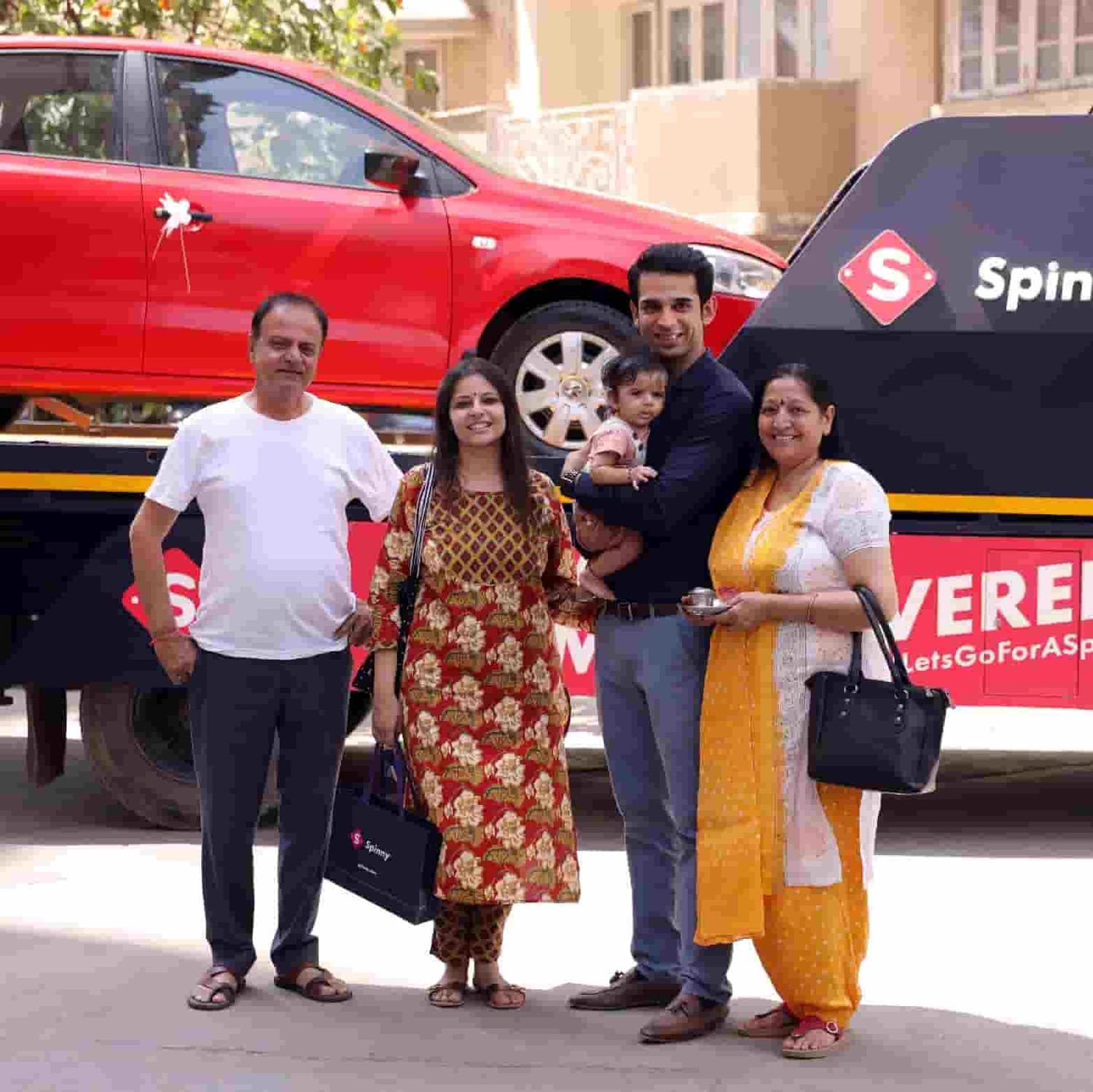
Over 2 Lakh Spinny Love Stories


More about Spinny
FAQs About Used Tata Nano cars in India
More About Tata Nano
Being undoubtedly the most affordable car in the Indian market, Nano has the shortest turning radius (4m), the Light power steering & the compact size makes it a breeze to manoeuvre in urban conditions. The refined and fuel-efficient 624cc petrol engine generates 38 ps of power and 51 nm of torque with 23kmpl of milage! Now also available in AMT option, priced at least a lac lower than the other AMT options present in the market! It's independent, lower wishbone, McPherson strut with gas-filled damper provides decent ride quality over pothole and road bump.

Top 5 features of Nano

- Power steering
- Fog lamps
- Central locking
- Seat adjustment
- Glove compartment
Features are of the latest generation model
Key Specifications of Nano
- Engine Displacement624.0 cc
- Mileage(ARAI-Auto Research Association of India)21.9 kmpl


Specifications are of the latest generation model
Nano Pricing
12 Tata Nano near you in Chandigarh
We have several options in the following price range.
Price starts from
₹1.52 Lakhfor Tata Nano Twist XT
Goes to
₹2.55 Lakhfor Tata Nano Twist XTA
How much does a used Tata Nano cost on Spinny?
- Model and registration year
- Manual or AMT transmission
- Petrol or CNG version
- Kilometres driven and number of previous owners
- Service, repair and insurance history
- Tyre, battery and overall mechanical condition
Does the Nano Still Work as a City Car?
Why the Nano Still Works Well in the City
- Very compact dimensions
- Easy parking
- Four-seat practicality
- Low purchase cost
- Good fuel efficiency
- Light controls
- Simple city-friendly driving
Where the Nano Feels Outdated
- Modest engine performance
- Limited luggage space
- Basic cabin materials
- More engine and road noise
- Fewer modern safety features
- Limited high-speed confidence
Manual or AMT: Which Nano Should You Look For?
Manual Nano
- Want the lowest possible purchase cost
- Prefer simpler mechanicals
- Are comfortable using a clutch in traffic
- Want fewer transmission-related components to worry about
Tata Nano Automatic
- Most driving is urban
- Convenience matters more than performance
- You want an inexpensive automatic car
- The transmission has been properly maintained
What to Check on an AMT Nano
- Excessive delay when selecting drive or reverse
- Strong jerking between gears
- Transmission warning lights
- Difficulty engaging gears
- Unusual mechanical noises
- Poor hill-start behaviour
Which Tata Nano Variant Should You Look For?
Routine Maintenance
- Engine oil and filters
- Spark plugs
- Brake inspection
- Battery
- Tyres
- Coolant
- Belts
- Air-conditioning checks
- Suspension inspection
Spare-Parts Availability
- Interior switches
- Electrical components
- Trim pieces
- Body parts
- AMT-related parts
- Certain model-specific mechanical components
Common Areas to Inspect
- Starter and electrical system: Check whether the engine starts cleanly and whether all switches, lights and electrical functions work correctly.
- Air conditioning: When testing the cooling system, it is even more essential to test the cooling system in an old car that may have been left in a garage for a longer duration.
- Suspension and steering: Listen for knocking sounds over broken roads and check whether the car tracks straight.
- Engine vibration: In the Tata Nano, the two-cylinder engine will generally create more vibration than other typical standard four-cylinder hatchback engines, but vibration should still be within a controllable range.
- Rust and body condition: Check the underbody, door edges, wheel arches and hidden areas for corrosion.
- AMT operation: In case of a Tata Nano automatic used car, make sure to test every gearbox position and drive the car in stop-and-go traffic.
What Is the Nano Like to Maintain Today?
Routine Maintenance
- Engine oil and filters
- Spark plugs
- Brake inspection
- Battery
- Tyres
- Coolant
- Belts
- Air-conditioning checks
- Suspension inspection
Spare-Parts Availability
- Interior switches
- Electrical components
- Trim pieces
- Body parts
- AMT-related parts
- Certain model-specific mechanical components
Common Areas to Inspect
- Starter and electrical system: Check whether the engine starts cleanly and whether all switches, lights and electrical functions work correctly.
- Air conditioning: When testing the cooling system, it is even more essential to test the cooling system in an old car that may have been left in a garage for a longer duration.
- Suspension and steering: Listen for knocking sounds over broken roads and check whether the car tracks straight.
- Engine vibration: In the Tata Nano, the two-cylinder engine will generally create more vibration than other typical standard four-cylinder hatchback engines, but vibration should still be within a controllable range.
- Rust and body condition: Check the underbody, door edges, wheel arches and hidden areas for corrosion.
- AMT operation: In case of a Tata Nano automatic used car, make sure to test every gearbox position and drive the car in stop-and-go traffic.
Who Should Buy a Used Nano in 2026?
Most Searched on Spinny
Search By Category
Make:
Model:
Fuel Type:
Mileage:
Color:
Price:
Bangalore
Hyderabad
Mumbai
Pune
Chennai
Gurgaon
More Cities
Kolkata
Ahmedabad
Ghaziabad
Lucknow
Noida
Jaipur
Chandigarh
Coimbatore
Faridabad
Jodhpur
Kochi
Mangaluru
Ranchi
Nagpur
Visakhapatnam
Kanpur
Mohali
Sonipat
Ambala
Agra
Mysuru
Vadodara
Prayagraj
Karnal
Ludhiana
Nashik
Jalandhar
Used cars by Model
Used grand-i10 in BangaloreUsed kwid in BangaloreUsed creta in BangaloreUsed venue in BangaloreUsed seltos in BangaloreUsed cars by Model
Used kwid in HyderabadUsed seltos in HyderabadUsed baleno in HyderabadUsed swift in HyderabadUsed alto-800 in HyderabadUsed cars by Model
Used baleno in MumbaiUsed city in MumbaiUsed seltos in MumbaiUsed venue in MumbaiUsed kwid in MumbaiUsed cars by Model
Used tiago in PuneUsed baleno in PuneUsed kwid in PuneUsed nexon in PuneUsed creta in PuneUsed cars by Model
Used grand-i10-nios in ChennaiUsed kwid in ChennaiUsed creta in ChennaiUsed venue in ChennaiUsed amaze in ChennaiUsed cars by Model
Used seltos in GurgaonUsed creta in GurgaonUsed baleno in GurgaonUsed city in GurgaonUsed nexon in GurgaonUsed cars by Model
Used creta in KolkataUsed grand-i10 in KolkataUsed santro in KolkataUsed wagon-r in KolkataUsed punch in KolkataUsed cars by Model
Used baleno in AhmedabadUsed alto-800 in AhmedabadUsed grand-i10 in AhmedabadUsed nexon in AhmedabadUsed creta in AhmedabadUsed cars by Model
Used seltos in GhaziabadUsed swift in GhaziabadUsed creta in GhaziabadUsed punch in GhaziabadUsed nexon in GhaziabadUsed cars by Model
Used kwid in LucknowUsed baleno in LucknowUsed ecosport in LucknowUsed city in LucknowUsed punch in LucknowUsed cars by Model
Used creta in NoidaUsed baleno in NoidaUsed seltos in NoidaUsed nexon in NoidaUsed verna in NoidaUsed cars by Model
Used creta in JaipurUsed punch in JaipurUsed baleno in JaipurUsed city in JaipurUsed tiago in JaipurUsed cars by Model
Used city in ChandigarhUsed creta in ChandigarhUsed slavia in ChandigarhUsed amaze in ChandigarhUsed elite-i20 in ChandigarhUsed cars by Model
Used city in CoimbatoreUsed kwid in CoimbatoreUsed altroz in CoimbatoreUsed creta in CoimbatoreUsed amaze in CoimbatoreUsed cars by Model
Used venue in FaridabadUsed grand-vitara in FaridabadUsed magnite in FaridabadUsed seltos in FaridabadUsed alto-800 in FaridabadUsed cars by Model
Used wagon-r-10 in JodhpurUsed baleno in JodhpurUsed punch in JodhpurUsed alto-k10 in JodhpurUsed city in JodhpurUsed cars by Model
Used kwid in KochiUsed kushaq in KochiUsed tiago in KochiUsed altroz in KochiUsed celerio in KochiUsed cars by Model
Used celerio in MangaluruUsed kwid in MangaluruUsed nexon in MangaluruUsed elite-i20 in MangaluruUsed eon in MangaluruUsed cars by Model
Used nexon in RanchiUsed swift in RanchiUsed xcent in RanchiUsed celerio in RanchiUsed glanza in RanchiUsed cars by Model
Used magnite in NagpurUsed brezza in NagpurUsed city in NagpurUsed creta in NagpurUsed dzire in NagpurUsed cars by Model
Used alto-800 in VisakhapatnamUsed grand-i10-nios in VisakhapatnamUsed ciaz in VisakhapatnamUsed city in VisakhapatnamUsed creta in VisakhapatnamUsed cars by Model
Used grand-i10-nios in KanpurUsed wagon-r in KanpurUsed baleno in KanpurUsed ignis in KanpurUsed tigor in KanpurUsed cars by Model
Used city in MohaliUsed altroz in MohaliUsed ciaz in MohaliUsed ecosport in MohaliUsed tiago in MohaliUsed cars by Model
Used amaze in SonipatUsed ciaz in SonipatUsed grand-i10-nios in SonipatUsed magnite in SonipatUsed nexon in SonipatUsed cars by Model
Used nexon in AmbalaUsed swift in AmbalaUsed venue in AmbalaUsed alto-800 in AmbalaUsed baleno in AmbalaUsed cars by Model
Used kwid in AgraUsed alto-800 in AgraUsed alto-k10 in AgraUsed baleno in AgraUsed punch in AgraUsed cars by Model
Used amaze in MysuruUsed creta in MysuruUsed ecosport in MysuruUsed grand-i10 in MysuruUsed polo in MysuruUsed cars by Model
Used elite-i20 in VadodaraUsed city in VadodaraUsed grand-i10 in VadodaraUsed xuv-300 in VadodaraUsed alto-800 in VadodaraUsed cars by Model
Used city in PrayagrajUsed grand-i10-nios in PrayagrajUsed punch in PrayagrajUsed swift in PrayagrajUsed alto-k10 in PrayagrajUsed cars by Model
Used baleno in KarnalUsed city in KarnalUsed vitara-brezza in KarnalUsed alto-k10 in KarnalUsed amaze in KarnalUsed cars by Model
Used baleno in LudhianaUsed brezza in LudhianaUsed ecosport in LudhianaUsed elite-i20 in LudhianaUsed glanza in LudhianaUsed cars by Model
Used alto-800 in NashikUsed baleno in NashikUsed tiago in NashikUsed ecosport in NashikUsed ertiga in Nashik(∗)subject to certain terms and conditions.© 2026 Valuedrive Technologies Limited.
All rights reserved.
CIN : U74999HR2019PLC077781
Company
Offerings
E-Challan
Processes
Finance & Tools
Contact Us
Policies & Terms
Buy Used car in
Provides better visibility in poor weather situations (fog, mist, etc.). Placed below headlamps in the front of the car to directly illuminate the road.
Allows you to control all door locks from the driver door lock, for safety & convenience.
Allows you to move the driver seat front and back, change the recline angle or height, and in some cases adjust lumbar support according to your comfort & preference.