
The mid-size SUV market in India is very competitive. It has a lot of different vehicles in it, as not all SUVs are made in the same way to please SUV buyers. While some SUV companies focus on features and performance of the vehicles, others make cars that are more comfortable and provide a hassle-free ownership experience and reliability. The Nissan Tekton and the Honda Elevate have the same platform, but they have very different ways of approaching their customers.
The Nissan Tekton is the newer entry. It comes with two turbo-petrol engines, a larger boot, a modern cabin, ADAS, a 5-star Bharat NCAP rating, and a feature list that feels competitive against newer mid-size SUVs. It is aimed at buyers who want something fresh, powerful, well-equipped, and safety-rated.
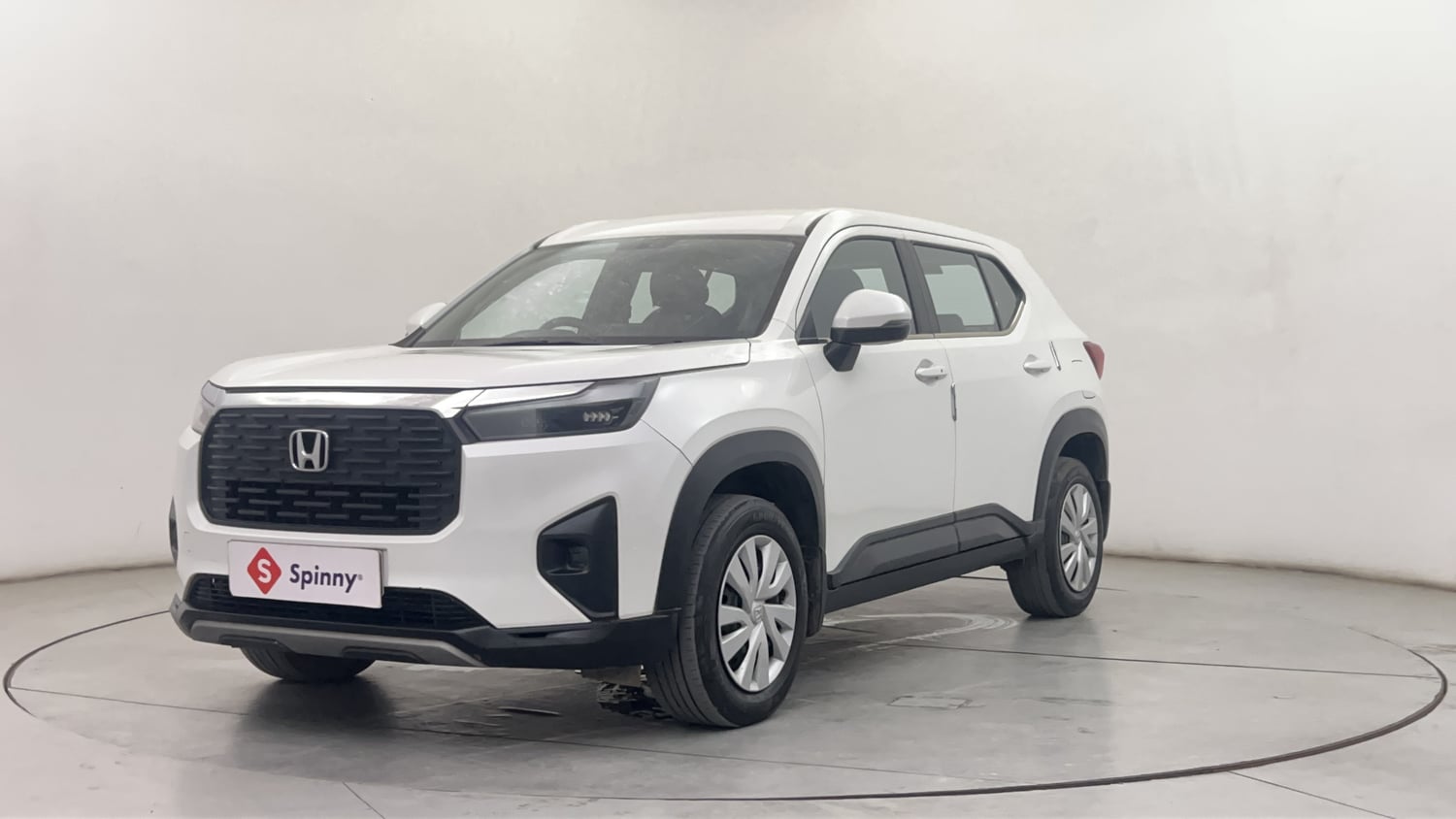
Honda Elevate keeps things simple with the familiar Honda 1.5L i-VTEC petrol engine paired with both manual and CVT options; its features are reliability, comfort, and high ground clearance. It may not be the showiest contestant in this segment of SUVs, but nevertheless is a worthy choice for prospective customers willing to buy a petrol SUV.
Here is the interesting part: the Tekton looks stronger on paper for performance, features, boot space, and starting price. The Elevate counters with Honda’s refinement, higher ground clearance, a simpler powertrain, lower top-end pricing, and strong safety credentials. So, if you are choosing between the Nissan Tekton and Honda Elevate, which one should you pick? This comparison breaks both SUVs down across dimensions, engine and transmission, features, safety, and price.
Table of Contents
Nissan Tekton vs Honda Elevate: Dimensions
| Specification | Nissan Tekton | Honda Elevate |
| Length | 4,348 mm | 4,312 mm |
| Width | 1,815 mm | 1,790 mm |
| Height | 1,674 mm | 1,650 mm |
| Wheelbase | 2,657 mm | 2,650 mm |
| Boot Space | 518 litres | 458 litres |
| Ground Clearance | 212 mm | 220 mm |
| Seating | 5 seats | 5 seats |
In terms of dimensions, the Nissan Tekton is larger than the Honda Elevate: it is longer, wider, and taller, with a slightly longer wheelbase. The difference in wheelbase is negligible, but the Tekton definitely has an edge in other dimensions.
The biggest practical advantage for the Tekton is boot space. It offers 518 litres, while the Honda Elevate offers 458 litres. The Elevate’s boot is already quite usable for a family SUV, but the Tekton offers more space for luggage, airport bags, road trips, and regular family travel.
In terms of ground clearance, the Elevate has a higher ground clearance of 220 mm compared to the Tekton’s 212mm. This allows the Honda to navigate many Indian roads, be it tall speed bumps, broken roads, or bad streets. The Tekton also performs well in this area; however, the Elevate wins in this aspect.
Both SUVs offer a 5-seat layout, so the real difference comes down to packaging. The Tekton feels larger and more spacious on paper, while the Elevate feels slightly more compact and easier to manage.
In conclusion, overall, the Tekton wins in the category of size and cargo capacity. In contrast, the Honda Elevate is superior when it comes to ground clearance and other practical tasks.
Nissan Tekton vs Honda Elevate: Engine & Transmission
| Specification | Nissan Tekton | Honda Elevate |
| Engine Options | 1.0L turbo-petrol / 1.3L turbo-petrol | 1.5L i-VTEC petrol |
| Power Output | 100 PS / 163 PS | 119 bhp |
| Torque | 166 Nm / 280 Nm | 145 Nm |
| Transmission | 6-speed MT / 6-speed wet-clutch DCT | 6-speed MT / CVT |
| Drive Type | FWD | FWD |
| Fuel Type | Petrol only | Petrol only |
| Mileage | 17.8–19.41 kmpl | 15.31–16.92 kmpl |
Nissan Tekton features two turbo-petrol engine types. The base 1.0-litre turbo-petrol engine produces 100 PS and 166 Nm of torque, coupled with a 6-speed manual transmission. The more powerful version gets a 1.3-litre turbo-petrol engine with 163 PS and 280 Nm of torque and is offered with both a 6-speed manual and a 6-speed wet-clutch DCT automatic gearbox.
The Tekton’s top engine is its biggest advantage in this comparison. With 280 Nm of torque, it is much stronger than the Elevate’s naturally aspirated petrol engine. This should make the Tekton feel quicker during overtakes, highway acceleration, and full-load driving. Buyers who want stronger petrol performance will find the Tekton more appealing.
Honda Elevate offers a simpler solution with just one option: a 1.5-litre i-VTEC petrol engine producing 119 bhp and 145 Nm of torque. It comes with both a 6-speed manual and a CVT transmission. While Honda’s engine doesn’t deliver as much power as Nissan’s 1.3-litre turbo-petrol, it does bring reliability and smoothness.
The Elevate’s naturally aspirated petrol engine is easier to understand and should appeal to buyers who want a proven petrol setup without the added complexity of a turbocharger or dual-clutch automatic. The CVT is also well-suited to relaxed city driving.
In theory, Nissan wins on mileage as it claims to achieve 17.8-19.41 kmpl, which is better than Honda’s claim of 15.31-16.92 kmpl. But real-life performance may vary depending on the driving style, traffic conditions, and variants; in any case, the Tekton will provide better fuel efficiency.
With stronger turbo-petrol performance and better claimed mileage, the Tekton wins on numbers. The Elevate wins on simplicity, refinement, and long-term confidence.
Nissan Tekton vs Honda Elevate: Features & Comfort
| Feature | Nissan Tekton | Honda Elevate |
| Infotainment System | 10.1-inch screen with Google built-in | 10.25-inch touchscreen |
| Digital Cluster | 10.25-inch digital cockpit | 7-inch digital display |
| Music System | Arkamys 3D Auditorium surround sound | 8-speaker premium sound system, variant dependent |
| Climate Control | Voice-assisted dual-zone AC | Automatic climate control |
| Ventilated Seats | Yes, front seats | No |
| Sunroof | Panoramic sunroof | Single-pane electric sunroof |
| Wireless Charging | Active-cooled wireless charger | Wireless charger |
| Connected Tech | MyNissan connected features | Honda Connect |
| 360° Camera | 3D Around View Monitor | Optional accessory / rear camera setup |
| ADAS | Level 2 ADAS on higher variants | Honda Sensing ADAS |
Both vehicles offer a good level of equipment, yet the Tekton appears to be more luxurious and modern. It is furnished with a 10.1-inch Tek-Link HD display with the Google built-in feature, a 10.25-inch virtual cockpit, wirelessly operated Android Auto and Apple CarPlay, ventilation and power functions in the front seats, voice-enabled dual-zone AC, an active-cooled charger, and many sound and connected features.
The Tekton also gets a panoramic sunroof, which gives it an advantage over the Elevate’s single-pane electric sunroof. For buyers who want a more open cabin feel, this will matter. Features such as ventilated seats, a larger digital driver display, and a 3D Around View Monitor also help the Tekton feel more premium.
The Elevate is simpler, but comfort is present there as well. It has a 10.25-inch touchscreen, wireless connectivity, an automatic air-conditioning system, rear AC outlets, LaneWatch camera, Honda Connect, multi-angle rear camera, sunroof, and an audio system with 8 speakers in higher versions. The car is not deprived of features, but in comparison, the Tekton wins.
The Elevate’s cabin strength is ergonomics. The controls are easy to use, visibility is good, the seating position is comfortable, and the dashboard layout is straightforward. It feels less flashy than the Tekton, but it is easy to live with.
Generally speaking, the Tekton wins because of premium features and cabin technology, while the Elevate takes the lead due to its simplicity, comfort and usability.
Nissan Tekton vs Honda Elevate: Safety Features
| Safety Feature | Nissan Tekton | Honda Elevate |
| NCAP Safety Rating | 5-star Bharat NCAP | 5-star Japan NCAP |
| Adult / Overall Score | 30.49 / 32 AOP | 176.23 / 193.8 overall |
| Child / Collision Score | 45 / 49 COP | 86.01 / 100 collision safety |
| Airbags | 6 airbags | 6 airbags |
| ABS with EBD | Yes | Yes |
| ESC / VSA | Yes | Yes |
| Hill Hold Assist | Yes | Yes |
| TPMS | Yes | Optional genuine accessory |
| 360° Camera | Yes | Optional accessory |
| ADAS | Level 2 ADAS | Honda Sensing ADAS |
| ISOFIX | Yes | Yes |
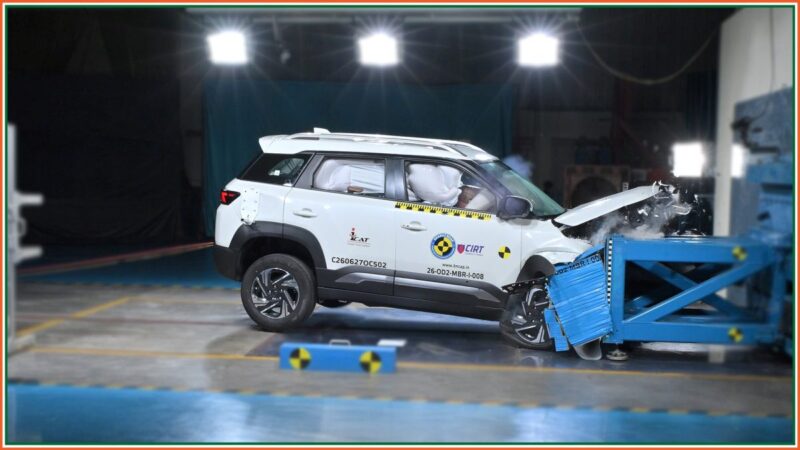
Both SUVs have a high level of safety. The Nissan Tekton has scored 5 stars on the Bharat NCAP test and received a score of 30.49 out of 32 for adult occupant safety and 45 out of 49 for child occupant safety. Bharat NCAP is India’s own safety assessment program, making this test very relevant to the Tekton’s safety in India.
The Tekton also gets six airbags, electronic stability control, hill start assist, tyre pressure monitoring, ISOFIX child seat mounts, front and rear parking sensors, 360-degree camera-style assistance, and Level 2 ADAS on higher variants. Its ADAS package includes features such as automatic emergency braking, lane assistance, adaptive cruise control, and blind-spot-related alerts, depending on the variant.
The Honda Elevate is also a very safe SUV. The Honda WR-V, which is based on the Honda Elevate and produced in India, has scored 5 stars on the Japan NCAP test. The Honda Elevate is also equipped with Honda Sensing, which is a set of advanced safety features that include collision mitigation braking, lane keep assist, road departure mitigation, adaptive cruise control, and auto high beam.
Honda’s safety package also includes six airbags, ABS with EBD, Vehicle Stability Assist, Hill Start Assist, ISOFIX mounts, LaneWatch camera, multi-angle rear camera, emergency stop signal, rear parking sensors, and Honda’s ACE body structure.
Thus, the Tekton has the advantage of having a better crash-test record in India thanks to Bharat NCAP. In contrast, the Honda Elevate can rely on Honda Sensing and validation on other countries’ crash tests through Japan NCAP.
Both SUVs are strong on safety. The Tekton has the added Bharat NCAP advantage, while the Elevate remains a very safe and well-equipped Honda SUV.
Nissan Tekton vs Honda Elevate: Price Comparison
| Variant Level | Nissan Tekton Ex-Showroom | Honda Elevate Ex-Showroom |
| Base / Entry Variant | ₹10.49 lakh | Around ₹11.60 lakh |
| Mid Variant | Around ₹13–16 lakh | Around ₹13–15 lakh |
| Top Variant | ₹18.59 lakh | Around ₹16.67–16.87 lakh |
The Nissan Tekton has an ex-showroom price of ₹10.49 lakh and goes up to ₹18.59 lakh. This makes it cheaper to buy than its rival, the Honda Elevate, but its top-variant price is higher. This is because of features such as the powerful turbo-petrol engine, panoramic sunroof, ventilated seats, ADAS, and 360-degree camera-based assistance.
The Honda Elevate starts around ₹11.60 lakh ex-showroom and top variant is around ₹16.67–16.87 lakh, depending on listing and variant. It is more expensive at the entry point, but cheaper at the top end. This makes it attractive for buyers who want a fully loaded petrol SUV without crossing into the higher price band.
The Tekton’s value is derived from features such as its lower entry price, higher performance, larger boot space, more features, and 5-star Bharat NCAP safety rating. The vehicle ranks higher on value proposition compared to competitors on entry-level and mid-level variants, especially when both performance and features are taken into account.
The Elevate’s value comes from Honda’s reliability, simpler engine, CVT convenience, higher ground clearance, and lower top-end price. It may not offer as many premium features, but it is easier to recommend to buyers who want a fuss-free ownership experience.
While the Tekton delivers optimum value in terms of added features compared to the Elevate, the latter delivers simplicity in the long term.
Summary: Nissan Tekton vs Honda Elevate
The Nissan Tekton vs Honda Elevate comparison comes down to modern features and turbo-petrol performance on one side, and simplicity and reliability on the other.
In this specification, the Nissan Tekton stands out as the more powerful, more equipped, and more modern SUV. It is bigger in size, has a bigger boot, is expected to give better mileage than the Honda Elevate, has better turbo-petrol performance, and comes with some luxury features, such as ventilated seats, panoramic sunroof, 3D Around View Monitor, dual-zone climate control, and Level 2 ADAS features. The SUV has been rated five stars by Bharat NCAP in terms of safety, giving it an edge in that aspect.
The Honda Elevate is the simpler and more dependable choice. It offers high ground clearance, a reliable 1.5L i-VTEC petrol engine, a smooth CVT option, a comfortable cabin, Honda Sensing ADAS, and strong safety credentials through Japan NCAP. It may not feel as feature-heavy as the Tekton, but it is easy to live with and should appeal to buyers who prioritise reliability over novelty.
In case you want a powerful, spacious, and well-equipped SUV at a lower price and safety rating from Bharat NCAP, then the Nissan Tekton is the better option. But in case you want a more affordable yet reliable Honda SUV with higher ground clearance, then the best option for you is the Honda Elevate.
FAQ about Nissan Tekton vs Honda Elevate
Q. Which is cheaper, the Nissan Tekton or Honda Elevate?
The Nissan Tekton is cheaper at the entry level, starting at ₹10.49 lakh ex-showroom. The Honda Elevate starts around ₹11.60 lakh ex-showroom. However, the Elevate is cheaper at the top end.
Q. Which SUV is bigger, the Nissan Tekton or Honda Elevate?
The Nissan Tekton is bigger in length, width, height, and wheelbase. It also offers more boot space than the Honda Elevate.
Q. Which SUV has more boot space?
The Nissan Tekton has more boot space, with 518 litres. The Honda Elevate offers 458 litres, which is still practical but smaller than the Tekton’s boot.
Q. Which SUV has better ground clearance?
The Honda Elevate has better ground clearance at 220 mm. The Nissan Tekton offers 212 mm, which is also strong for a mid-size SUV.
Q. Which SUV is more powerful?
The Nissan Tekton is more powerful. Its 1.3-litre turbo-petrol engine produces 163 PS and 280 Nm, while the Honda Elevate’s 1.5-litre petrol engine produces 119 bhp and 145 Nm.
Q. Which SUV is safer, the Nissan Tekton or Honda Elevate?
Both SUVs have strong safety credentials. The Nissan Tekton has a 5-star Bharat NCAP rating, while the Honda Elevate has strong international validation through a 5-star Japan NCAP rating for its Japan-market equivalent and also offers Honda Sensing ADAS.
Q. Which SUV should I buy: Nissan Tekton or Honda Elevate?
Buy the Nissan Tekton if you want stronger performance, more boot space, more premium features, and a 5-star Bharat NCAP rating. Choose the Honda Elevate if you want a simpler, reliable, comfortable petrol SUV with higher ground clearance, Honda Sensing, and lower top-end pricing.