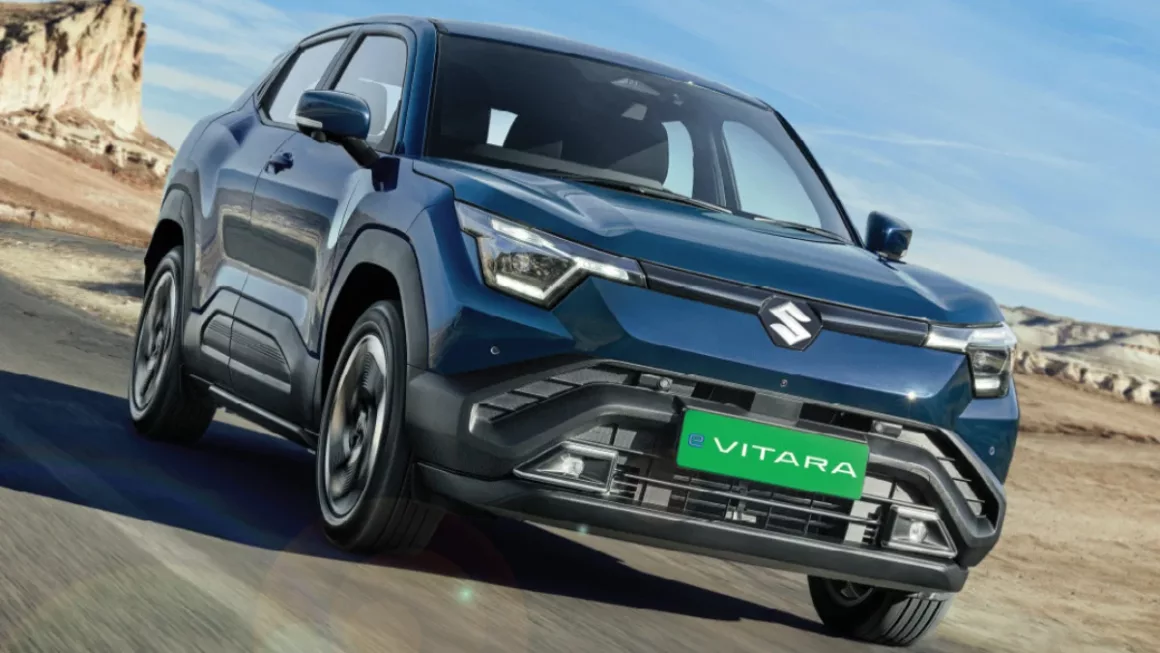
The electric SUV market in India is rapidly developing, and two leading brands, Maruti Suzuki and Hyundai, are battling for the mass-market SUV segment. Both will offer fully electric vehicles to replace currently available popular petrol-engine SUVs, but each will provide a different method of making that transition.
The e-Vitara is Maruti Suzuki’s first electric SUV, built around long range, family comfort, and everyday usability. The Hyundai Creta Electric brings Hyundai’s familiar Creta platform into the EV space, combining modern technology with a premium interior experience.
Even though they are both aimed at the same target audience, they each have different strengths.
The strengths of the Creta Electric are in technology and high-quality interior. The e-Vitara will offer more space savings and a much longer distance on one charge. In this comparison, this article will look at aspects such as cabin size, battery and performance, features, safety and pricing to determine which vehicle would better suit each buyer.
Table of Contents
Maruti Suzuki e Vitara vs Hyundai Creta Electric: Dimensions
| Specification | Maruti Suzuki e Vitara | Hyundai Creta Electric |
| Length | 4,275 mm | 4,340 mm |
| Width | 1,800 mm | 1,790 mm |
| Height | 1,635 mm | 1,655 mm |
| Wheelbase | 2,700 mm | 2,610 mm |
| Ground Clearance | 185 mm | Approx. 190 mm |
| Boot Space | Approx. 310 litres | Approx. 433 litres |
The Creta Electric has a slightly increased height compared to petrol versions, making it sit taller and appear more upright while providing a similar level of ease of use/manoeuvrability as existing petrol versions of the Creta.
However, the Maruti Suzuki e-Vitara holds a clear advantage in wheelbase. At 2,700 mm, it offers significantly more space between the axles than the Creta Electric. This translates into better rear legroom and a more relaxed seating position for second-row passengers.
Both SUVs have similar boot space; the e-Vitara has slightly more room. They are both family-friendly and have enough boot space for daily activities.
The Creta Electric is ideal for city driving, while the interior of the e-Vitara will support more passenger legroom. The e-Vitara will be more comfortable for passengers who travel with others on a regular basis.
Also Read: Complete Guide to Buying a Maruti Suzuki e Vitara
Maruti Suzuki e Vitara vs Hyundai Creta Electric: Battery & Performance
| Specification | Maruti Suzuki e Vitara | Hyundai Creta Electric |
| Battery Options | 49 kWh / 61 kWh | 42 kWh / 51.4 kWh |
| Claimed Range | Up to 543 km | Up to 473 km |
| Motor Output | Up to 172 bhp | Up to 171 PS |
| Torque | Approx. 192 Nm | Approx. 255 Nm |
| Drivetrain | Front-wheel drive | Front-wheel drive |
| DC Fast Charging | Yes | Yes |
| 10–80% Charging Time | Around 45 minutes | Around 58 minutes |
Electric SUVs have two different battery size options to suit different budgets and travel needs.
The Maruti Suzuki e-Vitara has a significantly longer battery range of 543 km with a larger battery; therefore, this would be better for someone who takes frequent long highway trips, as they won’t have to stop as many times for charging.
The Hyundai Creta Electric offers up to 473 km with its larger battery pack. While lower than the e-Vitara, this range is still sufficient for most daily commuting and occasional highway trips.
The two vehicles produce almost the same amount of output with approximately 170bhp. However, the electric version of the Creta has a higher torque output and thus provides better low-end response when driving in cities. The overall feel of the e-Vitara is more stable at high speed due to the longer wheelbase and configuration of the chassis.
Charging speeds favour the e Vitara slightly, with faster 10 to 80% charging times compared to the Creta Electric.
The e-Vitara is best for drivers who want the most range and best highway use. The Creta Electric, however, will provide a better performance in urban environments and quick stop/start traffic conditions.
Maruti Suzuki e Vitara vs Hyundai Creta Electric: Features & Comfort
| Feature | Maruti Suzuki e Vitara | Hyundai Creta Electric |
| Infotainment System | Large touchscreen | Dual 10.25-inch displays |
| Instrument Cluster | Fully digital | Fully digital |
| Climate Control | Automatic | Dual-zone automatic |
| Ventilated Seats | Yes | Yes |
| Sunroof | Panoramic | Panoramic |
| Powered Driver Seat | Yes | Yes |
| Rear AC Vents | Yes | Yes |
| Drive Modes | Multiple | Multiple |
| Audio System | Premium setup | Premium Bose audio |
The Hyundai Creta Electric offers a much more luxurious interior. The vehicle includes dual 10.25-inch displays, premium audio from Bose, two separate climate zones, and a nice overall design appealing to upscale buyers.
The Maruti Suzuki e-Vitara counters with a clean, functional interior that prioritises comfort over visual flair. It offers ventilated seats, powered driver adjustment, panoramic sunroof, and intuitive controls designed for everyday usability.
The eVitara wins again when it comes to rear-seated comfort, with its longer wheelbase. The Creta Electric offers a luxurious front-row experience but has somewhat less rear-seat legroom than the e-Vitara.
Those who place the greatest importance on rich interior appointments and high-tech infotainment will choose the Creta Electric over the eVitara, whereas those who place the most importance on space and practicality will prefer the layout of the eVitara.
Maruti Suzuki e Vitara vs Hyundai Creta Electric: Safety
| Safety Feature | Maruti Suzuki e Vitara | Hyundai Creta Electric |
| Bharat NCAP Rating | 5-star | Not yet officially tested |
| Airbags | 6 | 6 |
| Electronic Stability Control | Yes | Yes |
| Traction Control | Yes | Yes |
| Hill Hold Assist | Yes | Yes |
| 360-degree Camera | Yes | Yes |
| ISOFIX | Yes | Yes |
| ADAS | Level 2 | Level 2 |
Safety is definitely one category that the e-Vitara excels in.
With its five-star Bharat NCAP rating, the Maruti Suzuki e-Vitara provides verified crash protection. While the Hyundai Creta Electric has six airbags and Level 2 ADAS, there is no official Bharat NCAP rating for it yet.
The two SUVs are both well equipped with excellent safety features, including electronic stability control, ISOFIX anchor points, a 360-degree camera system and driver assistance technology.
The Creta electric is very well equipped, like the e-Vitara; however, the e-Vitara’s confirmed crash test results provide buyers with an added level of independently verified safety.
Maruti Suzuki e Vitara vs Hyundai Creta Electric: Price Comparison
| Variant Level | Maruti Suzuki e Vitara (Ex-showroom) | Hyundai Creta Electric (Ex-showroom) |
| Base Variant | Around ₹17.0 lakh | ₹17.99 lakh |
| Mid Variant | ₹19–20 lakh | ₹19.50–21.00 lakh |
| Top Variant | Up to ₹22.5 lakh | Up to ₹23.50 lakh |
Although the Creta Electric is marketed as a premium SUV, its higher price largely reflects the vehicle’s interior technology and brand image. By contrast, the e Vitara is seen as offering superior value given its mileage and entry price point.
The e-Vitara provides good value for customers looking for a good range and practicality. The Creta Electric appeals to those looking for high-feature vehicles and luxury vehicles.
Summary: Maruti Suzuki e-Vitara vs Hyundai Creta Electric
The Hyundai Creta Electric has a very urban feel and can give the driver a whole new experience while driving around town due to its high torque and premium interior, etc. Its base platform, being similar to the regular model, also makes it easier for consumers who already own a Hyundai to switch to EVs.
The Maruti Suzuki e-Vitara, on the other hand, feels more future-proof for longer journeys. Its larger battery option, faster charging capability, and longer wheelbase translate into fewer charging stops and better comfort on highways. For families who regularly travel outside city limits or prefer a more traditional SUV seating layout, the e-Vitara offers a stronger case.
Both have substantially lower running costs than common petrol SUVs, but the extended driving range of the e-Vitara should reduce reliance on public EV chargers over time. In the end, your selection will be based on your lifestyle: if you want a premium feel and urban function, the Creta Electric is for you; if you want space, range, and practicality for long distances, the e Vitara is right for you.
Also Read :
Comparison: Maruti Suzuki Grand Vitara vs Hyundai Creta
Comparison: Maruti Suzuki Vitara Brezza vs Tata Nexon
FAQs: Maruti Suzuki e-Vitara vs Hyundai Creta Electric
Q. Which offers a better range: Maruti Suzuki e-Vitara or Hyundai Creta Electric?
The Maruti Suzuki e-Vitara offers up to 543 km, while the Hyundai Creta Electric offers up to 473 km.
Q. Which is more spacious for rear passengers: Maruti Suzuki e-Vitara or Hyundai Creta Electric?
The e-Vitara provides better rear legroom due to its longer wheelbase.
Q. Which electric SUV is safer: Maruti Suzuki e-Vitara or Hyundai Creta Electric?
The e Vitara has a confirmed five-star Bharat NCAP rating, while the Creta Electric has not yet been officially tested.
Q. Which is more affordable: Maruti Suzuki e-Vitara or Hyundai Creta Electric?
The e-Vitara starts at a lower price, making it more accessible at the entry level.
Q. Which should I buy: Maruti Suzuki e-Vitara or Hyundai Creta Electric?
Choose the Creta Electric for premium interiors and infotainment. Choose the e-Vitara for longer range, better rear-seat comfort, and verified safety.