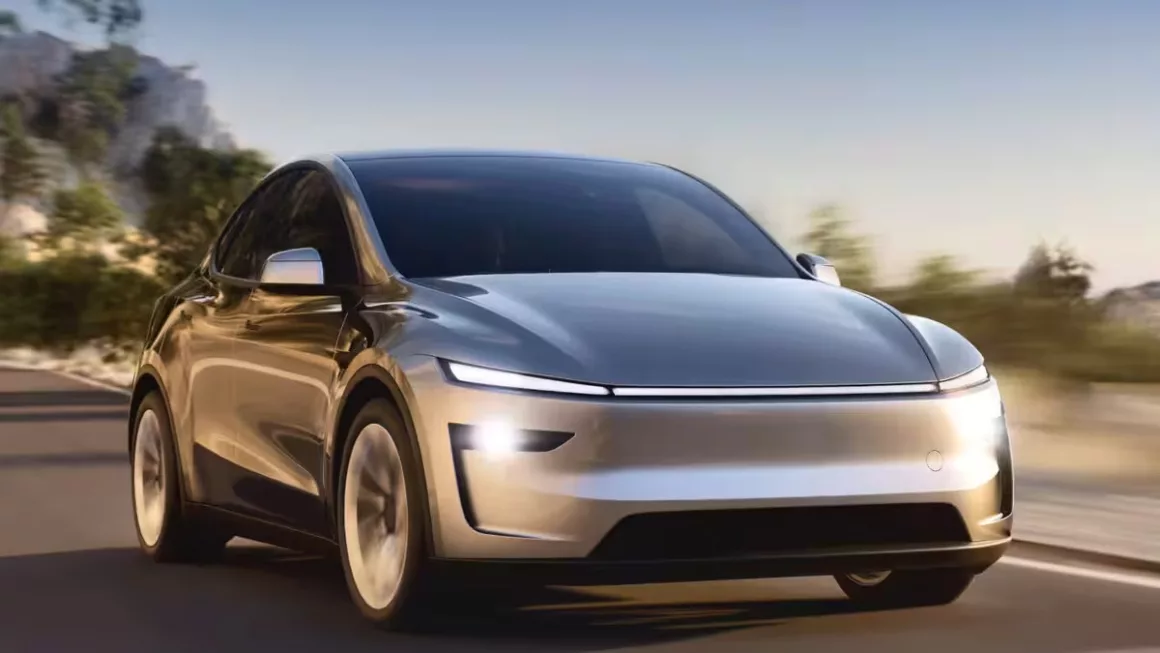
As far as electric cars are concerned, one conflict runs more heated than all others: Tesla vs. BYD. Tesla, a pioneer of modern EVs, has built its brand on state-of-the-art motoring, sophisticated software, and its peerless Supercharger network. On the other hand, BYD has reached global prominence in record time by selling feature-packed EVs at budget-friendly prices that are competitively priced and sturdily constructed in Asian and European sales markets.
The two brands dominate the global sales chart of EVs, though their strategies couldn’t differ more. Tesla focuses on technology and performance, catering to customers who expect speed, advanced technology, and a well-established charging network. BYD targets customers who prioritise affordability, value, and comfort and prefer practicality without compromising on functionality.
Through this blog, we compare Tesla vs. BYD by parameters such as dimensions, performance, features, safety, and price to help you understand which brand best meets your driving needs.
Table of Contents
Tesla vs BYD: Dimensions
| Brand/Model Example | Length (mm) | Width (mm) | Height (mm) | Wheelbase (mm) | Boot Space (Litres) | Ground Clearance (mm) |
| Tesla Model 3 | 4,719 | 1,933 | 1,440 | 2,740 | 682 | ~137 |
| Tesla Model Y | 4,797 | 1,925 | 1,620 | 2,890 | 822 | ~167 |
| BYD Atto 3 | 4,455 | 1,875 | 1,615 | 2,720 | 440 | 175 |
| BYD Seal | 4,800 | 1,875 | 1,460 | 2,920 | 400+ | ~149 |
Tesla models, such as the Model 3 and Model Y, are generally longer and have larger wheelbases, which means they feel more stable on highways and offer more rear-seat space. The Model Y excels particularly in terms of SUV practicality, offering nearly 1,000 litres of boot space with the seats folded.
BYDs such as the Atto 3 and Seal are marginally smaller but typically offer better ground clearance, making them better suited to city streets and rough terrain. The Atto 3, for example, strikes a balance between city-friendly sizes and a respectable 175 mm ground clearance, which is larger than that of most Tesla sedans.
If space and practicality are concerns, Tesla SUVs, such as the Model Y, come out on top. For customers needing an urban-friendly size with ample ground clearance for mixed driving conditions, BYD models offer an advantage.
Tesla outshines in bulk and boot space alone, but BYD counters with increased ground clearance and urban-friendly dimensions.
Tesla vs BYD: Engine & Transmission
| Brand/Model Example | Motor / Power Output | Torque (Nm) | 0–100 km/h (seconds) | Battery (kWh) | Range (km, WLTP) | Drivetrain Options |
| Tesla Model 3 RWD | 283 hp | ~420 | 6.1 | 60 | ~491 | RWD |
| Tesla Model 3 Performance | 450+ hp | ~639 | 3.3 | 75 | ~547 | AWD |
| Tesla Model Y Long Range | 295 hp | ~420 | 5.6 | 82.5 | ~533 | RWD |
| BYD Atto 3 | 201 hp | 310 | 7.3 | 60.5 | ~512 | FWD |
| BYD Seal (Performance) | 523 hp | 670 | 3.8 | 82.5 | ~580 | AWD |
Tesla is renowned for aggressive acceleration and sporty driving dynamics. Even the standard Model 3 accelerates from 0 to 100 km/h in under 6 seconds, with high-performance variants achieving a time of under 3.5 seconds, effectively placing them in sports car territory. With instantaneous torque and agile dynamics, Teslas are closer to sports cars than family EVs.
BYD offers a more balanced solution by comparison. The Atto 3 excels in day-to-day use, with decent performance across both city and highway conditions. The BYD Seal Performance proves that BYD isn’t one to lag behind Tesla’s pace, achieving a 0–100 km/h time of 3.8 seconds. That said, Tesla’s driving feel is better defined as sharper and more exhilarating.
Range-wise, both Tesla and BYD are on par. Tesla’s economy is very good, especially in long-range models, and BYD’s in-house battery production allows it to achieve strong range numbers at relatively modest costs.
Tesla stands out for its consistent performance across all models, while BYD offers a broader balance, combining everyday practicality with top-class performance in its top models.
Tesla vs BYD: Features & Comfort
| Feature/Tech Highlight | Tesla | BYD |
| Infotainment System | 15-inch central touchscreen (Model 3/Y), software-driven with OTA updates | Dual-screen setups in some models, e.g., a 12.8–15.6-inch rotating screen in Atto 3, dual 12.3-inch screens in Seal |
| Music System | Premium audio in higher trims (e.g., 13–14 speakers in Model 3/Y) | Premium systems in top trims (e.g., 16-speaker Harman Kardon with Dolby Atmos in BE series) |
| Climate Control | Dual-zone automatic with rear vents | Dual-zone / tri-zone, depending on model |
| Ventilated Seats | Available in some models | Available in mid-to-top trims |
| Adjustable Steering | Electric, integrated with memory in higher trims | Electric/manual, depending on model |
| Drive Modes | Multiple modes, including Track (Performance trims) | Eco, Normal, Sport, Snow, depending on the model |
| Instrument Cluster | Minimalist (only central screen in Model 3/Y) | Digital instrument clusters + infotainment |
| Sunroof / Glass Roof | Full-length panoramic glass roof | Panoramic sunroof in most models |
| Seat Adjustability | 12-way power adjustable with heating (higher trims) | Power adjustable with heating & ventilation in higher trims |
| Rear AC Vents | Yes | Yes |
| Rear Seat Split | 60:40 split folding | 60:40 split folding |
| Cruise Control | Adaptive cruise with Autopilot integration | Adaptive cruise with Level 2 ADAS integration |
Tesla bets everything on a software-oriented minimalist cabin. At its centre is its massive central touchscreen display, which runs nearly everything from climate control to navigation. Although such an advanced system will thrill customers who are technology-driven, it may be less intuitive for those who prefer physical controls.
BYD offers a more feature-rich and comfort-focused experience. Their interiors will feel more premium, with comfortable materials, nicely finished touches, and rotating touchscreens that strike a balance between functionality and flair. Even vehicles like the BYD Seal feature a digital instrument cluster alongside the infotainment display, providing a more traditional yet modern experience.
Both vehicles feature luxury amenities, including panoramic glass roofs, ventilated seats, and premium audio systems. While BYD packages these comforts on lower-end trims, Tesla reserves many of them for higher-end variants.
Tesla is about future minimalist fashion and software brilliance, whereas BYD offers a more upscale, high-quality experience, with a cabin built around amenities and comfort.
Tesla vs BYD: Safety Features
| Safety Feature | Tesla | BYD |
| NCAP Safety Rating | 5-star Euro NCAP & NHTSA (Model 3, Model Y) | 5-star Euro NCAP (Seal, Atto 3) |
| Airbags | 6–8 airbags, depending on model | 6–8 airbags, depending on model |
| ABS with EBD | Yes | Yes |
| ESC (Electronic Stability) | Yes | Yes |
| Traction Control | Yes | Yes |
| Automatic Headlamps | Yes | Yes |
| Rain-Sensing Wipers | Yes | Yes |
| Hill Hold Assist | Yes | Yes |
| Hill Descent Control | Limited (mainly SUVs) | Available in some SUV models |
| Rear Parking Sensors | Yes | Yes |
| Rear Parking Camera | Yes (360° in higher trims) | Yes (360° in higher trims) |
| ISOFIX Child Seat Anchors | Yes | Yes |
| ADAS / Driver Assistance | Tesla Autopilot (standard), Full Self Driving (optional, extra cost) | Level 2 ADAS standard on most models (lane keep, adaptive cruise, collision warning) |
A significant portion of Tesla’s credibility has been built on Autopilot and advanced driver-assist features. Both cars get a full ADAS suite as standard, and buyers get the option to purchase the controversial “Full Self Driving” package that brings automatic lane changing, motorway navigation, and traffic light recognition. With universally strong crash test results to boot, Teslas are among the safest EVs out there.
BYD, by contrast, uses a more harmonious safety-first approach. A number of its models, such as the Atto 3 and Seal, have 5-star Euro NCAP ratings and come equipped with a comprehensive Level 2 ADAS bundle as standard without requiring Tesla’s expensive add-on package. Options like collision alert, adaptive cruise control, and lane-keeping assist are usually bundled across variants, thereby making sophisticated safety features more mainstream.
Tesla edges slightly forward in the sophistication of its driver-assistance technology, yet BYD scores points for having strong safety across the board without incurring huge additional costs.
Tesla stands out with advanced Autopilot and steady crash test results, and BYD offers greater ADAS and safety feature availability at a lower cost.
Tesla vs BYD: Price Comparison
| Brand / Model Example | Starting Price (approx, ex-showroom India equivalent) | Top Variant Price (approx) |
| Tesla Model 3 | ₹45–50 lakh (imported pricing) | ₹65+ lakh |
| Tesla Model Y | ₹55–60 lakh | ₹75+ lakh |
| BYD Atto 3 | ₹33.99 lakh | ₹34.49 lakh |
| BYD Seal | ₹41 lakh | ₹53 lakh |
| BYD e6 (MPV) | ₹29 lakh | ₹29.15 lakh |
One of the most striking differences between the Tesla vs. BYD debate is the cost. Tesla cars securely occupy the high-end EV space, often starting over ₹45 lakh in India (upon import) and over ₹70 lakh for top-of-the-line models. They therefore become aspirational purchases rather than something practical for most buyers.
BYD’s second approach has been to make accessibility its forte. With models like the Atto 3 and e6 MPV, it has crossed the ₹30–40 lakh segment, offering luxury electric SUVs and MPVs that directly target the upper-middle-class buyer. The BYD Seal, a luxury sedan, continues to outdo the Tesla Model 3 at a significantly lower cost while maintaining competitiveness in terms of features and range.
The choice comes down to budget and positioning: Tesla has cornered the luxury EV space, and BYD offers good EVs with a high-end feel at roughly half the cost.
Tesla sits at the premium end of the EV marketplace, and BYD offers affordable models without compromising on fundamental capabilities, thereby making EV ownership more accessible to a wider range of individuals.
Summary: Tesla vs BYD
The Tesla vs. BYD comparison ultimately pits two very different EV strategies against each other.
Tesla has established itself as a technology-driven pioneer by offering world-class capabilities in performance, advanced software, and the convenience of its own Supercharger network. With a minimalist appearance, communicative driving dynamics, and standard-setting speed, it’s the automatic for customers who want innovation and luxury all in one vehicle. At the same time, it’s pricey enough to keep Tesla resoundingly in luxury EV territory.
BYD, on the other hand, excels in value and affordability. With an in-house battery build, similar costs, and strong interior build quality, it brings mainstream affordability to electric mobility. Cars like the BYD Seal and Atto 3 offer best-in-class range, advanced safety features, and feature-packed interiors at a fraction of the cost of similar Teslas. For typical practical customers, BYD provides a smarter balance between affordability and current EV capability.
So which brand do you opt for? If speed, cutting-edge technology, and a mature global charging infrastructure are top-of-prioritised considerations, then Tesla is your pick. If affordability, comfort, and value-driven amenities without making huge compromises on range or safety are your top-prioritised considerations, then BYD is your better option.
FAQ about Tesla vs BYD
Q. Which brand is more affordable: Tesla or BYD?
BYD is generally more affordable, with models like the Atto 3 starting around ₹34 lakh, while Tesla vehicles such as the Model 3 and Model Y start above ₹45 lakh and go much higher.
Q. Which offers better performance: Tesla or BYD?
Tesla leads in performance with quicker acceleration and sportier driving dynamics. The Tesla Model 3 Performance, for example, does 0–100 km/h in 3.3 seconds, while BYD’s Seal Performance is close at 3.8 seconds.
Q. Which has better interior quality: Tesla or BYD?
BYD often offers richer interior finishes, with premium upholstery and dual-screen setups. Tesla adopts a minimalist design, which appeals to some but may feel bare in comparison to BYD’s feature-rich cabins.
Q. Which has better charging support: Tesla or BYD?
Tesla has a clear advantage with its dedicated Supercharger network, providing fast and reliable charging globally. BYD relies on public charging networks, which can be less uniform in availability and speed.
Q. Which is safer: Tesla or BYD?
Both Tesla and BYD have earned 5-star Euro NCAP ratings for models like the Model 3, Model Y, Seal, and Atto 3. Tesla’s Autopilot is more advanced, but BYD makes Level 2 ADAS widely available across variants without extra cost.
Q. Which should I buy: Tesla or BYD?
Buy a Tesla if you want top-tier performance, advanced software, and access to the Supercharger network. Choose BYD if you want affordability, premium interiors, and strong features at a lower price point.