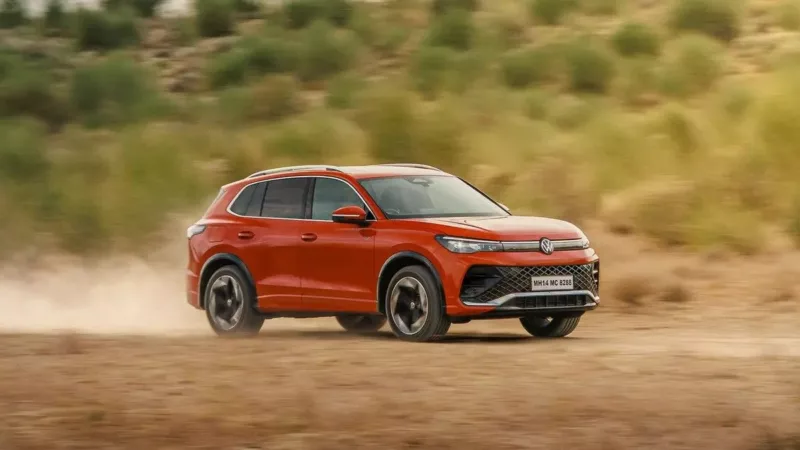
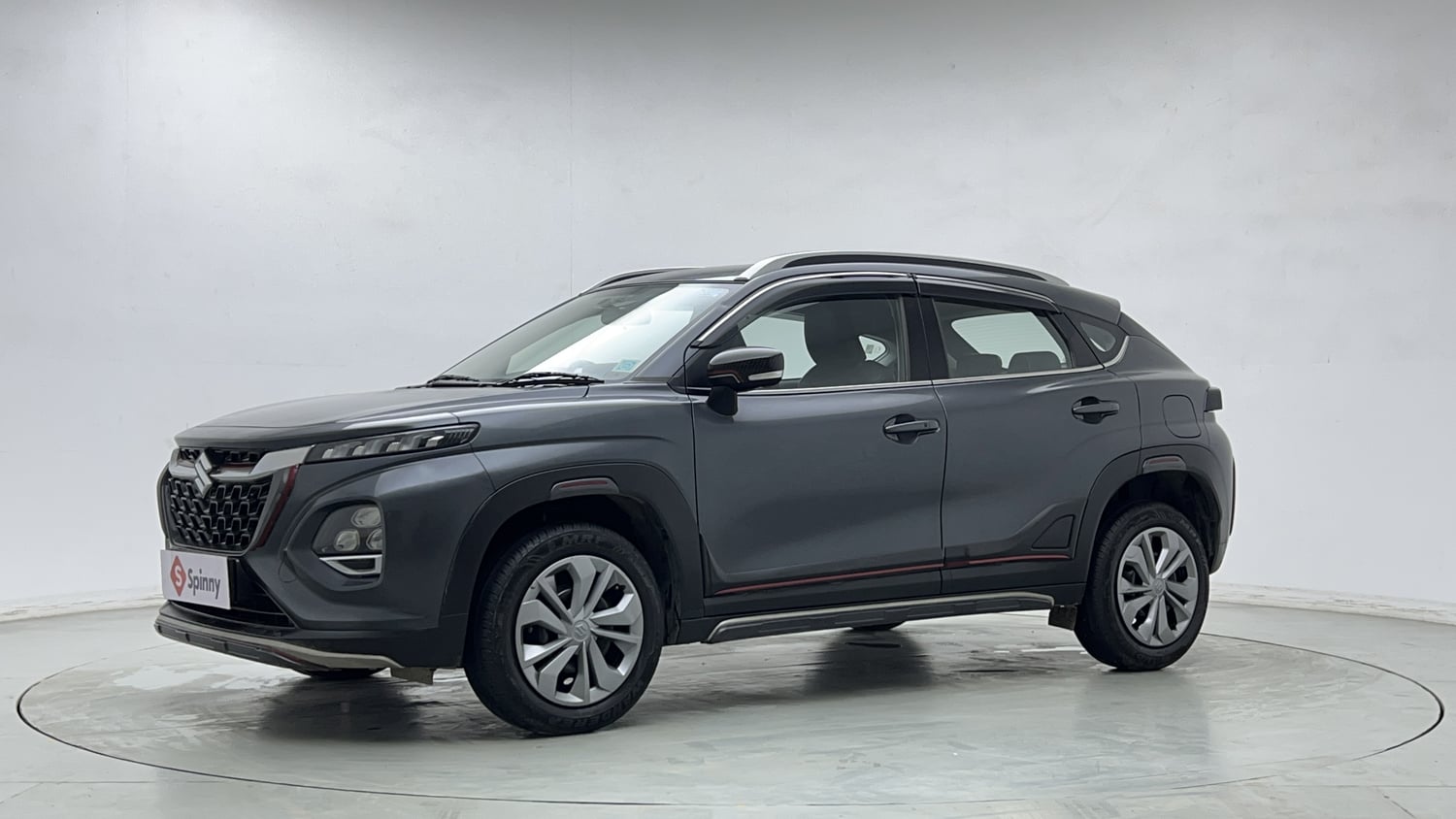
The Maruti Baleno and the Maruti Fronx are two of NEXA’s best-selling cars and share the same platform. The Baleno is a premium hatchback that now uses the new 1.2-litre Z-Series 3-cylinder engine, while the Fronx is a coupe-style crossover that sticks with the 1.2-litre DualJet 4-cylinder petrol and adds a 1.0-litre Turbo Boosterjet option. Both are also available with factory-fitted CNG.
So, Baleno or Fronx, which is better for mileage? In this Maruti Baleno vs Maruti Fronx comparison, we look at ARAI-claimed and real-world mileage for each powertrain, along with specs, fuel costs and price, to help you decide.
Table of Contents
Maruti Baleno vs Maruti Fronx Specs
The specifications of the Maruti Baleno and the Maruti Fronx help explain the difference in their mileage. The table below sheds some light on this:
| Specification | Maruti Baleno (2026 Facelift) | Maruti Fronx |
|---|---|---|
| Engine | 1.2-litre Z-Series (Z12E) 3-cylinder petrol / 1.2-litre Z-Series petrol + CNG | 1.2-litre DualJet petrol / 1.2-litre DualJet petrol + CNG / 1.0-litre Turbo Boosterjet petrol (smart hybrid) |
| Displacement | 1197 cc | 1.2 petrol and CNG: 1197 cc / Turbo: 998 cc |
| Power | Petrol: 82.93 PS / CNG: 69.75 PS | 1.2 petrol: 89.73 PS / CNG: 77.5 PS / Turbo: 100.06 PS |
| Torque | Petrol: 112.4 Nm / CNG: 101.8 Nm | 1.2 petrol: 113 Nm / CNG: 98.5 Nm / Turbo: 147.6 Nm |
| Transmission | Petrol and CNG: 5-speed MT, 5-speed AMT | 1.2 petrol: 5-speed MT, 5-speed AMT / CNG: 5-speed MT / Turbo: 5-speed MT, 6-speed AT |
| Kerb weight | Petrol: 950–990 kg / CNG: 1,045–1,060 kg | 1.2 petrol: 960–975 kg / CNG: 1,050–1,060 kg / Turbo: 1,015–1,060 kg |
| Fuel tank capacity | Petrol: 37 litres / CNG: 55 litres (water-equivalent) | Petrol: 37 litres / CNG: 55 litres (water-equivalent) |
| Boot space | 318 litres | 308 litres |
The Baleno facelift now uses the efficiency-focused 3-cylinder Z-Series engine, while the Fronx continues with the 4-cylinder DualJet, which makes slightly more power. The Fronx also offers a 1.0-litre turbo-petrol with 147.6 Nm of torque for buyers who want stronger performance. Both share the same 37-litre petrol tank and 55-litre CNG cylinder, and their kerb weights are closely matched. Read our Baleno vs Fronx comparison for the differences in design and features. Let’s see the ARAI-claimed mileage figures of both these cars now.

Maruti Baleno vs Maruti Fronx: ARAI Claimed Mileage
ARAI mileage figures are usually higher than real-world mileage because the tests are carried out in a controlled environment under ideal conditions. Still, they are a useful benchmark for comparing cars. The claimed mileage of the Maruti Baleno and Maruti Fronx is given below:
| Engine & Transmission | Fuel Type | Maruti Baleno – ARAI Mileage | Maruti Fronx – ARAI Mileage |
|---|---|---|---|
| 1.2L Petrol – 5-Speed MT | Petrol | 23.80 km/l | 21.79 km/l |
| 1.2L Petrol – 5-Speed AMT | Petrol | 24.77 km/l | 22.89 km/l |
| 1.0L Turbo Petrol – 5-Speed MT | Petrol | NA | 21.5 km/l |
| 1.0L Turbo Petrol – 6-Speed AT | Petrol | NA | 20.01 km/l |
| 1.2L Petrol + CNG – 5-Speed MT | CNG | 33.61 km/kg | 28.51 km/kg |
| 1.2L Petrol + CNG – 5-Speed AMT | CNG | 34.47 km/kg | NA |
On paper, the Baleno is clearly the more fuel-efficient car. Its new Z-Series engine claims 23.80 km/l with the manual and 24.77 km/l with the AMT, about 2 km/l more than the Fronx 1.2 petrol. The gap is even wider with CNG, where the Baleno claims 33.61 km/kg against the Fronx’s 28.51 km/kg. The Baleno is also the only one of the two to offer CNG with an AMT. The Fronx turbo-petrol claims 20.01–21.5 km/l, the lowest of the range but still competitive for its power.
Also Read: 2026 Maruti Baleno Facelift Launched
Maruti Baleno vs Maruti Fronx: Real-World Mileage
Now, let’s see whether the claimed figures translate into real-world mileage. The real-world mileage for each powertrain of the Baleno and the Fronx is given below:
Maruti Baleno (1.2L Petrol) vs Maruti Fronx (1.2L Petrol)
| Driving Condition | Maruti Baleno (1.2L Petrol) | Maruti Fronx (1.2L Petrol) |
|---|---|---|
| City | Manual: 15.50 km/l / AMT: 14.20 km/l | Manual: 14.50 km/l / AMT: 15.50 km/l |
| Highway | Manual: 21.00 km/l / AMT: 20.00 km/l | Manual: 19.50 km/l / AMT: 20.50 km/l |
| Average | Manual: 18.25 km/l / AMT: 17.10 km/l | Manual: 17.00 km/l / AMT: 18.00 km/l |
| Tank Range | 630–675 km | 630–665 km |
Maruti Fronx (1.0L Turbo Petrol)
| Driving Condition | Maruti Fronx (1.0L Turbo Petrol) |
|---|---|
| City | Manual: 14.50 km/l / Automatic: 13.50 km/l |
| Highway | Manual: 19.50 km/l / Automatic: 20.50 km/l |
| Average | Manual: 17.00 km/l / Automatic: 17.00 km/l |
| Tank Range | About 630 km |
Maruti Baleno CNG vs Maruti Fronx CNG
| Driving Condition | Maruti Baleno CNG | Maruti Fronx CNG |
|---|---|---|
| City | Manual: 22.00 km/kg | Manual: 21.00 km/kg |
| Highway | Manual: 33.20 km/kg | Manual: 26.50 km/kg |
| Average | Manual: 27.60 km/kg | Manual: 23.75 km/kg |
| CNG-only Range | About 220–250 km, plus petrol backup | About 190–215 km, plus petrol backup |
With manual gearboxes, the Baleno is the more efficient choice, averaging 18.25 km/l against the Fronx’s 17.00 km/l, with the biggest gap on the highway (21.00 vs 19.50 km/l). The automatics tell a different story: the Fronx 1.2 AMT averages 18.00 km/l, ahead of the Baleno AMT’s 17.10 km/l, thanks to its better city figure. The Fronx turbo-petrol averages about 17.00 km/l with both gearboxes, which is impressive for its extra power.
In CNG form, the Baleno has a clear lead, averaging about 27.60 km/kg against the Fronx’s 23.75 km/kg, and the gap is largest on the highway. With the same 55-litre cylinder, this also gives the Baleno a longer CNG-only range. For more detail on each car, read our Baleno mileage guide and Fronx real-world mileage guide.
Also Read: How to Increase Maruti Suzuki Baleno Mileage
Maruti Baleno vs Maruti Fronx: Fuel-Cost Comparison
The monthly, yearly and 5-year fuel costs of the Baleno and the Fronx show how their real-world mileage affects running costs. For reference, we have assumed that both cars run 1,500 km per month. Delhi fuel prices as of 26 October 2026, petrol (₹102.12 per litre) and CNG (₹86.98 per kg), are used to calculate the fuel costs:
| Cost Head | Baleno 1.2 Petrol MT | Fronx 1.2 Petrol MT | Fronx 1.0 Turbo MT | Baleno CNG | Fronx CNG |
|---|---|---|---|---|---|
| Monthly Running | 1,500 km | 1,500 km | 1,500 km | 1,500 km | 1,500 km |
| Real-World Avg Efficiency | 18.25 km/l | 17.00 km/l | 17.00 km/l | 27.60 km/kg | 23.75 km/kg |
| Monthly Fuel Use | 82.2 L | 88.2 L | 88.2 L | 54.3 kg | 63.2 kg |
| Average Monthly Cost | ₹8,393 | ₹9,011 | ₹9,011 | ₹4,727 | ₹5,493 |
| Average Yearly Cost | ₹1.01 lakh | ₹1.08 lakh | ₹1.08 lakh | ₹56,726 | ₹65,922 |
| 5-Year Fuel Cost | ₹5.04 lakh | ₹5.41 lakh | ₹5.41 lakh | ₹2.84 lakh | ₹3.30 lakh |
Among petrol manuals, the Baleno saves about ₹620 a month, or roughly ₹37,000 over five years, compared with the Fronx. The gap is larger with CNG, where the Baleno saves about ₹770 a month, or roughly ₹46,000 over five years. CNG remains the cheapest way to run either car, costing about half as much as petrol. If you prefer an automatic, the Fronx 1.2 AMT is the cheaper one to run. Fuel prices vary by city, so recalculate using your local rates.
Maruti Baleno vs Maruti Fronx Price
Let’s compare the ex-showroom prices of the Maruti Baleno and the Maruti Fronx:
| Model | Variant (Base to Top) | Price (Ex-Showroom) |
|---|---|---|
| Maruti Baleno | Sigma to Alpha (O) | ₹5.99 lakh to ₹9.99 lakh |
| Maruti Fronx | Sigma to Alpha Turbo AT | ₹6.90 lakh to ₹12.03 lakh |
The Baleno starts about ₹91,000 lower than the Fronx and tops out around ₹2 lakh lower. It also offers premium features such as Level 2 ADAS and ventilated front seats on its top variants. The Fronx costs more but brings crossover styling and the option of a 1.0-litre turbo-petrol with a 6-speed automatic. Our Fronx alternatives guide shows how it compares with other rivals.
Also Read: Complete Guide to Buying a Maruti Fronx
Summary
When we compare the Baleno and the Fronx, the Baleno is the more fuel-efficient car on paper and in most real-world conditions. Its new 3-cylinder Z-Series engine gives it the edge with the manual gearbox, and its CNG version is clearly more efficient than the Fronx CNG.
The Fronx fights back with its 1.2 AMT, which returns better real-world mileage than the Baleno AMT in city traffic, and with its turbo-petrol, which offers stronger performance while still averaging around 17 km/l.
Therefore, if you want the lowest running costs, a lower price and a well-equipped premium hatchback, the Baleno is a great choice. If you prefer crossover styling, an automatic for city driving or the extra punch of a turbo-petrol, the Fronx justifies its higher price.
FAQs
Q. Which has better mileage, the Maruti Baleno or the Maruti Fronx?
The Baleno has better mileage overall. Its petrol manual averages about 18.25 km/l in real-world driving against 17.00 km/l for the Fronx, and its CNG averages about 27.60 km/kg against 23.75 km/kg. The Fronx 1.2 AMT is the exception, averaging about 18.00 km/l against 17.10 km/l for the Baleno AMT.
Q. What is the ARAI mileage of the Maruti Baleno?
The Baleno claims 23.80 km/l (MT) and 24.77 km/l (AMT) with petrol, and 33.61 km/kg (MT) and 34.47 km/kg (AMT) with CNG.
Q. What is the ARAI mileage of the Maruti Fronx?
The Fronx claims 21.79 km/l (MT) and 22.89 km/l (AMT) with the 1.2 petrol, 21.5 km/l (MT) and 20.01 km/l (AT) with the 1.0 turbo-petrol, and 28.51 km/kg with CNG.
Q. Do the Baleno and Fronx use the same engine?
Not anymore. The 2026 Baleno uses the new 1.2-litre Z-Series 3-cylinder engine, while the Fronx uses the 1.2-litre DualJet 4-cylinder engine and also offers a 1.0-litre Turbo Boosterjet.
Q. Does the Baleno have a turbo-petrol engine?
No. The Baleno is available only with the 1.2-litre petrol and CNG. The 1.0-litre Turbo Boosterjet is offered only on the Fronx.
Q. Which CNG is more fuel-efficient, the Baleno or the Fronx?
The Baleno CNG is more efficient, with a claimed 33.61 km/kg and about 27.60 km/kg in real-world driving. The Fronx CNG claims 28.51 km/kg and averages about 23.75 km/kg.
Q. What is the fuel tank capacity of the Baleno and the Fronx?
Both have a 37-litre petrol tank, and both CNG versions use a 55-litre (water-equivalent) CNG cylinder.
Q. Which is cheaper to run, the Baleno or the Fronx?
The Baleno is cheaper to run. At Delhi prices and 1,500 km a month, the Baleno petrol MT costs about ₹8,393 against ₹9,011 for the Fronx 1.2 MT, and the Baleno CNG costs about ₹4,727 against ₹5,493 for the Fronx CNG.