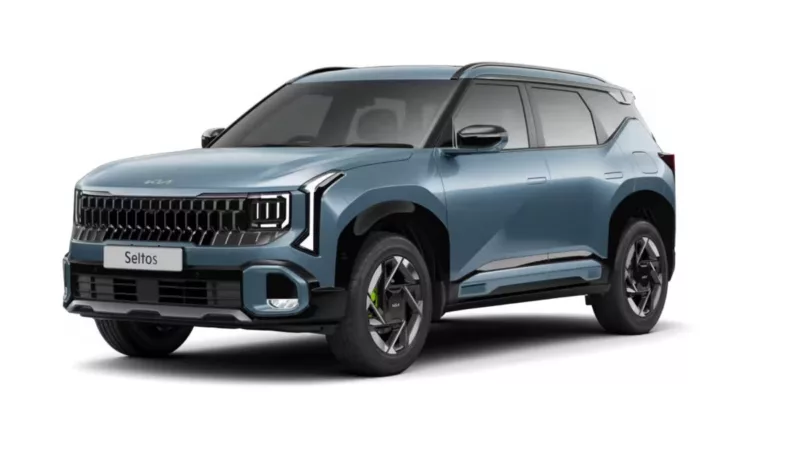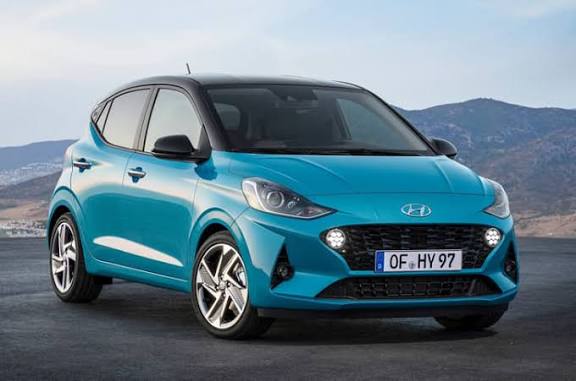
The Hyundai Grand i10 Nios and the Hyundai i20 are Hyundai’s two hatchbacks in India. Both use the same 1.2-litre Kappa petrol engine, but the Grand i10 Nios is the smaller, more affordable car, while the i20 is a larger premium hatchback. The Nios also offers a factory-fitted CNG option and an AMT, while the i20 offers a smoother IVT automatic.
So, Grand i10 Nios or i20, which is better for mileage? In this Hyundai Grand i10 Nios vs Hyundai i20 comparison, we look at ARAI-claimed and real-world mileage for each powertrain, along with specs, fuel costs and price, to help you decide.
Table of Contents
Hyundai Grand i10 Nios vs Hyundai i20 Specs
The specifications of the Hyundai Grand i10 Nios and the Hyundai i20 help explain the difference in their mileage. The table below sheds some light on this:
| Specification | Hyundai Grand i10 Nios | Hyundai i20 |
| Engine | 1.2-litre Kappa petrol / 1.2-litre Bi-Fuel (petrol + CNG) | 1.2-litre Kappa petrol |
| Displacement | 1197 cc | 1197 cc |
| Power | Petrol: 83 PS / CNG: 69 PS | MT: 83 PS / IVT: 88 PS |
| Torque | Petrol: 113.8 Nm / CNG: 95.2 Nm | 114.7 Nm |
| Transmission | Petrol: 5-speed MT, 5-speed Smart Auto AMT / CNG: 5-speed MT | 5-speed MT / IVT (CVT automatic) |
| Fuel tank capacity | Petrol: 37 litres / CNG: 60 litres (water-equivalent) | 37 litres |
| Seats | 5 | 5 |
Both hatchbacks use the same 1.2-litre Kappa petrol engine and the same 37-litre fuel tank. The i20’s IVT version makes a slightly higher 88 PS, while the Nios offers a CNG option with a 60-litre (water-equivalent) cylinder that the i20 does not. The i20 is the larger of the two. Read our Grand i10 Nios buying guide for more on its variants. Let’s see the ARAI-claimed mileage figures of both these cars now.

Hyundai Grand i10 Nios vs Hyundai i20: ARAI Claimed Mileage
ARAI mileage figures are usually higher than real-world mileage because the tests are carried out in a controlled environment under ideal conditions. Still, they are a useful benchmark for comparing cars. The claimed mileage of the Hyundai Grand i10 Nios and Hyundai i20 is given below:
| Engine & Transmission | Fuel Type | Hyundai Grand i10 Nios – ARAI Mileage | Hyundai i20 – ARAI Mileage |
| 1.2L Petrol – 5-Speed MT | Petrol | 18 km/l | 16 km/l |
| 1.2L Petrol – Automatic | Petrol | 16 km/l (AMT) | 20 km/l (IVT) |
| 1.2L Petrol + CNG – 5-Speed MT | CNG | 27 km/kg | NA |
On paper, the Grand i10 Nios manual is more efficient than the i20 manual (18 vs 16 km/l), but the i20 IVT claims the best petrol figure of the two at 20 km/l, well ahead of the Nios AMT’s 16 km/l. The Nios CNG claims 27 km/kg, giving it a clear running-cost advantage, as the i20 is not offered with CNG.
Also Read: Hyundai i20 Price, Features and Specifications
Hyundai Grand i10 Nios vs Hyundai i20: Real-World Mileage
Now, let’s see whether the claimed figures translate into real-world mileage. The real-world mileage for each powertrain of the Grand i10 Nios and the i20 is given below:
Hyundai Grand i10 Nios (1.2L Petrol) vs Hyundai i20 (1.2L Petrol)
| Driving Condition | Hyundai Grand i10 Nios (1.2L Petrol) | Hyundai i20 (1.2L Petrol) |
| City | Manual: 13–16 km/l / AMT: 13–15.5 km/l | Manual: 14–16 km/l / IVT: 10–14 km/l |
| Highway | Manual: 17–19 km/l / AMT: 17–18.5 km/l | Manual: 19–22 km/l / IVT: 17–20 km/l |
| Average | Manual: 15–17 km/l / AMT: 14.5–16.5 km/l | Manual: 15.5–17.5 km/l / IVT: 13–16 km/l |
| Tank Range | Manual: 555–630 km / AMT: 535–610 km | Manual: 575–650 km / IVT: 480–590 km |
Hyundai Grand i10 Nios CNG
| Driving Condition | Hyundai Grand i10 Nios CNG (5-Speed MT) |
| City | 20–23 km/kg |
| Highway | 24–27 km/kg |
| Average | 22–25 km/kg |
| CNG-only Range | About 180–230 km, plus petrol backup |
With manual gearboxes, the two are closely matched, but the i20 has a slight edge on the highway (19–22 km/l against 17-19 km/l). In real-world tests, the order of the automatics flips compared with the ARAI figures: the Nios AMT averages 14.5–16.5 km/l and holds up well in traffic, while the i20 IVT drops to 10–14 km/l in the city.
The Nios CNG is the most economical option, averaging 22–25 km/kg in mixed driving. For more on its petrol and CNG versions, read our Grand i10 Nios vs Tata Tiago mileage comparison. The sportier i20 N Line, with its 1.0-litre turbo-petrol, is sold as a separate model and is not covered here.
Also Read: Hyundai i20 Mileage in Real World
Hyundai Grand i10 Nios vs Hyundai i20: Fuel-Cost Comparison
The monthly, yearly and 5-year fuel costs of the Grand i10 Nios and the i20 show how their real-world mileage affects running costs. For reference, we have assumed that both cars run 1,500 km per month and used the midpoint of each real-world average. Delhi fuel prices as of 26 October 2026, petrol (₹102.12 per litre) and CNG (₹86.98 per kg), are used to calculate the fuel costs:
| Cost Head | Nios Petrol MT | i20 Petrol MT | Nios Petrol AMT | i20 Petrol IVT | Nios CNG |
| Monthly Running | 1,500 km | 1,500 km | 1,500 km | 1,500 km | 1,500 km |
| Real-World Avg Efficiency | 16.0 km/l | 16.5 km/l | 15.5 km/l | 14.5 km/l | 23.5 km/kg |
| Monthly Fuel Use | 93.8 L | 90.9 L | 96.8 L | 103.4 L | 63.8 kg |
| Average Monthly Cost | ₹9,574 | ₹9,284 | ₹9,883 | ₹10,564 | ₹5,552 |
| Average Yearly Cost | ₹1.15 lakh | ₹1.11 lakh | ₹1.19 lakh | ₹1.27 lakh | ₹66,623 |
| 5-Year Fuel Cost | ₹5.74 lakh | ₹5.57 lakh | ₹5.93 lakh | ₹6.34 lakh | ₹3.33 lakh |
With manual gearboxes, the i20 is slightly cheaper to run, saving about ₹290 a month. With automatics, the Nios AMT is cheaper, saving about ₹680 a month, or roughly ₹41,000 over five years, compared with the i20 IVT. The Nios CNG is by far the cheapest to run at about ₹5,550 a month, saving around ₹2.4 lakh over five years compared with the Nios petrol manual. Fuel prices vary by city, so recalculate using your local rates.
Hyundai Grand i10 Nios vs Hyundai i20 Price
Let’s compare the ex-showroom prices of the Hyundai Grand i10 Nios and the Hyundai i20:
| Model | Variant (Base to Top) | Price (Ex-Showroom, Delhi) |
| Hyundai Grand i10 Nios (Petrol) | Era MT to Asta AMT | ₹5.60 lakh to ₹8.09 lakh |
| Hyundai Grand i10 Nios (CNG) | Magna CNG to Sportz CNG | ₹7.33 lakh to ₹7.83 lakh |
| Hyundai i20 | Era MT to Asta (O) IVT DT Knight Edition | ₹6.00 lakh to ₹10.68 lakh |
The Grand i10 Nios starts about ₹40,000 lower than the i20 and tops out around ₹2.6 lakh lower. The i20 costs more but is a bigger, more premium hatchback with more space and features, and its IVT offers a smoother automatic experience. Our i20 alternatives guide shows how it compares with other premium hatchbacks.
Also Read: Comparison: Hyundai Exter vs Hyundai Grand i10 Nios
Summary
When we compare the Grand i10 Nios and the i20, their shared 1.2-litre petrol engine delivers similar real-world mileage with manual gearboxes, with the i20 slightly ahead on the highway. With automatics, the Nios AMT returns better real-world mileage than the i20 IVT, especially in city traffic.
The Nios CNG is the clear running-cost winner, averaging 22–25 km/kg and costing around half as much to fuel as the petrol models. The i20 does not offer a CNG option.
Therefore, if you want the lowest purchase price and running costs, or a factory-fitted CNG option, the Grand i10 Nios is a great choice. If you want a bigger, more premium hatchback with a smooth IVT automatic, the i20 justifies its higher price.
Related Blogs:
Hyundai i20 vs Tata Altroz: Real World Mileage Comparison
FAQs
Q. Which has better mileage, the Hyundai Grand i10 Nios or the Hyundai i20?
With manual gearboxes, both deliver similar real-world mileage of around 16–16.5 km/l. With automatics, the Nios AMT (about 15.5 km/l) is more efficient than the i20 IVT (about 14.5 km/l). The Nios CNG, at about 23.5 km/kg, is the most economical option.
Q. What is the ARAI mileage of the Hyundai Grand i10 Nios?
The Grand i10 Nios claims 18 km/l with the petrol MT, 16 km/l with the petrol AMT and 27 km/kg with CNG.
Q. What is the ARAI mileage of the Hyundai i20?
The i20 claims 16 km/l with the petrol MT and 20 km/l with the petrol IVT.
Q. Do the Grand i10 Nios and i20 use the same engine?
Yes. Both use the 1.2-litre Kappa petrol engine. It makes 83 PS in the Nios and i20 manual, and 88 PS in the i20 IVT.
Q. Is the Hyundai i20 available with CNG?
No. The i20 is offered only with the 1.2-litre petrol engine. Factory-fitted CNG is available only on the Grand i10 Nios.
Q. Which automatic is more fuel-efficient, the Nios AMT or the i20 IVT?
The i20 IVT has the higher claimed figure (20 km/l), but in real-world driving, the Nios AMT is more efficient, averaging about 15.5 km/l against 14.5 km/l for the i20 IVT.
Q. What is the fuel tank capacity of the Grand i10 Nios and i20?
Both have a 37-litre petrol tank. The Nios CNG also has a 60-litre (water-equivalent) CNG cylinder.
Q. Which is cheaper to buy, the Grand i10 Nios or the i20?
The Grand i10 Nios is cheaper, starting at ₹5.60 lakh (ex-showroom, Delhi) against ₹6.00 lakh for the i20.