




India is preparing to witness a significant shift in fueling petrol vehicles. The government has mandated the launch of E20 fuel, a 20% ethanol-based petrol, by 2025. The initiative aims to reduce oil imports, support farmers by utilising ethanol produced from crops, and decrease harmful emissions. That, in turn, means that each new model of petrol vehicles now must be “E20-ready,” a standard that has been made a mandate by BS6 Phase 2 norms in April 2023.
Compatibility is more than a mere technical specification to automobile owners. It always affects driving performance, engine durability, warranty validity, and even the resale value of the car. Incorrect fuel in a non-compatible car will harm mileage, damage parts, and render you without recourse under warranty claims.
Hyundai has already moved the vast majority of its petrol cars over to E20 compatibility. The likes of the Creta, Venue, i20, and Verna are now approved for E20 fuel, and the manufacturers have set out warranty conditions to reassure customers. But not every Hyundai out there, even as of this date, is up to scratch, so it’s a good thing to know exactly where your car stands.
Table of Contents
What Is E20 Fuel?
E20 fuel is simply petrol with 20% ethanol and 80% regular petrol. Ethanol is an alcohol that plants like sugarcane, maize, and grains generate. When it is mixed with petrol, fuel is made more eco-friendly because it reduces India’s reliance upon imported crude oil and complements locally produced biofuel.
Technically, ethanol has a higher octane rating than petrol, which helps to reduce knock in engines that are tuned to it. But it also has a lower energy density, so vehicles generally obtain slightly lower mileage per E20 than with straight petrol. Another consideration is materials compatibility, ethanol will degrade rubber sealing materials, plastic pipework, and certain types of metallic parts if the fuel system is not compatible with it.
That’s why in April 2023, the government tied E20 rollout to BS6 Phase 2 emission standards and made it mandatory for carmakers to sell new petrol vehicles that can be safely run with the ethanol blend.
Hyundai Cars Compatible with E20 Fuel
Hyundai has clarified that all petrol cars refaced/re-launched after BS6 Phase 2 (after April 2023) are made to meet E20 fuel. That includes best-selling hatchbacks, cars, and SUVs in the model range. In a few cases, the manufacturer has provided exact manufacturing end-of-life dates. For example, in the case of the i20, the E20-ready model is certified to be manufactured after October 2023.
Here’s a quick model-wise look at Hyundai’s E20-ready cars in India:
| Model | E20 Introduction Year / Cut-off |
| Hyundai i20 (incl. N Line) | 2023 (Oct onwards for confirmed compliance) |
| Hyundai Grand i10 Nios | 2023 (BS6 Phase 2 update) |
| Hyundai Verna | 2023 (new-gen launch) |
| Hyundai Aura | 2023 (facelift/BS6 Phase 2) |
| Hyundai Exter | 2023 (launch model E20-ready) |
| Hyundai Venue | 2023 (BS6 Phase 2 update) |
| Hyundai Alcazar | 2023 (BS6 Phase 2 update) |
| Hyundai Creta | 2023 (BS6 Phase 2 update) |
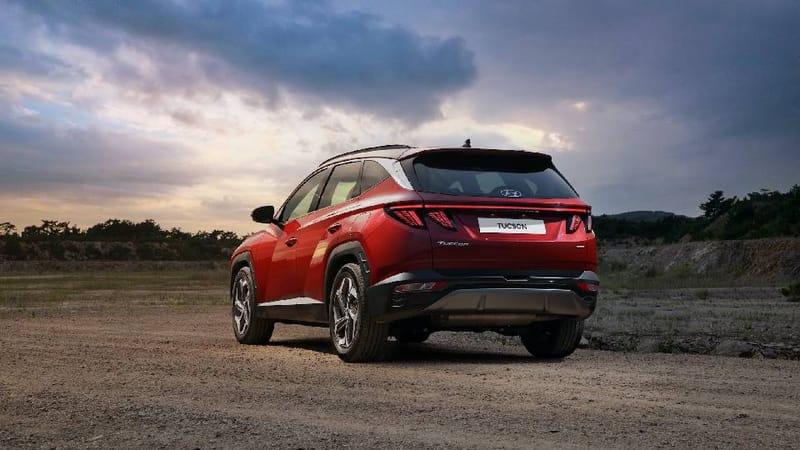
| Hyundai Tucson | 2023 (BS6 Phase 2 update) |
Note: Compatibility always ties back to the manufacturer’s date of the vehicle. Owners should double-check the fuel lid, owner’s manual, or VIN with Hyundai’s service centre for confirmation.
Hyundai i20 (incl. N Line)
The Hyundai i20 is one of India’s most popular premium hatchbacks, blending style, space, and performance. The car is available with two petrol powertrains: a 1.2L Kappa petrol (mated with 5-speed manual or IVT automatic) and a 1.0L turbo-petrol in the N Line trim (with 6-speed iMT or 7-speed DCT). Fuel efficiency figures are up to 16–20 km/l, variant and transmission depending. Fuel types include petrol across all, with N Line variants tuned to be more sporting.
Warranty Guidelines for Hyundai i20 on E20 Fuel
| Model | Warranty Period |
| Hyundai i20 / i20 N Line | 3 years or 100,000 km (standard) — extendable up to 5 years/140,000 km with Hyundai Shield of Trust packages |
For cars manufactured after October 2023, Hyundai has claimed compliance with E20. If your car falls in this category, it will not sacrifice warranty coverage to power it with E20 fuel. Car owners who made theirs earlier should check the VIN or consult a servicing centre before refuelling with E20.
Hyundai Grand i10 Nios
The Grand i10 Nios is Hyundai’s entry-level hatchback, marked by petite size and urban-centric performance. The vehicle features a 1.2L Kappa petrol engine, paired with options for a 5-speed manual or AMT automatic transmission. The estimated mileage is about 20 km/l, so it ranks among the highest in its class. The vehicle is petrol-only, and some trims are good for daily driving as well as family customers.
Warranty Guidelines for Hyundai Grand i10 Nios on E20 Fuel
| Model | Warranty Period |
| Hyundai Grand i10 Nios | 3 years or 100,000 km (standard), extendable up to 5 years/140,000 km |
From the 2023 BS6 Phase 2 update onwards, the Nios has been certified as E20-compatible. Hyundai clarified that warranty coverage will remain intact if E20 is used in these updated models.
Hyundai Verna
The new 2023 Verna sedan was introduced as fully E20-ready. The two petrol powertrains offered are a 1.5L MPi petrol (manual/ CVT) and a 1.5L turbo-petrol (6-speed manual/7-speed DCT). The cars’ mileage is anywhere between 18 and 20 km/ l, depending on both the powertrain and the transmission. The Verna is petrol-only, and it offers sport-inspired styling along with high-tech features.
Warranty Guidelines for Hyundai Verna on E20 Fuel
| Model | Warranty Period |
| Hyundai Verna | 3 years or 100,000 km (standard), extendable up to 5 years/140,000 km |
Every unit of the new-gen Verna launched in 2023 is E20-certified. Warranty remains unaffected when running the sedan on E20 fuel.
Hyundai Aura
The Hyundai Aura is also the small sedan sibling of the Nios, which shares its 1.2L Kappa petrol engine with it. However, the Aura comes standard with a 5-speed manual transmission and offers a 5-speed AMT as an optional feature. The mileage is equivalent to that of Nios, around 20 km/l, making it effective for city commuting.
Warranty Guidelines for Hyundai Aura on E20 Fuel
| Model | Warranty Period |
| Hyundai Aura | 3 years or 100,000 km (standard), extendable up to 5 years/140,000 km |
The 2023 facelifted Aura came certified for E20. Owners of earlier units should confirm via VIN before using E20, while newer ones enjoy full warranty support on the blend.
Hyundai Exter
The Exter, introduced in 2023, is Hyundai’s micro-SUV when it makes an entry into this segment. The micro-SUV features the usual 1.2L Kappa petrol power by manual/b진 as well as by AMT, which gives about 19–20 km/l. Tough-looking and small SUV in silhouette, it makes a very good substitute for hatchbacks.
Warranty Guidelines for Hyundai Exter on E20 Fuel
| Model | Warranty Period |
| Hyundai Exter | 3 years or 100,000 km (standard), extendable up to 5 years/140,000 km |
Since the Exter launched after BS6 Phase 2, it was E20-ready from day one. Warranty is fully valid with E20 use.
Hyundai Venue
The Venue, Hyundai’s blockbuster subcompact SUV, has been updated to BS6 Phase 2 in 2023. The petrol models get a 1.2L Kappa petrol (manually/IMT/AMT) and a 1.0L turbo-petrol (manually, iMT, or DCT). The fuel efficiency is 17–20 km/L
Warranty Guidelines for Hyundai Venue on E20 Fuel
| Model | Warranty Period |
| Hyundai Venue | 3 years or 100,000 km (standard), extendable up to 5 years/140,000 km |
Post-2023 updates, all petrol Venue models are E20-certified. Warranty coverage continues as long as owners stick to recommended fuel grades.
Hyundai Alcazar
The Alcazar is Hyundai’s three-row SUV, underpinned by the Creta. The petrol variant of this SUV gets a 2.0L MPi petrol engine, coupled with a 6-speed manual or automatic transmission. The claimed mileage is about 14-16 km/l, which is good enough considering it’s a full-size SUV.
Warranty Guidelines for Hyundai Alcazar on E20 Fuel
| Model | Warranty Period |
| Hyundai Alcazar | 3 years or 100,000 km (standard), extendable up to 5 years/140,000 km |
From its 2023 petrol updates, the Alcazar became E20-ready. Hyundai has confirmed that the warranty remains unaffected for compliant units with E20 fuel.
Hyundai Creta
The Creta, Hyundai’s Indian bestseller, can be had in a vast variety of petrol trims. The petrol engines of this car comprise a 1.5L MPi petrol (manually/IVT) as well as a 1.4L turbo-petrol (DCT, discontinued in certain updates). The mileage remains at 16–17 km/l for petrol models.
Warranty Guidelines for Hyundai Creta on E20 Fuel
| Model | Warranty Period |
| Hyundai Creta | 3 years or 100,000 km (standard), extendable up to 5 years/140,000 km |
With the 2023 update, Creta petrol models are confirmed E20-ready. Warranty protection applies when using E20 fuel.
Hyundai Tucson
The Tucson, Hyundai’s flagship SUV in India, also receives a 2.0L MPi petrol engine along with a 6-speed automatic transmission. Fuel efficiency is about 13–14 km/l, more focused on refinement and smooth ride than efficiency.
Warranty Guidelines for the Hyundai Tucson on E20 Fuel
| Model | Warranty Period |
| Hyundai Tucson | 3 years or 100,000 km (standard), extendable up to 5 years/140,000 km |
The 2023 petrol Tucson is E20-compliant, with Hyundai confirming full warranty validity on the new fuel blend.
How to Check if Your Hyundai Car is E20-Compatible
Even though Hyundai has announced E20 compliance across its petrol line-up post-2023, it’s always better to confirm your specific car. Here are the ways you can do that:
- Owner’s Manual: The simplest check is your car’s handbook. Hyundai clearly mentions fuel requirements and compatibility in the manual. If your model is E20-ready, it will be stated there.
- Fuel Lid Sticker: Many newer Hyundai models have a sticker or engraving on the inside of the fuel lid that says “E20”. If you see this, it’s a direct confirmation.
- Manufacture Date: Cars built after April 2023 (BS6 Phase 2 rollout) are generally E20-ready, with some models like the i20 having a stricter cut-off (October 2023). Check your registration certificate (RC) or VIN plate for the build month.
- Dealership or Service Centre: If your car is close to the transition period, visit a Hyundai dealer or authorised service centre. They can verify compatibility using your Vehicle Identification Number (VIN).
- Hyundai Website / Press Releases: Hyundai India’s official site and media announcements often list compatibility updates for each model. This is especially useful for owners who bought cars around 2022–23.
Tip: If your Hyundai was manufactured before 2023, don’t assume compatibility. Get it verified before switching to E20 fuel.
Impact of E20 on Hyundai Cars
Switching to E20 fuel has clear advantages for the environment and the economy, but owners also want to know how it affects their day-to-day driving. Here’s the breakdown:
Mileage
Ethanol contains less energy per litre than pure petrol, so that you will get a marginally reduced fuel efficiency. You can expect a 2-4% loss in miles per gallon compared to E10 or normal petrol. For a car such as the i20 or Creta, this could translate to a loss of around 0.5-1 km/l in real conditions.
Performance
The Hyundai E20-ready engines are calibrated to run with ethanol blends, so smooth power output and driving performance remain. Incompatible older models, however, may develop knocking, rough cold cranks, or sluggish throttle response.
Engine Wear and Components
E20-compliant cars use ethanol-proof materials in the fuel pump, injector, seal, and pipe parts. In older cars without such enhancements, wear and corrosion would soon appear more quickly, reducing component life and escalating maintenance costs.
Emissions
On the positive side, ethanol helps reduce carbon monoxide and hydrocarbon emissions. Properly tuned E20 engines can run cleaner overall, aligning with India’s emission reduction goals.
Resale Value
Compatibility in due course with E20 will be a significant selling feature. Buyers are already asking whether cars are “E20-ready.” Compliant Hyundais will hold value better, while non-compliant variants could witness softening of demand.
In short: If your Hyundai is a 2023 model year or newer, you’re good to go. If it’s older, check ahead of time that refuelling with E20 in a non-compliant vehicle won’t harm both the vehicle and your wallet.
Summary
The move by India to E20 fuel, which is petrol with 20% ethanol, is a significant step in India’s automobile sector. Cleaner emissions, less oil imports, and more support to domestic farming are among its potential gains. But car owners will fret about compatibility.
Hyundai has covered this by guaranteeing that every petrol car that was launched or refreshed under BS6 Phase 2 (April 2023 onwards) is E20-ready. That includes popular variants such as the i20, Grand i10 Nios, Verna, Aura, Exter, Venue, Alcazar, Creta, and Tucson. Some variants, like the i20, also have variant-specific manufacturing cut-offs to ensure compliance.
Compatibility matters at the owner level because it involves performance, emissions, warranty coverage, and resale value. Hyundai has been clear that driving E20 vehicles will not affect warranty cover. However, pre-2023 vehicles may not be safe to drive on E20, such that damage done may not be warranty-claimable.
If unsure, check by referring to your owner’s manual, fuel lid sticker, manufactured date, or Hyundai service centre. Now that you’ve got accurate knowledge, make the switch to E20 with confidence, knowing that your car is safe and future-proof.
FAQs
Q. What is E20 fuel?
E20 fuel is petrol blended with 20% ethanol and 80% petrol. It’s part of India’s plan to reduce oil imports, cut emissions, and support farmers by using ethanol derived from crops.
Q. Are all Hyundai cars compatible with E20 fuel?
No. Only petrol Hyundai cars manufactured under the BS6 Phase 2 norms (effective from April 2023 onwards) are officially E20-ready. Older models may not be safe for E20 use.
Q. Will using E20 fuel void my Hyundai warranty?
For E20-certified models, Hyundai has confirmed that using E20 fuel will not void the warranty. However, if you use E20 in a non-compatible car, any resulting damage may not be covered.
Q. How can I check if my Hyundai car is E20-compatible?
You can check the owner’s manual, fuel lid sticker, or your car’s manufacturing date. For certainty, visit a Hyundai service centre with your VIN to confirm compatibility.
Q. Does E20 fuel affect mileage and performance?
Yes, slightly. E20 fuel generally causes a 2–4% drop in mileage compared to regular petrol. However, Hyundai’s E20-ready cars are tuned to handle this without noticeable performance issues.