
















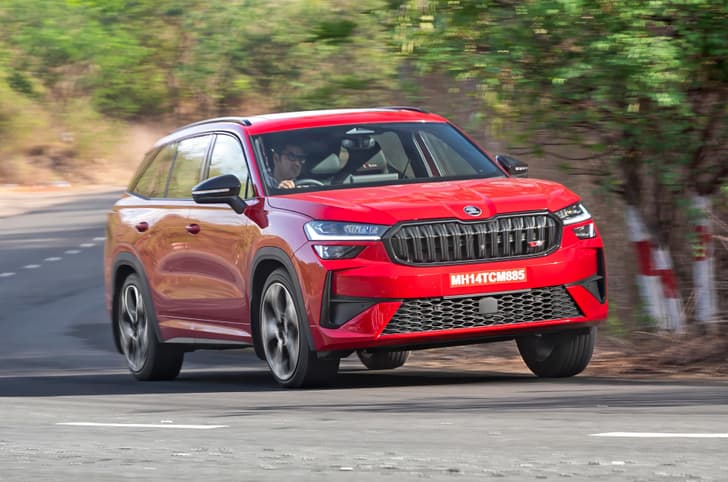



Kia Sonet Real World Mileage: A Detailed Overview

Kia Sonet
Last updated 5 months ago

Are you looking for a subcompact SUV that smoothly blends both city driving and adventurous spirit? Then the Kia Sonet could be your suitable fit. No matter whether you are navigating heavy city traffic or heading out for a long weekend journey, this SUV offers some suitable features along with its impressive mileage. The Kia Sonet comes with several engine options, with both petrol and diesel fuel options. 

You can also find different variants like iMT, DCT, Automatics, etc, which serve your several riding needs on the road. With every variant, you can find standout mileage and separate fuel efficiency ranges. The average Kia Sonet mileage ranges from 18 kmpl to 24 kmpl. So, if you are thinking of the Kia Sonet, you may proceed with any variant. The sleek design, impressive fuel efficiency, mileage, and other safety features are suitable for your daily usage and adventurous rides. For further mileage details, go through the information given below. 

Kia Sonet Engine and Transmission Options

Check the available engine and transmission variants for the Kia Sonet. 

Fuel Transmission 
Petrol Manual 
Petrol iMT
Petrol DCT
Diesel iMT
Diesel Automatic 
Diesel Manual

Each of these variants has a different fuel consumption range. In general, the automatic version consumes more fuel than the manual variant. Besides, the diesel engine delivers better mileage compared to the petrol variants. Based on the driving conditions, the Kia Sonet mileage also differs for every variant. 

Kia Sonet: Claimed vs Real-world Mileage

Compare the breakdown of claimed vs. actual Kia Sonet mileage. The actual mileage refers to the real-world mileage. 

ARAI-certified Mileage

The ARAI mileage is the standard mileage announced by the Kia company. This is defined by the standard testing mentioned by the Automotive Research Association of India. 

Fuel Transmission ARAI 2025 (kmpl)
Petrol Manual ~18.4
Petrol iMT~18.2
Petrol DCT~18.3
Diesel iMT~24.1
Diesel Automatic ~19
Diesel Manual~24.1

Real-world Mileage Feedback

Here are the real-world Kia Sonet mileage which will help you to know how much fuel is used during real-world use. 

VariantCity Mileage (kmpl)Highway Mileage (kmpl)Mixed / Tank-to-Tank (kmpl)Notes on ARAI vs Real-World difference 
Petrol Manual ~12 – 13~16 – 18~14–16Lower than the ARAI mileage 
Petrol iMT (Turbo)~11–13~15–17~14–15Lower than the ARAI mileage
Petrol DCT  (Turbo)~12.7~16.7~14.4Lower than the ARAI mileage
Diesel iMT (Manual)~16 – 18~20–23~18Closer to the ARAI mileage
Diesel Automatic  ~14–16~18–20~15Lower than the ARAI mileage
Diesel Manual~16 – 18~20–23~18Closer to the ARAI mileage

Note: The ARAI mileage is checked under several environments, like without traffic, with minimum load and no extra weight. On the other hand, real-world mileage is what any buyer like you will experience on the road during a daily journey. At those moments, Kia Sonet mileage depends on traffic stops, usage of AC, driving conditions, tyre pressure, maintenance of parts, etc. 

What Affects Kia Sonet’s Mileage in Daily Use

Spinny Assured Kia Sonet

There are several factors which influence the mileage of the Kia Sonet variants. Let’s talk about these factors. 

  1. City traffic and stop‑go patterns: If you are driving on a city road, you may face frequent stop-and-start scenarios. In almost every traffic, you may need to stop your engine and then start it. This frequent start and stop can lower the mileage because it will consume excessive fuel.
  2. Rough driving: Rough driving, sudden braking, high acceleration, etc, consume more fuel than usual. So, the mileage standard may fall.
  3. Road gradient and load: Driving in hilly upward roads or carrying excess load or passengers also creates extra load on the engine. When the pressure or load is higher, it creates resistance, and the engine needs more fuel to run smoothly. So, the mileage reduces significantly.
  4. AC usage: Air conditioner is another factor which affects the mileage noticeably. It can reduce the mileage by 0.5–1 kmpl on average. 
  5. Tyre pressure: Under-inflated tyres create resistance against the road. If there is more resistance on the road, then it will lower the mileage will be.
  6. Servicing and Maintenance: In case the regular servicing and maintenance schedule is disrupted, it may create a cause of lower mileage. Without servicing, clogs can be created in the engine. Also, brake fluid, coolant, engine oil, etc, need to be replaced regularly. Without replacing these, the car engine may get blocked or overheated. It will cause a decrease in mileage. 

Variant-Wise Mileage Comparison

The table below shows a comparison among all variants of the Kia Sonet. Here you can compare every variant of the Kia Sonet with its mileage. 

Variant ARAI Claim (kmpl)City Mileage (kmpl)Highway (kmpl)
Sonet HTE18.4 ~12 – 13~16 – 18
Sonet HTE (O)18.4 ~12 – 13~16 – 18
Sonet HTK18.4 ~12 – 13~16 – 18
Sonet HTK (O)18.4 ~12 – 13~16 – 18
Sonet HTK Turbo iMT18.4 ~11–13~15–17
Sonet HTK Plus (O)18.4 ~12 – 13~16 – 18
Sonet HTK Plus (O) Turbo iMT18.4 ~11–13~15–17
Sonet HTX Turbo iMT18.4 ~11–13~15–17
Sonet HTX Turbo DCT18.4 ~12.7~16.7
Sonet GTX Plus Turbo DCT18.4 ~12.7~16.7
Sonet C-Line Turbo DCT18.4 ~12.7~16.7
Sonet HTE (O) Diesel 24.1  ~16 – 18~18
Sonet HTK (O) Diesel 24.1  ~16 – 18~18
Sonet HTK Plus (O) Diesel 24.1  ~16 – 18~18
Sonet HTX Diesel 24.1  ~16 – 18~18
Sonet HTX Diesel Automatic 19~14–16~15
Sonet GTX Plus Diesel Automatic 19~14–16~15

How to Improve Kia Sonet Mileage

Here are some factors you can follow. If you can follow these, you may experience improved Kia Sonet mileage over time. Check these now. 

  1. Acceleration: Make sure you are driving with smooth acceleration. Overspeed or frequent braking reduces the mileage. If you can go for a smooth and stable speed, you may experience improved mileage. 
  1. Engine usage: If you need to wait for more than 20 to 30 seconds, you must switch off the engine. It is especially needed in city traffic. It will help to reduce the waste of fuel. 
  1. Driving modes: Usually, manual variants show higher mileage compared to the automatic variants. 
  1. Gear shifts: Stick to the optimal gear shift to avoid wasting fuel. It can enhance the Kia Sonet mileage. 
  1. Servicing and maintenance: Do not miss any scheduled servicing and maintenance routine. Regular servicing helps to keep your Sonet’s parts and engines in their optimal health for the best performance. It will also help to enhance the mileage. 
  1. Tyre pressure: Always inflate the tyres to the recommended tyre pressure to avoid resistance against the road while driving. 
  1. Excess weight: Do not load your car with extra luggage or excess passengers. More load tends to create more resistance. Avoid this as much as possible. 
  1. Use of AC: Use AC only when needed. AC used for a prolonged time can decrease the mileage. 
  1. Fuel: Always fill your car’s fuel tank from a trustworthy fuel station. Only quality fuel can help run a car engine smoothly. 

Summary

As we have covered the Kia Sonet mileage details here, you can see that the average mileage ranges from 12 to 18 kmpl in city driving. Following some techniques like regular servicing, replacing parts when needed, steady speed, etc, can increase the mileage. Also, always go for a trusted fuel station so that you get only good-quality fuel. It will keep your engine optimised. So enjoy these factors and enjoy a smooth drive with the Kia Sonet. 

FAQs about Kia Sonet Real World Mileage

  1. What is the city mileage for the Kia Sonet petrol automatic variants?

    The city mileage for petrol varies from 11 to 13 kmpl. Due to frequent braking, the average city mileage can be decreased.

  2. What is the city mileage for the Kia Sonet diesel Automatic variant?

    Diesel automatic variants can show a mileage range of 14 to 16 kmpl. Diesel variants show better mileage compared to petrol variants.

  3. How can I keep my engine health optimised for better mileage?

    You should always opt out of regular servicing and maintenance. Along with that, do not overspeed or brake frequently; use good quality fuel for optimum engine performance.

  4. Can I go for overspeeding on highways?

    On highways, there is less chance of blockages. But for your own safety, you should keep the speed steady and not too high. It will also ensure better engine performance.

Share

Leave a Comment

Your email address will not be published. Required fields are marked *

A-Z Glossary

Every car part & feature, explained

News

The latest from the automotive world

Best Cars

The crème de la crème of cars

Rules & Regulations

Every law & regulation, explained

Car Ownership

Everyday car-care tips & advice

Buying a car

Make the right buying decision

Selling a car

Make the right selling decision

Miscellaneous

Cars & eveything in-between

5,000,000+ Readers

We’re ❤️ne big family!

Follow us for accurate, impartial & up-to-date information around everything related to cars – Latest news & developments, best options for every budget & lifestyle, ownership tips, buying & selling advice and a lot more on Spinny Magazine.

Unbiased
4.5/5
Reliable
4.5/5
Helpful
4.5/5
Scroll to Top

Want to Sell your Car?

Choose your brand below to get started: