
The Kia Syros has quickly become a mega success. With a host of upmarket features and a variety of powertrains, the Korean compact SUV is a compelling offering in the sub-4-metre car category. However, the sub-4-metre segment is not limited to compact SUVs, and also encompasses compact sedans, and even premium hatchbacks. The latest entrant to the premium hatchback segment is the Tata Altroz facelift. Being a premium hatchback, the Altroz is not necessarily a rival of the Syros, however, it can be a worthy alternative, considering their sizes. Moreover, for its price, the Altroz can save you a lot of money, compared to the Syros.
In this comparison article of Kia Syros vs Tata Altroz, we compare the two on important grounds and determine which one you should put your money on.
Kia Syros vs Tata Altroz: Dimensions & Design
Kia Syros | Tata Altroz | |
Length | 3,995 mm | 3,990 mm |
Width | 1,805 mm | 1,755 mm |
Height | 1,680 mm | 1,523 mm |
Wheelbase | 2,550 mm | 2,501 mm |
Ground Clearance | 190 mm | 165 mm |
Boot Space | 390 - 465 litres | 345 litres (ICE) 210 litres (CNG) |
Understandably, in comparison between a compact SUV and a premium hatchback, the odds of the SUV being the larger one are obviously higher. This is the case here as the Kia Syros is larger than the Tata Altroz, which makes it offer more room to passengers. A special advantage that the Kia Syros has is the sliding rear seat. Adjusting the rear seats allows you access to 390 – 465 litres of boot space, while also providing more legroom when required. All the same, what is important to note is that the Tata Altroz is also a five-seater and offers ample space for five adults.
As far as designs are concerned, belonging to different segments, the Kia Syros and Tata Altroz are worlds apart from each other. The overall road presence of the Syros is that of a futuristic compact SUV. Its rather minimalist face carries a flat bonnet, sleek triple ice cube headlights bracketed by slim vertical LED DRLS, and a closed-off grille area. A blacked-out air intake section is split by the number plate, and below that is a silver embellishment, which is repeated at the sides and on the rear bumper, too. Its side profile highlights a boxy silhouette, complemented by the squarish housing for the dual-tone alloy wheels. The futuristic appeal of the Syros carries on to the rear as well, featuring stylish L-shaped DRLS that flank the rear windshield, while the tail lights are affixed to the black cladding near the rear fenders.
On the other hand, the Tata Altroz has always been popular for its stylish looks, and after the latest facelift, this has become even more prevalent. In comparison to Syros, the Altroz looks sportier. At the front, the aggressive bumper is full of cuts and creases and features a trapezoidal air intake. Moreover, the slim grille features layered rectangles to create a 3D effect and neatly merges into swept-back headlamps. On the side, the Altroz features EV-like 16-inch alloy wheels and flush-fitting front door handles, much like the ones on the Syros, while the rear door handles are mounted on C-pillars. At the rear, the Altroz features a chunky blacked-out rear bumper and LED tail lamps connected by a light bar.
The Kia Syros is larger than the Tata Altroz and therefore, offers more space for five passengers. Looks-wise, the Kia Syros looks boxy and futuristic, while the Tata Altroz looks sportier.
Kia Syros vs Tata Altroz: Engine & Transmission
Kia Syros | Tata Altroz | |
Engine | 1-litre turbo petrol engine 1.5-litre turbo diesel engine | 1.2 litre NA petrol engine 1.5-litre turbo diesel engine |
Power | 120 PS (Petrol) 116 PS (Diesel) | 88 PS (Petrol) 90 PS (Diesel) 73.5 PS (CNG) |
Torque | 172 Nm (Petrol) 250 Nm (Diesel) | 115 Nm (petrol) 200 Nm (diesel) 103 Nm (CNG) |
Transmission | 6-speed manual transmission with both engines 7-speed DCT automatic with the petrol engine 6-speed torque converter automatic with the diesel engine | 5-speed manual gearbox for both engines 5-speed AMT and 6-speed DCT for petrol engine 5-speed manual gearbox for CNG models |
Mileage | 17.68 to 18.2 km/l (petrol) 17.65 to 20.75 km/l (diesel) | 19.33 km/l (petrol) 23.60 km/l (diesel) 26.90 km/kg (CNG) |
The Kia Syros is equipped with more powerful engines compared to the Tata Altroz. However, since the Syros is larger than the Altroz, it requires bigger engines to drive it.
Both engines of the Syros deliver ample power and torque to meet city as well as highway driving needs. The same is the case with the Altroz. In fact, the 200 Nm torque of its diesel engine is more than required and can deliver the driving joy one expects of a sporty hatchback. To complement the driving fun, the Altroz offers fantastic ride stability that comes from a well-weighted steering and nifty suspension setup that Tata cars are known for. This suspension also helps the hatchback deliver great ride comfort both at high and low speeds. Another advantage of the Altroz is the CNG models, which can be impressively economical to keep the running cost as low as possible.
Meanwhile, despite having a tallboy stance and boxy silhouette, the Syros offers impressive ride stability. Moreover, while its suspension is not as good as that of the Altroz, it does a satisfactory job of absorbing bumps. A key advantage of the Syros is a torque converter automatic for the diesel engine, which is a better automatic transmission than the AMT offered with the diesel models of the Altroz.
The Kia Syros is more powerful than the Tata Altroz; however, from a power-to-weight perspective, both cars are powerful enough to comfortably meet your driving needs. At the same time, the Tata Altroz offers the advantage of better ride quality and CNG models, while the Kia Syros offers a better automatic transmission with the diesel engine.
Kia Syros vs Tata Altroz: Features & Comfort
Kia Syros | Tata Altroz | |
Infotainment system | 12.3-inch touchscreen infotainment | 10.25-inch touchscreen infotainment system |
Music system | 8-speaker Harman Kardon music system | 8-speaker music system |
Climate control | Automatic | Automatic |
Ventilated seats | Front ventilated seats and thigh-only ventilation for the rear seats | Not available |
Adjustable steering | Tilt | Tilt |
Drive modes | Eco, Normal, Sport | Eco and Sport |
Instrument cluster | 12.3-inch digital instrument cluster | 10.25-inch digital instrument cluster |
Sunroof | Panoramic sunroof | Single pane sunroof |
Adjustable seats (manual or electric) | 4-way powered driver seat | Height adjustable driver seat (manual) |
Rear AC vents | Available | Available |
60:40 rear seat split | Available | Not available |
Cruise control | Available | Available |
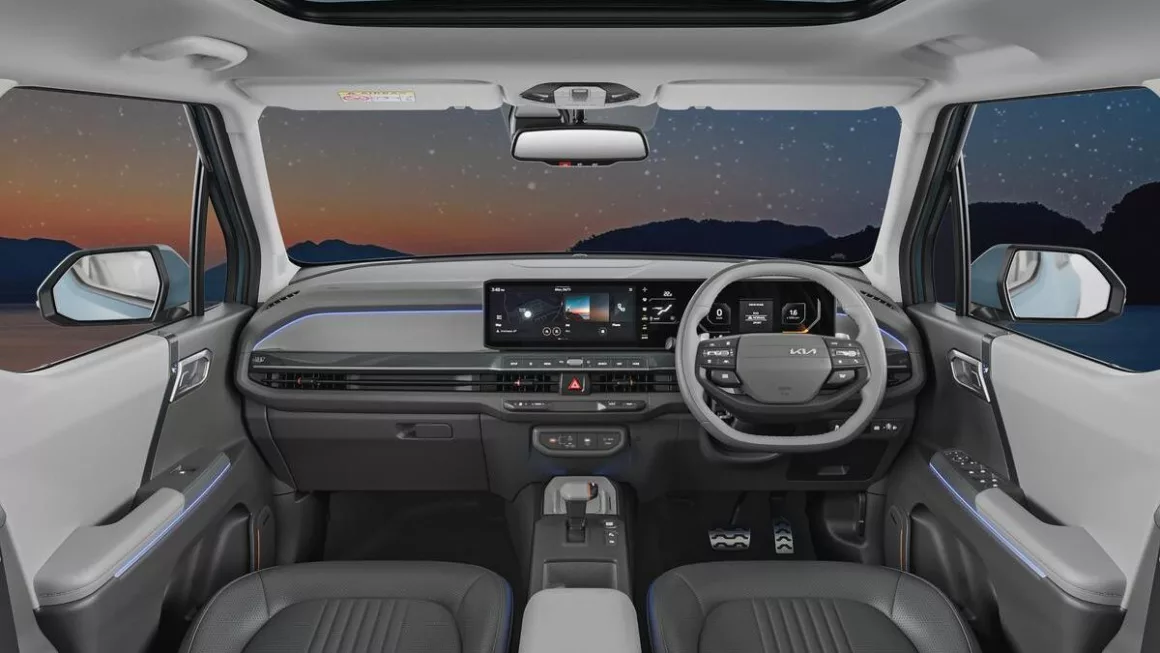
On the inside, both Kia Syros and Tata Altroz feel quite modern. The Korean compact SUV has a minimalist interior layout. On its clean dual-tone dashboard, there is a 30-inch glass panel that consists of a 12.3-inch central touchscreen for infotainment, a 12.3-inch digital instrument cluster with customisable displays, and a 5-inch HVAC touchscreen in the middle. The interesting thing about the HVAC touchscreen is that while it offers digital controls for HVAC, Kia has also facilitated more easy-to-use physical buttons on the centre console for the same controls. Moreover, the cube-like gear knob with an illuminated P-R-N-D indicator, and the squarish two-spoke steering wheel, add to its futuristic appeal. Due to the light interior theme and a panoramic sunroof, the cabin feels airier.
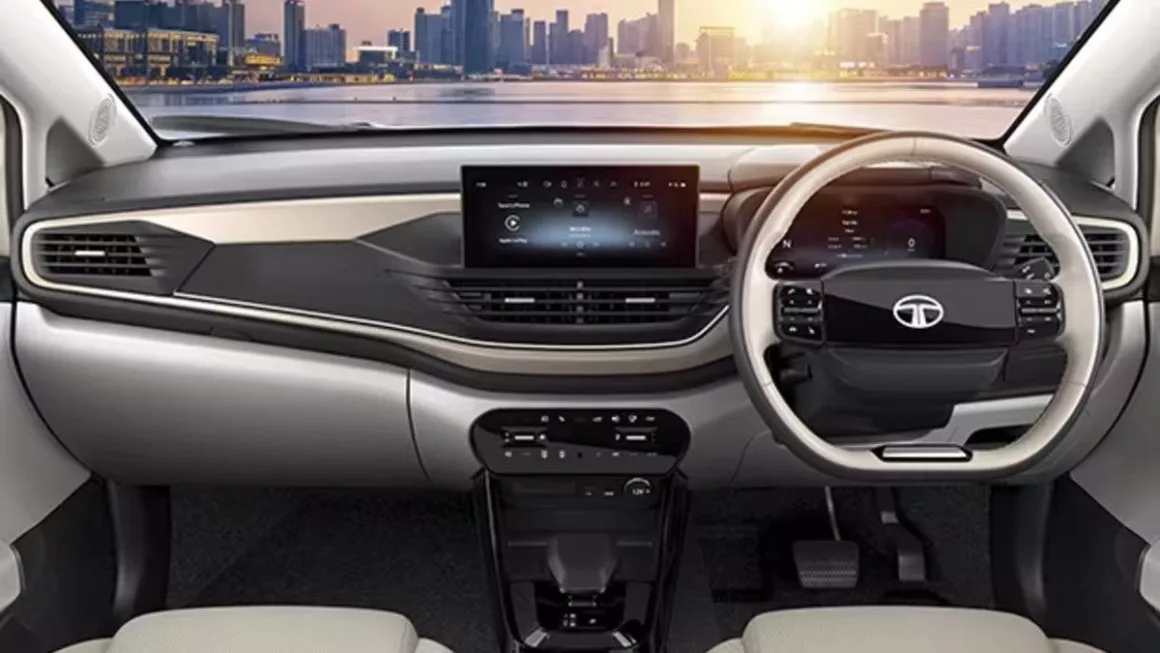
Like the Syros, the Altroz has a light colour theme for the interior, which makes it feel rich. Its dual-tone dashboard is sharply designed with angular elements. The digital instrument cluster, a large touchscreen, a two-spoke steering wheel with an illuminated logo, and a modern-looking glossy centre console come together to make the cabin feel a class above. An interesting update in the latest Altroz is the additional thigh support, which is essentially additional pads on the edge of the seats to enhance comfort for the thighs.
In the feature department, both cars pack enough upmarket perks to offer a premium ownership experience. However, the Syros is significantly better than the Altroz due to the advantages of ventilation for front and rear seats (for thighs only), a 4-way powered driver seat, a panoramic sunroof, and a dual-camera dashcam.
Both Kia Syros and Tata Altroz feel premium on the inside; however, since the Kia Syros belongs to the higher segment, the same can be felt inside the cabin. Feature-wise, the Kia Syros is far more loaded than the Tata Altroz.
Kia Syros vs Tata Altroz: Safety Features
Kia Syros | Tata Altroz | |
NCAP Safety Rating | 5-stars in Bharat NCAP | Not tested |
Airbags | Six airbags as standard | Six airbags as standard |
ABS with EBD | Yes | Yes |
ESC | Yes | Yes |
Traction Control | Yes | Yes |
Automatic headlamps | Yes | Yes |
Rain-sensing Wipers | Yes | Yes |
Hill hold assist | Yes | Yes |
Hill descent control | No | No |
Rear sensors | Yes | Yes |
Rear parking camera | 360-degree camera | 360-degree camera |
ISOFIX Child seat anchor points | Yes | Yes |
ADAS | Level-2 ADAS features | No |
The Kia Syros has scored a full 5-star rating in the Bharat NCAP safety test, which makes it one of the safest cars in India. All the same, the new Tata Altroz is structurally similar to the pre-facelift Altroz, which had scored a 5-star rating in the Global NCAP safety test, so the same rating can be considered true for the new Tata Altroz as well.
However, the Kia Syros gets a major advantage as it offers more safety features. Even the base variant of the Kia Syros offers six airbags, a tyre pressure monitoring system, vehicle stability management, front and rear parking sensors, hill start assist, and more. Moreover, its top variant also offers the Level-2 ADAS safety suite, which consists of front collision warning and avoidance assist, leading vehicle departure alert, lane departure warning, lane keep assist, lane follow assist, adaptive cruise control with stop and go, high-beam alert, driver attention warning, and parking collision avoidance assist.
Both Kia Syros and Tata Altroz are quite safe cars, however, the Kia Syros has the advantage of a Level-2 ADAS safety suite.
Kia Syros vs Tata Altroz: Price comparison
Kia Syros | Tata Altroz | |
Base variants (Ex-Showroom) | Rs. 9.50 – 11.30 lakh | Rs. 6.89 - 7.89 lakh |
Mid variants (Ex-Showroom) | Rs. 11.80 – 13.10 lakh | Rs. 7.69 – 9.15 lakh |
Upper mid variants (Ex-Showroom) | Rs. 13.30 – 17 lakh | Rs. 8.69 – 10.35 lakh |
Top variant | Rs. 16.80 – 17.80 lakh | Rs. 9.99 – 11.49 lakh |
This is where the difference between the Tata Altroz and the Kia Syros is the greatest. The Altroz is far more affordable than the Syros, and for its size, feature-wealth, powertrains, and passenger safety, the Altroz does appear to be a more value-for-money product.
Kia Syros vs Tata Altroz: Summary
After all the above-mentioned comparisons, it should not be hard to make a choice between the Kia Syros and the Tata Altroz.
Being the more affordable of the two, the Tata Altroz can save you a lot of money if you are looking for a capable car for you and your family. However, while the Altroz is spacious enough for a family, a family would be more comfortable in a Syros than they would in an Altroz. Apart from that, the Altroz offers great ride comfort, ride stability, passenger safety, and attractive fuel efficiency, especially with its diesel and CNG variants. So, if you want a car to drive daily to the workplace and for occasional family trips, the Tata Altroz should be an appealing proposition. All the same, due to the larger cabin and more upmarket features, including a panoramic sunroof, the Kia Syros should be the better option if you want your car to deliver maximum joy on family trips.
Kia Syros vs Tata Altroz: FAQs
Which is larger among the Kia Syros and Tata Altroz?
Kia Syros is 3,995 mm long, 1,805 mm wide, 1,680 mm tall, and has a wheelbase of 2,550 mm. Tata Altroz is 3,990 mm long, 1,755 mm wide, 1,523 mm tall, and has a wheelbase of 2,501 mm. Therefore, the Kia Syros is considerably larger than the Tata Altroz.
Among the Kia Syros and Tata Altroz, which car is more powerful?
The 1-litre turbo petrol engine and 1.5-litre turbo diesel engine of the Kia Syros produce 120 PS and 116 PS, respectively. Whereas, the 1.2-litre naturally aspirated petrol engine and 1.5 turbo diesel engine of the Tata Altroz produce 88 and 90 PS respectively. This makes the Kia Syros more powerful than the Tata Altroz.
Among the Kia Syros and the Tata Altroz, which has better sound quality?
The sound qualities of the music systems offered on the Kia Syros and Tata Altroz feel equally premium.
Which safety features are available in the base variant of the Kia Syros?
The safety features of the base HTK variant of the Kia Syros include 6 airbags, rear parking sensors, electronic stability control, front parking sensors, ABS with EBD, hill-assist, ISOFIX anchorages, and 3-point ELR seat belts for all passengers.
What types of automatic transmission systems are available in the Kia Syros and the Tata Altroz?
The Tata Altroz offers a 5-speed AMT and 6-speed DCT automatic. The Kia Syros also offers a 6-speed torque converter automatic and a 7-speed DCT automatic.