Chennai has seen a sixfold increase in vehicular transport over the past two decades, contributing to 23% of air pollution. To control pollution, Tamil Nadu, like all Indian states, mandates that all petrol, diesel, and CNG vehicles must carry a valid Pollution Under Control (PUC) certificate.
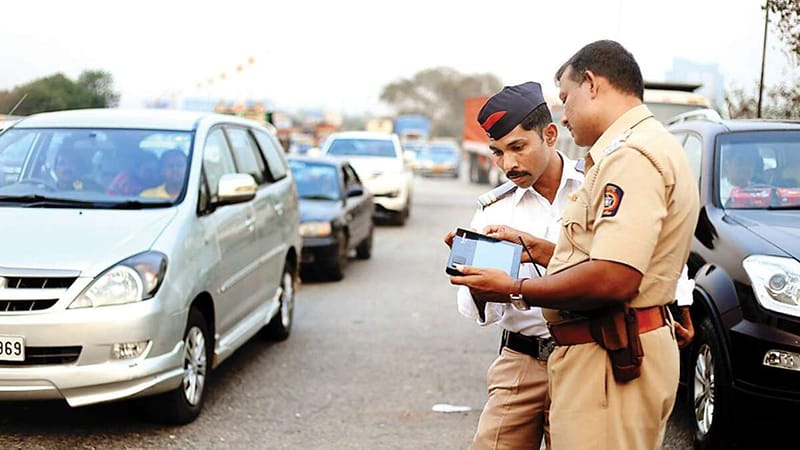
A PUC certificate is proof that your vehicle’s exhaust emissions are within the legal limits. Operating without it may lead to a traffic police stop and a PUC challan (a traffic fine). Additionally, the Chennai traffic authorities have ramped up enforcement in the past few years through smart cameras and digital checks. Read on to understand what a PUC challan is, how much the fine is in Chennai, how to pay it, and smart ways to avoid it altogether.
What is a PUC Challan?
A PUC challan is a ticket issued for the lack of a valid PUC certificate. The PUC certificate itself is given once your vehicle passes through an emission test, and it indicates that your car/bike is not polluting the air with excessive carbon monoxide or unburnt hydrocarbons.
As per the Motor Vehicles Act, all registered vehicles (car, two-wheeler taxi, truck, etc.) should have a valid PUC. In other words, getting a PUC test done and keeping the certificate up-to-date helps to stay compliant.
What is the Fine for Driving without a PUC Certificate in Chennai?
Chennai follows the provisions of the Motor Vehicles Act with its established fines. Details are given in the table below:
| Offence | Fine/Penalty in Tamil Nadu |
| Driving without a valid PUC certificate | ₹1,000 (for the first offence) and₹2,000 (for the second/subsequent offence) |
In case you delay paying a PUC challan, the traffic authorities can impound the vehicle till the challan is cleared. Furthermore, it can lead to legal complications like disqualification of your driving licence, issues in renewing vehicle insurance, etc.
How to Pay a Challan for Driving without a PUC in Chennai?
It is now easier to pay a pollution challan in Chennai than before. The Government of India operates an official e-Challan portal under the Ministry of Road Transport, where you can easily view and pay your challans online. Here’s how:
- Step 1: Go to the Parivahan e-Challan portal. This is the official site of the Ministry of Road Transport.
- Step 2: Click on “Check Challan Status” in the dropdown menu of “Check Online Services”.
- Step 3: Enter your vehicle’s registration number (and captcha or OTP as prompted) and submit.
- Step 4: The portal will show all pending challans for your vehicle. Verify that the listed offence is for “PUC certificate” (it should describe non-production of the PUC).
- Step 5: Choose the challan and click “Pay Now”. You can pay using UPI, debit/credit card, or net banking. The system is secure and supports major payment modes.
- Step 6: Once payment is complete, download or take a screenshot of the receipt. This serves as proof that you have cleared the fine.
How to Pay a Challan for Driving without a PUC Using Spinny?
You can also pay through the Spinny e-challan system by following the steps mentioned below:
- Step 1: Go to Spinny’s Chennai e-Challan page and enter your vehicle registration number.
- Step 2: Verify via the OTP sent to your phone, and Spinny will display all pending challans.
- Step 3: Select the pollution challan, click “Review Payment,” and then “Pay Now”.
- Step 4: Complete payment via UPI, card, or bank transfer, and download the PDF receipt from Spinny.
In case any traffic officer has pulled you over, most of them will give you an option to scan a QR code and pay immediately on the spot using UPI, ensuring that you receive a digital receipt.
How to Avoid Getting a PUC Challan in Chennai?
The most convenient way of preventing this inconvenience is to never drive without a proper PUC. Keeping your certificate current not only saves you money but also helps your vehicle run more efficiently. The following are a few tips that can be useful to remain PUC compliant:
- Never Miss the Renewal Date: New vehicles receive a 1-year PUC validity, and after this, you have to renew it every six months. Note the expiry date on your calendar app.
- Get the Test done During Regular Servicing: Request your service mechanic to perform the PUC check each time the vehicle is brought in for routine services. By doing this, the certificate will never be outdated.
- Keep Emissions Low: Use high-quality fuel and follow your manufacturer’s maintenance schedule (air filter, spark plugs, etc.). Always change or clean filters, and ensure the catalytic converter is well-maintained. Emissions can be greatly decreased through regular maintenance and engine tuning.
- Use Authorised PUC Centres Only: Always use government-approved testing centres. Certified centres operate with approved equipment and provide receipts that are bound to the central database.
- Keep a Digital Copy of the PUC Certificate: After your vehicle gets tested, keep the digital certificate on your phone. You can either download it from the Parivahan (VAHAN) app or upload it to DigiLocker.
With these tips, you would be better placed to renew on time, bundle tests with service, and never ever be caught without PUC.
Conclusion
Driving without a valid PUC certificate in Chennai is a serious offence under Indian law and carries stiff penalties. However, staying compliant is straightforward by keeping up with renewals and emissions checks. A current PUC not only keeps you compliant, but it also helps the environment and ensures your insurance remains valid.
By making timely PUC testing a habit, you can avoid fines, contribute to cleaner air, and drive with peace of mind. Furthermore, as a responsible citizen, ensuring your vehicle’s emissions are within limits is “a good first step” toward curbing air pollution.
FAQs about Driving without a PUC Challan in Chennai
Q. What law regulates PUCC fines in Chennai?
Section 190(2) of the Motor Vehicles Act, 1988, regulates PUC fines throughout the country. In Tamil Nadu, a fine of ₹1,000 (for the first offence) and ₹2,000 (for the second/subsequent offence) can be levied for driving without a valid PUC.
Q. How often do I have to renew my PUC in Chennai?
The first PUC certificate for most private vehicles in Chennai is valid for one year. Thereafter, it has to be renewed every six months.
Q. Is online payment possible for a PUC challan?
Yes. PUC challans may be paid online through the official Parivahan e-Challan portal. Simply visit the Parivahan portal, enter your vehicle number, view all outstanding challans, and pay online using a card, net banking, or UPI.
Q. What will happen if I ignore a PUC challan?
Ignoring a PUC challan only makes matters worse. Unpaid challans can incur additional penalties and, in some cases, result in suspension of the driving licence or vehicle impoundment.
Q. Where can I have my vehicle’s Pollution Under Control (PUC) test done in Chennai?
You can have your vehicle’s PUC checked at any authorised emission testing centre across Tamil Nadu. Many petrol pumps in Chennai offer on-the-spot testing for cars and bikes. There are also standalone RTO-approved PUC shops around the city.
Q. Is it mandatory to carry a physical PUC certificate in Chennai?
No, it is not necessary to have the paper certificate anymore. Tamil Nadu traffic police accept a digital PUC stored on the DigiLocker or the mParivahan/VAHAN app.
Q. Is a PUC required for new vehicles in Chennai?
Yes. When you buy a new vehicle, the dealer issues an initial PUC certificate (valid for 1 year). After that initial year, you must renew every six months.
Q. Why is driving without a PUC a serious issue in Chennai?
Driving without a valid PUC harms air quality and public health. Every citizen has to help curb pollution, and getting regular PUC checks is one way to do that. Legally, driving without a valid PUC also voids the emissions law compliance, which can lead to penalties and invalidate insurance claims.
Q. What is the grace period for renewing a PUC in Chennai?
The grace period for renewing a PUC is 7 days from the date of expiry. In case you are caught by the authorities within this time period, it can still lead to legal hassles and fines. Thus, the best practice is to renew your vehicle’s PUC before the due date.
Q. What kinds of vehicles need a PUC in India?
All petrol-, diesel-, CNG-, or LPG-fueled motor vehicles require a PUC certificate. This consists of two-wheelers (scooters, motorcycles), four-wheelers (cars, SUVs), and even commercial vehicles (taxis, buses, trucks).