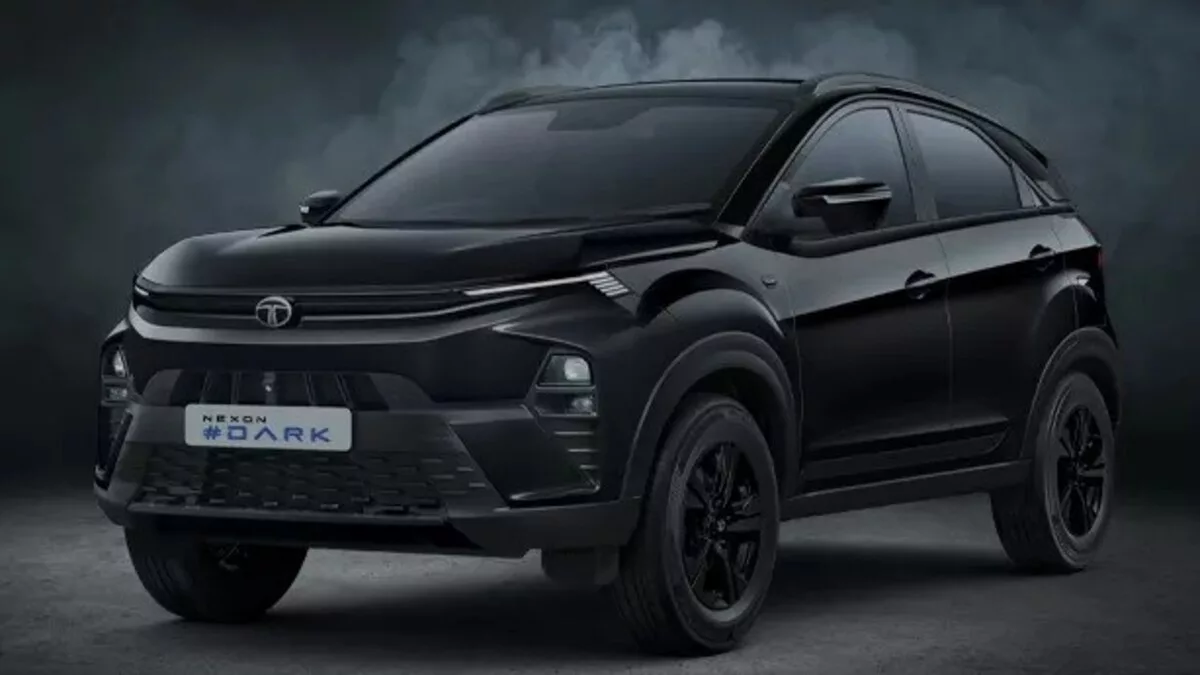










The Tata Nexon is more than just a small SUV to many Indian consumers. It makes a statement about style, safety, and, yes, making wise choices. While everyone is talking about the modern design and 5-star crash rating, the Tata Nexon mileage is one aspect that is frequently overlooked until it affects your monthly budget. Depending on the fuel type and transmission, the claimed Tata Nexon Mileage can be between 17 km/l to 24 km/l. Read the article to learn about it in detail.
ARAI-Certified Mileage of Tata Nexon
Before we dive into the actual Tata Nexon user reviews and experiences, let’s take a look at what the official numbers say. Here are the ARAI mileage figures for all available Nexon variants:
| Variant | Fuel Type | Transmission | ARAI Mileage (km/l or km/kWh) |
| Nexon Petrol | Petrol | Manual | 17.44 km/l |
| Nexon Petrol | Petrol | AMT | 17.18 km/l |
| Nexon Diesel | Diesel | Manual | 23.23 km/l |
| Nexon Diesel | Diesel | AMT | 24.07 km/l |
| Nexon CNG | CNG | Manual | 17.44 km/kg |
| Nexon EV | Electric | Automatic | 325 km (MIDC range) |
| Nexon EV Max | Electric | Automatic | 465 km (MIDC range) |
While the Tata Nexon mileage numbers look good on paper, it’s important to note that the ARAI ratings are obtained under ideal test conditions. Real-life Tata Nexon mileage results may vary depending on city traffic, load, driving style, and terrain.
Also note, that the Tata Nexon diesel mileage is more than Tata Nexon petrol mileage while Tata Nexon CNG mileage is similar to the petrol one. Tata Nexon ev mileage can not be compared directly with the rest of the fuel types as it would always be cheaper.
Tata Nexon Mileage in City vs Highway Conditions
The versatility of the Nexon is among its best features. It caters to a variety of drivers, categorized as follows:
- City Commuters: Consider daily office runs, school pickups, and sporadic trips to the mall if you commute in the city.
- Highway Explorers: Frequent out-of-town work, longer weekend drives, or frequent road trips.
- Balanced Drivers: Most of us fall into the category of balanced drivers who combine elements of both.
Which of these lifestyles best suits you will have a significant impact on your fuel efficiency, not only due to traffic, but also the routes you travel each day. This affects the gear changes, engine load, and the fuel efficiency you get when analysing Tata Nexon mileage with AC and without AC.
Petrol vs Diesel vs EV: Which Tata Nexon Variant Gives Best Mileage?
Unlike many of the Tata Nexon competitors, the car comes in petrol, diesel, and even electric versions. Therefore, you are not forced to choose between two extremes. This brief analysis is based on user feedback rather than just tested results.
- Petrol Manual: For infrequent drivers, the manual petrol variation is the best resource. Highway mileage can reach up to 15 km/l, while city mileage typically averages between 11 and 12 km/l.
- Petrol AMT: Convenient but a little thirstier is the petrol AMT variant. Anticipate an average of 10–11 km/l.
- Diesel Manual: Long-distance runners adore this diesel manual variant. On highways, it consistently yields 17–19 km/l.
- Diesel AMT: 15–17 km/l, a little lower but still reliable.
- Nexon EV/EV Max: Fuel costs are zero for the Nexon EV or EV Max, but electricity prices differ by city. The average range is between 180 and 200 km in urban settings and more on highways.
So, what should you choose? If you drive less than 1000 km a month on average, the petrol variant is the best Tata Nexon variant in terms of mileage. After you get past that point, diesel starts to make sense. While EVs are undoubtedly the way of the future, their viability in the present depends on your charging accessibility.
Is Mileage the Same for All Tata Nexon Trims?
Remarkably no. Features like larger alloy wheels, roof rails, or additional weight from higher trim levels may marginally impact the Tata Nexon’s mileage. For instance, compared to their lower-trim counterparts, the Creative+ and Fearless trims may experience a drop of a few kmpl, particularly in urban usage.
Lighter Tata Nexon colours also tend to heat up less, which lowers the load on the air conditioner. Yes, if you live in a hot city, even your choice of colour can have a slight impact.
Driving Style vs Mileage: The Tata Nexon Responds Well
Naturally, mileage will suffer if you’re the type of person who speeds through every red light. Smoother driving is rewarded by the Nexon’s engines, particularly the diesel.
Drivers who:
- Shift gears under 2,500 RPM
- Avoid harsh braking
- Maintain steady speeds
…frequently report a 1-2 km/l increase in mileage compared to their aggressive driving counterparts. Saving fuel isn’t the only goal. It’s about driving more intelligently.
Tata Nexon Mileage: Pros and Cons
Here is an overview of the Tata Nexon’s mileage standing after analysing user reviews and performance information from reliable sources:
Pros
- Multiple powertrain configurations: Petrol, diesel, and electric provide customers the choice to suit their requirements and usage.
- The diesel variant has reliable highway fuel economy: Suited for long distances, always over 17 km/l.
- EV variant reduces fuel expenditure entirely: Perfect for city consumers who can charge at home.
- Smooth driving experience: Particularly on diesel and EV variants, which provide refined power and economy when handled gently.
Cons
- Petrol AMT is less economical when driven in traffic: Mileage goes below 11 km/l in city traffic conditions.
- Driving style greatly affects the mileage: Aggressive acceleration or excessive use of the AC can lead to significant decreases.
- Range still has its limits: Range anxiety can affect long-distance users when there is insufficient charging infrastructure.
- Higher trims are heavier: This can marginally reduce mileage compared to entry-level variants.
An understanding of trade-offs here will enable purchasers to choose appropriate variants and set expectations appropriately.
The Tata Nexon vs Its Competitors: Fuel Efficiency Snapshot
How does the Tata Nexon compare to cars like the Brezza, Sonet, Venue, and Punch? Here’s a quick snapshot based on real-world averages:
| Model | Fuel Type | Real Mileage (km/l) |
| Tata Nexon | Petrol | 11 – 13 km/l |
| Tata Nexon | Diesel | 15 – 18 km/l |
| Tata Nexon EV | Electric | 6 – 7 km/kWh (180–200 km range) |
| Maruti Brezza | Petrol | 14 – 16 km/l |
| Kia Sonet | Diesel | 17 – 19 km/l |
| Hyundai Venue | Petrol | 12 – 14 km/l |
So, yes, the Brezza may edge out on petrol fuel economy. And the Sonet diesel may beat the Nexon diesel by a fraction. Account for safety scores, cabin refinement, and EV option availability, though, and the Nexon remains a smart all-rounder.
Long-Term Ownership: Fuel Cost Projections and Service Insight
Comprehending the mileage is one piece of the puzzle. Understanding what you will be spending over time is the larger picture.
Let’s assume a yearly usage average of 12,000 km:
| Car | Average Mileage | Yearly Fuel Consumption | Cost per Year |
| Tata Nexon Petrol | 12 kmpl | 1000 litres | ₹1,00,000/year at ₹100/litre |
| Tata Nexon Diesel | 17 kmpl | 705 litres | ₹63,450/year at ₹90/litre |
| Tata Nexon EV | 6.5 km/kWh | 1850 kWh | ₹11,100/year at ₹6/kWh (home charging) |
- Petrol Nexon (avg 12 km/l): ~ 1,000 litres/year → ₹1,00,000/year at ₹100/litre
- Diesel Nexon (avg 17 km/l): ~ 705 litres/year → ₹63,450/year at ₹90/litre
- Nexon EV (avg 6.5 km/kWh): ~ 1,850 kWh/year → ₹11,100/year at ₹6/kWh (home charging)
This is a large variation in yearly running cost: between ₹11K for EVs and nearly ₹1 lakh for petrol models.
Then add service:
- Petrol service cost: ₹5,000–₹6,000/year
- Diesel service cost: ₹6,000–₹7,000/year
- EV service cost: Under ₹3,000/year (less fluids, fewer mechanical components)
These figures indicate that, although EVs are more expensive to purchase, they reap considerable long-term benefits.
The Bottom Line: Mileage Isn’t Everything—But It Matters
There aren’t many vehicles that can adapt to your lifestyle like the Nexon. Is a city-safe car what you want? Check. Is a long-distance diesel warrior needed? Check. It has the option to go electric if that’s something you’re interested in. Check! So, if you’re looking for a cost-effective car, the Tata Nexon mileage is enough proof that this is the car you want.
FAQs about Tata Nexon Mileage
Q. What is the actual road mileage of the Tata Nexon over its variants?
The Nexon’s petrol variant delivers 11–13 km/l, and the diesel one delivers 15–18 km/l, varying based on driving conditions and habits. The Nexon EV’s average operating range for a full charge is 180–200 km, and that is equivalent to 6–7 km/kWh.
Q. What is the most suitable Nexon variant for my driving style?
If you drive mostly within the city limits and don’t travel over 1,000 km/month, the petrol model might be enough. For daily highway usage or large daily commutes, the diesel Nexon will be more fuel-efficient. The EV is best for city users who have an option for home charging, and it has the lowest running cost.
Q. Does the Nexon’s mileage differ based on varying trims and driver styles?
Yes. Trims that have more features, i.e., higher trims, can experience a drop in mileage by 1 km/l. Driving style also plays a major role—smooth pick-ups, proper changing of gears, and maintaining consistent speeds can add 1.5–2 km/l to the mileage as against rapid acceleration.
Q. How does the Nexon EV’s range compare to petrol or diesel mileage?
The Tata Nexon EV’s range of 180–200 km is ideal for daily city usage. While it doesn’t match the long-range flexibility of diesel, it saves significantly on fuel costs if you charge at home. It’s best suited for users with predictable urban travel.
Q. What can I do to improve my Tata Nexon’s mileage?
Maintain correct tyre pressure, avoid sudden braking or acceleration, shift gears early (in manual variants), and get your car serviced on time. If your Nexon has Eco mode, use it often, as small changes can lead to noticeable savings.