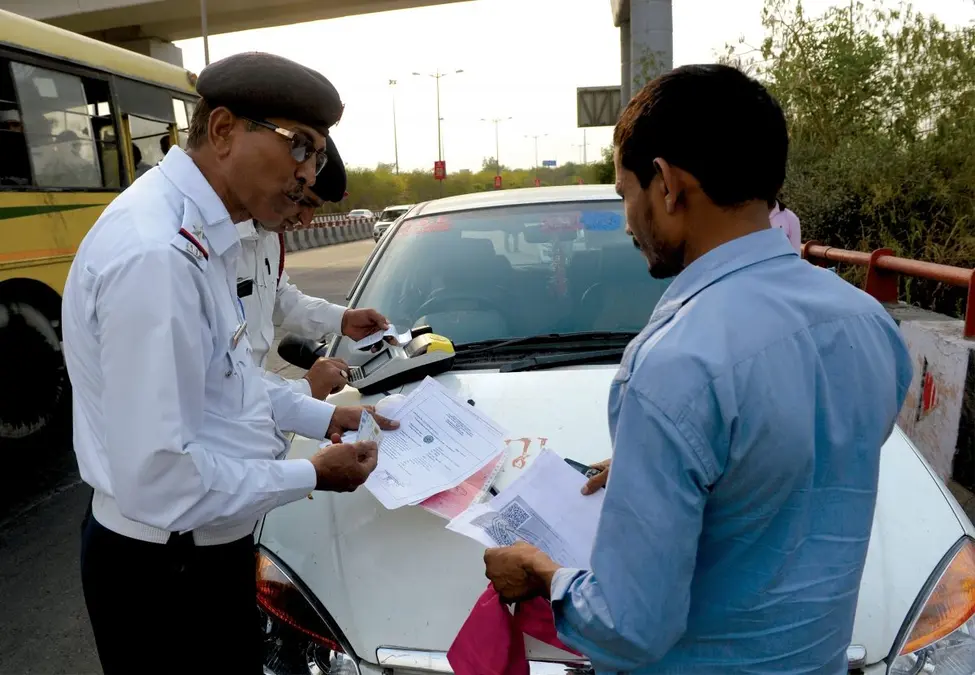
Delhi is a massive metropolitan area with dense traffic and an increasing number of vehicles. With the growth of digital platforms, the Delhi traffic police has also adopted a digital traffic fine system known as e-Challan.
The e-Challan system helps manage traffic violations efficiently and ensures proper road safety for all drivers. It is issued directly to the vehicle driver who violates traffic regulations either by the traffic police or through automated CCTV cameras installed across the city.
Table of Contents
What is an e-Challan in Delhi?

An e-Challan in Delhi is an electronically generated ticket issued to vehicle owners who violate traffic regulations. In Delhi, traffic violations are recorded by automated digital devices such as surveillance cameras or traffic sensors. However, it can also be issued if a traffic police officer manually observes a traffic violation.
After a traffic violation is recorded, the vehicle’s registration details, the driver’s licence data, and the e-Challan are retrieved from the VAHAN portal and sent to the vehicle owner’s registered mobile number.
How to Check e-Challan Status in Delhi?
Delhi experiences heavy traffic congestion almost every day, and with e-Challans, issuing and paying traffic violation penalties has become more convenient. Instead of visiting a traffic police station, vehicle owners can now check their e-Challan status through the official portal or any private platform.
The e-Challan will display the vehicle details, the description of the traffic rule violated, the location of the violation, the penalty amount, and the due date by which the e-Challan must be paid. Failure to pay the e-Challan can attract late fees, suspension of the driving license, and complications during vehicle transfer.
The following are the most common ways to check e-Challan status in Delhi:
1. Check the e-Challan on Spinny
Spinny offers a straightforward and easy-to-track platform for checking traffic challans associated with your vehicle in Delhi. The process is simple, as you don’t need to navigate multiple government pages.
It is suitable for users seeking a simplified challan payment process. Here are the steps to check the e-Challan on Spinny:
- Step 1: Visit the e-Challan Page
Navigate to the e-Challan service on the Spinny website or app. Enter your vehicle registration number to start the process.
- Step 2: Check Your e-Challan
Click on ‘Check e-Challan’, and you will get information on all pending traffic challans linked to your vehicle’s registration number. In case you are not signed in, you will be redirected to authenticate your identity.
There, you will have to verify your registered mobile number through an OTP. Upon successful verification, you can view your challans, including detailed information on the violation type, location, date, and the fine amount.
2. Check Delhi e-Challan via Parivahan Portal
The Parivahan e-Challan portal is the official government platform managed by the Ministry of Road Transport and Highways. It displays precise and updated information related to the traffic challan details for Delhi and other cities.
Here are the steps to check the e-Challan via the Parivahan portal:
- Step 1: Visit the official Parivahan portal in your web browser.
- Step 2: Navigate to the ‘Online Services’ tab and choose ‘Check Challan Status’.
- Step 3: Enter your vehicle’s registration number and captcha code.
- Step 4: Now, click on ‘Get Details’.
- Step 5: The website will display the status of your e-Challans (pending and paid) along with details of the violation and the penalty amount.
The Parivahan portal is ideal for vehicle owners seeking to verify their challan details through an official source, ensuring transparency in traffic fine management.
How to Pay an e-Challan in Delhi using Spinny?
Paying an e-Challan online in Delhi through Spinny is fast, easy, and secure. It provides details of your challans, their status, and provides quick payment options, all in a single platform.
Thus, the Spinny e-Challan portal has become a popular choice for people who wish to keep track of their pending e-Challans in Delhi.
Steps to Pay e-Challan via Spinny
Follow these simple steps to check your pending challans and complete the payment seamlessly through Spinny:
- Step 1: Visit the e-Challan Page: Open the e-Challan section on the Spinny website or mobile app. You will need your vehicle’s registration number to proceed.
- Step 2: Check Your Challan: Just click on ‘Check Challan’ to get details of all pending challans related to traffic violations that are associated with your vehicle number.
If you are not yet logged in, the portal will redirect you to undergo an OTP validation process sent to your registered mobile number. After that, it will display all the information regarding the challan.
- Step 3: Make the Payment: All pending challans are selected by default. You can select or deselect multiple challans as required, then click ‘Review Payment’.
On the next screen, select ‘Pay Now’ and choose your preferred payment method: UPI, Credit Card, Debit Card, or Net Banking to complete the transaction through Spinny’s secure payment gateway.
- Step 4: Download the Receipt: Upon successful payment, you can download the PDF receipt instantly. You can easily view your payment records and receipts anytime under the ‘Your Settlements’ tab.
Benefits of Paying e-Challan Online through Spinny
Online payment of traffic e-Challans through the Spinny website offers several advantages over the traditional payment procedure. Here’s why users find digital payment of challans more convenient:
- 100% Free with Spinny: Spinny helps you check your e-Challan for fines incurred from traffic violations, with no extra service or convenience charges for payment processing.
- Different Payment Options: Users can choose among flexible payment options, such as UPI, Credit Cards, Debit Cards, and/or Net Banking.
- Fast & Secure Transactions: The payment process for the e-Challan on the Spinny website takes just a few minutes. Their secure payment gateways encrypt all financial data and provide transparency.
- Easy Access to Payment History: Your payment history is maintained with Spinny, and you can view your past challans and download them anytime in the future using your login credentials or reference number.
- No Need to Visit Traffic Court: By paying your traffic fines online, you can avoid long queues, hefty paperwork, and multiple visits to traffic courts or police stations, saving valuable time and effort.
Common Traffic Violations and Fines in Delhi
With an advanced digital system and strict enforcement across Delhi, even minor violations can lead to hefty fines. The Delhi traffic police enforces fines for traffic violations in order to ensure road safety, discipline, and adherence to traffic regulations.
Thus, all vehicle drivers need to be aware of the common traffic violations and their prescribed penalties. Knowing these penalties will help them stick to the rules, avoid unnecessary challans, and ensure everyone’s safety.
Common traffic violations and applicable fines in Delhi are as follows:
| Traffic Violation | Penalty Amount for First Offence | Penalty Amount for Subsequent Offence |
| Overspeeding | ₹2,000 | ₹2,000 |
| Drunk Driving | Court Challan | Court Challan |
| RC Violation | ₹5,000 | ₹10,000 |
| Driving without a Valid Pollution Certificate | ₹10,000 | ₹10,000 |
| Driving without Insurance | ₹2,000 | ₹4,000 |
| Driving without a License | ₹5,000 | ₹5,000 |
| Jumping a Red Light | Court Challan | Court Challan |
| Stop Line Violation | ₹500 | ₹1,500 |
As a responsible driver in Delhi, following traffic rules will help you avoid hefty fines and will also ensure the safety of everyone on the road. Being aware of the revised fines and penalties will encourage you to practise disciplined and stress-free driving.
Summary
Payment of the e-Challan through online platforms is simple and time-saving. Being aware of Delhi’s digital challan system will enable you to comply with traffic rules and practise safe driving to ensure the safety of all.
Delay in payment of e-Challans can also lead to unnecessary legal complications. Thus, the digital platforms are there to ensure convenient traffic compliance for all vehicle drivers.
It is advised to check your e-Challan status periodically to stay informed and avoid late fees or charges.
Related Blogs:
Guide to Avoid traffic Challan in India
How to Pay E-Challan in Gurgaon
How to Pay E-Challan in Noida
FAQs about How to Pay the e-Challan in Delhi
Q. Can the Delhi police issue an e-Challan for not wearing a helmet?
Yes, the Delhi traffic police can issue an e-Challan to any driver who’s caught driving without a helmet. The Motor Vehicles Act prescribes a fine of ₹1,000 for a rider who is not wearing a helmet while driving a motorcycle or scooter.
Q. What happens if I don’t pay an overspeeding e-Challan in Delhi?
If you don’t pay the overspeeding e-Challan in Delhi, then the traffic police can take legal action against you. It can result in late fees and may also lead to the seizure of your vehicle, suspension of your driving license, or both.
Q. How to complain about the wrong traffic e-Challan in Delhi?
If you have any reasonable cause to believe that the e-Challan you have been issued is an error, then you can file a complaint with the traffic police.
You can do so by visiting the traffic police station, or you can register your complaint online through the Delhi Traffic Challan portal. The traffic authorities will then investigate your complaint and render a decision on the matter.Q. How can I waive my e-Challan in Delhi?
You can waive your e-Challans in Delhi by attending the Lok Adalat. First, you have to download your e-Challan from the official website and visit the court on the date mentioned on your notice.
There, you will have to present your case and make statements before the judge to obtain a waiver for your e-Challan.Q. What happens if I don’t pay traffic e-Challans in Delhi?
You have to pay the e-Challans within 60 days from the date of issue of your challan. If you don’t pay the prescribed fine, it will be escalated to the court, leading to legal complications such as suspension of the driving license, higher fines, and issues with vehicle ownership transfers or insurance renewals.