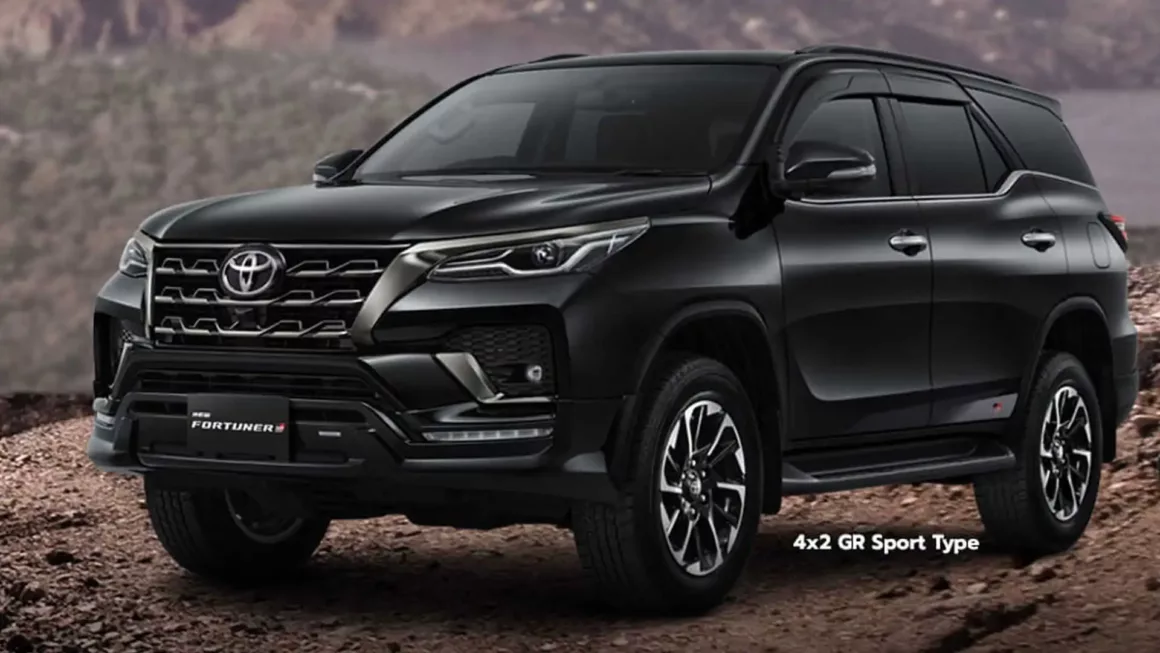
The Toyota Fortuner and Mahindra XUV700 take entirely different approaches to three-row SUVs: the Fortuner is a body-on-frame SUV synonymous with durability, rear-wheel drive, and four-wheel drive capability, while the XUV700 is built on a much lighter monocoque structure, making it more performance-oriented and emphasising comfort, technology, and value.
Both SUVs offered petrol and diesel engines, manual and automatic transmissions, and multiple drivetrain choices. However, the XUV700 has now been replaced by the Mahindra XUV 7XO. This comparison therefore uses its last-listed specifications, prices and real-world mileage figures. The objective is to show how their mechanical differences affect everyday fuel use rather than compare them only through laboratory figures.
Toyota Fortuner vs Mahindra XUV700 Specs
The table contents summarise the key mechanical and dimensional differences of the Toyota Fortuner as compared to the Mahindra XUV700:
| Specification | Toyota Fortuner | Mahindra XUV700 |
| Engine | 2.7-litre naturally aspirated petrol; 2.8-litre turbo-diesel; 2.8-litre diesel with 48V Neo Drive | 2.0-litre turbo-petrol; 2.2-litre turbo-diesel |
| Displacement | Petrol: 2694 cc; Diesel: 2755 cc | Petrol: 1997 cc; Diesel: 2184 cc |
| Power | Petrol: 166 PS; Diesel: 204 PS | Petrol: 200 PS; Diesel: 155 PS or 185 PS |
| Torque | Petrol: 245 Nm; Diesel MT: 420 Nm; Diesel AT: 500 Nm | Petrol: 380 Nm; Diesel MT: up to 420 Nm; Diesel AT: up to 450 Nm |
| Transmission | 5-speed MT, 6-speed MT and 6-speed AT, depending on engine and variant | 6-speed MT and 6-speed AT |
| Drive layout | Rear-wheel drive and four-wheel drive | Front-wheel drive and optional all-wheel drive |
| Construction | Body-on-frame | Monocoque |
| Length | 4795 mm | 4695 mm |
| Wheelbase | 2745 mm | 2750 mm |
| Fuel-tank capacity | 80 litres | 60 litres |
The Fortuner has a longer length and a bigger fuel tank. Although its ladder-frame construction and four-wheel-drive technology allow it to perform in tough environments, they add weight and mechanical resistance, which lowers efficiency.
The XUV700 has a slightly longer wheelbase despite its shorter body. Its monocoque construction and front-wheel-drive layout reduce drivetrain losses. It is more powerful in petrol form, while the Fortuner diesel automatic produces more torque. Toyota also offers a 48V Neo Drive diesel with mild-hybrid assistance.
The difference in the body style is vital here. Namely, the Fortuner includes many heavy mechanical units, while the XUV700 is a crossover that focuses more on on-road driving. Thus, the Mahindra has an edge in efficiency right from the start, unless you factor in engine tuning, transmission, and driver behaviour.
Toyota Fortuner vs Mahindra XUV700: ARAI Mileage Figures
The Fortuner’s larger engines and heavier construction reduce its claimed mileage. The XUV700 benefits from smaller engines and a lighter platform.
| Engine and transmission | Fuel type | Toyota Fortuner mileage | Mahindra XUV700 mileage |
| 2.7-litre petrol AT | Petrol | 10.3 km/l | Not applicable |
| 2.0-litre petrol MT | Petrol | Not applicable | Up to 17 km/l |
| 2.0-litre petrol AT | Petrol | Not applicable | 13 km/l |
| 2.8-litre diesel MT | Diesel | Approximately 14.4 km/l | Not applicable |
| 2.8-litre diesel AT | Diesel | Approximately 14.2-14.4 km/l | Not applicable |
| 2.8-litre Neo Drive AT | Diesel mild-hybrid | Approximately 14.6 km/l | Not applicable |
| 2.2-litre diesel MT | Diesel | Not applicable | Up to 17 km/l |
| 2.2-litre diesel AT | Diesel | Not applicable | 16.57 km/l |
XUV700 fuel-consumption details vary across reports, particularly for petrol, with database values ranging from 15 to 17 km/l. Thus, they should be treated as approximate estimates rather than facts.
Also Read: How to Buy a Used Mahindra XUV700?
Toyota Fortuner vs Mahindra XUV700: Real World Fuel-Efficiency
Real-world mileage depends on traffic, speed, load, terrain, air-conditioning use and drivetrain. Four-wheel-drive and all-wheel-drive variants normally use more fuel than comparable two-wheel-drive models.
The values in the following table come from average highway results merged with drivers’ real-life experiences. The estimates mentioned in the table should be taken as reasonable, as two different drivers can get different readings driving the same type of car.
Petrol Real-World Mileage
| Driving condition | Toyota Fortuner 2.7 petrol | Mahindra XUV700 2.0 turbo-petrol |
| City | Automatic: 7-8 km/l | Manual: 8-10 km/l; Automatic: 7-9 km/l |
| Highway | Automatic: 9-11 km/l | Manual: 11-13 km/l; Automatic: 10-12 km/l |
| Average | Approximately 9 km/l | Manual: 10-11 km/l; Automatic: 9-10 km/l |
| Practical tank range | Approximately 640-720 km | Approximately 540-660 km |
The Fortuner petrol has a large naturally aspirated engine and is a heavy SUV. Its efficiency can drop below 7 km/l in the city, but it can be as high as 10-11 km/l on open roads.
The XUV700 petrol is lighter but more powerful. It can return better mileage when driven gently, especially with the manual gearbox. Frequent turbo boost and quick acceleration can bring the automatic’s city mileage close to the Fortuner’s.
The 80-litre tank makes it possible for the Fortuner petrol to make up for its mileage. At around 9 km/l, it can travel up to 720 km. XUV700 is more efficient, but its fuel tank is smaller, at 60 litres, so it will need refuelling sooner.
Diesel Real-World Mileage
| Driving condition | Toyota Fortuner 2.8 diesel | Mahindra XUV700 2.2 diesel |
| City | Manual: 10-12 km/l; Automatic: 10-11.5 km/l | Manual: 12-14 km/l; Automatic: 11-13 km/l |
| Highway | Manual: 13-15 km/l; Automatic: 13-15.3 km/l | Manual: 16-18 km/l; Automatic: 15-17 km/l |
| Average | Manual: 12.5-13.5 km/l; Automatic: 12-13 km/l | Manual: 14-16 km/l; Automatic: 13-15 km/l |
| Practical tank range | Approximately 960-1080 km | Approximately 780-960 km |
The Fortuner diesel is much more economical than the petrol version. A 4×2 automatic diesel can run around 11 km/l in the city and over 15 km/l on a highway in controlled driving conditions. The 4×4 versions, however, are generally a bit less efficient.
The XUV700 diesel is the efficiency winner. Manual variants can return 12-14 km/l in cities and 16-18 km/l on highways. Automatic FWD models generally deliver 11-13 km/l and 15-17 km/l, respectively. AWD can reduce mileage by approximately 1-2 km/l.
Although the Fortuner shows lower km/l than the rest, it offers great tank range. With its efficiency of 13 km/l, it can support a theoretical range of up to 1,040 km due to its 80-litre tank. At the same time, the XUV700 can travel around 840 km on its 60-litre tank thanks to its efficiency of 14 km/l. However, the actual figure will be less.
The XUV700 wins on diesel efficiency, whereas the Fortuner wins on distance between fuel stops. The Toyota’s larger tank provides a useful cushion during remote-area travel.
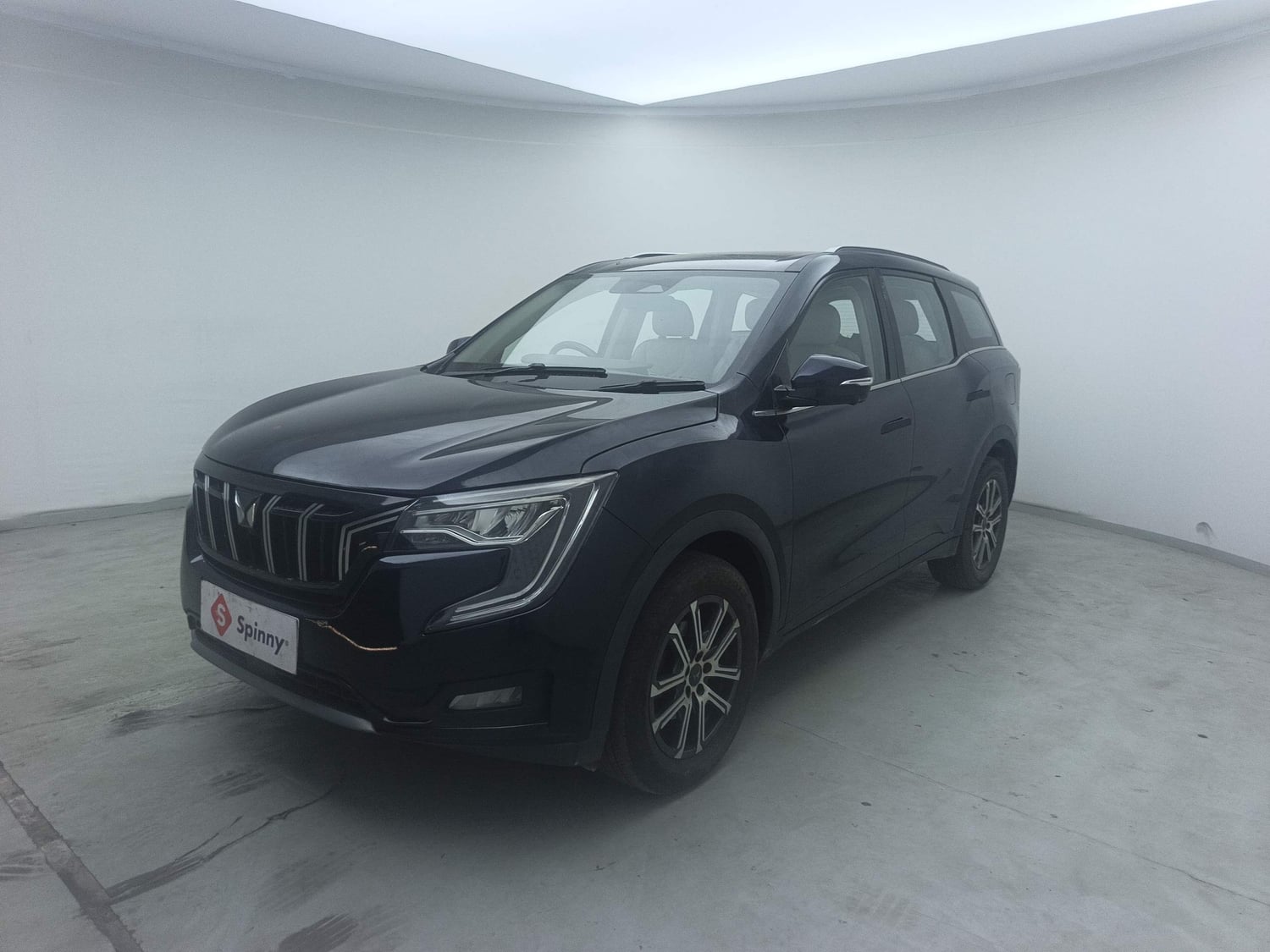
Toyota Fortuner vs Mahindra XUV700: Fuel Cost Comparison
The figures indicated in this calculation refer to running 1,500 km in a month, for petrol at ₹112.02 and diesel at ₹98.68. Further, for Fortuner petrol we take the average of 9 km/l, XUV700 petrol at 10 km/l, Fortuner diesel at 13 km/l, and XUV700 diesel at 14 km/l.
| Expense | Fortuner petrol | XUV700 petrol | Fortuner diesel | XUV700 diesel |
| Monthly running | 1,500 km | 1,500 km | 1,500 km | 1,500 km |
| Monthly fuel use | 166.67 litres | 150 litres | 115.38 litres | 107.14 litres |
| Monthly fuel cost | ₹18,670 | ₹16,803 | ₹11,386 | ₹10,573 |
| Yearly fuel cost | ₹2.24 lakh | ₹2.02 lakh | ₹1.37 lakh | ₹1.27 lakh |
| Five-year fuel cost | ₹11.20 lakh | ₹10.08 lakh | ₹6.83 lakh | ₹6.34 lakh |
Therefore, based on the above calculations, the XUV700 petrol saves around ₹1,867 a month and about ₹1.12 lakh over five years, whereas diesel saves about ₹813 a month, for a total of ₹49,000 over five years.
The larger difference is between fuel types. A Fortuner diesel can cost nearly ₹7,300 less per month to fuel than the petrol. The corresponding difference for the XUV700 is about ₹6,230. Buyers should also consider purchase price, maintenance, driving pattern and diesel-emission-system suitability before choosing diesel solely for mileage.
The above-mentioned numbers are based on stable fuel prices and constant monthly usage. Actual ownership costs will vary as fuel prices or traffic conditions change, or as the ratio of highway versus city driving shifts. In fact, this calculation also excludes servicing, insurance, and other upkeep costs.
Also Read: Complete Buying Guide: Toyota Fortuner
Toyota Fortuner vs Mahindra XUV700 Price
| Model | Variant range | Ex-showroom price |
| Toyota Fortuner | 4×2 petrol AT to GR-S 4×4 diesel AT | Approximately ₹34.76 lakh to ₹50.46 lakh |
| Mahindra XUV700 | MX to AX7L | Last recorded at approximately ₹13.66 lakh to ₹26.18 lakh |
The Fortuner occupies a substantially higher price segment because of its construction, rear-wheel-drive base, off-road hardware and larger engines. The XUV700 offered more affordable access to a powerful three-row SUV but has now made way for the XUV 7XO.
Consequently, the kind of mileage difference one sees must not be independent of the very large difference in the price of purchase of either of the SUVs in question. Although both the SUVs have a seven-seater option, their applications differ in terms of their price ranges and usage priorities.
Summary
The Mahindra XUV700 is more fuel-efficient in both petrol and diesel form. Its lighter monocoque body and front-wheel-drive layout reduce fuel consumption, with the diesel manual offering the strongest mileage potential.
The Fortuner consumes more fuel, but its 80-litre tank gives it a longer touring range. From a fuel-efficiency standpoint, the XUV700 has a clear advantage. The Fortuner works best when you want rugged build quality, 4WD capability and a greater distance between refuelling stops.
Also Read: Ultimate Guide to Selling Your Toyota Fortuner
FAQs
Q. Which SUV delivers better real-world mileage, the Toyota Fortuner or Mahindra XUV700?
The XUV700 generally delivers better real-world mileage. Its petrol variants return approximately 7-13 km/l and diesel variants around 11-18 km/l. The Fortuner petrol delivers 7-11 km/l, while its diesel versions return approximately 10-15 km/l.
Q. What is the real-world mileage of the Toyota Fortuner diesel automatic?
A Fortuner diesel automatic can return approximately 10-11.5 km/l in cities and 13-15.3 km/l on highways. The 4×2 is normally more efficient than the 4×4.
Q. What is the real-world mileage of the Mahindra XUV700 diesel?
The XUV700 diesel manual can deliver 12-14 km/l in cities and 16-18 km/l on highways. Automatic FWD variants generally return 11-13 km/l and 15-17 km/l respectively. AWD models may deliver 1-2 km/l less.
Q. Which SUV has the longer driving range on a full tank?
The Fortuner has the longer tank range because it carries 80 litres, compared with the XUV700’s 60 litres. At representative averages, their theoretical diesel ranges are approximately 1,040 km and 840 km respectively.
Q. Is the Mahindra XUV700 still available as a new car?
The newer Mahindra XUV 7XO has replaced the Mahindra XUV700. Its prices in this comparison are therefore the last recorded ex-showroom figures. Buyers looking for a new Mahindra SUV in this category should check the current XUV 7XO range.