
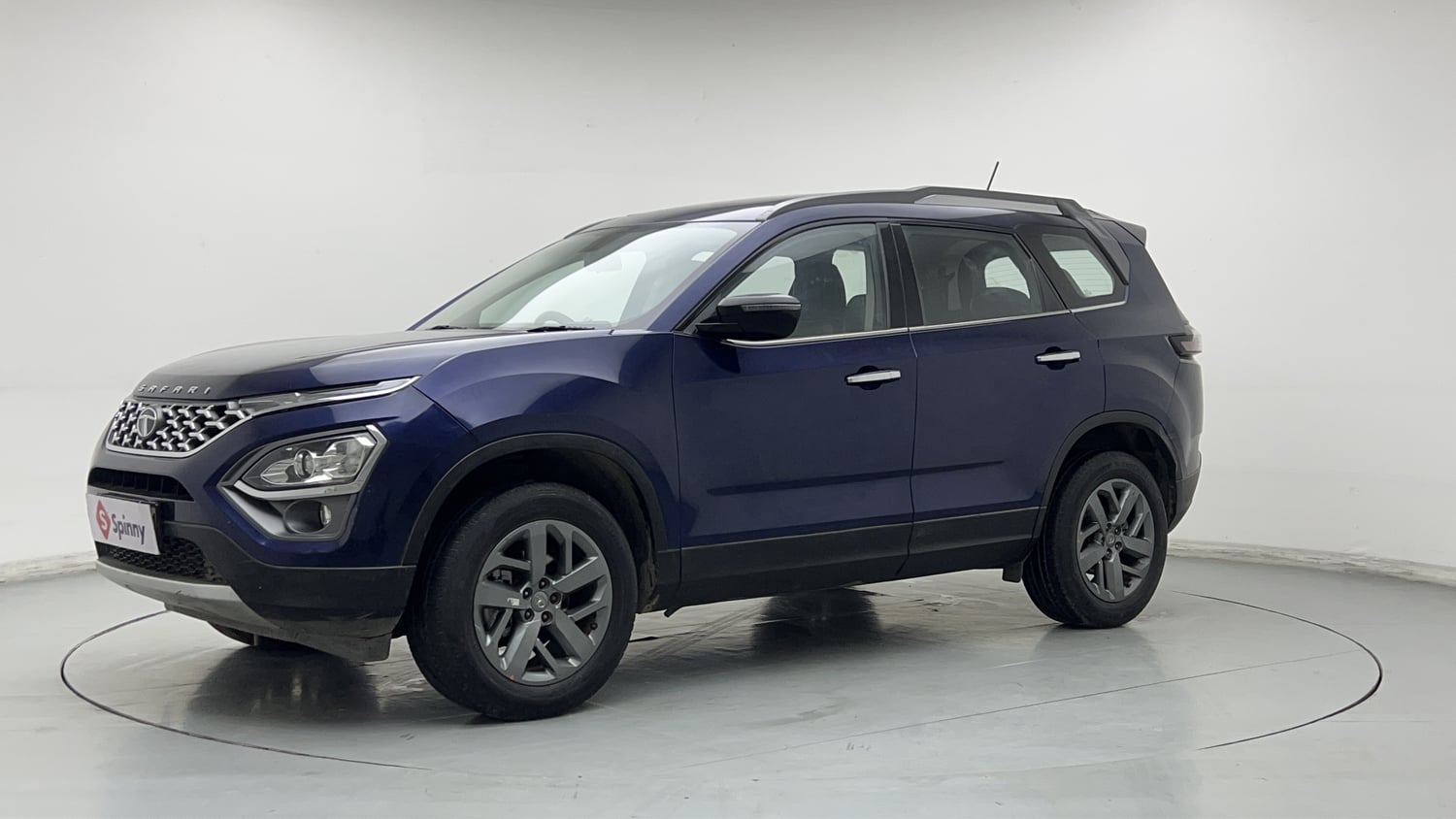
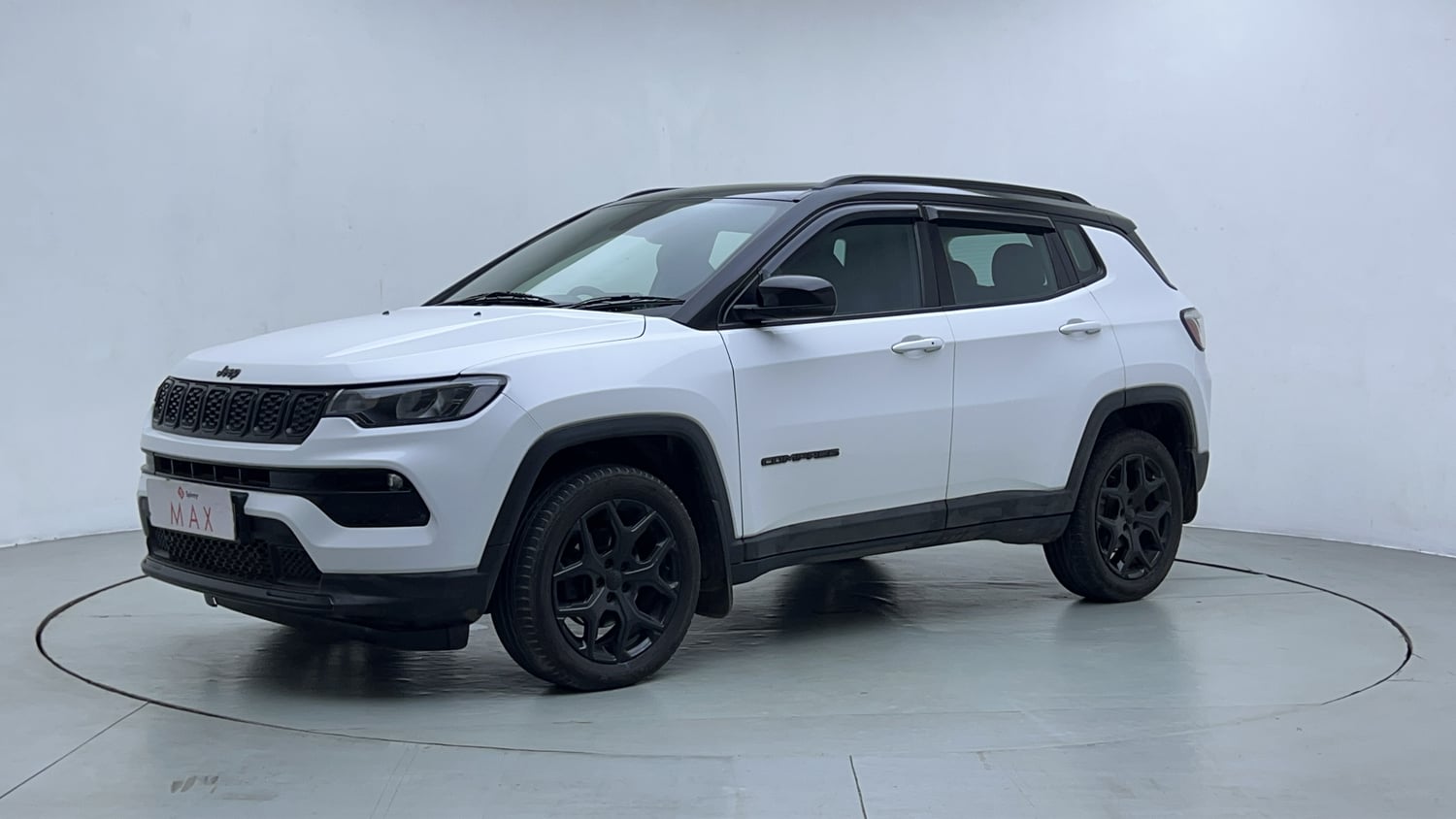
Tata Safari is a 7-seater mid-size SUV which was re-introduced as a monocoque style in 2021. The Jeep Compass is a 5-seater monocoque compact crossover SUV. The Safari was initially launched in 1998 and is currently in its second generation. The Compass came to India in 2017 and has reached its second generation here. The Safari comes in petrol and diesel variants, while the Compass has only the diesel engine option. Because of this, we compare the best mileage between the diesel variants, which are delivered with a manual transmission. The best mileage for each is up to 16.5 km/l for the Safari and up to 18 km/l for the Compass, both being best on the highways.
The Safari comes with a 1.5L Hyperion GDi petrol and 2.0L Kryotec turbo diesel engines. They are paired with either a 6-speed manual or a 6-speed automatic gearbox. The Compass has a 6-speed manual and a 9-speed automatic gearbox paired with its 2.0L Multijet diesel engine. This blog compares these engines in terms of fuel efficiency and calculates estimated real-world fuel expenses.
Table of Contents
Tata Safari vs Jeep Compass Specs
Before we see their mileage, let’s first compare their basic specifications regarding their engine, drive layout, etc. The table below shows these specifications of the Tata Safari and Jeep Compass.
| Specification | Tata Safari | Jeep Compass |
| Engine | 1.5L Hyperion GDi petrol2.0L Kryotec turbo diesel | 2.0L Multijet diesel |
| Displacement | Petrol: 1498 ccDiesel: 1956 cc | 1956 cc |
| Power | Petrol: 170 PSDiesel: 170 PS | 170 PS |
| Torque | Petrol: 280 NmDiesel: 350 Nm | 350 Nm |
| Transmission | 6-speed MT6-speed AT | 6-speed MT9-speed AT |
| Drive layout | Front-Wheel Drive | Front-Wheel DriveFour Wheel Drive |
| Kerb weight | Petrol: 2000 KgDiesel: 1655 to 1823 Kg | 1565 to 1650 Kg |
| Fuel tank capacity | Petrol: 50 litresDiesel: 50 litres | 60 litres |
As you can see, the specifications of the diesel engine of the Tata Safari and Jeep Compass have similar power, torque, and engine capacity. The petrol engine is available only with the Safari. The 6-speed manual transmission is available for both Safari and Compass. While the Safari has a 6-speed automatic, the Compass comes with a 9-speed gearbox for its automatic variants. The Safari has a front-wheel drive layout, but the Jeep Compass has an additional 4-wheel drive as well. The petrol variant of the Safari is notably heavier. The diesel variant of the Safari is also heavier than the Compass, and the exact weight differs with the chosen variant. The Safari’s fuel tank capacity is 50 litres, while the Compass holds up to 60 litres.
Tata Safari vs Jeep Compass: ARAI Mileage Figures
The Automotive Research Association of India (ARAI) is an autonomous body under the Government of India that tests and certifies vehicles. They also test the fuel efficiency of these vehicles under controlled, standardised conditions. The resultant mileage is often referred to as ARAI mileage. Let’s see the ARAI figures of the Tata Safari and Jeep Compass as given in the table.
| Engine and Transmission | Fuel Type | Tata Safari – ARAI Mileage | Jeep Compass – ARAI Mileage |
| 1.5L Hyperion GDi manual | Petrol | ≅ 16.3 km/l | — |
| 1.5L Hyperion GDi automatic | Petrol | ≅ 14.1 km/l | — |
| 2.0L Kryotec manual | Diesel | 16.3 km/l | — |
| 2.0L Kryotec automatic | Diesel | 14.1 km/l | — |
| 2.0L Multijet manual | Diesel | — | 15 km/l |
| 2.0L Multijet automatic | Diesel | — | 12 km/l |
Tata Motors has not officially declared the ARAI mileage for its petrol variants. It is estimated to be around the same mileage as the diesel variants or lower than those figures. The diesel variants clock a mileage of 16.3 km/l for the manual variants, which is their best figure. For the Jeep Compass also, the manual variant delivers a higher 15 km/l mileage than its automatic versions. In the real world, these figures are often not achieved by the vehicles, as there will be other influencing factors.
Also Read: Tata Safari Image Gallery: Interior and Exterior
Tata Safari vs Jeep Compass: Real-World Fuel Efficiency
In the real world, there are multiple factors such as road conditions, traffic, driving style, etc that affect the mileage, so the actual mileage you get will be different from what the ARAI claims. The actual expected mileage range of Tata Safari and Jeep Compass is provided in the table below.
| Tata Safari (Petrol) | Tata Safari (Diesel) | Jeep Compass (Diesel) | |
| City | MT: 8 to 9.5 km/lAT: 6 to 8 km/l | MT: 10.5 to 12 km/lAT: 8 to 11 km/l | MT: 11 to 13 km/lAT: 10 to 12 km/l |
| Highway | MT: 13 to 15 km/lAT: 12 to 14 km/l | MT: 15 to 16.5 km/lAT: 13.5 to 15.5 km/l | MT: 16 to 18 km/lAT: 14 to 16 km/l |
| Average | MT: 11.5km/lAT: 10 km/l | MT: 13.5 km/lAT: 12 km/l | MT: 14 km/lAT: 13.5 km/l |
| Tank range | 550 km | 650-750 km | Up to 750 km |
If you check these figures, you can see that the mileage of Safari petrol variants is much lower, sometimes dropping to just 6 km/l in the city, especially with heavy traffic. The best it can do is 9.5 km/l in the city, but on highways, the mileage goes up to 15 km/l in the manual variant.
The Safari diesel delivers an average of 10-11 km/l in the city and up to 16.5 km/l on highways. When you compare this with the Jeep Compass, the Compass delivers a slightly better mileage of around 12-13 km/l, depending on the transmission. The manual transmission has better fuel efficiency than the automatic variants. On Highways, the Compass can cruise at a higher mileage of up to 18 km/l.
The Compass will be a better choice for city and highways than the Safari diesel. Although the difference between the mileage of these SUVs is marginal, it can help you save more in terms of fuel expenses. The Compass is lighter, which helps improve its fuel efficiency. It is more suitable for city rides for its compact size and easy navigation through traffic.
Also Read: How to Improve Jeep Compass Reliability: Maintenance Tips
Tata Safari vs Jeep Compass: Fuel Cost Comparison
Now that you know the Tata Safari and Jeep Compass fuel efficiency performance, let us try to find out the expected fuel cost for them on a monthly and yearly basis. For this comparison, we will use 1500 km as the standard distance travelled per month. The prices of petrol and diesel are taken as Rs. 111 and Rs. 100 for the calculations.
| Safari Petrol | Safari Diesel | Compass Diesel | |
|---|---|---|---|
| Monthly Running | 1500 km | 1500 km | 1500 km |
| Monthly Fuel Use | 140L | 117L | 115L |
| Avg. Monthly Fuel Cost | ₹ 15,400 | ₹ 11,700 | ₹ 11,550 |
| Average Yearly Fuel Cost | ₹ 1.84 lakhs | ₹ 1.41 lakhs | ₹ 1.38 lakhs |
| 5-Year Fuel Cost | ₹ 9.24 lakhs | ₹ 7.02 lakhs | ₹ 6.93 lakhs |
The Tata Safari petrol variant delivers lower mileage, which leads to more fuel consumption. This impacts the monthly expenses and averages around Rs. 15k. If you choose the diesel variant of the Safari or the Compass, the monthly expenses are likely to be just over 11k. It makes a significant difference in the yearly cost of Rs. 50k and, over the next 5 years, a difference of staggering around 2.5 lakhs between the petrol and diesel variants.
Also Read: Jeep Compass Mileage Comparison: Manual vs Automatic
Tata Safari vs Jeep Compass Price
The comparison of the fuel cost is incomplete without knowing the ex-showroom price. Let’s see how much the Tata Safari and Jeep Compass will cost you.
| Model | Variant (Base to Top) | Price (Ex-Showroom) |
| Tata Safari | Smart to Accomplished Ultra or Stealth Edition | ₹ 13.40 lakhs to 26.76 lakhs |
| Jeep Compass | Sport, Longitude, Longitude (O), Trail, Limited (O), Model S (O), Track | ₹ 17.99 lakhs to 30.95 lakhs |
The price of Safari variants from the base variant to the top is lower than what the Jeep Compass would cost. This difference can help you more when you compare their fuel costs.
Summary
Tata Safari and Jeep Compass have different seating capacities, but their diesel variants have similar specifications and a matching fuel efficiency in the real world. There are, of course,e differences in this regard, but it ultimately comes down to fuel costs that are close to each other.
Since the fuel cost of the Safari and Compass diesel variants is almost similar, you must focus on their usability and ease of driving in the city or on highways. For city drives, the Compass is recommended. On highways, both SUVs are suitable. But if you need more seating capacity, the Safari is the best, as the Compass comes only in a 5-seater capacity.
The Tata Safari requires less investment initially, but the running cost can be higher if you choose the petrol variant. If you are choosing a diesel variant, you must also consider your requirements and not just its fuel efficiency or running cost.
Related Blogs:
Tata Harrier vs Tata Safari: Real World Mileage Comparison
Mahindra Scorpio N vs Jeep Compass Real-World Mileage Comparison
FAQs About Tata Safari vs Jeep Compass Mileage
Q. Does the Safari’s larger size affect its everyday fuel consumption?
The larger size of the Tata Safari needs more fuel and therefore delivers lower mileage than the Compass. Fuel consumption is higher for the petrol variants than for the diesel versions. Its fuel efficiency mainly depends on the powertrain and the driving environment. In heavy traffic, it needs more energy to pull through. The Compass is lighter and is easier to pull, and therefore consumes less fuel.
Q. How does the Compass perform on long highway journeys compared with the Safari?
Tata Safari and Jeep Compass are both suitable for highway cruising. The real comparison is in what you are looking for in these SUVs. If you want more passenger comfort during these longer trips, then the Compass is the recommended choice. Its 9-speed gearbox comes with all-wheel drive that keeps the SUV in control, even at higher speeds. If you need more passenger capacity or storage space, then the Safari is the better choice.
Q. How does stop-and-go traffic affect the Safari’s fuel consumption?
Safari’s fuel efficiency instantly drops in stop-and-go traffic. The mileage could drop to 6-8 based on the powertrain. The heavier SUV needs more fuel to drag through the almost standstill traffic. The frequent stopping and acceleration can affect the engine and burn out more fuel. Also, its drivetrain efficiency drops when the acceleration is constantly lower than 30 km/hr.
Q. Which SUV is more economical for frequent family road trips? Safari or Compass?
For family trips, the Tata Safari diesel would be the more economical choice. It has a lower initial cost and can accommodate up to 7 people inside. Other than its lower fuel cost, it is more spacious and has flexible luggage space as well. If you need more comfort inside the cabin and do not need higher seating capacity, the Jeep Compass would also be suitable.
Q. What real-world mileage can buyers expect from the Safari and Compass in mixed conditions?
For mixed use, the Jeep Compass is the better choice. It delivers around 10-13 km/l in the city, depending on the transmission, and 14-18 km/l on highways. It gives you an all-wheel-drive layout, which is not available in the Safari. The Compass is compact and is easier to drive in the city. It is able to stay steady at higher speeds on the highway and still be comfortable.