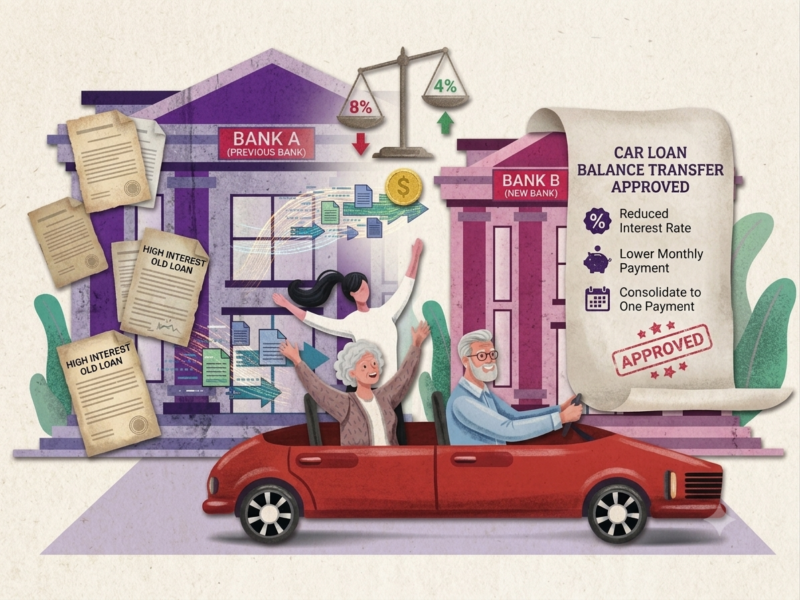
A bonus, a pay rise, or a few months of steady savings can leave you with a welcome question: should you use that extra money to repay your car loan early?
Paying off your used car loan early will result in fewer total interest charges and quicker completion of EMIs. The actual amount saved will be determined by how much money you owe, how long until the loan term is finished, and whether there are any future fees associated with paying off the loan early.
At Spinny, we want you to feel comfortable with your financing decisions throughout your ownership journey. Here’s how to work out whether prepayment makes sense and what to do when you’re ready.
Table of Contents
What Does Used Car Loan Prepayment Mean?
Prepayment means paying back your loan ahead of its agreed repayment schedule. There are two ways to do it:
- Part-prepayment: You pay an extra amount towards the outstanding principal while continuing the loan.
- Full prepayment, or foreclosure: You repay the entire outstanding amount, including interest accrued up to the closure date and applicable charges, to close the loan early.
As an example, say you receive an annual bonus of ₹50,000. Instead of using this amount to pay off the entire loan balance, you can pay it towards the principal that is due. This will allow you to reduce your debt while also maintaining some level of savings.
How Does Prepayment Save Interest?
On a reducing-balance loan, interest is calculated on the outstanding principal. When a prepayment reduces that principal, the interest charged afterward also reduces.
Consider this hypothetical example:
| Loan detail | Illustration |
| Original loan | ₹4 lakh at 12% annually for 48 months |
| Monthly EMI | Approximately ₹10,534 |
| Outstanding principal after 12 EMIs | Approximately ₹3.17 lakh |
| Part-prepayment immediately afterwards | ₹1 lakh |
| Remaining repayment period with the same EMI | Approximately 24 months instead of 36 |
| Future interest saved before charges | Approximately ₹34,820 |
This example is based on a monthly reducing-balance method for accruing interest, a fixed interest rate, timely payments, and no fees associated with prepayment. Your lender could calculate your savings differently based on the date you make payments, rounding, and other terms associated with your loan agreement.
The savings come from avoiding future interest. Interest already paid is not refunded simply because you prepay.
Also Read: Used Car Loans in India: Complete Guide on How to Apply, Fees, Eligibility, and Tips
Reduce Your EMI or Finish the Loan Sooner?
After a part-prepayment, ask whether your lender offers a choice between reducing the EMI and shortening the tenure.
Keeping the EMI unchanged and shortening the tenure generally saves more interest because you repay the remaining principal faster.
Lowering your EMI but keeping your remaining tenure the same may help you manage your monthly expenses. If your income has become less stable or if you have added other responsibilities to your household, this may be of interest to you.
Ask for both revised repayment schedules where available. Compare the remaining interest as well as the monthly installment before deciding.
Check Prepayment Charges Before Paying
There is no single foreclosure fee that applies to every used car loan.
Regulatory frameworks established by the Reserve Bank of India (RBI) will prohibit regulated lenders from charging prepayment fees on floating rate loans for individual consumption, effective 1 January 2026. This prohibition includes both partial and full prepayments, regardless of the source of payment, without a minimum period of lock-in. Additionally, older floating rate loans will likely also be protected by applicable regulations.
Fixed-rate loans do not automatically receive the same exemption. Check your loan agreement, sanction letter and Key Facts Statement for the applicable conditions and charges.
In cases where charges are assessed, you should determine how they are determined, whether or not applicable GST applies, and whether the fee will change as your loan matures. You should also inquire about the minimum part payment and frequency limitations associated with your loan.
Also Read: Car Loan Interest Rates in India: New vs Used
How to Prepay a Loan Arranged Through Spinny
When you finance a used car with us, the loan is provided by Spinny Capital or a partner lender, depending on your approved offer. Prepayment must follow the process of the lender named in your agreement.
1. Get Your Latest Loan Statement
To determine how much you actually have to pay back now on the loan, you need to look at the outstanding principal of the loan, any outstanding installments, or any other unpaid dues. The actual amount of loan made available to you does not tell you what is currently owed.
2. Request a Written Quote
Contact your lender through its official app, customer service, or branch. Specify whether you want to make a part-prepayment or close the loan. Ask for the amount payable, a breakdown of charges, payment instructions, and the quote’s validity date.
3. Compare the Savings With the Cost
When making a part-prepayment on a loan, first check your existing repayment schedule, compare it to your revised repayment schedule, and find out how much interest you are saving. Subtract any applicable fees and taxes from your savings to obtain an accurate figure for your savings. When calculating foreclosure amount payments, compare the remaining scheduled payment amounts with the entire closure amount.
4. Pay Through the Approved Channel
Follow the lender’s instructions and retain the receipt. Make sure the payment is recorded as a principal prepayment; an advance EMI payment may be treated differently. Continue scheduled EMIs until the lender confirms the revised arrangement or closure.
5. Collect the Updated Documents
After making a part-prepayment, request a revised repayment schedule. After completing full repayment, you should collect closure confirmation documents, no-dues certificates or NOCs, and any other necessary documentation related to hypothecation termination. You must then apply through your local RTO to have the hypothecation removed from the vehicle registration certificate, and you must complete Form 35 and submit any other required supporting documentation.
Also Read: RC Hypothecation: How to Remove Car Loan Hypothecation
When Should You Consider Prepayment?
An earlier prepayment generally saves more interest than the same payment made later, with other conditions unchanged. However, compare the actual savings after charges before choosing a date.
Make sure to keep sufficient funds available for emergencies, insurance renewals, servicing costs, and other necessary expenses. If you have higher-interest-rate debt (such as credit card balances) and you have excess surplus funds, evaluate the cost of that higher-interest-rate debt before allocating the surplus toward the loan that you are prepaying.
If you’re still choosing your next car, discuss repayment flexibility with our team while reviewing financing offers. Our EMI calculator can help you plan your starting budget; your lender’s prepayment quote will establish the cost of changing that repayment plan later.
Also Read: Vehicle Ownership Transfer: The Complete Step-by-Step Guide For RC Transfer
FAQs About Prepay Your Used Car Loan
Q. Can I prepay a used car loan taken through Spinny?
You can request prepayment from the lender named in your agreement. The applicable process, charges, and conditions depend on your loan and regulatory requirements.
Q. Is foreclosure always free?
No. Eligible floating-rate individual non-business loans have regulatory protection. Fixed-rate loans may attract disclosed charges. Confirm which category your loan falls into.
Q. Can I make a small part-prepayment?
Check your lender’s minimum payment requirement and any applicable limits. Do not assume that every extra transfer will automatically reduce your principal.
Q. Will prepayment reduce my interest rate?
Prepayment reduces your outstanding principal. It does not automatically change the contractual interest rate, although it can reduce the total interest you pay.
Q. Should I reduce my EMI or tenure?
If your lender offers both options, a shorter tenure generally saves more interest. A lower EMI can be preferable when monthly affordability is your priority.
Q. Is it worth prepaying near the end of the loan?
Possibly, but there is usually less future interest left to avoid. Compare the lender’s closure quote with your remaining payments before deciding.
Q. Can I stop my EMI mandate after requesting foreclosure?
Continue following the repayment schedule until closure is confirmed. Ask the lender when to cancel the mandate, so you avoid a missed payment or duplicate deduction.
Q. Does closing the loan remove hypothecation automatically?
Loan closure and updating the RC are separate steps. Collect the lender’s clearance documents and complete the applicable hypothecation termination process with the RTO.