Car window sun shades are useful during Indian summers. They reduce direct sunlight, make the rear seat more comfortable and help prevent the cabin from heating up quickly. Families travelling with children often use them to block harsh sunlight during daytime journeys.
Their legal position, however, is not completely straightforward.
A removable sun shade is not the same as a permanently pasted window film. Even so, traffic authorities may take action if the shade blocks visibility through the vehicle’s windows. The safest approach is to avoid using dark mesh shades, magnetic screens or curtains while the car is moving, particularly on the windscreen and front side windows.
Sun shades can generally be used when the vehicle is parked. They should be removed before driving if they obstruct the driver’s view or prevent the cabin from being seen clearly from outside.
What Does the Law Say About Car Window Visibility?
Vehicle-window visibility in India is governed primarily by Rule 100 of the Central Motor Vehicles Rules.
According to the rule:
- The front windscreen must allow at least 70% visible light transmission.
- The rear windscreen must allow at least 70% visible light transmission.
- Side windows must allow at least 50% visible light transmission.
Visible Light Transmission, commonly called VLT, refers to the percentage of visible light that passes through a window.
A 70% VLT window allows 70% of visible light to pass through. A lower percentage means the glass is darker.
These limits exist to ensure that the driver has a clear view and that the interior of the vehicle remains sufficiently visible. They also help traffic authorities identify occupants when required.
Although these percentages refer mainly to vehicle glazing, a dark sun shade can create a similar visibility problem. This is why removable shades may still attract enforcement even when nothing has been pasted onto the glass.
Are Removable Car Sun Shades Legal?
There is no simple nationwide rule stating that every removable sun shade is legal or illegal.
The main question is whether the shade obstructs visibility.
A lightly coloured or highly transparent shade fitted to a rear passenger window may not attract attention in some locations. A dark mesh screen that makes it difficult to see inside the vehicle may be treated differently.
Traffic enforcement can vary between states, cities and individual police drives. An accessory that goes unnoticed in one area may lead to a challan in another.
To reduce legal and safety risks:
- Never cover the front windscreen while driving.
- Avoid shades on the driver-side and front-passenger windows.
- Do not allow a shade to block the side mirrors.
- Remove dark rear shades at police checkpoints.
- Use shades mainly when the car is parked.
- Avoid fully opaque curtains or screens.
The fact that a shade can be removed quickly does not guarantee that it is permitted while the vehicle is moving.
Are Magnetic Sun Shades Legal?
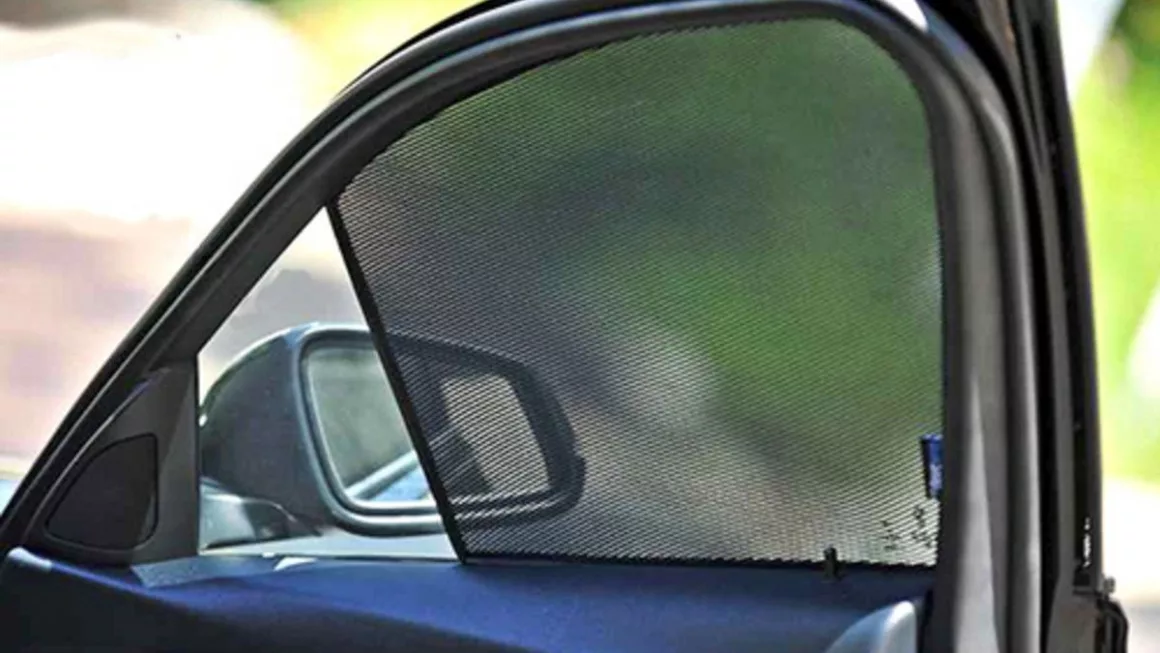
Magnetic sun shades attach to the metal frame around the car window. They are popular because they are easy to install, removable and designed specifically for different car models.
However, their legality still depends on visibility.
Many magnetic shades use dark mesh that reduces glare but also makes the cabin difficult to see from outside. Some designs cover almost the entire glass area. These can attract police action even though they are not permanently attached.
They may also affect the driver’s ability to see cyclists, pedestrians or vehicles approaching from the side, particularly at night.
Magnetic shades are safest when:
- Used only on rear windows
- Removed before night driving
- Removed during rain or poor visibility
- Used when the car is parked
- Kept clear of the driver’s mirror area
Owners should not assume that “car-specific” or “custom-fit” means legally approved.
Are Curtains Allowed Inside Cars?
Curtains create a greater legal risk than transparent mesh shades because they can completely block the view through a window.
Opaque curtains should not be drawn while the car is moving. This applies even when the curtain is fitted only to the rear passenger area.
A closed curtain can:
- Prevent police from viewing the occupants
- Reduce the driver’s side and rear visibility
- Create blind spots
- Block emergency access
- Increase suspicion during checks
Some luxury cars and MPVs have factory-fitted retractable rear blinds. These are more likely to be accepted because they are integrated into the vehicle’s design. Even then, owners may be asked to lower them during inspections or checkpoints.
An aftermarket curtain should not be treated as equivalent to a factory-installed blind.
Are Factory-Fitted Sun Blinds Legal?
Factory-fitted sun blinds are generally less problematic than loose aftermarket curtains or magnetic shades.
Manufacturers usually install them only on rear passenger windows or the rear windscreen. Their design, mounting and intended use form part of the vehicle’s original equipment.
However, factory fitment does not override safety requirements. The blinds should be lowered if they:
- Interfere with visibility
- Block the driver’s rearward view
- Are being used at night
- Create difficulty during reversing
- Are questioned during a traffic inspection
The rear windscreen blind should be used carefully unless the vehicle has a clear reversing camera and properly positioned side mirrors. Even with cameras, direct visibility remains important.
Are Sun Films and Tinted Films Legal?
Sun films have a more complicated legal history than removable shades.
In 2012, the Supreme Court prohibited the use of black films and other materials pasted over vehicle windscreens and window glass. The ruling led to widespread enforcement against aftermarket tinting across India.
The legal position changed to some extent after Rule 100 was amended to recognise forms of safety glazing. In September 2024, the Kerala High Court held that owners could not be penalised for using standards-compliant safety glazing merely because it had been added after the vehicle was manufactured.
According to the ruling, glazing that conforms to the required Indian Standards and maintains the prescribed VLT can be permitted.
However, motorists should not interpret this as a simple nationwide approval for all aftermarket sun films.
Important points remain:
- The complete glass-and-film combination must meet the VLT requirement.
- The material should comply with the applicable Indian Standard.
- Dark privacy films remain risky.
- Enforcement outside Kerala may follow a stricter interpretation.
- Local traffic police may continue relying on the Supreme Court’s 2012 directions.
- Ordinary accessory-shop films may not qualify as certified safety glazing.
Anyone considering a heat-rejection film should verify the current rules in their state and obtain proper product certification.
Difference Between Sun Shades and Sun Films
Although both products reduce sunlight, they work differently.
| Product | How It Is Installed | Main Legal Concern |
| Magnetic sun shade | Attached to the window frame | Can block visibility while driving |
| Suction-cup shade | Attached temporarily to the glass | Can obstruct the driver’s view |
| Curtain | Fixed or removable inside the cabin | Can completely conceal occupants |
| Sun film | Pasted onto the window glass | May violate glazing and VLT rules |
| Factory sun blind | Built into the door or rear shelf | Should not affect safe visibility |
| Reflective parking shade | Placed behind the windscreen | Must be removed before driving |
A removable product is not automatically legal. The degree of obstruction remains the most important issue.
Can Sun Shades Be Used When the Car Is Parked?
Using sun shades in a parked car is generally the safest option.
Owners can use:
- Reflective windscreen covers
- Magnetic side-window shades
- Rear-window covers
- Dashboard sun protectors
- Temporary curtains
All windscreen and front-window covers must be removed before the car begins moving.
Leaving a reflective windscreen cover in place while driving is extremely dangerous because it completely blocks the driver’s view. Even moving the car a short distance within a parking area should be avoided until the cover is removed.
Can You Be Fined for Using Car Sun Shades?
A driver may be stopped or fined if a sun shade is considered to obstruct visibility or violate vehicle-window requirements.
The amount and legal section used can vary by state and the circumstances of the violation. Authorities may also ask the driver to remove the shade immediately.
Possible consequences include:
- A traffic challan
- Removal of the shade or film
- Additional scrutiny at checkpoints
- Problems during vehicle inspection
- Reduced visibility leading to an accident
It is therefore better not to rely on whether an accessory seller claims that the product is legal.
Safer Ways to Reduce Heat Inside a Car
There are several ways to reduce cabin heat without using dark shades while driving.
- Use a Windscreen Cover While Parked
A reflective windscreen cover can significantly reduce direct sunlight on the dashboard and front seats. Remove it completely before driving.
- Park in a Covered Area
Basement, stilt or shaded parking offers the most effective protection against cabin heat and paint damage.
- Use Window Visors Carefully
Visors allow the windows to remain slightly open when the car is parked in a secure place. They should not be used to leave the vehicle open in unsafe locations or during rain.
- Choose Light-Coloured Seat Covers
Light upholstery absorbs less heat than black or dark brown surfaces. It can also make the cabin feel less uncomfortable after prolonged parking.
- Ventilate Before Using the AC
Open the doors or windows briefly before starting the air conditioner. This allows trapped hot air to escape faster.
- Use Certified Heat-Rejection Glazing
Where legally accepted, compliant transparent glazing may reduce ultraviolet and infrared heat without creating dark windows. Buyers must check certification and local enforcement before installation.
Final Verdict
Car window sun shades occupy a legal grey area when used on public roads.
They are safest when used only while the car is parked. Dark mesh shades, curtains and magnetic screens should not cover the front windows or windscreen while driving. Rear shades may also attract action if they prevent visibility inside the car.
Factory-fitted blinds are generally less problematic, but they should still be used responsibly. Aftermarket sun films require greater caution because the legal position involves the Supreme Court’s 2012 ruling, later amendments to Rule 100 and differing interpretations by courts and traffic authorities.
The simplest way to avoid trouble is to keep all windows clearly visible while driving and use temporary heat-blocking accessories only after parking.
Also Read:
RC Transfer – How To Transfer Vehicle Ownership
How to perform a pre-delivery inspection (PDI) of a car
How to Protect Your Car from Rats?
FAQs
Q. Are rear-window sun shades legal in India?
They may be tolerated if they do not significantly obstruct visibility, but dark or opaque rear shades can still attract police action. Using them only while parked is safer.
Q. Can I use magnetic sun shades while driving?
It is risky. Magnetic shades may be removable, but they can still block visibility and lead to a challan.
Q. Are sun shades allowed on front windows?
Front-window shades should not be used while driving because they can obstruct the driver’s side view and mirrors.
Q. Can I use a windscreen sun shade?
Yes, but only when the car is parked. It must be removed completely before driving.
Q. Are factory-fitted rear blinds legal?
They are generally more acceptable because they are original vehicle equipment. However, they should be lowered whenever they interfere with visibility.
Q. Is transparent sun film legal in India?
The legal position is not uniform in practice. Standards-compliant safety glazing that maintains the required VLT received support from the Kerala High Court in 2024, but enforcement can differ outside Kerala.
Q. What are the VLT limits for car windows?
The front and rear windscreens must allow at least 70% visible light transmission. Side windows must allow at least 50%.
Q. What is the safest legal alternative to dark sun shades?
Use removable reflective covers only while parked, choose shaded parking and keep the windows unobstructed while driving.
Q. Is a fog light illegal in India?
No, fog lights themselves are not illegal; factory-fitted fog lights are perfectly legal and useful in poor visibility.