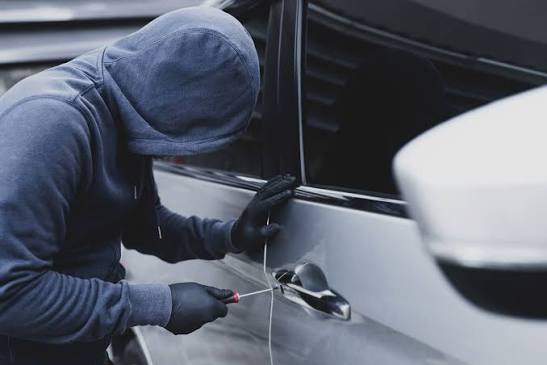
A car theft is distressing enough on its own. For many owners, the greater worry comes afterwards, when the insurer turns down the claim on a technical ground that has little to do with how the car was stolen.
The Supreme Court of India addressed this very situation in National Insurance Co. Ltd. v. Nitin Khandelwal. It held that when a vehicle is stolen, the insurer cannot reject the claim outright merely because the vehicle was being used for a purpose other than the one stated in the policy. The judgment has returned to public attention after the legal portal Lawtext republished it this week.
It is worth noting that this is not a new ruling. The Court delivered it on May 8, 2008, and it has guided insurers and consumer forums ever since, so there is no fresh date from which it applies.
Quick Summary
- Case: National Insurance Co. Ltd. v. Nitin Khandelwal, decided May 8, 2008
- Facts: A privately insured Mahindra Scorpio was stolen while allegedly being used as a taxi
- Court’s view: In theft cases, the breach of use has no link to the loss, so the claim cannot be rejected in full
- Outcome: The owner received 75% of the claim, about ₹4.83 lakh, with 6% interest
- What changes now: Nothing new. The ruling is settled law
Table of Contents
How the Dispute Began
Nitin Khandelwal insured his Mahindra Scorpio for private use. In September 2003, unknown persons stopped the vehicle, tied up the driver and drove away with it. The car was never found.
The insurer rejected the claim, saying the Scorpio was carrying four hired passengers at the time and was effectively being run as a taxi.
| Forum | Decision |
| District Forum, Gwalior | Upheld the insurer’s rejection |
| Madhya Pradesh State Commission | Ordered 75% of the claim, ₹4,83,000, with 6% interest |
| National Consumer Commission | Upheld the State Commission’s order |
| Supreme Court | Dismissed the insurer’s appeal |
The Court’s Reasoning
The Court’s reasoning rested on a simple principle: a breach of policy matters only if it has something to do with the loss. A thief does not care whether a car is carrying family or paying passengers. As the Court put it, “In the case of theft of vehicle breach of condition is not germane.”
The insurer had relied on Section 149 of the Motor Vehicles Act, 1988. Drawing on its earlier ruling in Jitendra Kumar (2003), the Court read the section narrowly. An insurer may avoid liability only where the breach actually contributed to the loss, not merely because a breach exists.
What Is a Non-Standard Claim Settlement?
When a policyholder has broken a condition but the breach did not cause the loss, the claim is often settled at a reduced amount rather than rejected. This is known as a non-standard settlement, and 75% of the claim has been a common figure.
The principle has since been applied in later cases. In Amalendu Sahoo (2010), the Court again allowed 75% where a private vehicle was used for hire. In Ashok Kumar (2023), it awarded 75% even though the truck’s key had been left in the ignition. There are limits, though. Where a vehicle was being driven without valid registration, as in Narinder Singh (2014), the Court treated it as a fundamental breach and upheld the rejection.
What Car Owners Should Take Away
The ruling is a safeguard, not a licence to bend the rules. Using a private car commercially remains a breach of policy and can prove costly in an accident claim. What the judgment protects is the genuine theft victim who might otherwise lose the full value of the car over a technicality.
If you are buying a used car, check that the insurance suits how the car will be used and that the policy is transferred to your name. At Spinny, we take care of the RC transfer for our buyers and always suggest confirming the insurance has moved too, so a claim never gets stuck on paperwork at the RTO.
What to Do If Your Car Is Stolen
- File an FIR immediately.
Go to the nearest police station and register the theft. A prompt FIR is the single most important document in a theft claim. - Inform your insurer the same day.
Call or write to the insurer with the FIR number. Even if the insurer hears of it a little late, a timely FIR keeps your claim alive. - Notify the RTO.
Inform the regional transport office so the vehicle cannot be transferred or re-registered without your knowledge. - Keep documents ready.
You will usually need the RC, policy copy, driving licence, both sets of keys, the FIR and, later, the police’s untraced or final report. - Complete the formalities.
Once the claim is approved, insurers typically ask for a letter of subrogation and transfer of the RC in their name before paying out.
If the claim is rejected for a reason that has nothing to do with how the car was stolen, ask the insurer for the rejection in writing. You can then approach the insurer’s grievance cell, the Insurance Ombudsman or a consumer commission.
FAQs
Q. Can an insurer reject a car theft claim because the car was used for a purpose not covered by the policy?
The Supreme Court has held that such a breach has no link to a theft, so the claim cannot be rejected in full, though it may be settled at a reduced amount so it’s not entirely true.
Q. What is a non-standard claim settlement?
It is a reduced payout made when a policy condition was broken but the breach did not cause the loss. Courts have commonly awarded 75% of the claim.
Q. Does this mean I can use my private car as a taxi?
No, it remains a breach of policy and of the Motor Vehicles Act, and can lead to a rejected claim in accident cases.
Q. Is this a new rule? From when does it apply?
No, it is not new. The judgment was delivered on May 8, 2008 and has applied since then. It was recently republished by Lawtext, which brought it back into the news.
Q. What should I do if my theft claim is rejected?
Ask for the rejection in writing and check whether the reason is actually linked to the theft. If it is not, you can approach the insurer’s grievance cell, the Insurance Ombudsman or a consumer commission.