Taking delivery of a new car is exciting, but the celebrations should begin only after checking the vehicle carefully. A car may be new, yet it can still pick up scratches, dents, tyre damage or electrical faults while being transported, stored or prepared at the dealership.
A Pre-Delivery Inspection, commonly called a PDI, is the final inspection of the exact vehicle allotted to you before registration and delivery. The dealership performs its own inspection, but buyers should also examine the car independently.
A PDI does not require specialist mechanical knowledge. Most important checks involve confirming the vehicle’s identity, inspecting its condition and testing every feature promised with the selected variant.
The ideal time to conduct a PDI is before the dealer registers the vehicle in your name and before you make the final payment. Once registration is complete, rejecting or replacing the vehicle can become more complicated.
When Should You Conduct the PDI?
Ask the dealership to arrange the inspection after the vehicle has reached its stockyard or showroom but before it is sent for registration.
Conduct the PDI:
- In broad daylight
- On a dry car
- Before accessories are fitted, where possible
- Before registration
- Before paying the complete balance
- On the exact car allotted to you
Avoid inspecting the vehicle after sunset, under coloured showroom lights or when it is covered in dust or water. These conditions can hide scratches, dents and paint differences.
Carry your booking details, variant specifications, a phone with a camera, a torch, a clean cloth and this checklist. Taking a friend or family member can also help because a second person may notice something you missed.
Start by Confirming the Car’s Identity
Before checking the paint or cabin, verify that the car is the correct one.
Confirm the:
- Make and model
- Variant
- Fuel type
- Transmission
- Exterior colour
- Interior colour or trim
- Manufacturing month and year
- Vehicle Identification Number
- Engine or motor number
The VIN is usually stamped or displayed in more than one location, such as the engine bay, door frame, dashboard or floor area. Its location varies by car.
Compare the VIN with the invoice, insurance proposal and other dealer documents. Do not accept a verbal assurance if the number does not match.
Ask the dealer to decode the manufacturing month and year. A vehicle that has remained in stock for several months is not automatically defective, but its battery, tyres, fluids and discounts deserve closer attention.
Inspect the Exterior in Daylight
Walk around the car slowly and inspect every body panel from different angles.
Look for:
- Scratches
- Dents
- Paint chips
- Colour mismatch
- Polish marks
- Uneven reflections
- Signs of repainting
- Rust near exposed metal
- Damaged plastic trim
Check the bonnet, roof and bumpers carefully because these areas may be damaged during transport or storage.
Minor surface marks may be repairable, but signs of repainting or panel replacement on a new car require a proper explanation. Ask for the issue and proposed resolution in writing.
Check Panel Gaps and Doors
The gaps between the bonnet, doors, boot and body panels should appear even on both sides.
Uneven panel gaps may indicate:
- Poor factory fitment
- Incorrect adjustment
- Transit damage
- Repair work
Open and close every door several times. They should latch without needing excessive force. Test the bonnet, boot lid and fuel flap as well.
Check the door seals for cuts, loose sections or improper fitting. Damaged seals can later cause wind noise, dust entry or water leakage.
Inspect the Glass and Lights
Check the windscreen, rear glass, side windows, mirrors, headlamps and tail lamps for cracks, chips or scratches.
Inspect:
- Windscreen edges
- Window corners
- ORVM housings
- Headlamp lenses
- Fog lamps
- Tail lamps
- Roof or panoramic glass
Glass damage can spread over time, so even a small chip should be reported.
Operate every light, including:
- Low and high beam
- Indicators
- Hazard lights
- Brake lights
- Reverse lights
- Fog lamps
- Daytime running lamps
- Number-plate lamps
- Cabin lights
Ask another person to stand outside while you operate the controls.
Check the Tyres and Wheels
Confirm that all tyres match the size specified for the selected variant. Check the spare wheel as well, if one is provided.
Inspect each tyre for:
- Cuts or cracks
- Sidewall bulges
- Uneven wear
- Embedded objects
- Damaged valve stems
- Incorrect size
- Significant manufacturing-date differences
Tyres carry a manufacturing code on the sidewall. The final four digits generally indicate the production week and year.
All four primary tyres should normally be from the same manufacturer and product line unless the carmaker specifies otherwise.
Check the alloy wheels or wheel covers for scratches and bends. Also confirm that the jack, wheel spanner, towing hook, puncture-repair kit and locking-wheel-nut key are present where applicable.
Tyre pressure should match the recommendation on the vehicle label or in the owner’s manual.
Examine the Engine Bay
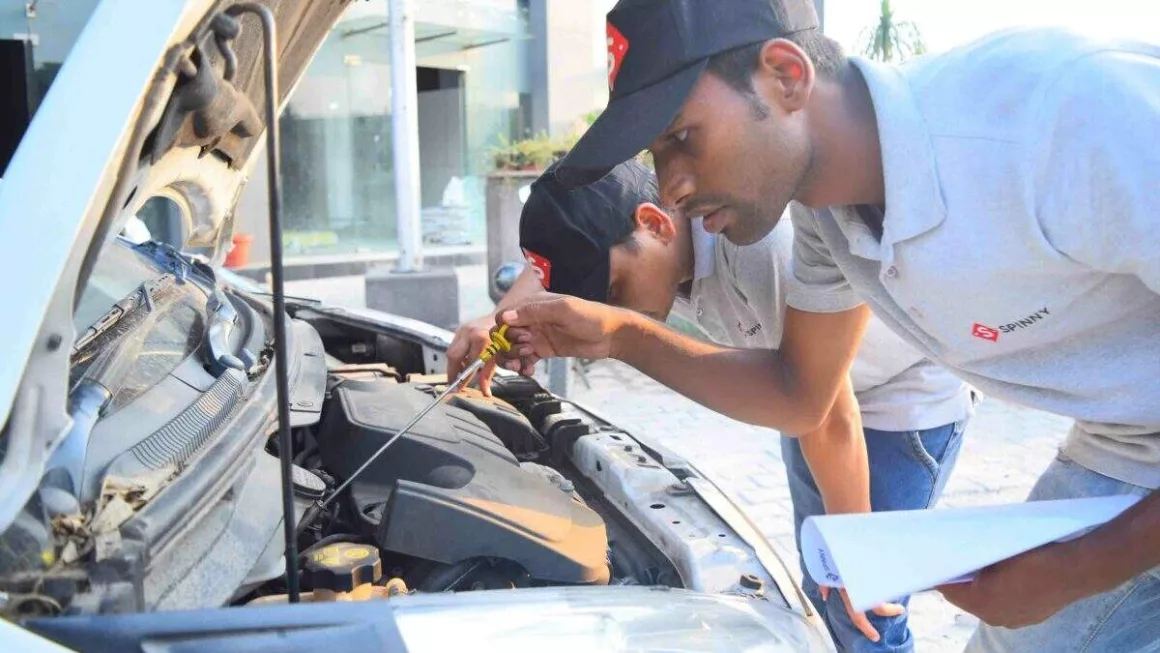
Open the bonnet and inspect the engine compartment.
A new car may have light storage dust, but it should not show:
- Oil or coolant leaks
- Loose cables
- Damaged insulation
- Corroded terminals
- Broken clips
- Rodent damage
- Excessive dirt or mud
Check the engine oil, coolant, brake fluid and windscreen-washer fluid where these reservoirs are accessible. Never open a hot coolant cap.
Start the engine and listen for abnormal knocking, metallic sounds or excessive vibration. Some diesel engines naturally sound louder than petrol engines, so compare the noise with another similar vehicle when uncertain.
Check that no warning light remains illuminated after the normal start-up sequence.
Inspect the Interior
The cabin should feel unused and clean.
Check the:
- Seats
- Dashboard
- Door pads
- Roof liner
- Carpets
- Floor mats
- Boot lining
- Seat belts
- Plastic trim
Look for stains, cuts, scratches, loose panels or damaged stitching.
Operate all seat adjustments and foldable seats. Check the head restraints and seat-belt buckles. Every seat belt should extend and retract smoothly.
Remove protective plastic only after the vehicle has passed the inspection, unless it prevents you from examining the upholstery properly.
Check the boot for water, moisture, loose wiring or missing tools.
Test Every Electrical Feature
Modern cars contain many electronic systems, so test each feature listed for your variant.
Check:
- Power windows
- Central locking
- Keyless entry
- Push-button start
- Electrically adjustable mirrors
- Mirror folding
- Horn
- Wipers and washers
- Rear defogger
- USB ports
- Wireless charger
- Steering controls
- Digital instrument cluster
- Ambient lighting
- Powered seats
- Ventilated seats
- Sunroof
Open and close the sunroof fully. Check that its blind works and that the glass closes evenly.
Pair your phone with Bluetooth. Test Android Auto or Apple CarPlay where offered. Play audio and confirm that every speaker works.
Also test the reverse camera, 360-degree camera, parking sensors and tyre-pressure monitoring display.
Check the Air Conditioner
Run the air conditioner at different fan speeds and temperature settings.
Confirm that:
- Cold air arrives quickly
- The fan does not make unusual sounds
- Air flows through every vent
- Rear AC vents work
- Automatic climate-control functions respond
- Heating works, where possible to test
- No unpleasant smell comes from the vents
For three-row vehicles, sit in the rear seats and check whether airflow reaches them properly.
Check ADAS and Connected Features
Cars with Advanced Driver Assistance Systems may include cameras, radar sensors and warning functions.
During the PDI, check that:
- No ADAS warning light is displayed
- Camera and sensor areas are undamaged
- The system settings open correctly
- The dealer explains the controls and limitations
Not every ADAS function can be safely demonstrated inside a dealership. Ask for a proper explanation rather than attempting unsafe tests.
Activate the manufacturer’s connected-car application and confirm that the vehicle appears in your account. Features such as remote locking, vehicle location and status updates may require account activation.
ALSO READ: 5 Best Aftermarket Car Audio Systems with Touchscreens
Additional Checks for EVs and Hybrids
For an electric car, confirm:
- Battery charge level
- Displayed range
- Charging-port operation
- Portable charging cable
- Home-charger equipment
- Connector condition
- Battery and motor warranty documents
- Regenerative-braking modes
- EV warning lights
Verify that the charger supplied matches the invoice. Ask who will install the home charger and whether installation charges are included.
For a hybrid, check that the vehicle changes smoothly between electric and engine operation. Confirm that no hybrid-system warning remains visible.
Check the Odometer and Fuel Level
A new car may have covered some kilometres during factory testing, stockyard movement and dealer preparation.
A small reading is normal. A much higher reading requires an explanation.
Check that the odometer has not been reset and photograph the reading during the inspection. Also confirm the fuel or battery level promised at delivery.
Take a Short Test Drive
Ask the dealer whether a brief drive of the allotted vehicle can be arranged before registration.
During the drive, check:
- Steering alignment
- Brake response
- Clutch operation
- Gear changes
- Automatic gearbox behaviour
- Suspension noise
- Engine response
- Warning lights
- Unusual vibration
- Vehicle pulling to one side
The steering wheel should remain reasonably centred when the car travels straight on a level road.
A short stockyard drive may not reveal every issue, but it can identify obvious faults.
Verify the Documents and Accessories
Before accepting delivery, check the documents against the vehicle.
Verify:
- Final invoice
- Registration details
- Insurance policy
- Warranty booklet
- Owner’s manual
- Service booklet
- Temporary registration, where applicable
- FASTag details
- Extended-warranty documents
- Roadside-assistance details
- Pollution certificate, if applicable
- Battery-warranty documents for EVs
- Both keys
Check that the invoice lists the correct variant, colour, VIN and engine or motor number.
Confirm that all paid accessories are installed properly. Ask for the invoice and warranty for dealer-fitted accessories.
Do not allow accessory installation to involve careless wire cutting, drilling or changes that may affect the vehicle warranty.
What Should You Do If You Find a Problem?
Photograph and record every issue. Share the list with the sales representative and dealership manager.
For minor concerns, ask the dealer to correct them before registration or delivery. Inspect the repaired area again.
For serious concerns such as extensive repainting, structural damage, major electrical faults, water entry or VIN mismatch, do not proceed merely on a verbal promise.
Ask for:
- A written explanation
- A replacement vehicle
- Corrected documents
- Written confirmation of repairs
- Escalation to the manufacturer, where required
Do not sign a delivery-satisfaction form until the concerns have been resolved.
Final PDI Checklist
Before approving the vehicle, confirm that:
- The VIN and documents match
- The manufacturing date is acceptable
- The paint and panels are undamaged
- The glass, lights and mirrors are intact
- Tyres and wheels are correct
- There are no fluid leaks
- The cabin is clean and unused
- Every electrical feature works
- The AC cools properly
- No warning light remains on
- The car drives without unusual noise
- All documents, keys and accessories are present
- Any identified issue has been resolved in writing
Conclusion
A PDI protects the buyer from accepting a damaged, incorrectly documented or poorly prepared new car. It should be completed calmly, in daylight and before registration.
Do not allow delivery-day excitement or pressure from the dealership to shorten the inspection. Check the exact car, verify its identity, test every promised feature and document any concern.
Spending an hour inspecting the vehicle can prevent weeks of arguments and repairs after delivery.
ALSO READ: Buying A Used Car In India: A Complete Guide
Frequently Asked Questions
Q: Is a PDI necessary for a new car?
Yes. A new car can still develop cosmetic, electrical or transit-related problems before delivery.
Q. Should PDI be done before registration?
Ideally, yes. Serious problems are easier to resolve before the vehicle is registered in the buyer’s name.
Q. Can a dealership refuse a buyer’s PDI?
Dealership policies differ, but buyers can request access to inspect the allotted vehicle before registration. The request should be made early and in writing.
Q. How long does a car PDI take?
A careful inspection usually takes around one to two hours, depending on the car’s features and whether a short drive is permitted.
Q. How many kilometres are acceptable on a new car?
Some kilometres are normal because of testing and movement. A noticeably high reading should be explained and verified before registration.
Q. Can an independent expert conduct the PDI?
Yes, subject to dealership access rules. Buyers may bring a knowledgeable person or use a professional inspection service.
Q. What happens if the car has a scratch?
Ask the dealer to document and rectify it before delivery. Significant paint damage or repainting should be evaluated more carefully.
Q. Should accessories be installed before the PDI?
The main vehicle inspection is easier before accessories are fitted. Accessories should then be inspected separately before final delivery.