
In India, the premium midsize sedan market still caters to those seeking comfort, handling, style, and functionality. The Honda City Facelift and Volkswagen Virtus are among the best options in this category.
The Honda City is known for its reliability, rear-seat comfort and refinement. The latest facelift builds on these strengths with updated styling, enhanced technology, and improved safety features.
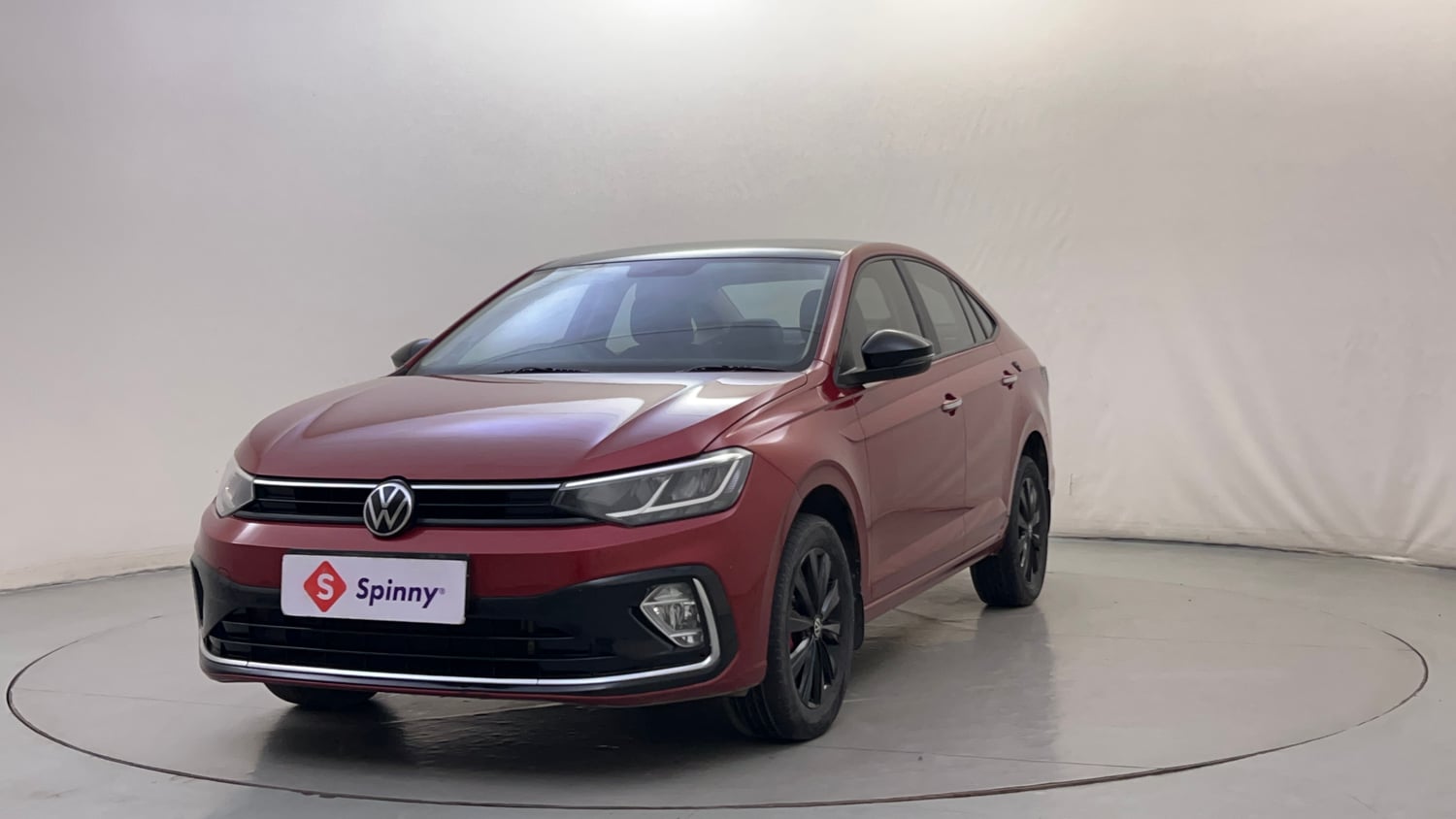
The Volkswagen Virtus, on the other hand, appeals to enthusiasts with its European design, turbocharged engines, and engaging driving experience.
If you are wondering which of these two capable sedans is better for your garage, this in-depth comparison will help you make a better choice.
Table of Contents
Honda City Facelift vs Volkswagen Virtus: Dimensions
Both the Honda City Facelift and the Volkswagen Virtus feature well-balanced proportions, although they’re based on different design concepts, one erring towards interior luxury and refinement while the other strives for stability, space efficiency and functionality.
The comparison below highlights how their dimensions stack up:
| Specification | Honda City Facelift | Volkswagen Virtus |
| Length | 4,594 mm | 4,561 mm |
| Width | 1,748 mm | 1,752 mm |
| Height | 1,489 mm | 1,507 mm |
| Wheelbase | 2,600 mm | 2,651 mm |
| Boot Space | 506 litres | 521 litres |
| Ground Clearance | 165 mm | 179 mm |
The Honda City Facelift is a bit longer, lending it an elegant road presence. The Virtus, on the other hand, has a much longer wheelbase, adding to its stability and increased cabin space.
Volkswagen also has an increased boot capacity of 521 litres, suitable for families who often travel with stuff. It has a higher ground clearance of 179 mm, which is useful on uneven roads and big speed breakers.
The Honda City offers a large interior and one of the most comfortable back seats in the class. Its size is not strictly functional but is based on the comfort of the passengers.
The Virtus is the more practical with its larger boot, elongated wheelbase and higher ground clearance, while the City outperforms the competition in terms of rear-seat comfort.
Honda City Facelift vs Volkswagen Virtus: Engine & Transmission
The Honda City Facelift aims to be refined and impressive in efficiency, especially with its hybrid functionality, while the Volkswagen Virtus prioritises a more dynamic, performance-oriented experience with its turbocharged engine range.
Let’s take a look at the subtle differences between these two sedans:
| Specification | Honda City Facelift | Volkswagen Virtus |
| Engine Options | 1.5L Petrol, 1.5L Hybrid | 1.0L TSI, 1.5L TSI |
| Transmission Options | 6MT, CVT, e-CVT | 6MT, 6AT, 7-speed DSG |
| Power | 121 PS (Petrol), 126 PS (Hybrid) | 115 PS (1.0 TSI), 150 PS (1.5 TSI) |
| Torque | 145 Nm, 253 Nm (Hybrid) | 178 Nm, 250 Nm |
| Mileage | Up to 27.26 kmpl (Hybrid) | Up to 19.62 kmpl |
The Honda City’s naturally aspirated 1.5-litre petrol engine focuses on refinement and smoothness. There’s linear acceleration, and it works remarkably well with the CVT gearbox for easy city driving.
The highlight is its formidable hybrid variant, which promises excellent fuel economy and convenience in city driving.
The Virtus takes a different approach. Its turbocharged TSI engines deliver more low-end torque and faster acceleration. Combined with the DSG gearbox, the 1.5 TSI is definitely a fun engine to drive and produces solid power and a strong sense of authority when making moves.
The City is more refined and focused on efficiency; the Virtus is sportier.
Choose the Virtus for performance and driving excitement, while the City is the better option for refinement and fuel economy.
Honda City Facelift vs Volkswagen Virtus: Features & Comfort
Both the Honda City Facelift and Volkswagen Virtus are well-equipped to meet the expectations of the modern day. From infotainment systems and convenience technologies to seat comfort and cabin practicality, the Honda City Facelift and Volkswagen Virtus have both got what it takes to meet today’s expectations. The City is packed with features and designed for the family, while the Virtus takes the best of the feature-rich and adds a driver-focused cabin design.
The table below compares the comfort and convenience features offered by these two premium sedans.
| Feature | Honda City Facelift | Volkswagen Virtus |
| Infotainment System | 10.1-inch touchscreen | 10-inch touchscreen |
| Music System | Premium 8-speaker setup | 8-speaker sound system |
| Climate Control | Automatic | Automatic |
| Ventilated Seats | Yes | Yes |
| Adjustable Steering | Tilt & Telescopic | Tilt & Telescopic |
| Drive Modes | Hybrid drive modes | Multiple drive modes |
| Instrument Cluster | Digital TFT cluster | Digital cockpit |
| Sunroof | Electric | Electric |
| Adjustable Seats | Manual | Manual |
| Rear AC Vents | Yes | Yes |
| 60:40 Rear Seat Split | Yes | Yes |
| Cruise Control | Adaptive Cruise Control | Cruise Control |
The facelifted Honda City has seen a considerable upgrade in its standard feature range. Convenience and usability are further enhanced with Honda Sensing ADAS, a 360-degree camera and a larger touchscreen on the front seats.
The interior of the cabin features a modern VITRUS design and has a crisp digital cockpit with premium touch. Its GT variants, combined with drive modes and sporty interiors, appeal to younger buyers.
The City, on the other hand, provides a more family-friendly experience while maintaining comfortable seats and high-tech driver-assist features.
The City also provides a more extensive comfort and technology package, and the Virtus is all about premium and sporty cabin comfort.
Honda City Facelift vs Volkswagen Virtus: Safety Features
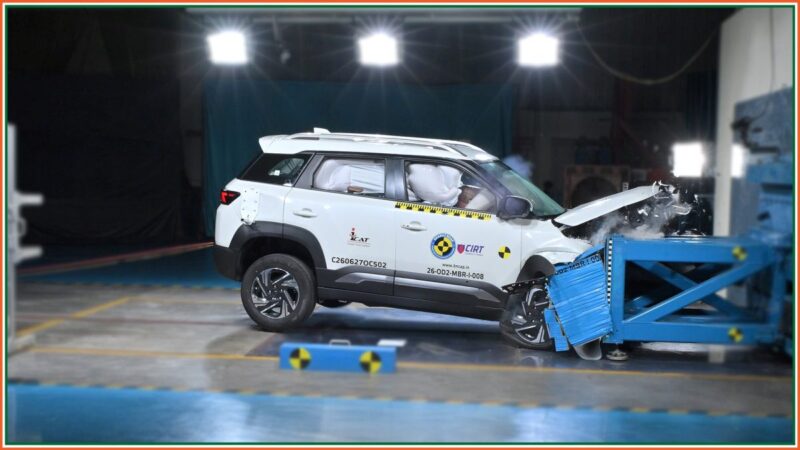
While the Honda City Facelift and Volkswagen Virtus share a robust range of safety features, they take different approaches to safety. The City is powerful with its Honda Sensing ADAS package and active safety features, while the Virtus comes out ahead because of its 5-star Global NCAP crash safety rating.
Here’s how these two sedans compare in terms of safety equipment and protection.
| Safety Feature | Honda City Facelift | Volkswagen Virtus |
| GNCAP Safety Rating | Not Rated | 5 Stars |
| Airbags | Up to 6 | Up to 6 |
| ABS with EBD | Yes | Yes |
| ESC | Yes | Yes |
| Traction Control | Yes | Yes |
| Automatic Headlamps | Yes | Yes |
| Rain-Sensing Wipers | Yes | Yes |
| Hill Hold Assist | Yes | Yes |
| Hill Descent Control | No | No |
| Rear Sensors | Yes | Yes |
| Rear Parking Camera | 360-degree camera | Rear camera |
| ISOFIX Child Seat Anchors | Yes | Yes |
| ADAS | Honda Sensing Level 2 | No |
The VW Virtus is clearly advantaged with its 5-star Global NCAP safety rating, indicating good crash protection characteristics.
The Honda City facelift responds with a more comprehensive list of safety features that includes Honda Sensing Level 2 ADAS functions, including adaptive cruise control, lane keep assist, collision mitigation braking and road departure mitigation.
Crash-test performance is the most important measure when assessing occupant protection, although advanced safety technology is beneficial.
The City is at the top of the pack when it comes to active safety technology, and the Virtus has a 5-star rating for structural safety.
Honda City Facelift vs Volkswagen Virtus: Price Comparison
The Honda City Facelift and Volkswagen Virtus are both aimed at the upscale midsize sedan market, but the cars’ costs reflect their respective attributes. While Honda’s reputation for reliability and longevity, hybrid technology and extensive safety systems justify a premium price for the City, the Virtus markets itself as a value-packed vehicle with performance variants in various price points.
Comparing variant-wise prices helps buyers understand which sedan offers the better balance of features, performance, and overall value within their budget.
| Variant Level | Honda City Facelift (ex-showroom prices) | Volkswagen Virtus (ex-showroom prices) |
| Base Variant | ₹11.99 lakh | ₹10.49 lakh |
| Mid Variant | ₹16.53 lakh | ₹17.06 lakh |
| Upper Mid Variant | ₹19.79 lakh | ₹21.84 lakh |
| Top Variant | ₹24.21 lakh (Hybrid) | ₹22.06 lakh |
A variant-wise price comparison also helps buyers understand whether the sedan is more feature-packed than the other variant, provides better performance, and is more economical.
The Virtus is a competitor at a moderately lower entry price and provides excellent value in its turbocharged engine options.
The hybrid version of the Honda City is a budget buster, but it does pay for the extra cost with the company’s reputable commitment to reliability, top-of-the-range safety and fuel efficiency.
If outright performance matters most, the Virtus offers tremendous value. The City could be worth the extra cost to buyers interested in maximising space efficiency and getting the peace of mind of ownership.
Related Blogs:
Comparison: Honda City Facelift vs Used Volkswagen Virtus
Comparison: Honda City Facelift vs Used Skoda Slavia
Comparison: New Volkswagen Virtus vs Used Volkswagen Virtus
Summary
Both sedans have distinct personalities.
The Honda City Facelift is one of the most sophisticated family sedans on the market in India. The comfort of the rear seat, hybrid efficiency, an abundance of features, and the Honda Sensing ADAS package all make it shine.
The Volkswagen Virtus appeals to buyers who enjoy driving. It is one of the most interesting sedans available in its class due to its turbocharged engines, 5-star safety rating, larger rear trunk, and European-style driving habits.
The Honda City Facelift may be the more suitable option for those seeking comfort, fuel efficiency, and low maintenance.
The Volkswagen Virtus, however, will be the more rewarding alternative for those who favour performance, crash safety ratings and a sportier appearance.
FAQ about Honda City Facelift vs Volkswagen Virtus
Q. Which car has better mileage, the Honda City Facelift or the Volkswagen Virtus?
The Honda City Hybrid is the most fuel-efficient, claiming up to 27.26 kmpl, and the Virtus has a fuel economy of up to approximately 20.8 kmpl.
Q. Which sedan is safer?
The Volkswagen Virtus has a 5-star Global NCAP safety rating, giving it an edge in crash protection.
Q. Which car is more fun to drive?
The Volkswagen Virtus, especially the 1.5 TSI DSG variant, provides a more engaging driving experience.
Q. Does the Honda City Facelift offer ADAS?
Yes, the Honda City Facelift comes equipped with Honda Sensing Level 2 ADAS features.
Q. Which car offers a bigger boot?
The Volkswagen Virtus offers a larger 521-litre boot than the Honda City’s 506 litres.
Q. Which sedan is better for families?
The Honda City Facelift is better suited for families due to its excellent rear-seat comfort, smooth ride quality, and fuel-efficient hybrid option.
Q. Which car offers better value for money?
The answer depends on your priorities. The Virtus offers excellent value for performance-oriented buyers, while the City provides superior efficiency and long-term ownership benefits.