
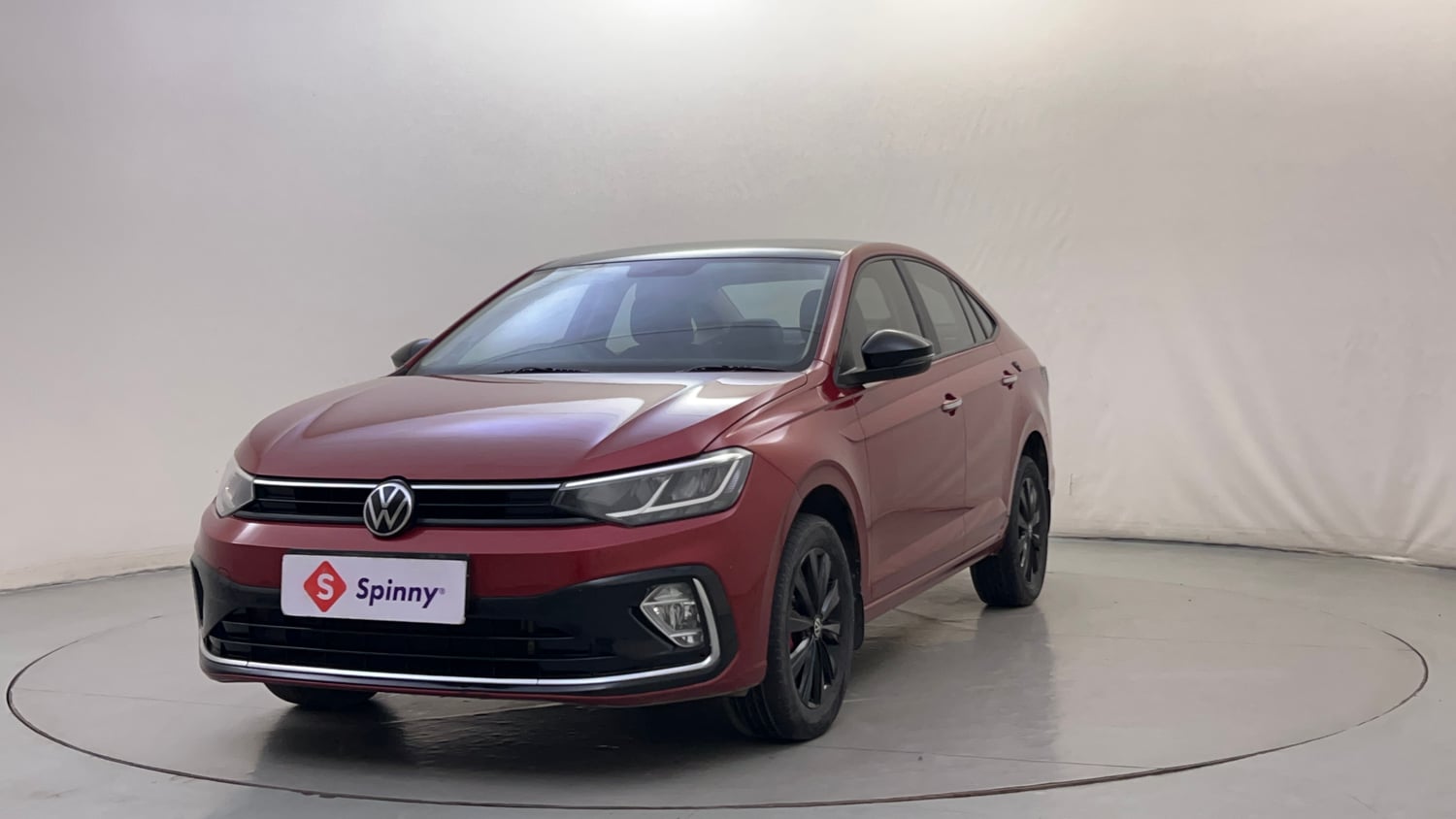
For years, the Honda City has been a popular choice among premium sedans in India due to its elegance, comfort, durability, and value retention. However, when it comes to the new Honda City Facelift, there is another attractive model to consider, the used Volkswagen Virtus.
A pre-owned Virtus is a blend of European style, turbo-petrol power and upscale interior finishings, at a much lower cost than a brand-new sedan. Meanwhile, the Honda City Facelift will be covered by a factory warranty, come with the latest technology, feature improved safety features and instil the sense of new car ownership.
It comes down to budget, driving style, what features you’re seeking and what you plan to do with the car. This review compares the Honda City Facelift to a used Volkswagen Virtus on a number of factors: performance, features, safety, pricing and ownership experience.
Read on to discover which premium sedan offers the better value for your lifestyle and driving needs.
Table of Contents
Honda City Facelift vs Used Volkswagen Virtus: Dimensions
Both sedans are functional and large, but they’re used for different purposes. Compared to the Honda Virtus, the Honda City is more focused on comfort and refinement in the rear seat, and the Honda Virtus is more space-efficient and practical, offering stability at high speed.
The comparison below highlights how their dimensions stack up:
| Dimension Parameter | Honda City Facelift | Used Volkswagen Virtus |
| Length | 4,594 mm | 4,561 mm |
| Width | 1,748 mm | 1,752 mm |
| Height | 1,489 mm | 1,507 mm |
| Wheelbase | 2,600 mm | 2,651 mm |
| Boot Space | 506 litres (306 litres Hybrid) | 521 litres |
| Ground Clearance | 165 mm | 179 mm |
The Honda City has a lovely elegance, is packed full of road presence and has excellent rear seat comfort. The longer wheelbase, wide stance and higher ground clearance of the Virtus make it more practical and offer greater confidence on rough road surfaces.
The split-folding rear seats and a larger boot increase the versatility, and its well-cushioned rear bench remains one of the best around this price.
While the Honda City is the more classy, comfortable back-seat car, the used Honda Virtus has more highway confidence and functionality.
Also Read: Comparison: Honda City Facelift vs Skoda Slavia
Honda City Facelift vs Used Volkswagen Virtus: Engine & Transmission
The difference in approach to performance between the Honda City Facelift and the used Volkswagen Virtus is quite evident. The City’s emphasis is on refinement, fuel economy and ease of city driving, while the turbo-petrol engines and reduced output of the Virtus focus on a more dynamic riding experience.
The following comparison highlights their engine and transmission options:
| Specification | Honda City Facelift | Used Volkswagen Virtus |
| Engine Options | 1.5L Petrol, 1.5L Hybrid | 1.0L TSI, 1.5L TSI |
| Transmission Options | 6MT, CVT, e-CVT | 6MT, 6AT, 7-speed DSG |
| Power | 121 PS (Petrol), 126 PS (Hybrid) | 115 PS (1.0 TSI), 150 PS (1.5 TSI) |
| Torque | 145 Nm, 253 Nm (Hybrid) | 178 Nm, 250 Nm |
| Mileage | Up to 27.26 kmpl | Up to 19.62 kmpl |
With a quiet 1.5-litre petrol engine and the very efficient e: HEV hybrid powertrain, the Honda City is great for regular commuting. The hybrid provides instant electric power assistance, virtually silent performance in traffic and outstanding fuel economy, thereby cutting down on running costs.
The Virtus, meanwhile, is designed to appeal to people who love to drive. It has turbocharged TSI engines, which give it more low-end torque, leading to faster acceleration and easy overtaking. The combination of 1.5 TSI with the 7-speed DSG gearbox guarantees a much more exciting experience on the highway.
If you prioritise performance and driving pleasure, you will find the used Volkswagen Virtus to be a more suitable purchase, whereas the Honda City is known for its refinement, city manners and exceptional fuel economy.
Honda City Facelift vs Used Volkswagen Virtus: Features & Comfort
The Honda City Facelift and Volkswagen Virtus are both high-quality sedans that target different markets. The City is designed to be comfortable in the back and relaxing to own, but the Virtus has technology, utility and a more sporty in-cabin vibe.
The table below compares their comfort and convenience features:
| Feature | Honda City Facelift | Used Volkswagen Virtus |
| Infotainment System | 8-inch / 10.1-inch touchscreen | 10-inch touchscreen |
| Audio System | 4 or 8 speakers | 4 or 8 speakers |
| Climate Control | Automatic climate control with PM2.5 filter | Automatic climate control |
| Ventilated Seats | Front ventilated seats | Front ventilated seats |
| Adjustable Steering | Tilt & Telescopic | Tilt & Telescopic |
| Drive Modes | Econ & Sport modes | Multiple drive modes (GT variants) |
| Instrument Cluster | TFT MID | Digital Cockpit |
| Sunroof | Electric sunroof | Electric sunroof |
| Seat Adjustment | Manual | Manual |
| Rear AC Vents | Yes | Yes |
| 60:40 Split Rear Seats | No | Yes |
| Cruise Control | Adaptive Cruise Control (ADAS variants) | Standard Cruise Control |
The Digital Cockpit, bigger touchscreen display, drive modes on GT models and split-folding rear seats promote a more modern feel in the cabin. These elements further contribute to its usability and sporty appeal.
But when it comes to passenger comfort, the Honda City is still the standard. It also has support from the rear seats, a low transmission tunnel and a well-designed cabin that make for more pleasant long trips, particularly when it is operated by a chauffeur. Honda Sensing ADAS technology is introduced to the higher variants, enhancing the ownership experience.
The Honda City retains its lead in rear-seat seating and cabin refinement and overall passenger satisfaction, and the used Virtus is a more tech-focused and practical package.
Also Read: Comparison: Volkswagen Virtus vs Honda City
Honda City Facelift vs Used Volkswagen Virtus: Safety Features
Both the Honda City Facelift and the used Volkswagen Virtus have impressive safety records, but in different ways. The Honda Sensing ADAS suite is all about preventative safety for the City, and the Virtus puts the focus on occupant protection via its proven performance in crash tests.
The table below compares their safety equipment:
| Safety Feature | Honda City Facelift | Used Volkswagen Virtus |
| GNCAP Safety Rating | Not tested under current protocols | 5-Star GNCAP rating |
| Airbags | 6 airbags | 6 airbags |
| ABS with EBD | Yes | Yes |
| ESC | Yes | Yes |
| Traction Control | Yes | Yes |
| Automatic Headlamps | Yes | Yes (higher variants) |
| Rain-Sensing Wipers | Yes (higher variants) | Yes (higher variants) |
| Hill Hold Assist | Yes | Yes |
| Hill Descent Control | No | No |
| Rear Parking Sensors | Yes | Yes |
| Rear Parking Camera | Multi-angle camera | Camera with guidelines |
| ISOFIX Anchor Points | Yes | Yes |
| ADAS | Level 2 Honda Sensing | No |
The two models share safety features like 6 airbags, ESC, traction control and ISOFIX mounts. But when it comes to safety, a verified crash-test rating is more important than a longer equipment list.
The 5-star Global NCAP rating is its opening victory for the Virtus, giving added reassurance in real crashes. The Honda City’s Level 2 Honda Sensing suite features Honda Collision Mitigation Braking, Honda Lane Keeping Assist, and Adaptive Cruise Control, all designed to help ward off accidents before they even happen.
The used Volkswagen Virtus offers more crash protection than the other, and the Honda City is equipped with advanced driver assistance and preventative safety features.
Honda City Facelift vs Used Volkswagen Virtus: Price Comparison
The Honda City Facelift and the used Volkswagen Virtus both appeal to different types of customers with their price points. The City is an all-new product with a factory warranty, new features, and lower cost of ownership uncertainty. Meanwhile, a used Virtus is available for a high-touch European sedan experience at a much reduced price.
The comparison below highlights how their prices typically stack up:
| Variant Level | Honda City Facelift (Ex-showroom Prices) | Used Volkswagen Virtus (Approx. Used-Car Prices)* |
| Base Variant | ₹11.99 lakh (SV MT) | ₹8–10 lakh |
| Mid Variant | ₹13.29 lakh (V MT) | ₹10–12 lakh |
| Upper Mid Variant | ₹15.25 lakh (ZX MT) | ₹12–14 lakh |
| Top Variant | ₹20.99 lakh (ZX Plus Hybrid e: HEV) | ₹14–18 lakh (GT variants) |
*Used Virtus prices vary based on model year, variant, mileage, condition, and location.
The used Virtus represents a more budget-friendly option, appealing to those who value high-end specifications and turbo-charged performance without compromising on cost. Higher-Spec GT versions also offer very good value for money when compared with their original price.
The Honda City, on the other hand, is worth the premium because of the new-car warranty, reduced maintenance risk, easy-to-find ADAS functionality, and the super-efficient e: HEV hybrid that can save on fuel costs in the long run.
Honda City provides greater long-term value security with extended warranties, efficiency, security technologies, and forecasted ownership experience, while the used Virtus offers more value to budget-conscious buyers and driving geeks.
Also Read: How to Improve Volkswagen Virtus Reliability
Summary
The Honda City Facelift and the used Volkswagen Virtus appeal to different types of premium sedan buyers. The Virtus is especially interesting for its sports-car-like turbo-petrol engines, spirited road mannerisms and its 5-star Global NCAP safety score. In the used car market, it also provides top-of-the-range options and European driving character at a more affordable price.
The Honda City, on the other hand, provides a more well-rounded ownership experience. It promises highly refined behaviour, extremely comfortable seats, easy-to-access Level 2 Honda Sensing ADAS and fuel-saving e: HEV hybrid technology. This makes it suitable for daily driving and family use, along with the benefits of a factory warranty and predictable maintenance.
Comfort, efficiency, state-of-the-art safety features, and ease of ownership make the Honda City Facelift worthwhile to recommend as a total high-end sedan. For those who prefer a more exhilarating ride and enjoy high levels of performance, the used Volkswagen Virtus is the obvious choice and is the better option for value buyers.
FAQ about Honda City Facelift vs Used Volkswagen Virtus
Q. Which car is better for highway driving?
Volkswagen Virtus is more suited for highways. Its turbo-petrol engines, lengthened wheelbase, and 5-star Global NCAP-rated structure give it the advantage on the highway.
Q. Is the Honda City hybrid worth the extra price?
Yes, if you are driving frequently in city settings. The e:HEV hybrid is a better fuel saver, has cheaper running costs and a smoother ride in traffic.
Q. Does the used Volkswagen Virtus offer ADAS features?
No. The Honda Virtus will not be equipped with any Level 2 Advanced Driver Assistant features like Adaptive Cruise Control or Lane Keeping Assist, like the Honda City Facelift.
Q. Which sedan is more comfortable for rear passengers?
Honda City is truly family-friendly and chauffeur-driven. The reasons are its supportive rear-seat bench, lower transmission tunnel, and roomy cabin design.
Q. What should I check before buying a used Volkswagen Virtus?
You need to check several things before buying a Volkswagen Virtus. Check the service record, accident history, DSG transmission condition (if applicable), tyre status and warranty terms to have an accident-free ownership experience.