





Tata Motors has launched the Tata Harrier EV at the starting price of Rs 21.49 lakh (ex-showroom). The Tata Harrier EV is the most expensive electric car in the Indian carmaker lineup and the first Tata car to come with an all-wheel-drive set-up since the Tata Safari Storme, which went out of production over five years ago. Compared to the ICE-powered Tata Harrier, the Tata Harrier EV is slightly larger and has almost the same design, except for some EV-specific cosmetic changes. Here is a closer look at the Tata Harrier EV.
Tata Harrier EV: Dimensions and Design
Based on Tata’s Acti.ev dedicated EV platform, the Tata Harrier EV is 4,607 mm long, 2,132 mm wide, 1,740 mm tall, and has a wheelbase of 2,741 mm, and a boot space of 502-litres. With such dimensions, the Tata Harrier EV is 2 mm longer, 210 mm wider, and 22 mm taller than the standard Tata Harrier, while the wheelbase is the same.
In terms of design, the Tata Harrier EV is almost the same as the standard Tata Harrier. However, to keep it distinguishable as an electric car, the Harrier EV gets a closed-off grille and vertical stripes on the front bumper, which look the same as the ones on the Tata Curvv EV. On the side, the Harrier EV features 19-inch aero-optimised alloy wheels and ‘EV’ badging on the front doors. At the rear, the ‘Harrier.EV’ lettering on the tailgate is what sets it apart from the standard Tata Harrier.
The Indian carmaker will offer the Tata Harrier EV in four colour options: Empowered Oxide, Nainital Nocturne, Pristine White, and Pure Grey. In addition to that, there will also be a Stealth Edition of the Harrier EV, which features blacked-out elements inside and out.
Tata Harrier EV: Interior and Features
Like the exterior, the Harrier EV looks much the same as the standard Harrier. Nonetheless, on the dashboard sits a 14-inch touchscreen infotainment system, featuring a world-first Samsung Neo QLED display that offers an immaculate image quality. The cabin also features a fully digital instrument cluster, a four-spoke steering wheel with an illuminated Tata logo, touch-based HVAC controls, and a rotary drive mode selector.
Moreover, Tata’s flagship electric SUV packs a host of upmarket features such as a panoramic sunroof, ambient lighting, dashcam, ventilated and powered front seats, 10-speaker JBL sound system with Dolby Atmos 5.1, vehicle-to-load (V2L) and vehicle-to-vehicle (V2V) functionality, four drive modes – Eco, City, Sport, Boost, six terrain modes – Normal, Snow/Grass, Mud, Ruts, Sand, Rock Crawl, Custom. Other upmarket features include an all-digital inside rearview mirror, auto park assist, and a 540-degree surround camera view, which can alert the driver if any of the wheels come too close to a kerb, improving manoeuvrability in tight spaces. There is also a new DrivePay feature that does not require a mobile device for FASTag and EV charging point payments.
In terms of safety features, the Tata Harrier EV packs six airbags, an electronic parking brake, a Level-2 ADAS safety suite, and more.
Tata Harrier EV: Battery and Range

The Tata Harrier EV is available with two battery packs. In lower variants, a 65-kWh battery pack is connected to a single electric motor on the rear axle, and this setup generates 238 hp. Whereas, the higher variants get a 75-kWh battery pack connected to two electric motors – one on the front axle and the other on the rear axle. The front motor generates 158 hp, and the rear motor generates 238 hp. Together, this all-wheel-drive setup generates 396 hp and 504 Nm torque. The driving range for the higher variants is 627 km, while the range for the lower variants has not been revealed. Charging options include a 7.2 kW AC charger, which can top up the Harrier EV in 10.7 hours, while a 120 kW DC fast charger can charge it from 20 to 80 percent in just 25 minutes.
Tata Harrier EV: Price and Rivals
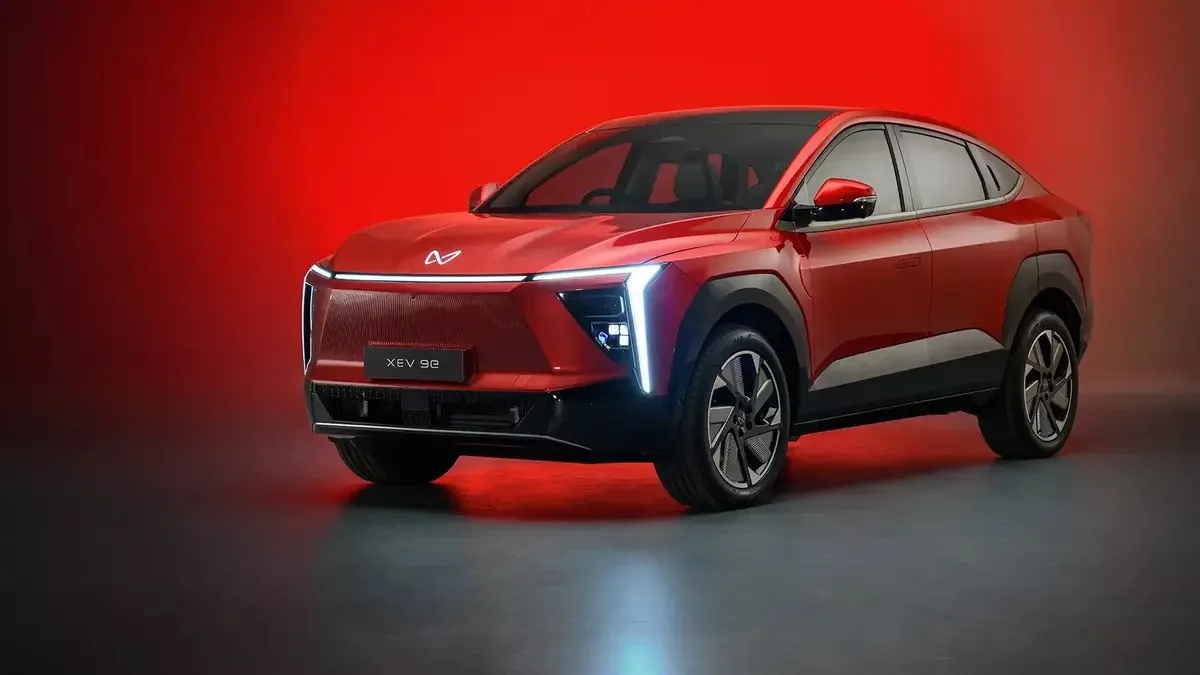
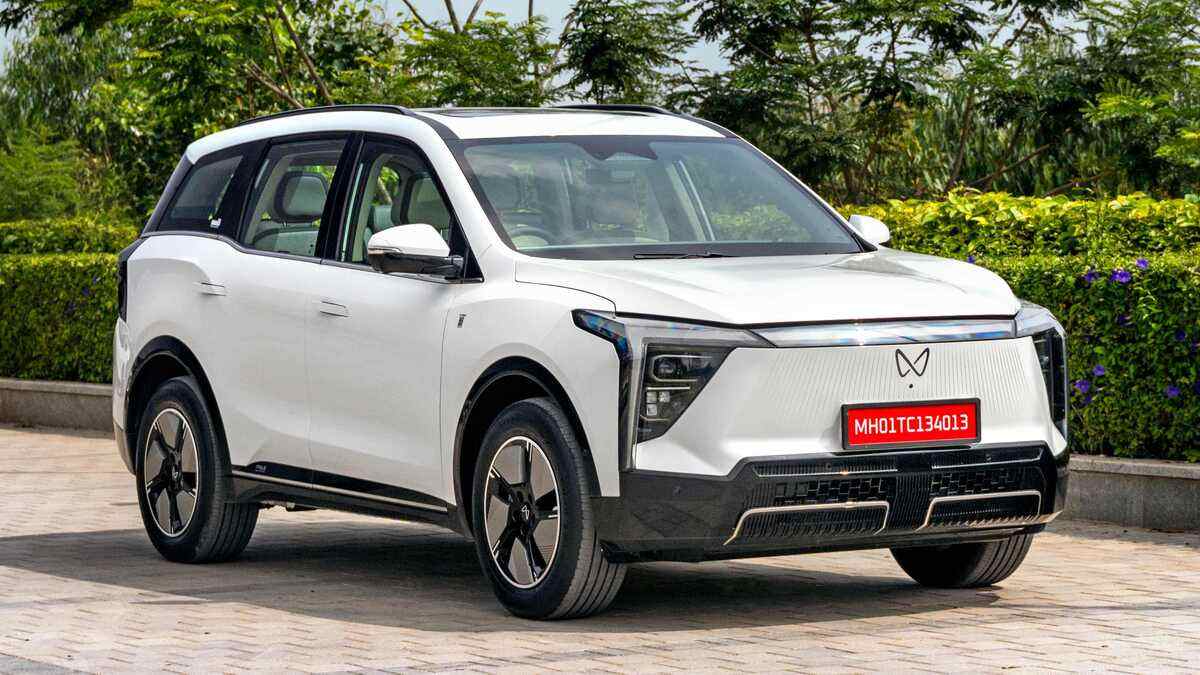
The Tata Harrier EV has a starting price of Rs 21.49 lakh (ex-showroom) for the base variant, which has a rear-wheel-drive setup and 65 kWh battery. With such a price, the Tata Harrier will compete with Mahindra BE 6 (Rs. 18.90 – 26.90 lakh), Mahindra XEV 9e (Rs. 21.90 – 30.50 lakh), Hyundai Creta Electric (Rs. 17.99 – 24.38 lakh), and the upcoming Maruti Suzuki e-Vitara.