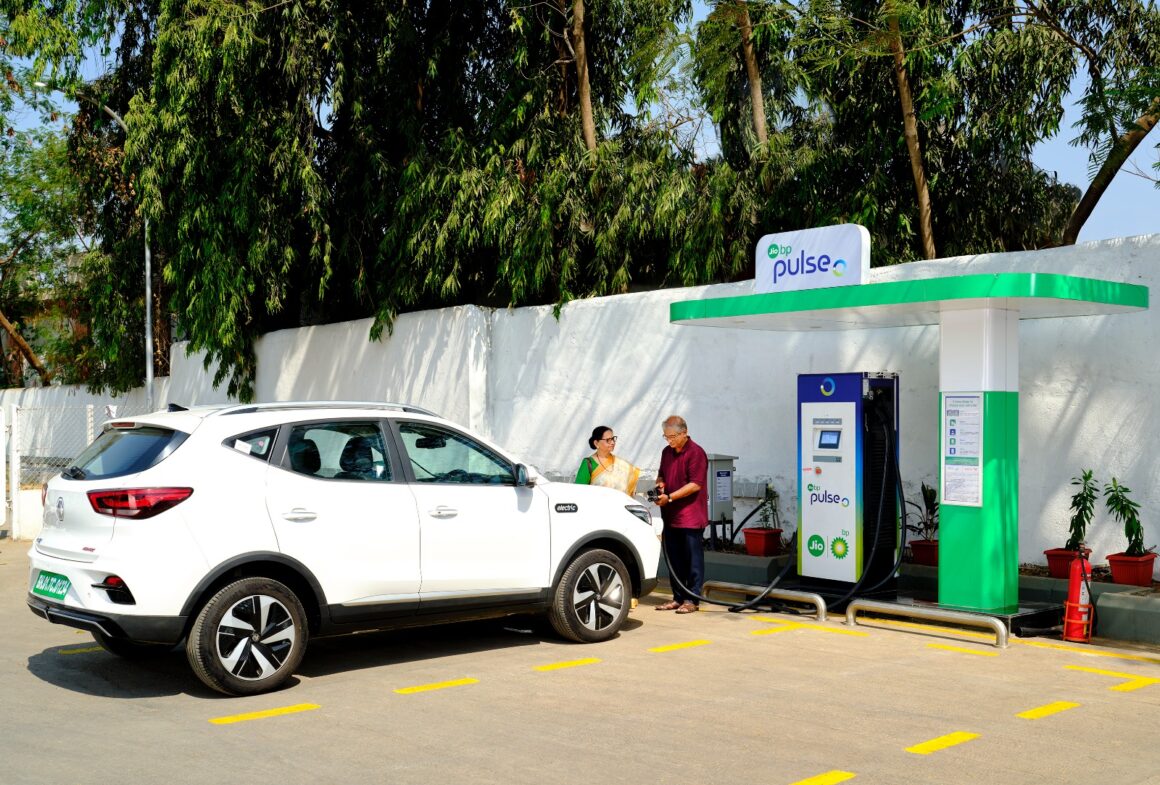
Driving an electric car in Delhi is becoming increasingly practical. Public chargers are now available at metro and Namo Bharat stations, shopping centres, hotels, commercial districts and municipal parking areas.
Delhi’s charging network is also more varied than it was a few years ago. Drivers can choose slower AC chargers when parking for several hours or use high-capacity DC chargers for a faster top-up. The newest facilities can accommodate private cars, commercial vehicles and electric buses at the same location.
However, finding a charger on a map is only the first step. Drivers must also check whether the connector is compatible, whether the charger is operational, how much their car can accept and whether parking or entry fees apply.
The following guide covers some of the top EV charging stations within the National Capital Territory of Delhi. Gurugram, Noida, Ghaziabad and other nearby NCR locations have not been included.
Station availability, connector status and charging station charges mentioned in this guide were checked in August 2026 and may change. Always verify the latest information in the relevant charging app before travelling.
Table of Contents
List of Top Electric Vehicle Charging Stations in Delhi
| Charging station | Area | Charging capacity | Best suited for |
| New Ashok Nagar Namo Bharat Station | East Delhi | 240, 360 and 480 kW DC | Cars, commercial EVs and electric buses |
| Statiq DMRC Hub Nangloi Railway Station | West Delhi | Up to 240 kW DC | Fast charging near Rohtak Road |
| Statiq BSES Hub Janakpuri District Centre | West Delhi | Up to 120 kW DC | Shoppers, office visitors and residents |
| Statiq x TATA.ev Nexus Select City | Saket | Up to 120 kW DC | Charging during shopping or dining |
| Statiq Sheraton New Delhi | Saket | 120 kW DC and 10.7 kW AC | Hotel visitors and destination charging |
| Statiq Shangri-La Station | Central Delhi | Up to 120 kW DC | Central Delhi commuters and visitors |
| Statiq Hotel The Suryaa Station | New Friends Colony | Up to 120 kW DC | South-east Delhi and Okhla traffic |
| Statiq BSES Hub Rajouri Garden | West Delhi | Up to 120 kW DC | Residents and Ring Road commuters |
1. New Ashok Nagar Namo Bharat EV Charging Station
The high-capacity charging hub at New Ashok Nagar Namo Bharat Station is one of Delhi’s most significant new EV facilities. Commissioned in July 2026, it has 14 DC charging points: seven rated at 240 kW, four at 360 kW and three at 480 kW.
The 480 kW points are designed primarily for heavy-duty vehicles, including electric buses and commercial fleets. Passenger cars can also use compatible chargers, although their actual speed will be restricted by the vehicle’s maximum charging capacity.
The station’s biggest advantage is scale. Multiple vehicles can charge at the same time, reducing the risk of a long queue. It is particularly useful for drivers travelling through east Delhi or using the Delhi–Meerut Namo Bharat corridor. Access and charging can be managed through the designated mobile application.
2. Statiq EV Charging Station, DMRC Hub, Nangloi Railway Station
Located on Rohtak Road, the Nangloi Railway Station charging hub offers one of the strongest combinations of DC and AC charging in west Delhi. The operator listing shows a 120 kW dual-connector CCS2 charger and a 240 kW dual-connector CCS2 charger.
The location also has three 3.3 kW AC wall chargers. These are better suited to longer parking sessions than quick top-ups. The station is listed as public and open 24 hours, with a restroom available nearby.
This hub is convenient for Nangloi, Mundka, Paschim Vihar and commuters using the western section of Rohtak Road. Drivers should still check live connector status before leaving because one charging unit may already be occupied even when the station itself appears available.
3. Statiq BSES Charging Station, Janakpuri District Centre
The Janakpuri District Centre hub is a useful option for EV owners in Janakpuri, Vikaspuri, Tilak Nagar and surrounding areas. It is located on Professor Joginder Singh Marg and is listed as a public, 24-hour charging facility.
The station has two 120 kW DC units, with each unit offering two CCS2 connectors. It also has three 3.3 kW AC wall chargers. The combination makes it suitable for both quick charging stops and longer visits to the district centre.
Because the station is located in an active commercial area, it can become busy during shopping and office hours. The number of connectors improves the likelihood of finding a usable point, but checking the app before arrival remains important.
4. Statiq x TATA.ev Charging Station, Nexus Select City
Nexus Select City in Saket has two 120 kW DC chargers, each equipped with two CCS2 connectors. The station is listed as public and open 24 hours through the charging network.
Its location inside a major shopping and dining destination makes it suitable for planned charging. Instead of waiting inside the vehicle, drivers can shop, eat or complete errands while the car charges. The operator also lists café and restroom facilities at the location.
This is a convenient option for Saket, Malviya Nagar, Pushp Vihar and other parts of south Delhi. Mall access rules and parking charges may apply independently of the electricity fee, so drivers should include those expenses when comparing it with a standalone charging hub.
5. Statiq Charging Station, Sheraton New Delhi
The charging station at Sheraton New Delhi is located near the hotel’s main porch in Saket District Centre. It offers a 120 kW DC charger with two CCS2 connectors, along with two 10.7 kW AC charging units.
The AC units support Type 2 charging and are practical for drivers who plan to remain at the hotel or district centre for several hours. The DC charger is the better choice when a quicker top-up is required.
The station is listed as public and open 24 hours, with café and restroom facilities available. However, hotel security, parking arrangements or access procedures may still apply. Calling the property or confirming the latest instructions in the app can prevent inconvenience, especially during events or busy evening periods.
6. Statiq Charging Station, Shangri-La
The Shangri-La charging station provides a practical DC charging option in central Delhi. It is situated near the hotel’s main entrance on Ashoka Road, close to Janpath and Connaught Place.
The station has a 120 kW DC charger with two CCS2 connectors and is listed as public and open 24 hours. Its central position makes it relevant for office visitors, hotel guests and drivers travelling around Connaught Place, Parliament Street and India Gate.
Central Delhi can be challenging for parking, so a well-located fast charger is valuable. Nevertheless, the hotel setting means drivers should verify access and parking conditions before arrival. A 120 kW rating does not guarantee that the vehicle will continuously draw 120 kW, particularly as its battery approaches a high state of charge.
7. Statiq Charging Station, Hotel The Suryaa
Hotel The Suryaa in New Friends Colony has a 120 kW DC charger with two CCS2 connectors. The station is listed as public and operates throughout the day.
Its position on MMA Jauhar Marg makes it useful for drivers travelling through New Friends Colony, Okhla, Kalkaji, Nehru Place and the Mathura Road side of south-east Delhi. It can also serve as an alternative when chargers near business districts or metro stations are occupied.
The charger is located within hotel premises, so entry and parking conditions should be checked beforehand. As with other dual-connector chargers, the total available power may be shared when two vehicles charge simultaneously. Actual speed will depend on the station configuration and the charging capabilities of both vehicles.
8. Statiq BSES Charging Station, Rajouri Garden
The BSES hub in Rajouri Garden’s J Block serves a densely populated and commercially active part of west Delhi. Its main passenger-car option is a 120 kW DC charger with two CCS2 connectors.
The site also lists a 60 kW GB/T unit and low-powered AC wall chargers. GB/T compatibility is more common among certain older or commercial EVs, while most newer Indian electric cars use CCS2 for DC charging. Drivers should select the connector that matches their vehicle rather than relying only on the charger’s power rating.
The hub is listed as a public, 24-hour facility and has a restroom. Because connector conditions can change, particularly on older equipment, checking live operational status before visiting is essential.
Also Read: EV Charging Costs at EV Charging Stations in India
How EV Charging Works in Delhi: EV Charger Types and Charging Points
Delhi’s public electric vehicle charging station network broadly consists of AC destination chargers and DC fast chargers.
AC chargers supply alternating current to the vehicle, which then converts it into the direct current required by the battery. Charging speed depends heavily on the car’s onboard AC EV charger. A car that accepts only 7.2 kW AC will not charge at 11 kW even when connected to an 11 kW EV charger unit.
DC chargers send direct current to the battery and bypass the vehicle’s onboard AC converter. This allows much higher charging speeds. Most current electric cars in India use a CCS2 connector for public DC charging.
The number printed on a charger is its maximum rated output, not a promise of continuous speed. A 120 kW charger may deliver considerably less if the car accepts only 50 kW, the battery is cold or hot, another vehicle is sharing the equipment, or the battery is already nearly full.
Charging usually slows after approximately 80 percent to protect the battery. For that reason, charging from 20 to 80 percent is often faster and more time-efficient than waiting for 100 percent at a busy public station.
EV Charging Cost in Delhi: Charging Station Charges Per Unit
Public EV charging station charges in Delhi vary by operator, location, EV charger speed and time of use. In the stations reviewed for this guide, app-listed prices were generally around ₹17.99 to ₹24.99 per kWh. These prices are snapshots and can be revised by the operator.
Government guidelines regulate elements of the service charge, but the amount paid by a customer may also reflect electricity, land, taxes and other operating expenses. Mall, hotel and municipal parking fees may be charged separately.
Here is an approximate comparison:
| Energy added | At ₹18 per kWh | At ₹22 per kWh | At ₹25 per kWh |
| 20 kWh | ₹360 | ₹440 | ₹500 |
| 30 kWh | ₹540 | ₹660 | ₹750 |
| 40 kWh | ₹720 | ₹880 | ₹1,000 |
Home charging is usually cheaper than frequent DC fast charging because the owner pays the applicable domestic electricity tariff rather than a public charging operator’s retail rate. Public DC charging is best treated as a convenience for longer trips, emergency top-ups or owners who cannot install a charger at home.
Best EV Charging Station Apps and Charging Networks in Delhi
No single app covers every charging station in Delhi. Keeping two or three apps installed gives drivers more alternatives when a preferred station is occupied or unavailable.
- Switch Delhi: The Delhi government’s platform provides a unified database of charging and battery-swapping stations across the NCT.
- Statiq: Useful for locating, checking and paying at numerous hotel, mall, BSES and DMRC charging locations.
- Tata Power EZ Charge: Particularly helpful for Tata EV owners, although compatible vehicles from other manufacturers can use supported public CCS2 chargers.
- Jio-bp pulse: Offers public charging at selected mobility hubs, fuel stations and commercial properties.
- ChargeZone: Provides app-based access to fast-charging locations and can be useful when travelling beyond Delhi.
Before starting a journey, check the connector type, live availability, tariff, access hours and recent user reviews. Save at least one backup station within a reasonable distance.
Practical Tips for Using EV Chargers and Charging Points in Delhi
Delhi’s dense road network means the nearest EV charger by distance is not always the quickest charging point to reach. Traffic congestion, restricted turns, parking entrances and security checks can significantly increase travel time.
Plan to reach a charger with at least 10 to 15 percent battery remaining. This gives you enough energy to travel to a backup location if the charger is occupied or offline.
Whenever possible, charge to around 80 percent at busy DC stations. The final 20 percent usually takes disproportionately longer. Moving the vehicle after charging also prevents idle fees and makes the connector available to another driver.
Summer air-conditioning, winter heating or demisting, stop-and-go traffic and high-speed expressway driving can all affect real-world range. Base your route on the vehicle’s recent efficiency rather than its advertised laboratory range.
Finally, distinguish Delhi from Delhi-NCR when searching. A result described as “Delhi NCR” may actually be in Gurugram, Noida or Ghaziabad and require crossing a state border.
How to Buy a Used Electric Car Through Spinny
A used electric car in Delhi can make sense because EVs are well suited to daily urban driving. Their smooth acceleration, automatic operation and low-speed efficiency make them comfortable in congested traffic.
When browsing a used EV on Spinny, begin by checking the battery warranty, service history, model year and claimed range. Battery capacity naturally declines with age, but excessive degradation can reduce daily usability and resale value.
Ask for information about battery health or request a diagnostic report when one is available. During the test drive, compare the displayed state of charge before and after the journey with the distance covered. One short drive cannot provide a complete battery assessment, but a large and unexplained drop deserves further inspection.
Examine the charging port, portable charging cable and underbody. Damage near the battery enclosure, signs of water exposure or repeated charging faults should be investigated professionally. Confirm whether the original home charger is included and whether installation support is available.
Your parking situation matters just as much as the vehicle. If you have a dedicated parking space, check whether your housing society or landlord permits a private connection. If home installation is not possible, map reliable chargers near your residence, workplace and regular routes before buying.
Also confirm the car’s DC charging standard. A CCS2-equipped vehicle will have more public fast-charging options in Delhi than a model dependent on a less common connector.
Summary
Delhi has one of India’s most diverse urban EV charging environments. Drivers can choose large high-capacity hubs, metro-linked facilities, hotel chargers, shopping-centre stations and municipal or utility-supported locations.
New Ashok Nagar stands out for its 14 ultra-fast charging points, while Nangloi, Janakpuri, Saket, central Delhi and Rajouri Garden provide useful alternatives across the city.
The best station is not necessarily the one with the highest advertised power. Location, compatibility, live status, price, parking access and your car’s charging limit are equally important. A reliable Delhi EV routine should combine home charging, when available, with two or three dependable public backup locations.
Related Blogs:
Top EV Charging Stations in Manipur
Top EV Charging Stations in Meghalaya
Top EV Charging Stations in Maharashtra
Frequently Asked Questions About EV Charging Stations in Delhi
Q. Which is the best EV charging station in Delhi?
New Ashok Nagar Namo Bharat Station is one of the strongest choices based on capacity and the number of charging points. However, the best station for an individual driver will usually be the closest reliable and compatible charger on their route.
Q. Which is the fastest EV charging station in Delhi?
New Ashok Nagar has charging points rated at up to 480 kW. These highest-capacity units are intended primarily for compatible heavy-duty vehicles. Most passenger cars will charge at a much lower rate determined by their battery and charging system.
Q. Can every electric car use a 120 kW or 240 kW charger?
No. The car must have a compatible connector, and its battery must support DC fast charging. Even when compatible, the vehicle will draw only the power it can safely accept.
Q. How can I find operational chargers in Delhi?
Use the Switch Delhi database and operator apps such as Statiq, Tata Power EZ Charge or Jio-bp pulse. Check live connector availability shortly before departure because station status can change quickly.
Q. How much does public EV charging cost in Delhi?
The operator listings reviewed for this guide generally showed prices between approximately ₹17.99 and ₹24.99 per kWh. Actual prices vary, and parking fees, taxes or idle charges may be additional.
Q. Is home charging cheaper than public fast charging?
In most cases, yes. Home charging uses the applicable electricity tariff and does not include the commercial costs associated with operating a public fast-charging station.
Q. Do Delhi charging stations operate 24 hours?
Many stations are listed as open 24 hours, but site access may still depend on mall, hotel, metro or parking-facility rules. Always check the specific location before travelling late at night.
Q. Is Delhi-NCR the same as Delhi for charging searches?
No. Delhi-NCR includes neighbouring cities such as Gurugram, Noida and Ghaziabad. Confirm the complete address if you want to remain within the NCT of Delhi.
Q. Can I own an EV in Delhi without a home charger?
Yes, but it requires more planning. Look for reliable chargers near your home or workplace, compare their prices and maintain backup options. Owners with long daily commutes may find exclusive dependence on public charging less convenient.