
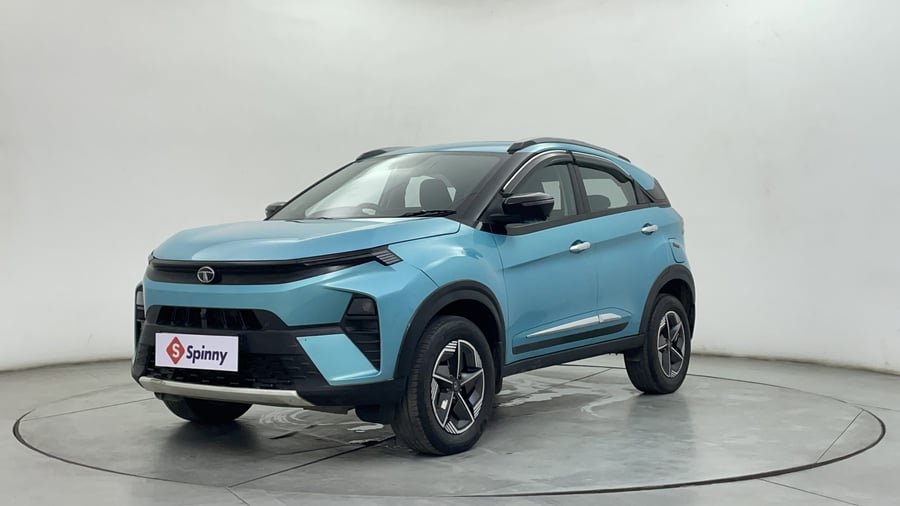
The Tata Nexon gives buyers more powertrain choices than most compact SUVs in India. It is available with petrol, diesel and factory-fitted CNG engines, while the separate Nexon EV offers two battery options. Each version has different strengths in terms of mileage, performance, convenience and running costs.
The diesel delivers the highest claimed fuel economy, while the CNG and electric versions can reduce everyday running expenses. Petrol remains suitable for buyers with lower annual usage. This guide compares the claimed figures, tested mileage, ownership costs and best Nexon variant for different driving requirements.
Table of Contents
- Tata Nexon Engine and Powertrain Options
- Tata Nexon Claimed Mileage
- Claimed vs Real-World Mileage
- City Mileage Comparison
- Highway Mileage Comparison
- Petrol vs Diesel vs CNG vs EV Running Costs
- Tata Nexon Mileage Compared with Rivals
- Which Tata Nexon Should You Choose?
- How to Improve Tata Nexon Mileage
- Summary
- FAQs
Tata Nexon Engine and Powertrain Options
The Nexon is available with a 1.2-litre turbo-petrol engine, a 1.5-litre diesel engine and a 1.2-litre turbocharged CNG engine.
The petrol engine produces approximately 120 PS and 170 Nm. Depending on the Nexon variants, it is offered with five-speed and six-speed manual gearboxes, a six-speed AMT and a seven-speed dual-clutch automatic transmission.
The diesel engine produces approximately 115 PS and 260 Nm. Buyers can choose between a six-speed manual and a six-speed AMT.
The Nexon iCNG uses a lower-output version of the 1.2-litre turbo engine. It produces approximately 100 PS and 170 Nm and is currently paired with a six-speed manual transmission.
The Nexon EV is sold with 30 kWh and 46.08 kWh battery packs. The larger 46.08 kWh version produces 106 kW and 215 Nm.
| Powertrain | Engine or Battery | Transmission | Maximum Output |
| Petrol | 1.2-litre turbo-petrol | 5-speed MT, 6-speed MT, 6-speed AMT, 7-speed DCT | 120 PS, 170 Nm |
| Diesel | 1.5-litre turbo-diesel | 6-speed MT, 6-speed AMT | 115 PS, 260 Nm |
| CNG | 1.2-litre turbo-CNG | 6-speed MT | 100 PS, 170 Nm |
| Electric | 30 kWh or 46 kWh battery | Single-speed automatic | Up to 106 kW, 215 Nm |
Tata Nexon Claimed Mileage
The Nexon diesel automatic has the highest listed fuel-economy figure at approximately 24.08 kmpl. The diesel manual follows closely at 23.23 kmpl.
Petrol mileage ranges from approximately 17.01 to 17.44 kmpl, depending on the transmission. The CNG version is listed at around 24 km/kg.
| Powertrain | Transmission | Claimed Mileage or Range |
| Petrol | Manual | 17.44 kmpl |
| Petrol | AMT | 17.18 kmpl |
| Petrol | DCT | 17.01 kmpl |
| Diesel | Manual | 23.23 kmpl |
| Diesel | AMT | 24.08 kmpl |
| CNG | Manual | Around 24 km/kg |
| Nexon EV 30 kWh | Automatic | Up to 275 km |
| Nexon EV 46 kWh | Automatic | Up to 489 km |
The current 30 kWh Nexon EV has a listed certified range of approximately 275 km. The 46 kWh version has a certified range of up to 489 km under the applicable MIDC testing cycle.
These figures are measured under controlled testing conditions. Actual efficiency depends on traffic, temperature, speed, load, tyre pressure, air-conditioning use and driving style.
Tata Nexon Claimed vs Real-World Mileage
Real-world mileage is usually lower than the certified figure because everyday driving involves congestion, idling, changing speeds and varying road conditions.
Independent tests also produce different results because each publication follows its own route, speed and testing process. The figures below should therefore be viewed as reference ranges rather than guaranteed mileage.
| Variant | Tested City Mileage | Tested Highway Mileage |
| Petrol DCT | 9.10 kmpl | 16.60 kmpl |
| Diesel manual | 14.04 to 16.50 kmpl | 19.40 to 21.18 kmpl |
| CNG manual | 11.65 km/kg | 17.50 km/kg |
| Nexon EV 46 kWh | Combined city and highway test | 329.7 km tested range |
CarWale recorded 9.10 kmpl in the city and 16.60 kmpl on the highway from the petrol DCT. Its combined tested average was 10.83 kmpl.
The diesel manual returned 14.04 kmpl in the city and 21.18 kmpl on the highway in one test. Another independent test recorded 16.5 kmpl in urban conditions and 19.4 kmpl on the highway.
The CNG manual returned 11.65 km/kg in city driving and 17.5 km/kg on the highway in CarWale’s test.
The 46 kWh Nexon EV covered 329.7 km during a complete real-world range test. Tata’s more realistic C75 range estimate for this version is approximately 350 to 370 km under suitable conditions.
Tata Nexon City Mileage Comparison
The petrol Nexon is suitable for buyers who mainly complete short urban journeys. Its compact size and multiple automatic options make it convenient in traffic. However, the turbo-petrol engine can consume considerably more fuel in slow-moving conditions.
The petrol DCT may return single-digit mileage in heavy traffic. The AMT can be more economical when driven gently, although its gear changes may not feel as smooth as the DCT.
The diesel Nexon provides stronger low-speed torque and better fuel efficiency. It becomes financially attractive for buyers covering substantial monthly distances. However, a diesel may not be ideal when the vehicle is used only for very short journeys.
The CNG version offers lower fuel costs without requiring home charging. Its turbocharged engine also gives it stronger performance than many naturally aspirated CNG cars. However, owners must consider CNG availability, longer refuelling queues and reduced performance when running on gas.
The Nexon EV has the lowest potential urban running cost when charged at home. Regenerative braking can also recover energy during repeated slowing and braking. Its suitability depends heavily on access to reliable home or workplace charging.
Why City Mileage Varies
Several factors influence Nexon mileage in urban conditions:
- Traffic congestion: Repeated braking and acceleration increase fuel consumption.
- Journey length: Short trips prevent the engine from reaching an efficient operating temperature.
- Driving style: Strong acceleration causes the turbocharged engines to use more fuel.
- Air-conditioning: Continuous AC use places an additional load on the powertrain.
- Idling: Fuel is consumed without covering any distance.
- Tyre pressure: Underinflated tyres increase rolling resistance.
- Vehicle load: Additional occupants and luggage increase the energy required to move the car.
Tata Nexon Highway Mileage Comparison
All four Nexon powertrains become more efficient when driven at steady speeds.
The petrol version performs well on open roads, particularly when quick overtaking is required. Highway mileage can improve considerably compared with congested city driving. However, repeated high-speed acceleration can quickly reduce efficiency.
The diesel is the strongest option for frequent long-distance use. Its higher torque makes highway cruising and overtaking easier, especially with passengers and luggage. Tested highway figures of approximately 19 to 21 kmpl make it the most suitable Nexon for buyers who regularly travel between cities.
The CNG Nexon can also reduce highway fuel expenses. However, buyers must plan refuelling stops more carefully because CNG stations may be limited on some routes.
The Nexon EV is comfortable for planned intercity journeys, particularly in the 46 kWh version. Nevertheless, highway range can fall at sustained high speeds. Charging availability, charger reliability and charging time should be considered before undertaking longer trips.
Tata Nexon Running Cost Comparison
The following calculation assumes annual driving of 12,000 km.
Representative real-world efficiency assumptions have been used instead of the most optimistic claimed figures:
- Petrol mileage: 12 kmpl
- Diesel mileage: 18 kmpl
- CNG mileage: 16 km/kg
- EV efficiency: 7.3 km/kWh
- Petrol price: ₹100 per litre
- Diesel price: ₹90 per litre
- CNG price: ₹80 per kg
- Home electricity price: ₹8 per kWh
Fuel and electricity prices vary between cities. These figures are intended only as a consistent ownership-cost example.
| Expense | Petrol | Diesel | CNG | Electric |
| Annual distance | 12,000 km | 12,000 km | 12,000 km | 12,000 km |
| Annual consumption | 1,000 litres | 667 litres | 750 kg | 1,644 kWh |
| Estimated annual energy cost | ₹1,00,000 | ₹60,030 | ₹60,000 | ₹13,152 |
| Estimated five-year energy cost | ₹5,00,000 | ₹3,00,150 | ₹3,00,000 | ₹65,760 |
Under these assumptions, the diesel and CNG versions could save approximately ₹2 lakh in fuel over five years compared with petrol.
The EV could save more than ₹4.3 lakh in energy expenses if it is charged primarily at home. However, this comparison does not include the purchase-price difference, charger installation, insurance, finance costs, maintenance or resale value.
Public fast charging is usually more expensive than home charging. Buyers who depend heavily on paid public chargers should calculate their costs separately.
Also Read: Ultimate Guide to Selling Your Tata Nexon
When Does Each Nexon Powertrain Make Financial Sense?
The petrol Nexon is usually the simplest option for buyers driving fewer kilometres every year. Its lower purchase price can make more sense when annual usage is limited.
The diesel becomes easier to justify when monthly driving is high. It is particularly suitable for frequent highway users who value stronger torque and a longer driving range.
CNG can work well for regular city commuters who have convenient access to filling stations. Its running cost can be close to diesel while avoiding the need for EV charging infrastructure.
The Nexon EV offers the lowest everyday energy cost for owners with home charging. It becomes especially attractive when the car covers predictable daily routes and returns to the same parking location each night.
Tata Nexon Mileage vs Competitors
The Nexon competes with petrol, diesel and CNG compact SUVs. Direct comparisons require caution because different models use different engines, transmissions and testing methods.
| Model | Available Powertrains | Claimed Mileage Range |
| Tata Nexon | Petrol, diesel and CNG | 17.01 kmpl to 24 km/kg |
| Maruti Suzuki Brezza | Petrol and CNG | 17.80 kmpl to 25.51 km/kg |
| Kia Sonet | Petrol and diesel | 18.6 to 24.1 kmpl |
| Hyundai Venue | Petrol and diesel | 17.9 to 20.99 kmpl |
| Mahindra XUV 3XO | Petrol and diesel | 17.96 to 21.2 kmpl |
| Maruti Suzuki Fronx | Petrol and CNG | 20.01 kmpl to 28.51 km/kg |
Current comparison data shows that the Brezza and Fronx are more economical on paper in petrol and CNG form. The Sonet diesel also has a competitive claimed figure.
The Nexon’s advantage is its unusually broad powertrain range. Buyers can choose petrol, diesel, CNG or a fully electric version while retaining a similar compact-SUV format.
Petrol vs Diesel vs CNG vs EV: Which Nexon Should You Choose?
Choose the Petrol Nexon If:
- Your annual driving is relatively low.
- Most journeys are short and within the city.
- You want the widest choice of transmissions.
- Smooth automatic driving is more important than minimum running cost.
- You do not have convenient access to CNG or home charging.
Choose the Diesel Nexon If:
- You regularly drive long distances.
- Your annual usage is high.
- Highway mileage is a priority.
- You frequently travel with passengers and luggage.
- You want strong low-speed torque.
Choose the Nexon CNG If:
- You want lower running costs without buying an EV.
- CNG stations are easily accessible in your area.
- Most journeys are predictable city commutes.
- A manual transmission suits your driving needs.
- You are comfortable planning fuel stops on longer journeys.
Choose the Nexon EV If:
- You have a dedicated home or workplace charger.
- Most journeys are within a predictable daily range.
- Minimum everyday running cost is a priority.
- You want quiet and smooth urban performance.
- You are comfortable planning charging stops for highway trips.
Also Read: Tata Nexon EV Safety Rating
How to Improve Tata Nexon Mileage
Maintain a steady speed and accelerate gradually. Strong throttle inputs cause the turbocharged petrol and diesel engines to consume more fuel.
Use the correct gear and avoid making the engine struggle at very low speeds. On automatic versions, gentle acceleration encourages earlier upshifts.
Check the tyre pressure regularly. Underinflated tyres increase fuel consumption and cause faster tyre wear.
Avoid unnecessary idling. Switch off the engine during extended waits when it is safe to do so.
Remove unnecessary luggage from the boot. Additional weight increases fuel or electricity consumption.
Keep the vehicle serviced according to Tata’s recommended schedule. Dirty filters, incorrect wheel alignment and worn components can affect efficiency.
EV owners should use regenerative braking effectively and maintain moderate highway speeds. Strong acceleration and sustained high speeds can reduce driving range.
Summary
The Tata Nexon diesel delivers the best fuel efficiency for frequent highway users. Real-world highway mileage can reach approximately 19 to 21 kmpl under suitable conditions.
The petrol version provides the widest choice of transmissions but can return relatively low mileage in congested traffic.
The Nexon CNG lowers fuel expenses and retains usable boot space through Tata’s twin-cylinder arrangement. Its suitability depends on access to CNG stations.
The Nexon EV offers the lowest potential running cost. The 46 kWh version has a certified range of up to 489 km, while tested real-world range is closer to approximately 330 to 370 km.
The right Nexon depends on monthly usage, driving environment, refuelling or charging access and the initial purchase budget.
Also Read: How to Buy a Used Tata Nexon?
FAQs About Tata Nexon Mileage
Q. What is the mileage of the Tata Nexon petrol?
The petrol Nexon has a listed mileage of approximately 17.01 to 17.44 kmpl. The figure varies between the manual, AMT and dual-clutch automatic versions.
Q. What is the real-world mileage of the Tata Nexon diesel?
Independent tests recorded approximately 14.04 to 16.5 kmpl in the city and 19.4 to 21.18 kmpl on the highway.
Q. What is the mileage of the Tata Nexon CNG?
The Nexon CNG has a listed figure of around 24 km/kg. One independent test recorded 11.65 km/kg in the city and 17.5 km/kg on the highway.
Q. What is the real-world range of the Tata Nexon EV?
The 46.08 kWh Nexon EV covered 329.7 km during an independent range test. Tata’s C75 real-world estimate is approximately 350 to 370 km under suitable conditions.
Q. Which Tata Nexon has the lowest running cost?
The Nexon EV usually has the lowest running cost when charged at home. CNG and diesel are the next most economical options, depending on local fuel prices and driving conditions.
Q. What is the mileage of Tata Nexon diesel?
The Tata Nexon 1.5-litre diesel delivers up to about 23.2 kmpl with the manual and around 24 kmpl with the AMT (ARAI-claimed). Real-world figures are usually 17-19 kmpl.