The Tata Nexon EV and MG Windsor EV are both popular electric cars, but they take different approaches. The Nexon EV looks like a typical compact SUV, whereas the Windsor EV focuses more on cabin area and comfort for passengers.
In the independent comparison discussed here, the Nexon EV delivered more range, while the Windsor used slightly less electricity per kilometre. The important detail is the battery: these results compare the Nexon EV 45kWh with the Windsor EV 38kWh. We will also explain where the larger Windsor Pro fits, alongside charging times, running costs and current prices.
Table of Contents
Tata Nexon EV vs MG Windsor EV: Specifications
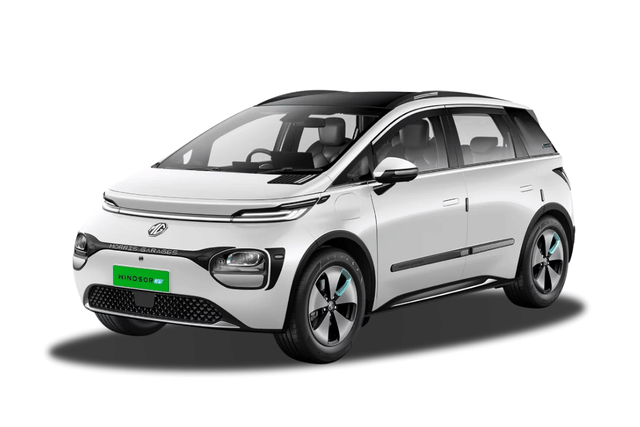
The Nexon EV 45 has a 45kWh battery, larger than the standard Windsor’s 38kWh. It also makes 6kW more power (106kW vs 100kW) and 15Nm more torque (215Nm vs 200Nm).
| Specification | Tata Nexon EV 45 | MG Windsor EV |
| Battery capacity compared | 45kWh | 38kWh |
| Maximum motor power | 106kW | 100kW |
| Maximum torque | 215Nm | 200Nm |
| Driven wheels | Front | Front |
| Seating capacity | Five | Five |
| Claimed range | 489km | 332km |
The Windsor Pro includes a battery capacity of 52.9 kWh, with a range of up to 449 km. The figures derived from this model should not be confused with those of the 38kWh version. Similarly, the older Nexon EV with the 40.5kWh battery is different from the Nexon EV 45 tested here.
Also Read: Tata Nexon EV Variants Guide: Choose the Best Variant

Claimed Range vs Real-World Range
The claimed figures suggest a substantial advantage for the Tata, but the difference becomes much smaller on the road. An independent comparison published in October 2025 brought together the following test results for these battery versions.
| Range measure | Nexon EV 45 | Windsor EV 38kWh |
| Claimed range | 489km | 332km |
| Test-derived city range | 355km | 327km |
| Test-derived highway range | 345km | 289km |
| Published overall range | 350km | 308km |
In the published overall results, the Nexon led by 42 km. The Windsor came closer to its claimed figure, but that doesn’t mean it travelled further. Closeness to the claim and actual distance are two different measures.
Testing used fixed routes, recommended tyre pressures and air-conditioning at 22°C. Range was calculated from the proportion of battery charge consumed, rather than driving both vehicles until they stopped. Treat the numbers as useful references, with room for weather, traffic and driving habits to change your experience.
City Range: How Much Does the Difference Matter?
In the city, the Nexon went 28km further. This ultimately allows for increased flexibility in the number of charges needed, but when analysed in relation to a user who typically makes a daily commute of 30–50 km and charges at home, the results from both tests would indicate enough range for habitual use.
Urban efficiency depends on more than the distance on your navigation app. An hour spent travelling slowly with the air-conditioning running can use energy differently from a shorter, flowing journey. Regenerative braking recovers some energy during deceleration, but it does not make repeated hard acceleration and braking free.
Urban customers appreciate the convenience of charging just as much as the importance of the longest distance that can be travelled. Charging becomes easy if the vehicle can be plugged in when parked overnight, as in that case the battery will never have to be completely drained.If you rely on public chargers, range matters much more, because every recharge needs planning.
Also Read: How to Increase Driving Range in MG Windsor EV?
Highway Range: The Nexon Has More Breathing Room
In a separate standalone range test, the Nexon recorded highway efficiency of 7.67km/kWh, with Eco mode selected and regenerative braking at its least aggressive level. Its performance on that route was relatively close to its urban result. That should not be read as a promise that speed has little effect on range.
For example, taking the cars from a charge of 80% to a charge of 10%, it is possible to estimate the distance that can be travelled at 70% of the published highway distance using the Nexon and the Windsor. The distance that can be expected to be covered is around 242 km for the Nexon and 202 km for the Windsor. This information is only usable for planning purposes.
A full car, luggage, hills and sustained higher speeds can reduce the distance available. Choose charging stops with a reserve and identify an alternative nearby.
Efficiency: Why the Windsor Still Has an Advantage
In the published overall results, the Nexon returned 7.79km/kWh and the Windsor 8.1km/kWh. Multiply efficiency by battery size and you get range. So the Windsor used slightly less electricity per kilometre, even though it covered less distance on a charge than the Nexon.
Think of battery capacity as the amount of energy available and efficiency as how carefully the car uses it. A larger battery can compensate for higher consumption. That is why range and running cost should be considered separately when comparing EVs.
For a buyer charging at home, a small efficiency advantage may only save a modest amount each month.
Charging Times: What Independent Testing Found
The charging analysis, which came out in April 2025, covered a number of charging sessions on DC chargers that had the potential to surpass the maximum charging speed of the automobile. Considering the same charging phase, the Nexon EV 45 completed its charge in 29 minutes while the Windsor 38kWh required 35 minutes.
| DC charging measure | Nexon EV 45 | Windsor EV 38kWh |
| Battery window assessed | 20–80% | 20–80% |
| Reported charging time | 29 minutes | 35 minutes |
According to the analysis performed, Tata was faster, although it was charging a bigger capacity battery. But charging speed is not constant during a session. The time spent charging can be affected by the initial charge, battery temperature, as well as the charging device used.
Home charging is a different calculation.MG quotes around seven hours for a 10–100% charge of the 38kWh Windsor using a 7.4kW AC charger. Tata quotes about 6.6 hours for 10–100% on the Nexon EV 45 with a 7.2kW AC charger. Confirm the charger supplied with your chosen variant, installation requirements and available electrical capacity. A suitable overnight setup can make ownership much easier than relying entirely on fast chargers.
Also Read: EV Charging Costs at EV Charging Stations in India
Monthly Electricity Costs Compared
To demonstrate operating costs, let’s suppose that you drive 1,500km each month at a cost of electricity of ₹8 per kWh. The computations below use published overall efficiencies to give a rough estimate of the energy used for driving, but they do not constitute a full electricity-bill estimation.
| Calculation | Nexon EV 45 | Windsor EV 38kWh |
| Reference efficiency | 7.79km/kWh | 8.1km/kWh |
| Battery energy for 1,500km | Approximately 193kWh | Approximately 185kWh |
| Energy cost at ₹8/kWh | Approximately ₹1,540 | Approximately ₹1,481 |
| Energy cost per kilometre | Approximately ₹1.03 | Approximately ₹0.99 |
Under this assumption, the figures indicate the difference to be approximately ₹59 a month. If there are transmission losses, there would be more electricity consumed from the grid, and public charging may attract higher tariffs and other charges. The battery rental costs would be additional if applicable.
This puts the efficiency difference into perspective. Compare your actual home tariff and likely public-charging use, then add insurance, servicing, tyres and finance payments. A small saving on electricity should not outweigh a car that fits your family or budget substantially better.
Tata Nexon EV vs MG Windsor EV: Pricing

In order to obtain an accurate price comparison between the cars, it is important to compare only those price quotes that include the battery. It is not acceptable to compare the lowest quoted price of the smaller-battery Nexon car with Nexon EV 45. Likewise, it is necessary to keep separate Windsor Battery-as-a-Service pricing from ownership prices.
| Battery version | Ex-showroom price range |
|---|---|
| Tata Nexon EV 45kWh | ₹14.34 lakh–₹17.89 lakh |
| MG Windsor EV 38kWh | ₹14.85 lakh–₹17.15 lakh |
| MG Windsor EV Pro 52.9kWh | ₹18.05 lakh–₹19.15 lakh |
These prices were verified in November 2026. The Nexon Creative 45 comes in at a lower price than the Windsor Excite, although equipment specifications differ between the two. It is better to check the exact models of interest than to think that entry-level versions offer similar equipment.
MG also advertises an entry Windsor BaaS offer from ₹9.99 lakh plus ₹4.30 per kilometre for battery usage. That lower upfront amount is not directly comparable with a battery-inclusive Nexon price. Review the contract’s minimum billing, financing conditions, transfer terms and applicable charges, with charging electricity budgeted separately.
Also Read: Should you buy the MG Windsor EV in the BaaS scheme: Pricing Comparison
Where Does the Windsor Pro Fit?
The Windsor Pro could change your decision, because its 52.9kWh battery is larger than the Nexon’s 45kWh. The manufacturer has provided an official range of 449km for this vehicle, but the 308km tested figure in this article applies only to the regular 38kWh Windsor.
The independent comparison used here does not establish the Pro’s real-world range against the Nexon EV 45. Multiplying the smaller Windsor’s efficiency by the Pro’s battery capacity would be an estimate, not a tested result. Avoid treating such a calculation as proof of a range winner.
If you often make trips between urban centres and have a reasonable budget, you should put Pro on your list of considerations. Check its range, charging speed and whether the extra cost is worth it for you.
Everyday Practicality and Used-EV Checks
The Nexon’s compact footprint and the Windsor’s roomier cabin give you different reasons to choose them. Try both on familiar roads, including your parking area. Bring regular passengers along and check seating comfort, access and luggage space with your usual bags.
Sort out charging access before you buy. Check with your housing society to see if approval is required, and how the cable is routed to the car.
For a used EV, verify the exact battery version, service history and remaining warranty conditions. Ask for battery-health information where available and confirm whether the battery is owned outright or covered by a separate contract. On Spinny, compare available listings by budget and requirements, then review the individual vehicle’s details.

Which EV Should You Choose?
Between the two types of batteries that have been put to the test, the Nexon EV 45 has proven to be the best in terms of distance between charging stations. Its larger battery also allows one to have more flexibility when driving on the highway.
The Windsor 38kWh deserves attention if cabin comfort, rear-seat space and regular urban use matter most. Its tested efficiency is slightly better, although the electricity saving alone is too small to decide the purchase. With convenient home charging, its range may already meet your routine comfortably.
Select your usual week, the total length of your most prolonged normal journey, and the total cost of ownership. If you plan to compare findings, include the Windsor Pro separately and ensure that you leave a charging reserve for whichever car you end up purchasing.
Related Blogs:
Tata Nexon EV BaaS Explained: Price, Payment Plan
MG Windsor BaaS Explained: Price, Payment Plan
FAQs
Q. Which offers more real-world range, the Nexon EV or Windsor EV?
In the cited comparison, the Nexon EV 45 returned a published overall range of 350km, against 308km for the Windsor 38kWh. This conclusion does not cover the larger-battery Windsor Pro.
Q. Is the MG Windsor more efficient than the Nexon EV?
The Windsor returned 8.1km/kWh overall, compared with 7.79km/kWh for the Nexon in the published testing. It used slightly less battery energy per kilometre, although the Tata travelled further per charge.
Q. Which charged faster in the independent analysis?
The Nexon EV 45 took 29 minutes to charge from 20–80%, while the Windsor 38kWh took 35 minutes. Those reported results can vary with battery temperature, charger output and other conditions.
Q. Does the 308km result apply to the Windsor Pro?
No. It applies to the 38kWh Windsor. The Pro has a 52.9kWh battery and needs its own range assessment. Do not mix its claimed range with the smaller version’s tested figures.
Q. Does Windsor battery rental include charging electricity?
Treat battery rental and electricity as separate expenses. Check the BaaS agreement for minimum billing, financing terms and other charges. The advertised upfront price alone does not represent total ownership cost.
Q. Can either EV cover 300km without charging?
The reported results suggest that conditions and route matter. The Windsor’s highway estimate was below 300km, while the Nexon’s was above it. Neither figure guarantees a 300km journey with a comfortable reserve.
Q. What should I prioritise when buying either EV used?
Confirm battery capacity, condition information, service records, warranty eligibility and ownership terms. Check charging operation and choose a vehicle whose practical range comfortably covers your routine, rather than relying solely on the dashboard estimate.