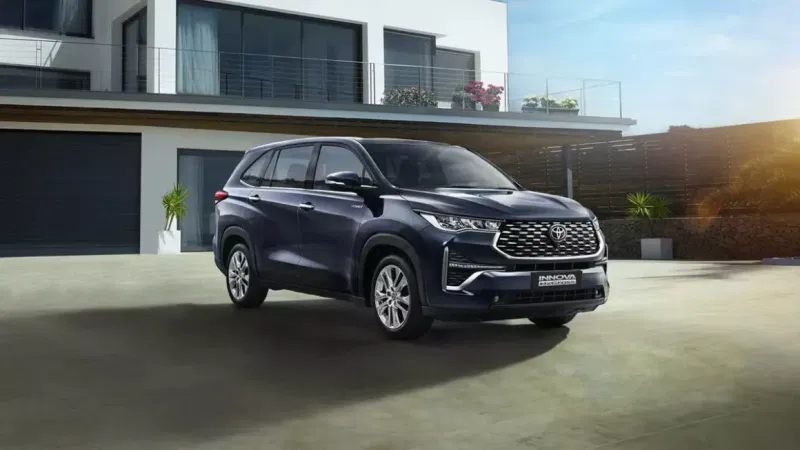
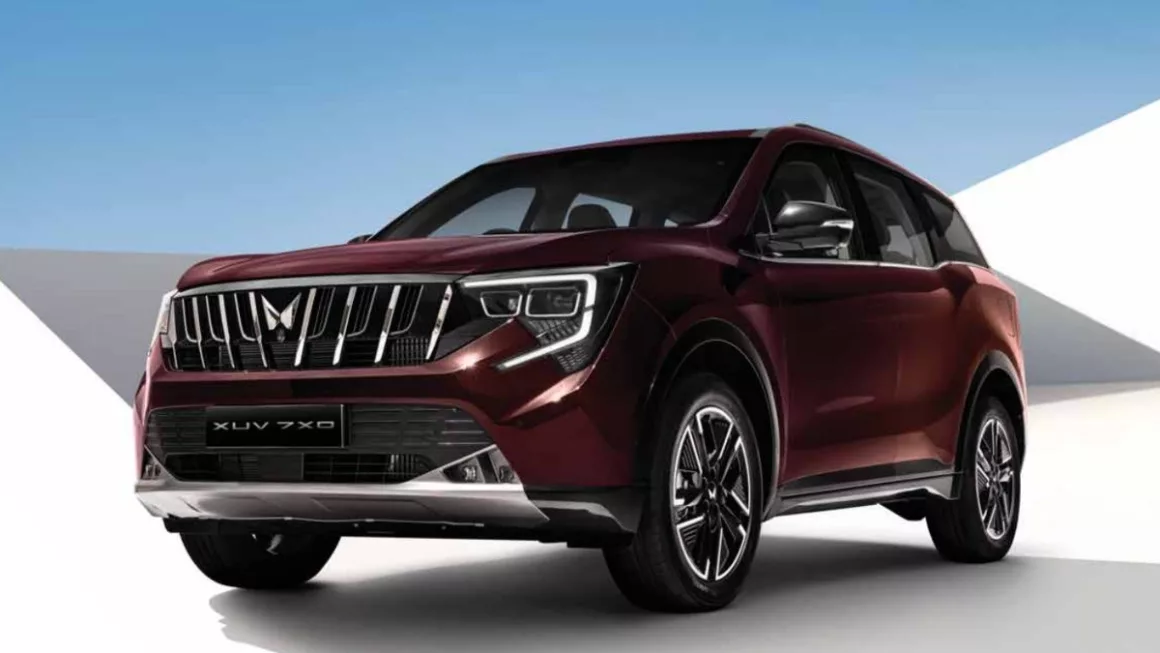
Diesel or hybrid? For buyers spending ₹20 lakh or more on a seven-seater, that’s the real question behind the Mahindra XUV 7XO and Toyota Innova Hycross. Mahindra’s 2026 update of the XUV700 keeps faith with a 2.2-litre diesel, alongside a 2.0-litre turbo-petrol. Toyota, on the other hand, has dropped diesel altogether in the Hycross in favour of a 2.0-litre strong-hybrid petrol that leans on an electric motor in slow traffic. The two even think about family travel differently: the XUV 7XO is a muscular SUV with optional all-wheel drive, while the Hycross is a spacious MPV built around comfort. With the Hycross facelift arriving on November 25, 2026, this guide compares their claimed and real-world mileage, works out what each costs to fuel every month, and shows which one suits city-heavy and highway-heavy driving.
Table of Contents
Mahindra XUV 7XO vs Toyota Innova Hycross: Specifications
The Mahindra XUV 7XO offers a 2.0-litre turbo-petrol making around 200 hp and a 2.2-litre diesel making up to around 185 hp, with a 6-speed manual or 6-speed automatic and all-wheel drive on select diesel automatics. The Toyota Innova Hycross comes with a 2.0-litre petrol (about 174 PS) with a CVT automatic, or a 2.0-litre strong hybrid producing about 186 PS combined, paired with an e-CVT.
| Specification | Mahindra XUV 7XO | Toyota Innova Hycross |
| Petrol | 2.0L turbo, ~200 hp / 380 Nm | 2.0L, ~174 PS / 205 Nm |
| Diesel | 2.2L, up to ~185 hp / 450 Nm (AT) | Not offered |
| Strong hybrid | Not offered | 2.0L petrol-hybrid, ~186 PS combined |
| Gearboxes | 6-speed MT or 6-speed AT | CVT (petrol) or e-CVT (hybrid) |
| Drive | FWD; AWD on select diesel ATs | FWD |
| Fuel tank | 60 litres | 52 litres |
| Body style | SUV | MPV |
The big difference is how each saves fuel. The XUV 7XO relies on the torque and efficiency of its diesel, while the Hycross hybrid uses an electric motor and battery to cut fuel use in stop-start traffic. Both offer a thirstier petrol option for buyers who cover fewer kilometres.
Also Read: Mahindra 7XO Complete Buying Guide
Mahindra XUV 7XO vs Toyota Innova Hycross: ARAI Mileage Figures
Only one of these two has official figures to compare. The Innova Hycross hybrid is rated at 23.24 km/l, and the petrol CVT at 16.13 km/l. Mahindra hasn’t published ARAI mileage figures for the XUV 7XO. Since it carries over the XUV700’s engines, the older model’s figures give a rough idea: about 17 km/l for the diesel manual, 16.57 km/l for the diesel automatic, and around 13 to 15 km/l for the petrol.
| Version | Mahindra XUV 7XO | Toyota Innova Hycross |
| Petrol (automatic) | Not published | 16.13 km/l |
| Diesel MT | Not published | Not offered |
| Diesel AT | Not published | Not offered |
| Strong hybrid | Not offered | 23.24 km/l |
The Hycross hybrid looks far ahead, but remember that its 23.24 km/l is for petrol, while the XUV 7XO’s diesel runs on a fuel that costs less per litre. That’s why the real-world tests and running costs below matter far more for this comparison than the lab figures.
Mahindra XUV 7XO vs Toyota Innova Hycross: Real World Fuel Efficiency
The fairest way to compare these two is to look at results from the same set of tests, run on the same routes. In one such series, the Innova Hycross hybrid managed about 13.1 km/l in the city and 16.1 km/l on the highway in Eco mode. The XUV 7XO diesel automatic, put through the same routine, returned around 11.28 km/l and 14.91 km/l.
With petrol automatics, the two are much closer. The Hycross petrol CVT recorded roughly 6.9 km/l in town and 12.4 km/l on the highway, while the XUV 7XO turbo-petrol automatic came in at about 7.6 km/l and 9.8 km/l.
| Version | City | Highway | 50:50 mixed |
| XUV 7XO diesel AT | 11.28 km/l | 14.91 km/l | 13.1 km/l |
| Innova Hycross hybrid | 13.1 km/l | 16.1 km/l | 14.6 km/l |
| XUV 7XO petrol AT | 7.6 km/l | 9.8 km/l | 8.7 km/l |
| Innova Hycross petrol CVT | 6.9 km/l | 12.4 km/l | 9.65 km/l |
It’s worth knowing that a second, separate round of testing painted a slightly different picture. There, the XUV 7XO diesel automatic returned about 9.64 km/l in the city and 18.9 km/l on the highway, and the diesel manual stretched to 11.12 km/l and an impressive 20.4 km/l. The Hycross hybrid returned around 13.26 km/l in the city and 18.52 km/l on the highway in the same kind of test, while its petrol-only version managed about 7.02 km/l and 11.1 km/l.
So what should you take from all this? The Hycross hybrid returns more kilometres per litre, and its advantage is clearest in the city, where its electric motor does much of the work. On the highway, the XUV 7XO diesel, especially the manual, can match or beat it. Keep in mind that the 7XO’s diesel costs less per litre than the Hycross’s petrol, which narrows the gap at the pump, as the next section shows.
Also Read: Toyota Innova Hycross Real World Mileage
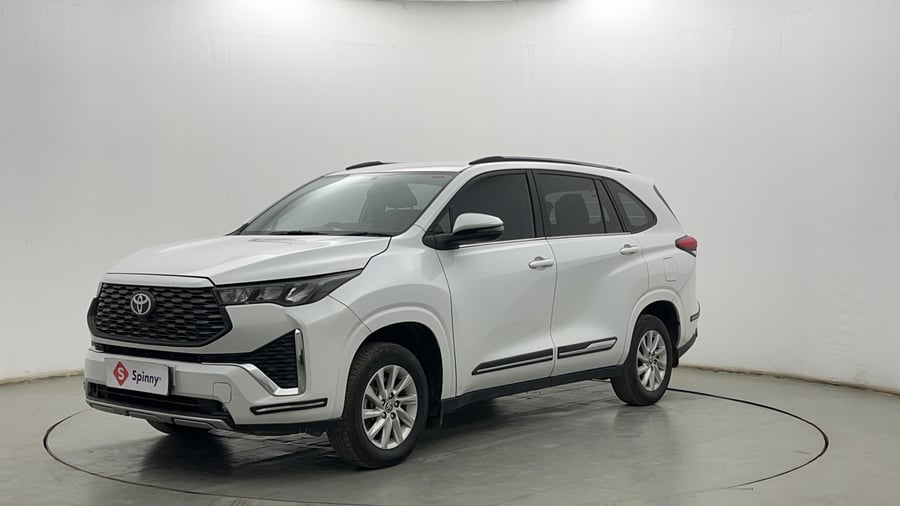
Mahindra XUV 7XO vs Toyota Innova Hycross: Fuel Cost Comparison
To get a feel for the monthly spend, picture driving 1,000 km a month with an even split of city and highway, which comes to 12,000 km over a year. We’ve worked these out using diesel at ₹90 a litre and petrol at ₹100 a litre, so the figures will shift slightly depending on where you live.
| Version | Mixed mileage | Cost per km | Monthly (1,000 km) | Yearly (12,000 km) |
| XUV 7XO diesel AT | 13.1 km/l | ₹6.87 | ₹6,870 | ₹82,443 |
| XUV 7XO diesel MT (second test) | 15.76 km/l | ₹5.71 | ₹5,711 | ₹68,528 |
| Innova Hycross hybrid | 14.6 km/l | ₹6.85 | ₹6,849 | ₹82,192 |
| XUV 7XO petrol AT | 8.7 km/l | ₹11.49 | ₹11,494 | ₹1,37,931 |
| Innova Hycross petrol CVT | 9.65 km/l | ₹10.36 | ₹10,363 | ₹1,24,352 |
As these numbers show, the XUV 7XO diesel automatic and the Hycross hybrid cost almost exactly the same to run, at under ₹6,900 a month each. The 7XO diesel manual is the cheapest of the lot, saving around ₹1,100 a month over the hybrid. Both petrol-only versions are far thirstier, costing roughly ₹3,500 to ₹4,600 more a month than their diesel or hybrid siblings. If fuel bills matter to you, pick the 7XO diesel or the Hycross hybrid, and avoid the non-hybrid petrols if you drive a lot.
Mahindra XUV 7XO vs Toyota Innova Hycross: Price Comparison

When it comes to price, the XUV 7XO is the more affordable of the two. It’s priced from roughly ₹13.99 lakh for the entry petrol manual to about ₹25.79 lakh for the top diesel automatic with all-wheel drive. The current Innova Hycross ranges from about ₹18.70 lakh for the entry petrol to roughly ₹32.95 lakh for the top hybrid (all prices ex-showroom).
| Car | Approx. ex-showroom price |
| Mahindra XUV 7XO | ₹13.99 lakh to ₹25.79 lakh |
| Toyota Innova Hycross (current) | ₹18.70 lakh to ₹32.95 lakh |
The hybrid Hycross sits well above most of the XUV 7XO range, so the running-cost match between the 7XO diesel and the Hycross hybrid comes at a noticeably lower purchase price with the Mahindra. Your choice really comes down to what you value most. The XUV 7XO suits buyers who want SUV styling, strong performance, a manual option and available all-wheel drive. The Hycross suits those who want a roomy, comfortable MPV with smooth, quiet hybrid running in the city and Toyota’s reputation for reliability.
The facelifted Hycross is due on November 25, 2026, and is widely expected to see a small price increase, so check the latest prices before you decide.
Buying used? The Hycross has been on sale since late 2022, and the XUV 7XO carries over the XUV700’s mechanicals, so you’ll find pre-owned Hycross and XUV700 models on Spinny across years and budgets. As you narrow things down, spend some time with the inspection report and service records, and on a hybrid, ask about the battery’s health and warranty coverage. Each Spinny Assured car is put through a 200-point inspection and includes a 1-year warranty, fixed pricing and a 5-day money-back guarantee.
Summary
The XUV 7XO and Innova Hycross take very different routes to saving fuel, yet they end up remarkably close at the pump. The Hycross hybrid returns more kilometres per litre, especially in the city, where its electric motor shines. The XUV 7XO diesel claws that back on the highway and with cheaper fuel, so the 7XO diesel automatic and the Hycross hybrid cost almost exactly the same to run, while the 7XO diesel manual is cheaper still. Both petrol-only versions are noticeably thirstier. In the end, it’s less about which one sips less and more about the kind of seven-seater you’d enjoy living with. If you want SUV styling, strong performance and a lower price, the XUV 7XO makes a strong case. If smooth, quiet city driving, MPV comfort and Toyota’s reputation matter more, the Innova Hycross hybrid is hard to beat.
Related Blogs:
Mahindra Scorpio N vs Mahindra XUV 7XO Real-World Mileage Comparison
Toyota Innova Hycross vs Kia Carnival Real-World Mileage Comparison
Toyota Fortuner vs Mahindra XUV700 Real World Mileage Comparison
FAQs about XUV 7XO and Innova Hycross Mileage Comparison
Q. Is the Hycross hybrid cheaper to run than the XUV 7XO diesel?
In real-world testing, the Hycross hybrid returns more kilometres per litre, but it runs on petrol, which costs more than diesel. At 1,000 km a month, the 7XO diesel automatic and the Hycross hybrid both cost a little under ₹6,900 a month to fuel.
Q. Will the 2026 Innova Hycross facelift give better mileage?
The facelift is due on November 25, 2026, and is expected to keep the same 2.0-litre petrol and hybrid engines, possibly with a version that can run on higher ethanol blends. Official mileage figures will only be confirmed at launch, so check back once they’re out.
Q. Does the XUV 7XO come with a hybrid option?
The XUV 7XO is offered with a 2.0-litre turbo-petrol and a 2.2-litre diesel, with manual and automatic gearboxes. If you want a strong hybrid seven-seater, the Innova Hycross is the one to look at.
Q. Can I get the Innova Hycross with a diesel engine?
The Hycross is petrol-only, offered as a standard petrol or a strong hybrid. If a diesel matters to you, the XUV 7XO is the one to pick between these two.
Q. I mostly drive in the city. Which one should I pick?
The Hycross hybrid is the better city companion. Its electric motor handles much of the low-speed driving, helping it return around 13 km/l in traffic, against about 9.6 to 11.3 km/l for the XUV 7XO diesel automatic in testing.
Q. Which one is better for long highway trips?
The XUV 7XO diesel has the edge here, especially the manual, which stretched to about 20.4 km/l on the highway in testing. Its 60-litre tank also gives it a longer range between fuel stops.
Q. Does the XUV 7XO AWD give lower mileage than the regular diesel?
Yes, by a small margin, since all-wheel-drive hardware adds weight and some driveline losses. If you don’t need it for rough roads or hill driving, the front-wheel-drive diesel is the more economical choice.