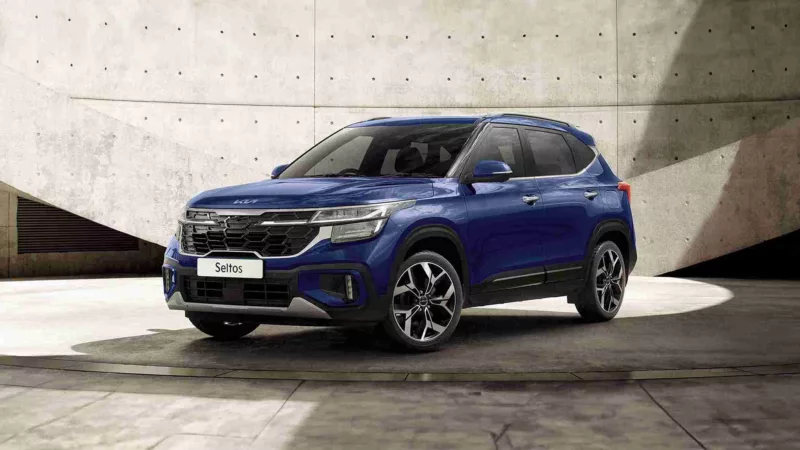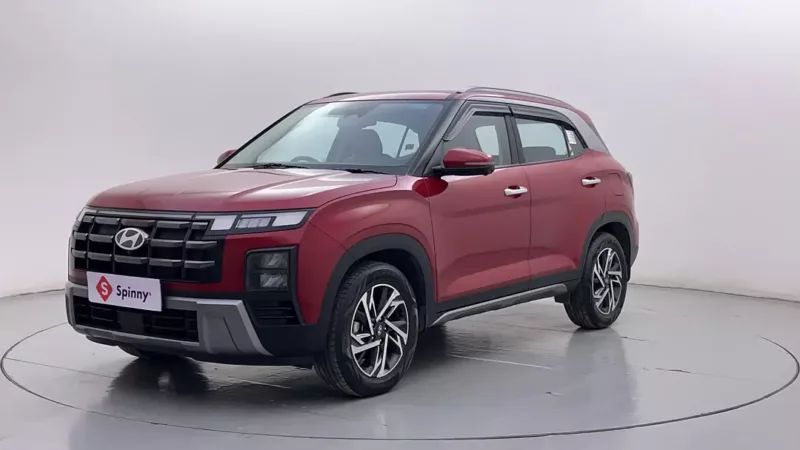
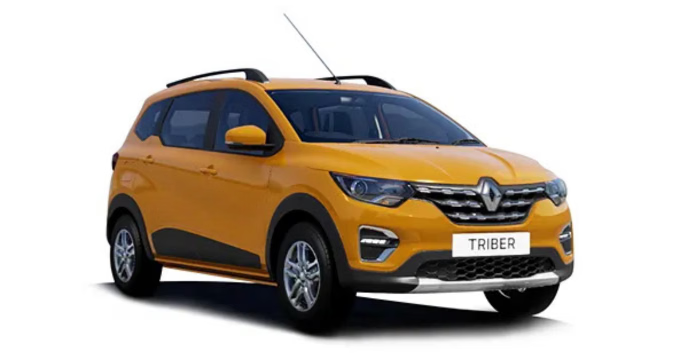
The Renault Triber and the Kia Carnival both offer seating for seven, but they target vastly different types of customers. Kia made its debut with the Carnival in India in 2024, while the Triber was launched in 2019 and received an update in 2025 with the option of a 1.0-litre petrol manual transmission and also the automatic manual transmission (AMT) option. In September 2026, they introduced the turbo version of the Triber, followed by the launch of the premium Carnival in India, which rolled out with a 2.2-litre diesel automatic transmission engine.
Size, engine and fuel type complicate the answer. Diesel costs less per litre than petrol in many cities, yet the Carnival is much larger. The new turbo Triber has a certified claim but no comparable city-and-highway test yet. We keep it separate from regular Triber tests, then convert measured results into monthly fuel bills. That gives buyers a clearer answer than putting two claimed mileage numbers side by side, especially when one car runs on petrol and the other on diesel.
Table of Contents
Renault Triber vs Kia Carnival: Specifications
The length of the Renault Triber is 3,985 mm, which is good enough to fit three rows in a vehicle that is less than four metres in length. The specifications of the vehicle consist of a naturally aspirated 999 cc electric engine with 72 PS and a torque of 96 Nm, with five speeds available in manual and automated modes. As far as the new introduction of a 1.0-litre turbo petrol engine is concerned, the engine produces 100 PS of power and has a torque of about 180 Nm. Both engines available in the Triber of 40 litres are able to drive the front wheels.
The Carnival is 5,155 mm long and offers seven seats in a 2+2+3 arrangement. Its 2,151 cc turbo-diesel produces approximately 193 PS and 441 Nm. An eight-speed automatic drives the front wheels, and its diesel tank holds 72 litres. Consider these figures alongside the space and performance provided.
| Specification | Renault Triber | Kia Carnival Limousine Plus |
| Current India-spec engines | 999 cc naturally aspirated petrol; 1.0-litre turbo-petrol | 2,151 cc turbo-diesel |
| Output | 72 PS/96 Nm; turbo 100 PS/180 Nm | Approximately 193 PS/441 Nm |
| Transmissions | Five-speed MT or AMT on regular petrol; five-speed MT on turbo | Eight-speed automatic |
| Driven wheels | Front | Front |
| Seating layout | Seven seats, 2+3+2 | Seven seats, 2+2+3 |
| Length | 3,985 mm | 5,155 mm |
| Liquid-fuel tank | 40 litres, petrol | 72 litres, diesel |
The Carnival is longer by 1,170 mm, which is essential for both passengers and city driving. The smaller Triber consumes less fuel according to the tests quoted, but its 72 PS engine might have trouble carrying seven people. The turbo gives it extra strength, but it’s not known how thrifty it is in real driving conditions.
Renault Triber vs Kia Carnival: ARAI Mileage Figures
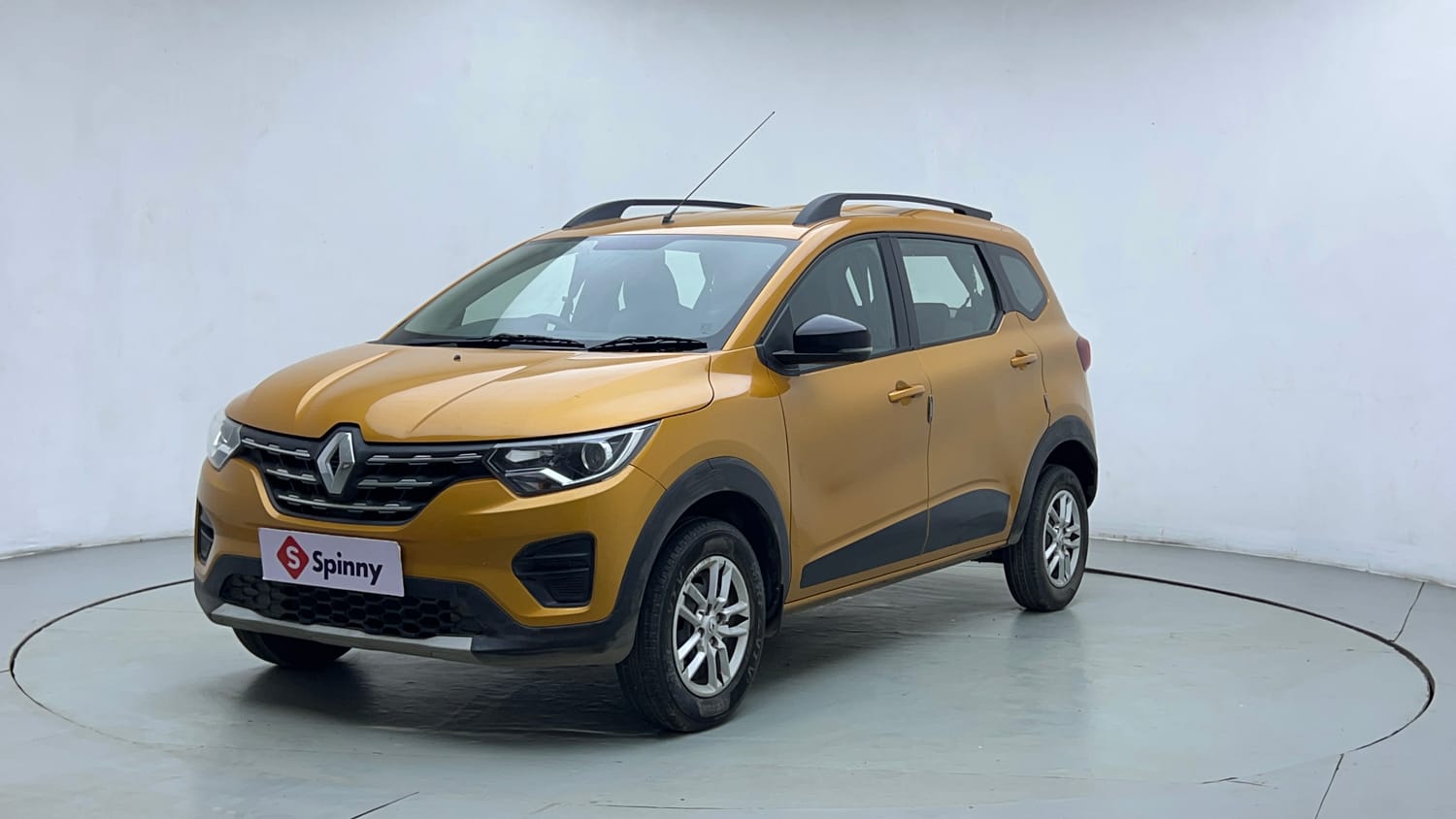
The official information shows that the fuel economy for the manual Triber is 19.76 km/l and for the AMT version is 19.59 km/l. The new turbo manual has a fuel economy rating of 21 km/l according to Renault. The turbo becomes the most fuel-efficient Triber on paper, even if it is more powerful. The 21 km/l rate is declared by Renault rather than based on real-life experience like family travels or stressful commutes.
The Kia Carnival diesel automatic claims 14.85 km/l. Each Triber has a higher certified km/l figure, but petrol and diesel prices differ. Compare rupees per kilometre after examining the tests. A Triber AMT result cannot be assigned to the new turbo manual.
| Vehicle and powertrain | Fuel | Claimed mileage |
| Triber 1.0 naturally aspirated, five-speed MT | Petrol | 19.76 km/l |
| Triber 1.0 naturally aspirated, five-speed AMT | Petrol | 19.59 km/l |
| Triber 1.0 turbo, five-speed MT | Petrol | 21 km/l |
| Carnival 2.2, eight-speed automatic | Diesel | 14.85 km/l |
Renault has an approved kit for converting the regular-engine manual models into CNG vehicles. The brochure does not mention anything about the turbo variants. There is no certified or similar CNG mileage figure mentioned for the said calculation.
Also Read: Kia Carnival Alternatives: Competitors of Kia Carnival
Renault Triber vs Kia Carnival: Real World Fuel Efficiency
In V3Cars’ July 2026 tank-to-tank trials, the normal Triber manual gave a fuel economy of 9.95 km/l in city conditions and 17.47 km/l on highways. The ordinary AMT SUV’s mileage stood at 10.92 and 16.92 km/l during trials in the same conditions as in the case of the manual variant. To reiterate, the regular AMT mileage was higher in city driving in this comparison, but it doesn’t warrant the conclusion of choosing a variant based on differences of less than 1 km/l in only one parameter.
Other reports list 7.24 km/l city and 10.80 km/l highway for the current Carnival diesel automatic. The publications and routes differ, so this is a comparison of reported measurements rather than a same-day head-to-head test. Each city result falls well below its respective ARAI claim. The Carnival figures belong to the 2024-onward diesel model; mileage tests of the older Indian Carnival refer to a different generation.
| Tested version | City | Highway | Equal-distance mixed estimate |
| Triber regular petrol MT | 9.95 km/l | 17.47 km/l | 12.68 km/l |
| Triber regular petrol AMT | 10.92 km/l | 16.92 km/l | 13.27 km/l |
| Triber turbo petrol MT | Not yet verified | Not yet verified | Not available |
| Carnival diesel AT | 7.24 km/l | 10.80 km/l | 8.67 km/l |
| Triber CNG retrofit | Not verified | Not verified | Not available |
In each scenario, the hybrid figures divide 1,000km by kilometres covered per litre in each case. These methods do not take into account the results of independent road tests. In another example, the 2025 Triber AMT managed to offer 13.64 km/l in the city and 17.86 km/l on the highway; conditions cause the figures to vary. In other words, AMT may not be capable of achieving the average numbers in this measurement.
Renault Triber vs Kia Carnival: Fuel Cost Comparison
Let’s say you travel 1,000 km a month, half of that in the city, and half of it on highways. This adds up to 12,000 km for a whole year. On 28 September 2026, the fuel prices average about ₹111.90 for petrol and ₹98.55 for diesel. So if you calculate your fuel consumption for each 500 km leg and multiply it by the cost of the fuel, your fuel expenses will certainly look different.
| Petrol version | Mileage basis | Fuel cost/km, mixed | Monthly fuel cost (1,000 km) | Annual fuel cost (12,000 km) |
| Triber regular petrol MT | 9.95 city / 17.47 highway | ₹8.83 | ₹8,826 | ₹1,05,909 |
| Triber regular petrol AMT | 10.92 city / 16.92 highway | ₹8.43 | ₹8,430 | ₹1,01,164 |
| Triber turbo petrol MT | No paired road test | Not calculated | Not calculated | Not calculated |
| Diesel version | Mileage basis | Fuel cost/km, mixed | Monthly fuel cost (1,000 km) | Annual fuel cost (12,000 km) |
| Carnival diesel AT | 7.24 city / 10.80 highway | ₹11.37 | ₹11,368 | ₹1,36,421 |
Compared to the Carnival in this respect, the Triber AMT vehicle charges about ₹2,938 lower on a monthly basis and ₹35,257 lower on an annual basis. The manual Triber variant is decreased on monthly expenses by about ₹2,542.
| CNG option | Tested km/kg figure | Monthly fuel cost (1,000 km) |
| Triber regular MT with approved retrofit kit | No comparable verified city/highway figure | Not calculated |
A CNG estimate needs measured kg consumed, local gas prices and petrol used during operation. Applying petrol mileage to CNG would mislead. The Carnival has no Indian petrol or CNG variant.
Also Read: Comparison: Used Renault Triber vs New Renault Triber
Renault Triber vs Kia Carnival: Price Comparison
When looking at the overall purchase decision, fuel cost is not the only factor. Renault has the basic Triber price starting at ₹5.80 lakh or ₹5,80,875 ex-showroom price. The turbo model that was launched on 28th September 2026 costs ₹7.84 lakh for the Evolution manual version and goes up to ₹8.99 lakh for the Emotion manual model. The Carnival Limousine Plus from Kia is priced at ₹59.64 lakh in the Indian market.
| Vehicle or example variant | Approximate ex-showroom price |
| Triber regular petrol Authentic | ₹5.81 lakh |
| Triber turbo Evolution MT | ₹7.84 lakh |
| Triber turbo Techno MT | ₹8.53 lakh |
| Triber turbo Emotion MT | ₹8.99 lakh |
| Carnival Limousine Plus diesel AT | ₹59.65 lakh |
The Carnival costs roughly ₹50.66 lakh more than the top turbo Triber shown. It provides a much larger cabin and more power; the Triber costs far less to buy. This purchase-price gap dwarfs the estimated yearly difference in fuel spending, so fuel savings alone cannot turn them into equivalent purchases. For used examples, check the generation, engine and gearbox before applying these figures.
Summary
When considering the published city and highway figures, the reported fuel efficiency of the Triber is higher, and it has a lower projected monthly fuel cost as compared to the Carnival. The results show that in the tests conducted, the regular petrol vehicle AMT of the Triber has the mileage of 10.92 km/l in city and 16.92 km/l on highway, while the diesel automatic Carnival shows 7.24 km/l and 10.80 km/l, respectively.
The Carnival makes sense if you need its far roomier cabin, more powerful diesel engine and premium second-row experience, and can justify the much higher purchase price. The Triber is the economical seven-seat choice on the measured evidence. Its new turbo has the strongest claimed figure at 21 km/l, but a real-world winner among Triber engines cannot be declared until independent city and highway results become available.
Also Read: Renault Triber Alternatives: Competitors of Renault Triber
FAQs
Q. Which has better real-world mileage, the Renault Triber or Kia Carnival?
The regular Triber petrol manual and AMT both beat the current Carnival diesel automatic in the cited city and highway tests. Those vehicles were tested by different publications, so the figures are useful references rather than a controlled head-to-head result.
Q. Is the 21 km/l Triber turbo figure real-world mileage?
No. Renault’s 21 km/l figure is a certified claim for the new 100 PS turbo manual. A comparable city-and-highway test was not available at the time of writing, so its actual mixed mileage and fuel bill remain unknown.
Q. What is the Carnival’s tested city mileage?
Studies list 7.24 km/l in city driving for the current 2.2-litre diesel automatic. At Pune diesel priced at ₹98.55 per litre, that is approximately ₹13.61 in fuel per city kilometre under the test conditions.
Q. Does the Triber come with a factory CNG version?
Renault offers an approved CNG retrofit kit for eligible regular-engine manual variants in select states. The brochure does not extend that kit to the new turbo. A verified city/highway CNG mileage figure is needed before estimating its running cost.
Q. Is the Triber AMT more economical than the manual?
It was in V3Cars’ July 2026 city test, returning 10.92 km/l against the manual’s 9.95 km/l. The manual did slightly better on the highway. These are single tests, and the AMT’s city advantage may not repeat on your route.
Q. Does the Carnival’s larger tank mean it needs fewer fuel stops?
Its 72-litre tank holds much more fuel than the Triber’s 40-litre tank. On the calculated equal-distance mixed figures, the tank-size advantage can outweigh its lower efficiency for distance between fills. Neither vehicle should be run until its tank is completely empty.