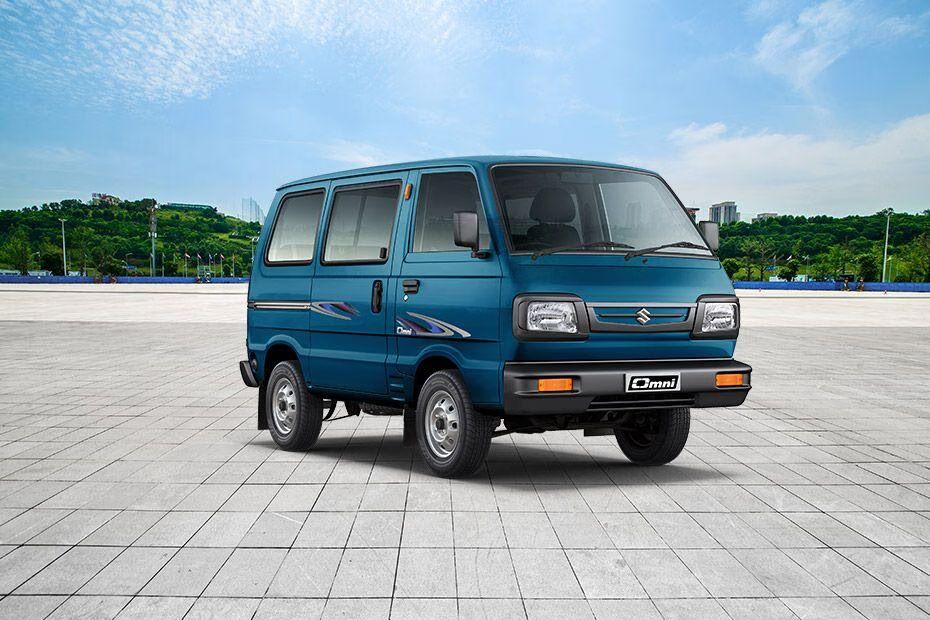
The Maruti Suzuki Omni is a small van that is known for having a basic set of mechanics and a simple design that promotes flexibility and versatility in carrying passengers. The image gallery displays the last model of the passenger variant of the Omni that was sold in India before it ceased production in 2019, including photos of the front, side, rear exterior profile, dashboard, front seats, second-row seat, third-row seat (on the 8-seater version), luggage compartment, and paint colours.
The final range included 5-seater and 8-seater petrol versions, both powered by a 796 cc three-cylinder engine and a 4-speed manual gearbox. The van’s basic layout changed very little over its long production run, so the final cars still retained the simple controls, sliding doors and tall cabin that defined the Omni for decades. Used Maruti Omni vans can also be explored on Spinny.
Table of Contents
Maruti Omni Exterior Images
One of the reasons that the Omni is so recognisable is due to its extremely simple yet distinctive design. The front is flat, the vertical sides are straight up and down, and the length is short. While it does have some visual flair, the overall shape is primarily focused on creating maximum usable cabin space.
It measures 3,370 mm long, 1,410 mm wide and 1,640 mm tall, with a 1,840 mm wheelbase and 165 mm of ground clearance. Its 4.1-metre turning radius also helps in tight city areas.
Key Highlights
| Exterior Feature | Highlight |
| Front design | Flat nose with rectangular clear-lens headlamps |
| Doors | Conventional front doors and sliding rear doors |
| Wheels | 12-inch steel wheels with commercial-style radial tyres |
| Rear styling | Upright hatch with high-mounted stop lamp |
Front Profile
The Omni has a nearly vertical nose and rectangular, clear-lensed headlamp assemblies when viewed from the front. Its grille is slim, and its bumper is made of thermoplastic. The windscreen is located very close to the front axle, giving it a compact appearance when viewed from the side.
The focus is purely functional, with a laminated windscreen, two-speed wiper and manual headlamp levelling.
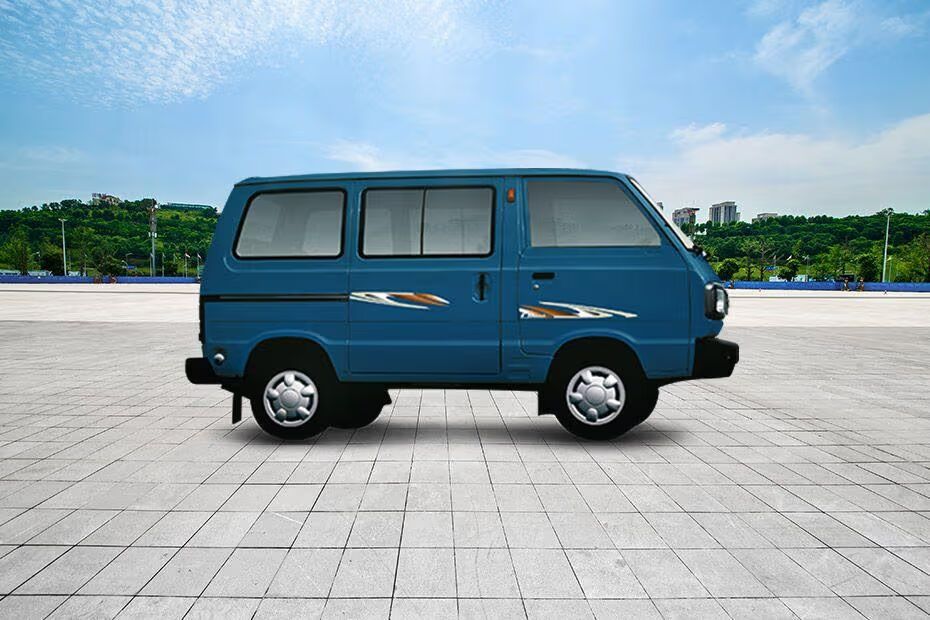
Side Profile
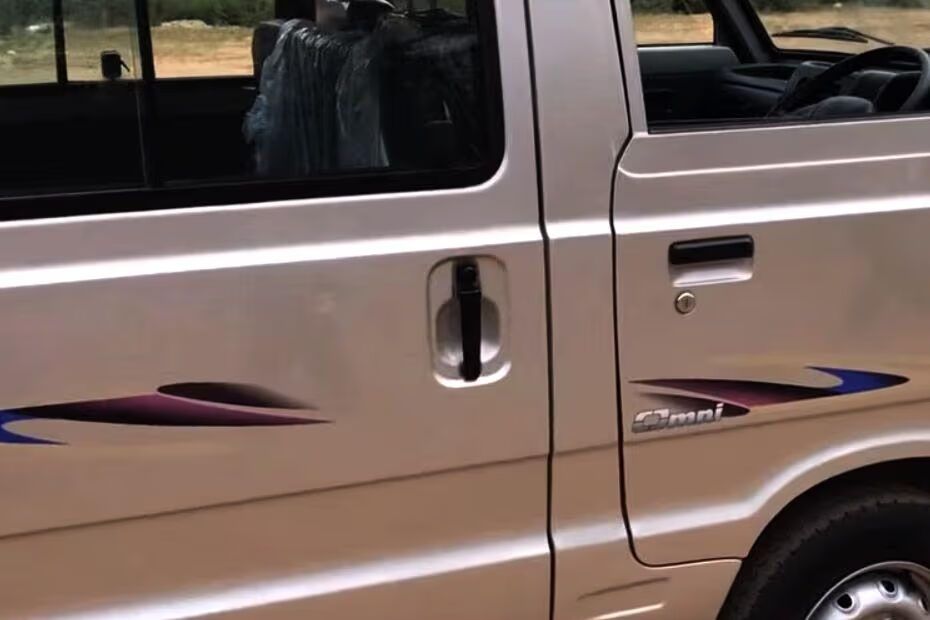
The side profile of the Omni offers the most insight into its packaging. The Omni’s tall roof, vertical sides,and short front and rear overhangs provide for the most efficient use of the 3,370 mm overall length for either passenger or cargo use. Also, the Omni’s rear sliding door feature offers ease of access when parking in tight areas.
The Omni uses 12-inch steel wheels and narrow tyres, while simple body graphics add some visual detail.
Rear Profile
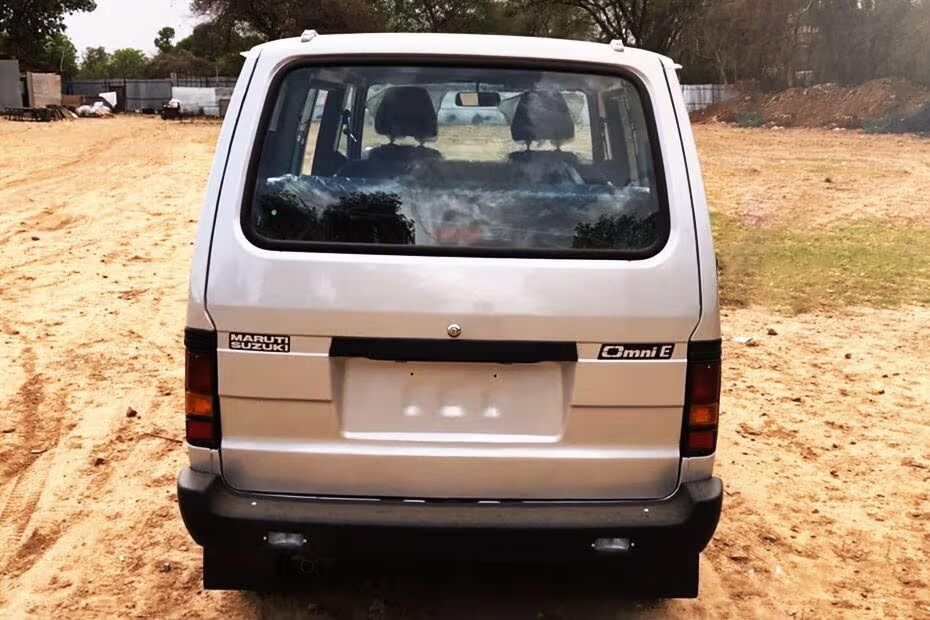
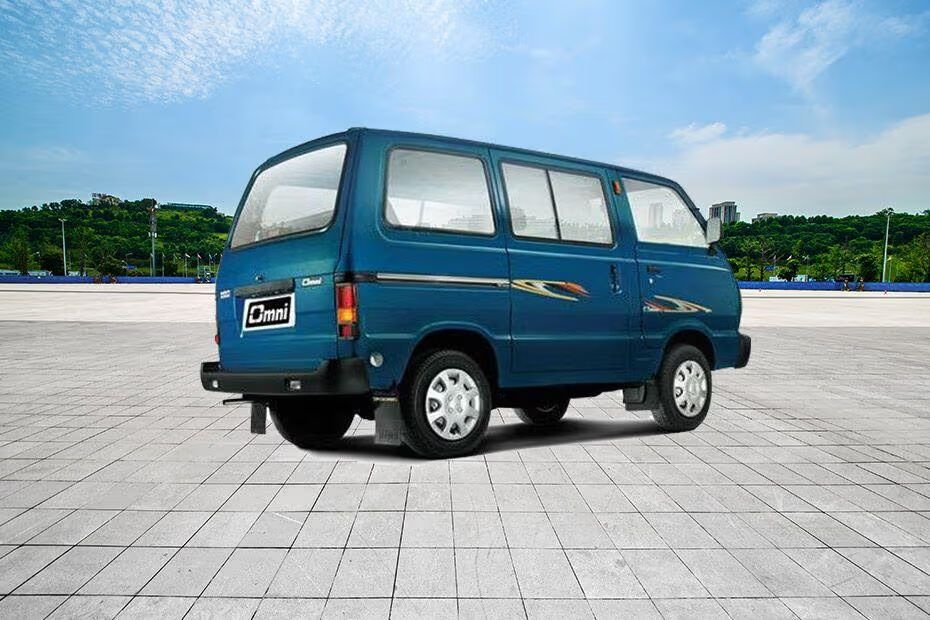
The Omni’s rear is made from a large, upright hatch with basic tail lamps and a high-mount stop lamp. Because of the vertical shape of the body, it has an impressive amount of headroom, extending to the rear of the cabin.
The hatch opens to the luggage area, although usable cargo space changes significantly between the 5- and 8-seater layouts. The upright opening also makes it easier to load taller bags or everyday household items.
Overall, although the exterior design of the Omni is based on practicality, access and simplicity, that same simplicity enables the Omni to be recognised immediately even today.
Maruti Omni Interior Images
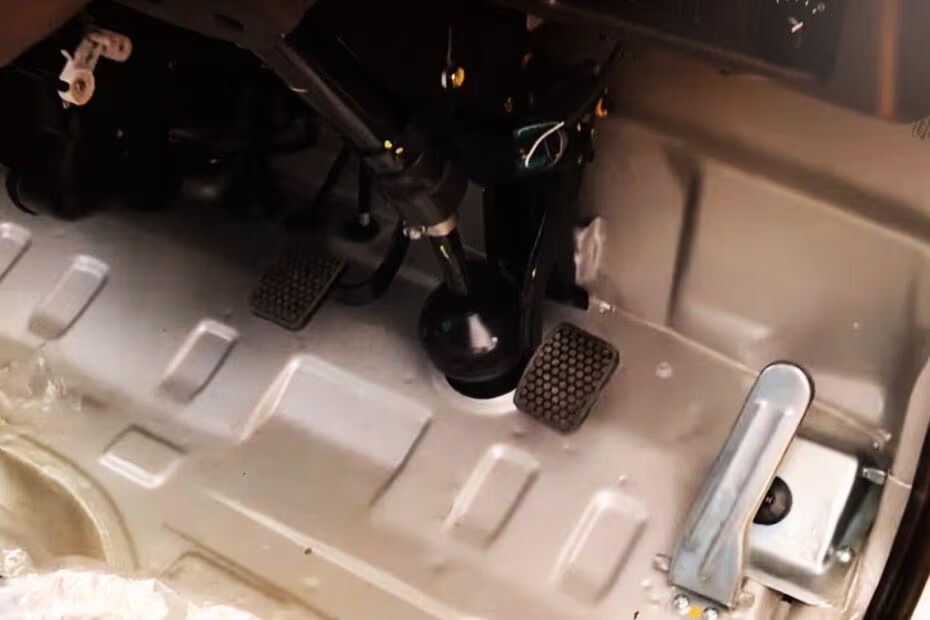
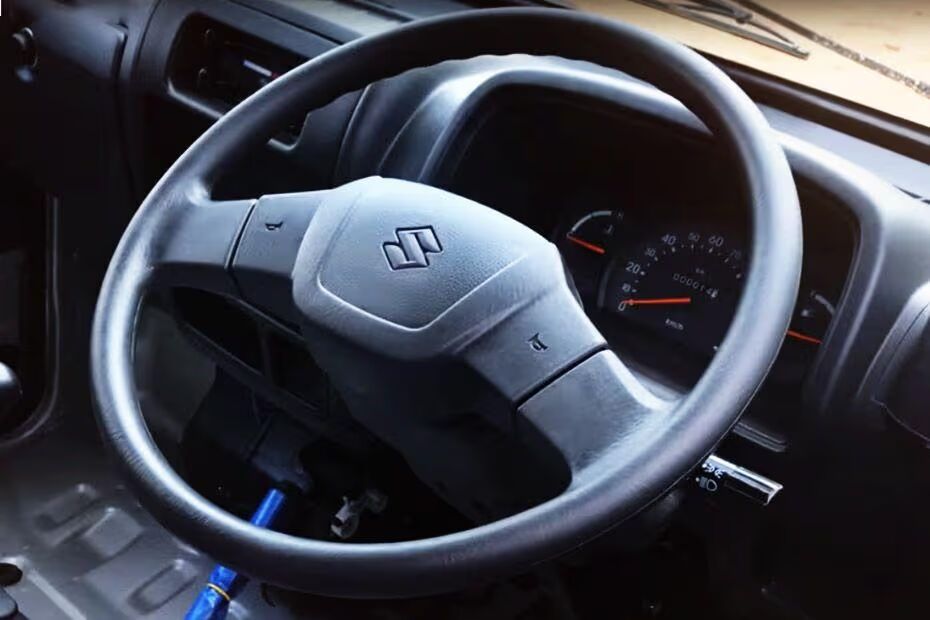
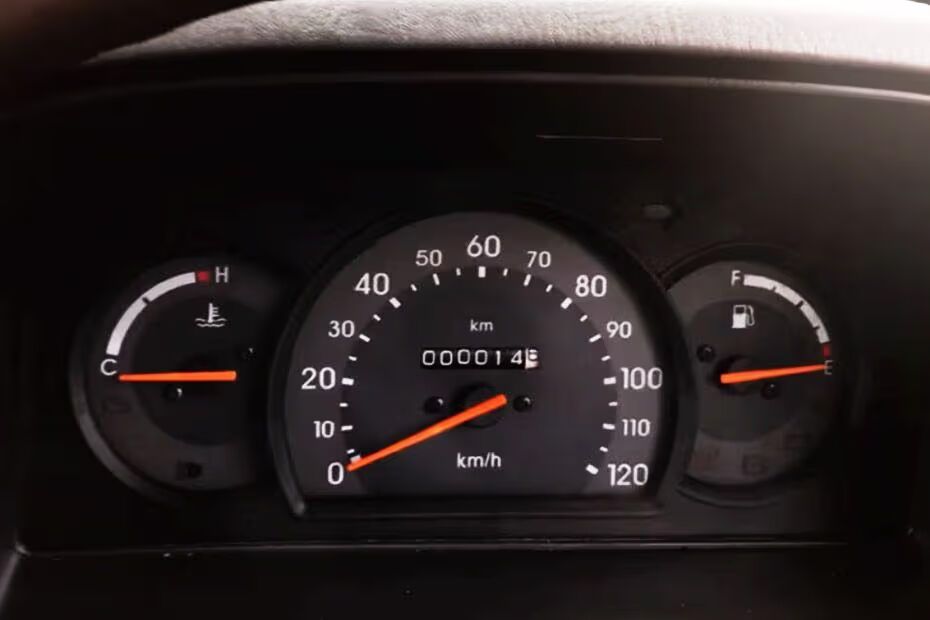
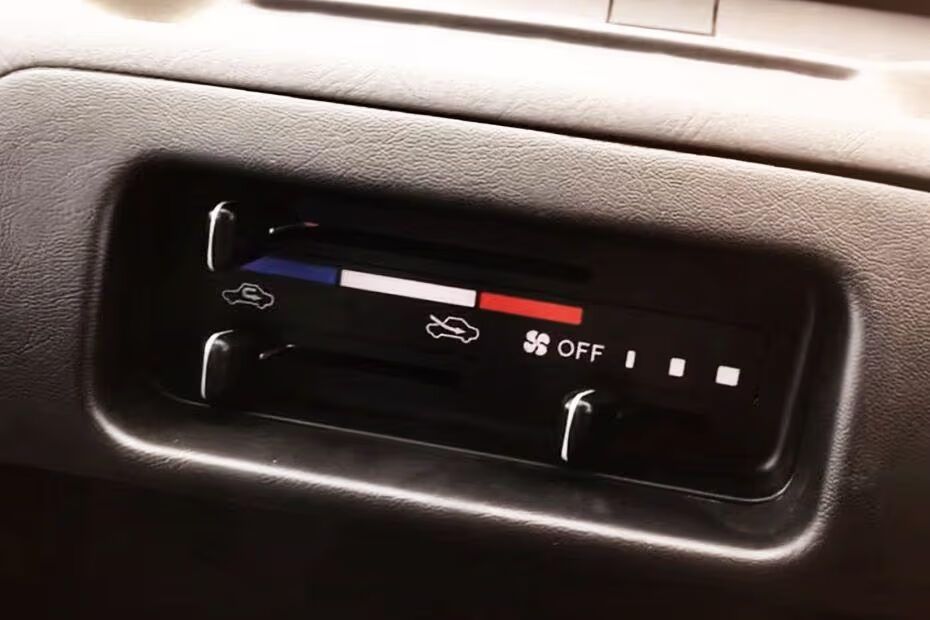
Inside, the Omni has a basic, utilitarian cabin with a simple dashboard, manual controls and two-tone upholstery. The steering and instruments are straightforward, while storage is limited to small dashboard spaces and a glove compartment.
The final passenger version of the vehicle has been designed with seat capacity rather than comfort features, and does not include power steering, touch screen infotainment or automatic climate control.
Key Highlights
- Choice of 5-seat and 8-seat passenger layouts
- Reclining front seats with adjustable head restraints
- Sliding driver’s seat
- Two-tone upholstery and simple dashboard storage
Dashboard & Front Seats
The dashboard features a unique design with an instrument cluster positioned directly in front of the driver, as well as simple switchgear that is easily accessible. A compact compartment for cups and storage areas has also been incorporated into the dashboard. The glovebox can be locked, which adds an extra level of security.
Both front seats recline, and the driver’s seat can slide to help different drivers find a workable position. The Omni uses manual steering and a floor-mounted 4-speed gear lever, keeping the driving environment extremely simple.
Second Row
The second row of seats in a 5-seat configuration accommodates three passengers, while the first row has two seats. The high roofline and huge side windows provide plenty of headroom for comfortable riding and visibility of incoming traffic. The sliding doors also provide ease of access.
The seating is basic, with no rear AC vents or charging points. Static rear seat belts and assist grips are provided.
Third Row
For the 8-passenger model Omni, an additional three-person seating is located behind the second row, bringing the total passenger capacity to eight. This configuration focuses more on maximising the number of passengers than providing maximum individual comfort or utility.
With all eight seats occupied, luggage room is limited, although the tall roof helps preserve headroom.
Luggage Space
The number of boot storage area for the conventional Omni model (passenger) was not published by Maruti Suzuki in “litres”; but in an Omni model with five seats, the rear seating area provides enough space for transporting bags, small luggage and work-related items.
The 8-seater sacrifices much of that cargo area for the additional row, making the 5-seater better for mixed passenger-and-luggage use.
Overall, the inside of the Omni emphasises practicality and minimalism, prioritising practical use as opposed to modern comfort features. The 5-seater is better suited for a combination of passenger travel and transporting luggage, whilst the 8-seater’s objective is to transport more people.
Maruti Omni Colour Options
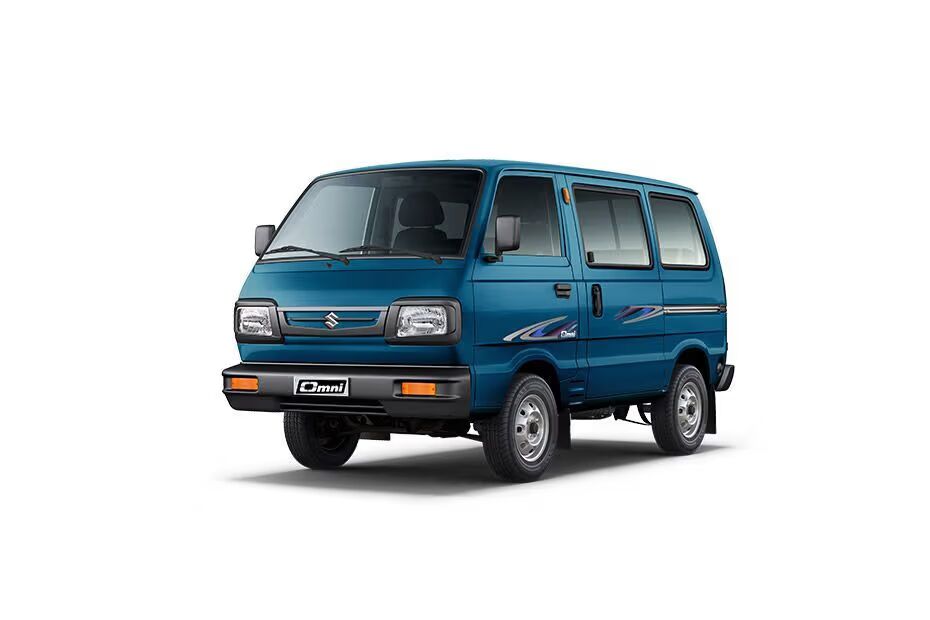
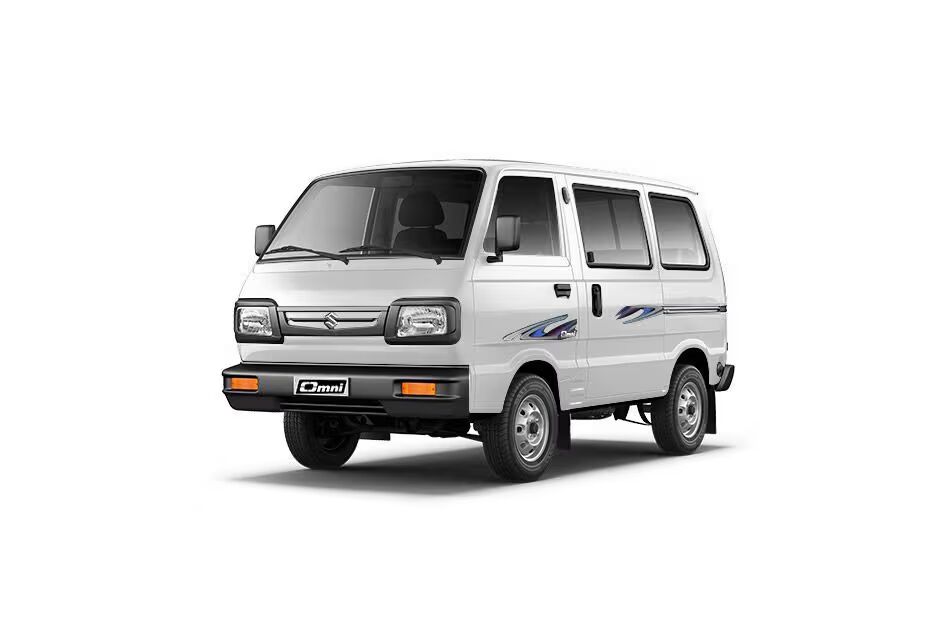
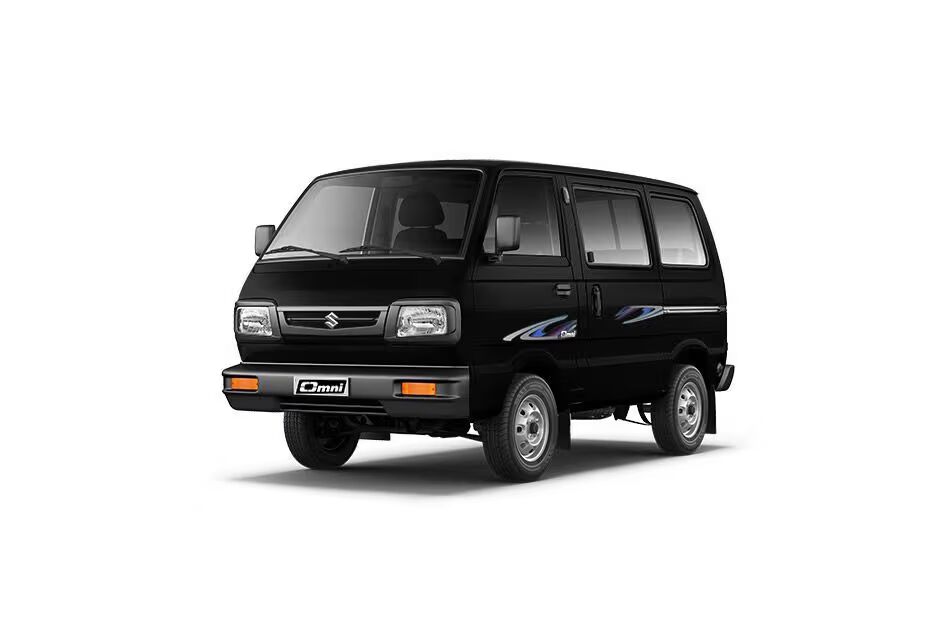
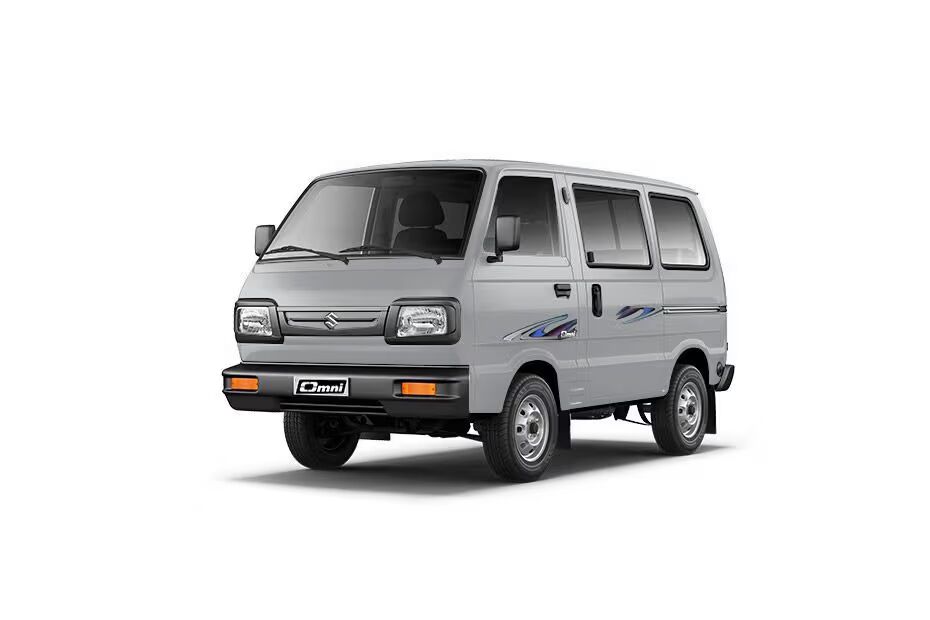
The final official brochure lists four exterior colours for the passenger Omni. The palette is simple and suited to the van’s practical positioning.
| Colour Name | Type | Availability |
| Metallic Pearl Blue Blaze | Metallic | Passenger range |
| Metallic Silky Silver | Metallic | Passenger range |
| Fantasy Black | Standard finish | Passenger range |
| Superior White | Solid | Passenger range |
Metallic Pearl Blue Blaze is the brightest option, while Metallic Silky Silver is more understated.
While Fantasy Black has the fullest dark look, Superior White possesses the most classic look. The colour of a used car depends on the year of the vehicle and also its availability.
Summary
The Maruti Omni features a highly compact exterior while also offering impressive versatility when it comes to passenger capacity. Its flat front, sliding doors, boxy body, and little 12-inch wheels make it a recognisable design, while its 3,370 mm length and 4.1-meter turning radius are perfectly suited for congested city areas.
Inside, buyers could choose between 5- and 8-seat passenger layouts, with the 5-seater leaving more room for luggage. The 796 cc petrol engine, 4-speed manual gearbox and very simple cabin reflect the Omni’s focus on affordability and utility. It remains relevant to used-car buyers who need a compact, mechanically simple people mover.
FAQs about the Maruti Omni
Q. Is the Maruti Omni still available as a new vehicle in India?
No. Maruti Suzuki ended Omni production in 2019 after 35 years because the van would have required major structural and safety updates to comply with newer regulations.
Q. How many people can the Maruti Omni seat?
The passenger Omni was available in 5-seater and 8-seater configurations. The 5-seater uses two front seats and a three-person rear bench, while the 8-seater adds another three-person row.
Q. What is the boot space of the Maruti Omni?
Maruti Suzuki did not publish a conventional passenger boot figure in litres. The 5-seater leaves more luggage room behind the rear bench, while the 8-seater uses much of that area for the third row.
Q. What engine does the Maruti Omni use?
The final Omni uses a 796 cc three-cylinder petrol engine producing about 34 PS and 59 Nm.
Q. Was the Maruti Omni available with an automatic transmission?
No. The final Omni uses a 4-speed manual gearbox with one reverse gear. An automatic transmission was not offered.
Q. What mileage does the Maruti Omni offer?
The final petrol Omni was commonly rated at around 16.8 km/l under certified conditions, although older variants and test cycles may show different figures.
Q. Does the Maruti Omni have power steering?
No. The Maruti Omni uses manual steering. Its compact size and 4.1-metre turning radius help keep low-speed manoeuvring manageable.
Q. Does the Maruti Omni have air conditioning?
Passenger Omnis were very basic, and air conditioning was not a standard feature across the final passenger range. Equipment varied across versions and model years.
Q. How many airbags does the Maruti Omni have?
The final Omni did not offer airbags or ABS. Its inability to meet newer mandatory safety and crash requirements was one of the main reasons production ended.
Q. What colours were available with the Maruti Omni?
The final official palette included Metallic Pearl Blue Blaze, Metallic Silky Silver, Fantasy Black and Superior White.