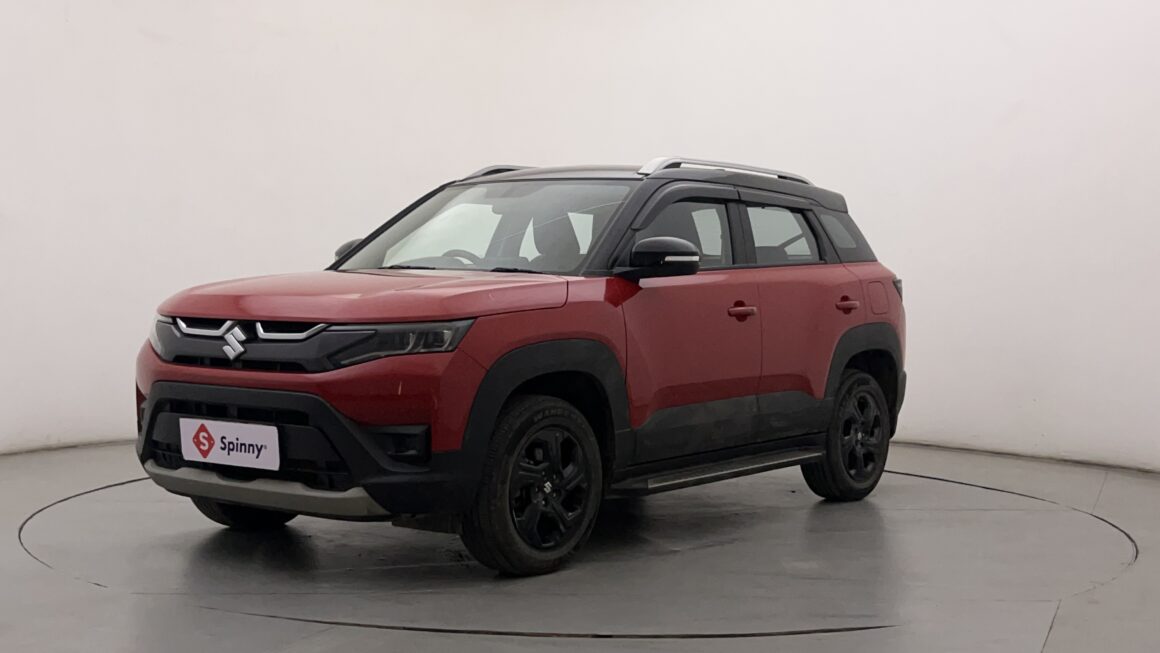
According to claims made by the manufacturers, the Maruti Brezza CNG has a mileage of 25.51 km/kg compared to the later Mahindra XUV300 diesel manual version, which has a mileage of 20.1 km/l. Even though both of them are five-seat compact SUVs, their operation methods are distinct. The Brezza uses petrol as well as CNG, while the XUV300 is available with modern-day petrol and diesel engines.
This comparison covers the Brezza generation launched in June 2022, before its 2026 update, and the original XUV300 introduced in February 2019. The Brezza offers manual and petrol automatic options, while the XUV300 has manual and AMT versions. The XUV300 was replaced by the XUV 3XO in 2024, making this comparison particularly relevant to used-car buyers evaluating running costs alongside purchase price.
Table of Contents
Maruti Brezza vs Mahindra XUV300: Specifications
The Brezza is equipped with a 1.5-litre naturally aspirated petrol engine that works in conjunction with either a five-speed manual transmission or a six-speed torque converter automatic transmission. Its factory-fitted CNG variant also employs the same engine family; however, it uses a manual transmission.
The availability of the mild hybrid variant has changed over the years, meaning the specification of a particular used model is of significance, especially as the CNG variant only became available in March 2023, thus checking whether the CNG car being advertised has a factory system or was converted later.
The XUV300 offers a standard 1.2-litre turbo-petrol engine and a 1.5-litre turbo-diesel, with six-speed manual and AMT options depending on variant. The later TurboSport adds a more powerful direct-injection turbo-petrol engine with a manual gearbox.
Consider its figures separately from the standard petrol. Buyers choosing an automatic should also distinguish the Brezza’s torque converter from the XUV300’s automated manual transmission.
| Specification | Maruti Brezza | Mahindra XUV300 |
| Body style | Five-seat compact SUV | Five-seat compact SUV |
| Petrol engine | 1,462 cc, naturally aspirated | 1,197 cc, turbocharged |
| Additional fuel option | Factory-fitted CNG | 1,497 cc turbo-diesel |
| Manual gearbox | Five-speed | Six-speed |
| Automatic gearbox | Six-speed torque converter, petrol only | Six-speed AMT, petrol or diesel |
| Length | 3,995 mm | 3,995 mm |
| Width | 1,790 mm | 1,821 mm |
| Wheelbase | 2,500 mm | 2,600 mm |
Both cars are the same in length; however, the XUV300 is wider and has a larger wheelbase, so rear passenger space should be checked while taking it for a test drive. As for engine options, Brezza is available with a factory-fitted CNG option, whereas the XUV300 is offered with a diesel engine. Other factors that need to be considered include frequency of driving and availability of refilling. The automatic transmissions also behave differently, with AMT automating the operations of clutch and gear changes, resulting in quite noticeable jerks during gear changes.
Also Read: Mahindra XUV300 Running Cost Breakdown: 5-Year Service Cost, Fuel Cost
Maruti Brezza vs Mahindra XUV300: ARAI Mileage Figures
The Brezza’s claimed petrol mileage changed during this generation. At launch, the manual was rated at up to 20.15 km/l and the automatic at 19.80 km/l. Later manuals without mild-hybrid assistance were rated at 17.38 km/l, while higher-spec manuals with the system were rated at 19.89 km/l. This explains why different figures appear in listings for seemingly similar vehicles.
The Brezza CNG has an estimated performance of 25.51 km/kg. For the XUV300, the standard petrol manual claimed performance is in the range of 16.82 to 17 km/l, while the diesel manual figures range from20 to 20.11 km/l. Both figures need to be checked for model-year specifications. The more powerful TurboSport and AMT variants must not be allowed to have the performance of the standard manual version.
| Version | Claimed mileage | Model-year under consideration |
| Brezza petrol manual, launch specification | Up to 20.15 km/l | 2022 mild-hybrid version |
| Brezza petrol manual without mild hybrid | 17.38 km/l | Applicable to later variants |
| Brezza higher-spec petrol manual with mild hybrid | 19.89 km/l | Applicable to later variants |
| Brezza petrol automatic | 19.80 km/l | Specification of the 2022 test vehicle |
| Brezza CNG manual | 25.51 km/kg | Earlier CNG model covered here |
| XUV300 standard petrol manual | 16.82–17 km/l | Depends on version |
| XUV300 diesel manual | 20–20.1 km/l | Depends on version |
The average mileage can be an aid, but it does not have the ability to determine the performance of an instant trip. Individual journey conditions, including traffic, passengers being carried, slopes, and air-conditioning function, determine its fuel consumption. CNG efficiency is measured in terms of kilograms rather than litres, and hence comparison between figures such as 25.51 and 20.1 would be meaningless in financial terms. The cost of driving each fuel/energy type per kilometre helps with calculating money spent on ownership.
Also Read: Mahindra XUV300 Alternatives: Competitors of Mahindra XUV300
Maruti Brezza vs Mahindra XUV300: Real-World Fuel Efficiency
A published test of the 2022 Brezza petrol automatic recorded 13.10 km/l in the city and 18.63 km/l on the highway. Its dashboard displayed higher figures of 14.3 and 19.5 km/,l respectively, illustrating why the measurement method matters. For budgeting, the calculated consumption from that test is more useful than treating the dashboard reading as an exact figure.
| Tested version | City mileage | Highway mileage | Test context |
| Brezza 1.5 petrol automatic | 13.10 km/l | 18.63 km/l | Published 2022 road test |
| XUV300 standard petrol manual | 9.70 km/l | 14.80 km/l | Published 2019 road test |
| XUV300 diesel manual | 14.40 km/l | 17.90 km/l | Published 2019 road test |
| XUV300 diesel manual, separate test | 15.40 km/l | 19.89 km/l | Another published 2019 road test |
Mahindra XUV300 diesel came out victorious against its petrol version in 2019’s tests, recording 14.40 km/l in urban conditions and attaining 17.90 km/l in highway operation. However, another diesel test recorded 15.40 km/l and 19.89 km/l, respectively. The distinction in the obtained readings indicates that one figure cannot be considered a rule for all. All tests conducted were based on the usage of the previous emission standard specifications, so they are irrelevant for the future BS6 models.
The available results suggest an economy advantage for the Brezza automatic over the tested standard XUV300 petrol manual, but the vehicles were tested separately. They do not establish a controlled head-to-head margin. Comparable measured city/highway results were not verified for every CNG, AMT or TurboSport version.
For a used vehicle, service history, tyre condition and how it performs on a familiar route provide additional context beyond an old road-test figure.
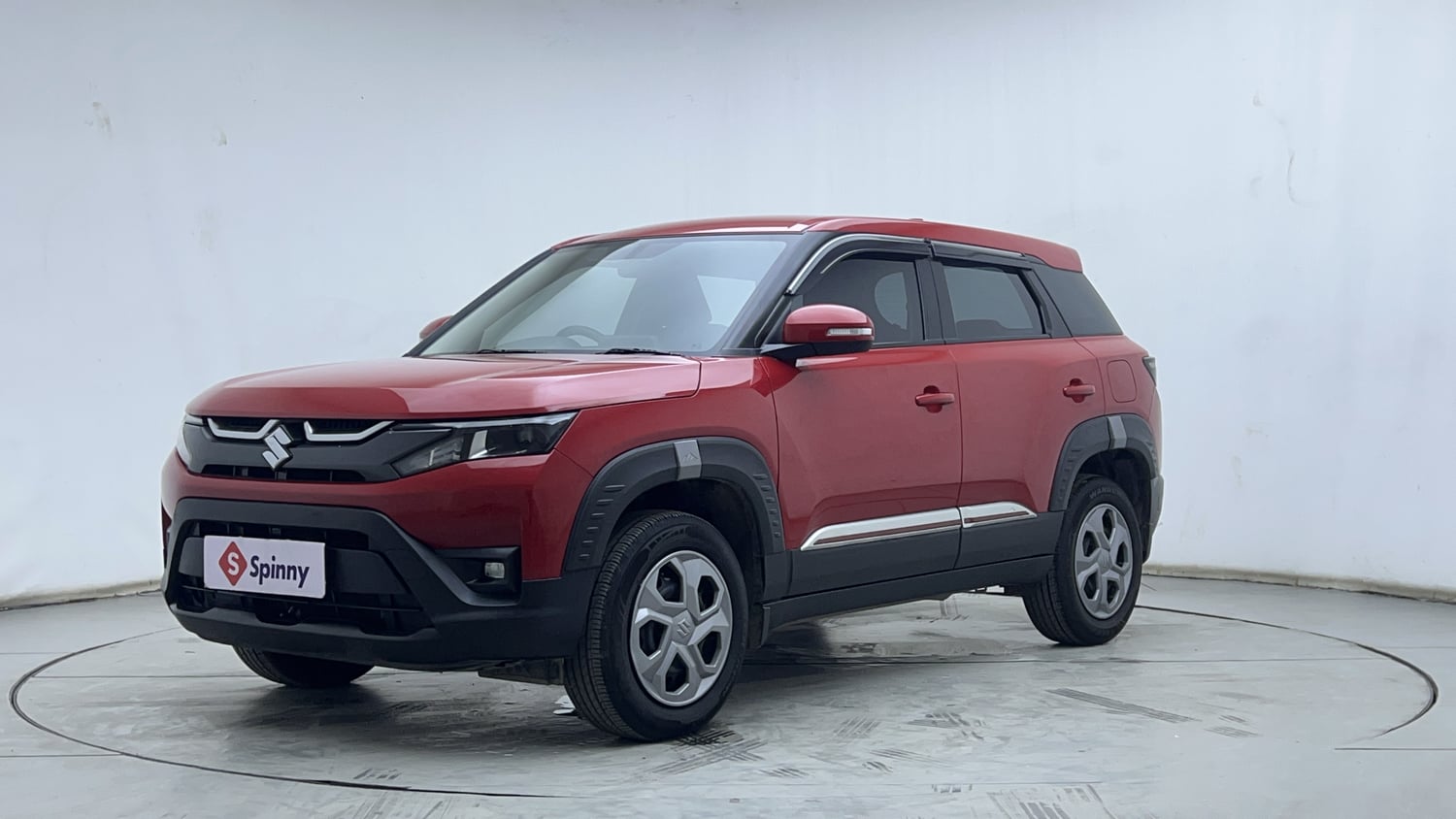
Maruti Brezza vs Mahindra XUV300: Fuel Cost Comparison
As per a transparent budget, we assume that 1,000 kilometres are driven in a month at an average fuel price of ₹105 for petrol, ₹95 for diesel, and ₹80 for CNG. The payload in terms of the fuel economy of these vehicles is taken as follows: the Brezza petrol runs 15 km/l, Brezza CNG runs 22 km/kg, the XUV300 petrol runs 12 km/l, and the XUV300 diesel runs 17 km/l. These are suggested numbers for calculations and not values from a nationwide survey or real-time fuel price data.
| Version | Budgeting mileage | Fuel cost/km | Monthly cost | Annual cost |
| Brezza petrol | 15 km/l | ₹7.00 | ₹7,000 | ₹84,000 |
| Brezza CNG | 22 km/kg | ₹3.64 | ₹3,636 | ₹43,636 |
| XUV300 standard petrol | 12 km/l | ₹8.75 | ₹8,750 | ₹1,05,000 |
| XUV300 diesel | 17 km/l | ₹5.59 | ₹5,588 | ₹67,059 |
The Brezza petrol saves ₹21,000 every year as opposed to the XUV300 petrol, according to these assumptions. The XUV300 diesel saves around ₹16,941 over the Brezza petrol, while the Brezza CNG saves roughly ₹23,422 against the XUV300 diesel.
Each of these savings is calculated on the assumption of fuel charges alone. Different results would emerge on a route that is largely congested, and the fuel consumed in CNG operation contributes towards the CNG vehicle’s expenses. It is essential for consumers to replace the assumptions with local pricing and correct mileage as per their driving.
Purchase-price recovery depends on the actual premium paid. If comparable used XUV300 diesel and petrol examples differ by ₹1 lakh, the assumed saving of approximately ₹3.16/km would recover that difference after about 31,600 km.
For a Brezza CNG priced ₹1 lakh above a comparable petrol example, the assumed saving of ₹3.36/km gives a recovery distance of roughly 29,700 km. These are illustrative premiums, not quoted market differences. At 1,000 km monthly, recovery takes roughly 32 months for the XUV300 diesel and 30 months for Brezza CNG. Financing, maintenance, condition and immediate repairs can change the calculation.
Maruti Brezza vs Mahindra XUV300: Price Comparison
A useful historical reference is the Brezza’s ex-showroom price band of about ₹8.34–₹14.14 lakh in 2024 against the last quoted price band of ₹7.99–₹14.76 lakh for the XUV300. These prices reflect the position of these vehicles in the market when they were new and not the price in the current showroom or the second-hand price of the vehicle. The discontinuation of the XUV300 makes this distinction more pertinent.
| Price reference | Maruti Brezza | Mahindra XUV300 |
| Historical starting ex-showroom price | ₹8.34 lakh | ₹7.99 lakh |
| Historical highest ex-showroom price | ₹14.14 lakh | ₹14.76 lakh |
| Basis | 2024 price range | Last recorded model range |
| Used-car purchase price | Depends on the individual vehicle | Depends on the individual vehicle |
Although some historical ranges are the same, a used car analysis requires closer attention to characteristics. Check registrations of similar years, types of gearboxes, mileage, and information about previous owners.
While choosing a cheaper petrol engine can be a wiser option for people who use a car little, a diesel engine may seem to be less economical because of lower fuel costs. At the same time, long-distance driving makes fuel economy of great importance.
Inspect the specific vehicle before assigning value to its fuel economy. For an automatic, check how the gearbox behaves in slow traffic and during acceleration. For a factory CNG example, review the system’s maintenance records alongside the rest of the car’s history.
Budget for tyres, scheduled servicing and identified repairs. A purchase requiring substantial immediate expenditure can absorb several years of the fuel savings suggested by a simple comparison.
Also Read: Complete Guide to buying a Maruti Brezza
Summary
The Brezza is a proper option for people looking for a petrol-powered car, equipped either with a traditional automatic transmission or the factory-installed CNG system.
The petrol automatic proved to provide good city and highway fuel consumption, since CNG represents the fuel with the lowest cost. In this case, a proper car choice will depend on monthly mileage, the availability of filling stations and understanding how high the additional cost will be.
The XUV300 diesel deserves consideration for buyers covering substantial distances who prefer diesel refuelling to CNG. Its published test results show a clear efficiency advantage over the standard XUV300 petrol tested alongside it.
The petrol and TurboSport versions require separate assessment according to variant and driving priorities. Across both SUVs, match the mileage figures to the exact model and assess total ownership expenditure before choosing.
FAQs
Q. Which gives better mileage, the Brezza or XUV300?
The XUV300 diesel offers stronger economy than its petrol counterpart, while Brezza CNG has the lowest assumed fuel cost here.
Q. What is the Brezza automatic’s real-world mileage?
A 2022 road test recorded 13.10 km/l in the city and 18.63 km/l on the highway. These figures apply to the tested 1.5-litre petrol six-speed automatic. Actual results vary with traffic, load and driving style, and should not be transferred automatically to the 2026 update.
Q. How much mileage does the XUV300 diesel deliver?
Two published 2019 manual-diesel tests returned 14.40–15.40 km/l in the city and 17.90–19.89 km/l on the highway. These ranges describe the separate test results. They are not guaranteed owner averages or measured results covering every subsequent emissions specification and transmission.
Q. Is Brezza CNG cheaper to run than XUV300 diesel?
With CNG at ₹80/kg and mileage of 22 km/kg, the Brezza costs approximately ₹3.64/km. At ₹95/litre and 17 km/l, the XUV300 diesel costs approximately ₹5.59/km. The CNG advantage depends on those assumptions, convenient refuelling and the purchase premium.
Q. Why do Brezza manual mileage figures differ between listings?
Mild-hybrid availability changed across variants and model years. The 2022 launch specification claimed up to 20.15 km/l, while later non-hybrid manuals were rated at 17.38 km/l and applicable higher-spec mild-hybrid manuals at 19.89 km/l. Check the exact vehicle rather than relying on a generic listing.
Q. Is the XUV300 the same vehicle as the XUV 3XO?
The XUV 3XO succeeded the XUV300 in 2024 with substantial updates. For a used XUV300 comparison, use its own engine, gearbox, mileage and historical pricing information. Newer XUV 3XO specifications and road-test results should not be substituted simply because the vehicles are related.