

Maruti Alto K10 and Maruti S-Presso are among the cheapest automobile models in India. Both vehicles are designed for urban roads and offer low costs thanks to their compact size. Both use a 998 cc three-cylinder K-series petrol engine, and both offer a five-speed manual transmission and AGS technology. A factory-fitted CNG version is available, but only with manual transmission.
Despite these similarities, their mileage differs slightly. The Alto K10 is lower, narrower and lighter, while the S-Presso offers a taller body, more ground clearance and a roomier cabin. The S-Presso leads narrowly in certified petrol mileage, whereas the Alto K10 leads in CNG efficiency. Real-world results depend on traffic, air-conditioning use, passenger load and driving technique. Here is how their mileage, range and fuel expenses compare.
Table of Contents
Maruti Alto K10 vs Maruti S-Presso Specs
The table below compares the specifications of K10 and S-Presso that most influence performance and fuel efficiency.
| Specification | Maruti Alto K10 | Maruti S-Presso |
| Engine | 1.0-litre K-Series petrol; 1.0-litre petrol with CNG | 1.0-litre K-Series petrol; 1.0-litre petrol with CNG |
| Displacement | 998 cc | 998 cc |
| Petrol power | Up to 68.5 PS | 66.6 PS |
| Petrol torque | Up to 91.1 Nm | 89 Nm |
| CNG-mode power | 56.7 PS | 56.7 PS |
| CNG-mode torque | 82.1 Nm | 82.1 Nm |
| Transmission | 5-speed manual; 5-speed AGS; CNG with manual only | 5-speed manual; 5-speed AGS; CNG with manual only |
| Drive layout | Front-wheel drive | Front-wheel drive |
| Approximate kerb weight | 716–825 kg, depending on variant | 736–854 kg, depending on variant |
| Petrol tank | 27 litres | 27 litres |
| CNG cylinder | 55 litres water-equivalent capacity | 55 litres water-equivalent capacity |
The difference in mechanical terms is very small. The current specification of the Alto K10 gives it slightly more power and torque, but both engines focus more on being user-friendly for low-speed driving. Given the lighter weight of the Alto, it is more responsive in traffic and puts less strain on the engine during acceleration. The AGS uses electric motors to operate the clutch and transmission without extra load.
The S-Presso is 35 mm longer, 30 mm wider and up to 47 mm taller than the Alto K10. It offers approximately 180 mm of ground clearance, compared with around 160–167 mm for the Alto. Its upright cabin feels more spacious, although the additional height creates more aerodynamic resistance. Both CNG versions lose some performance in gas mode, particularly with a full cabin or on inclines.
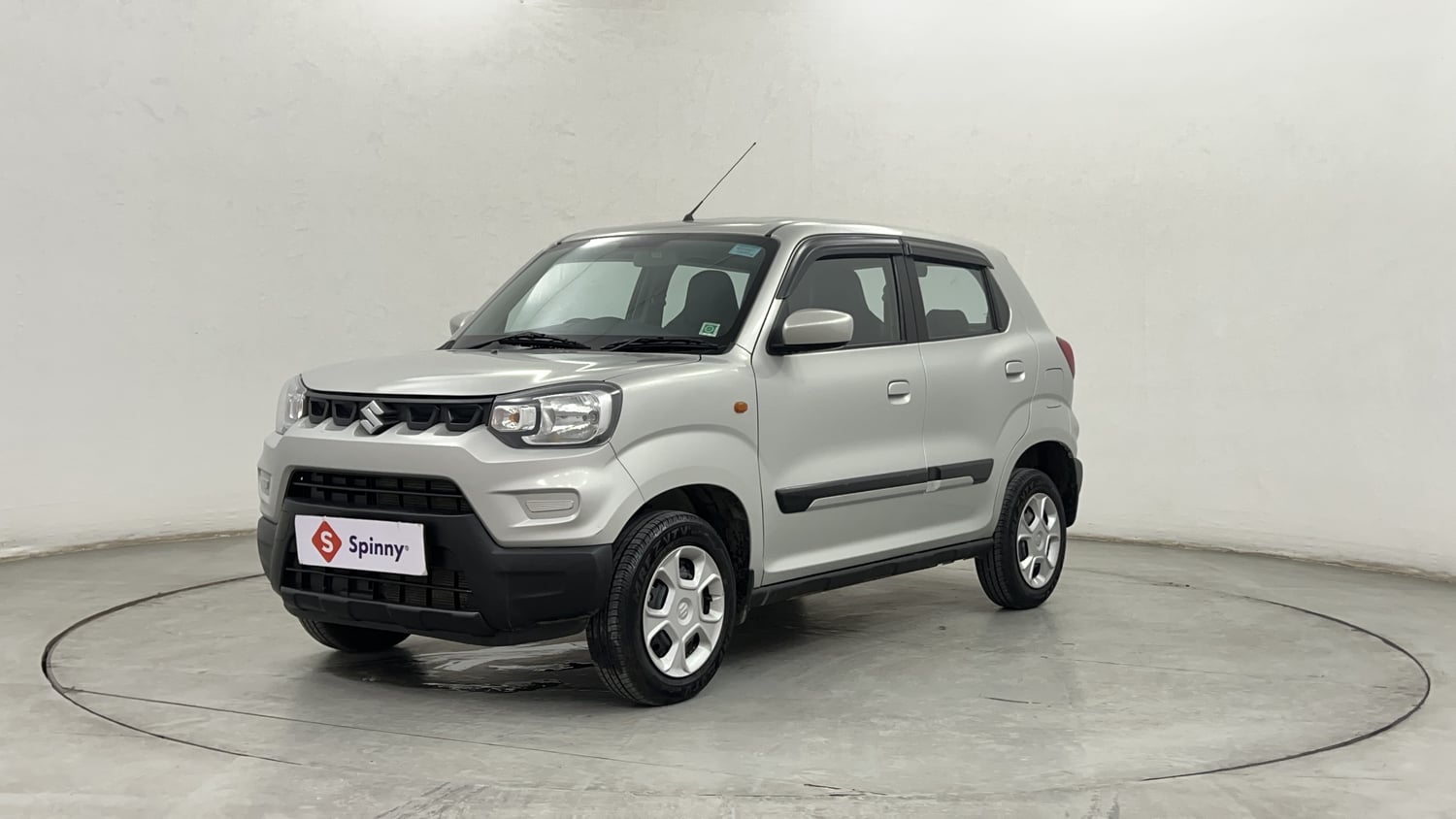
Maruti Alto K10 vs Maruti S-Presso: ARAI Mileage Figures
Certification figures obtained under standard test conditions are useful in comparing different car variants, but no one can guarantee these figures for everyday driving conditions.
| Engine and Transmission | Fuel Type | Alto K10 ARAI Mileage | S-Presso ARAI Mileage |
| 1.0-litre petrol manual | Petrol | 24.39 km/l | 24.12–24.76 km/l |
| 1.0-litre petrol AGS | Petrol | 24.90 km/l | 25.30 km/l |
| 1.0-litre CNG manual | CNG | 33.40 km/kg | 32.73 km/kg |
The figures for the S-Presso vary by variant. The Std and LXi variants of the S-Presso return a fuel efficiency figure of about 24.12 km/l, while the VXi and VXi+ variants claim 24.76 km/l. The higher S-Presso variants therefore outperform the Alto manual by only 0.37 km/l, while the base variant achieves slightly less than the Alto variants. The S-Presso AGS is ahead of its Alto equivalent by 0.40 km/l.
The result changes with CNG. The Alto K10 claims 33.40 km/kg, giving it a 0.67 km/kg advantage. CNG figures cannot be compared directly with petrol mileage because the fuels use different units. Cost per kilometre is more useful, and both CNG versions remain much cheaper to run than their petrol counterparts.
Maruti Alto K10 vs Maruti S-Presso: Real World Fuel-Efficiency
The following figures represent averages from road test results and actual users. They assume that the vehicle has been maintained properly, is loaded with passengers to a normal level and air conditioning is regularly used. Catastrophic traffic or frequent short trips can produce lower figures in such driving conditions. The figures are then calculated using 27-litre fuel tanks multiplied by mixed mileage: the car will run less than in the guide since drivers will have some fuel in reserve.
| Driving Condition | Alto Petrol Manual | Alto Petrol AGS | S-Presso Petrol Manual | S-Presso Petrol AGS |
| City | 14–16 km/l | 14–18 km/l | 15–19 km/l | 16–20 km/l |
| Highway | 20–22 km/l | 19–22 km/l | 18–22 km/l | 20–22 km/l |
| Mixed average | 16–18 km/l | 16.5–19 km/l | 17–20 km/l | 18–21 km/l |
| Theoretical petrol range | 432–486 km | 446–513 km | 459–540 km | 486–567 km |
| Driving Condition | Alto K10 CNG Manual | S-Presso CNG Manual |
| City | 21–24 km/kg | 22–24 km/kg |
| Highway | 30–35 km/kg | 26–30 km/kg |
| Mixed average | 25–29 km/kg | 24–27 km/kg |
| Typical CNG-only range | Approximately 190–260 km | Approximately 180–245 km |
Petrol cars’ fuel efficiency can vary with driving style and traffic conditions. In urban conditions, the Alto gets 14- 16 km/l, while the S-Presso can reach around 19 km/l thanks to its idle start-stop system and gearing. In urban conditions, crawling with the air conditioner will wipe out all the benefits. AGS petrol cars make the changes smoother, but jerky accelerator inputs make gear shifts less smooth and worsen fuel efficiency.
The Alto’s lower body and lighter construction work well on open roads. Its petrol manual can return 20–22 km/l when driven at moderate speeds in fifth gear. The S-Presso can achieve similar results, but its taller shape becomes less efficient when cruising speed rises. The difference remains small during relaxed driving. In both cars, maintaining momentum and avoiding unnecessary downshifts helps the small engine consume less fuel. Neither car is designed for sustained high-speed touring, and repeated overtakes or driving with four occupants and luggage makes the three-cylinder engine work harder.
When it comes to CNG, the Alto K10 has an edge over the competition. Both vehicles average around 21-24 km/kg, but Alto can exceed 30 km/kg on highways. The actual CNG range depends on how much gas can be filled at a station because of system pressure, temperature, and how much gas is left. The figures mentioned here are not literally in kilograms; they are based on the water-equivalent volume of the cylinder. Both vehicles have 27-litre petrol tanks, which makes petrol more convenient when no CNG stations are available.
Alto Read: Maruti S-Presso Mileage Comparison: Petrol vs CNG
Maruti Alto K10 vs Maruti S-Presso: Fuel Cost Comparison
This calculation assumes monthly driving of 1,500 km, petrol priced at ₹112.04 per litre and CNG at ₹95.75 per kg in Pune. A representative mixed mileage figure has been used for each version. Costs will change with traffic, fuel prices and individual driving habits.
| Powertrain | Mileage Used | Monthly Fuel Use | Monthly Cost | Yearly Cost | Five-Year Cost |
| Alto K10 petrol manual | 17 km/l | 88.24 litres | ₹9,886 | ₹1.19 lakh | ₹5.93 lakh |
| Alto K10 petrol AGS | 17.5 km/l | 85.71 litres | ₹9,603 | ₹1.15 lakh | ₹5.76 lakh |
| Alto K10 CNG manual | 27 km/kg | 55.56 kg | ₹5,319 | ₹63,833 | ₹3.19 lakh |
| S-Presso petrol manual | 18 km/l | 83.33 litres | ₹9,337 | ₹1.12 lakh | ₹5.60 lakh |
| S-Presso petrol AGS | 20 km/l | 75 litres | ₹8,403 | ₹1.01 lakh | ₹5.04 lakh |
| S-Presso CNG manual | 25 km/kg | 60 kg | ₹5,745 | ₹68,940 | ₹3.45 lakh |
At the averages mentioned, S-Presso is less costly in terms of fuel cost, especially AGS. But this statement may no longer be correct because the Alto on highways may consume as much as the S-Presso, while the S-Presso in urban conditions may consume less than 20 km/l. The yearly difference between the two manual petrol cars is ₹6,600, which is a great amount but not enough to be the only deciding factor in choosing a car.
CNG creates a much bigger difference than the gap between the two cars. The Alto K10 CNG can save around ₹4,500 per month compared with its petrol manual at this usage. The S-Presso CNG can save approximately ₹3,600 against the petrol manual. Over five years, the CNG versions may reduce fuel spending by more than ₹2 lakh. Buyers must still account for their higher purchase price, reduced boot flexibility, lower CNG-mode performance and the availability of reliable filling stations on their regular routes.
Alto Read: Maruti Alto K10 Mileage Comparison: Petrol vs CNG
Maruti Alto K10 vs Maruti S-Presso Price
| Model | Variant Range | Approximate Ex-Showroom Price |
| Maruti Alto K10 | Std to VXi+ AGS | ₹3.70 lakh to ₹5.45 lakh |
| Maruti S-Presso | Std to VXi+ AGS | ₹3.50 lakh to ₹5.27 lakh |
While the S-Presso is currently around ₹20,000 cheaper than the Alto K10, it remains slightly less expensive even at the highest trims. CNG versions are cheaper too. These prices may vary due to colour, location, and scheme, so be sure to check prices at the time of billing.

Summary
For petrol buyers, the S-Presso wins narrowly. It claims slightly better mileage in comparable VXi and AGS versions and can produce stronger real-world figures during efficient city use. However, the Alto K10 remains extremely economical, and its smaller, lighter body can perform equally well on open roads. The difference is too small to outweigh comfort, design or variant preference for most buyers.
The Alto K10 has an upper hand for CNG buyers, as it comes in with a higher certified figure and better possible highway economy, with lower estimated fuel costs averaged out. While both are good options for low-cost commuting, it comes down to whether the S-Presso’s added space and higher ground clearance matter more than the Alto K10’s compact dimensions and superior CNG fuel efficiency.
Related Blogs:
How to Increase Car Mileage with E20 Petrol?
Maruti Dzire vs Tata Tigor: Real World Mileage Comparison
Maruti Celerio vs Maruti Wagon R: Real World Mileage Comparison
FAQs About Maruti Alto K10 vs Maruti S-Presso Mileage
Q. Which car delivers better real-world petrol mileage, the Alto K10 or S-Presso?
The S-Presso generally has a small advantage, especially with the AGS transmission. Its petrol versions can average around 17–21 km/l, while the Alto K10 commonly delivers approximately 16–19 km/l. Actual figures overlap considerably and depend on traffic and driving style.
Q. Which CNG car is more fuel-efficient?
The Alto K10 CNG is more efficient on paper, with a certified figure of 33.40 km/kg compared with 32.73 km/kg for the S-Presso. It also tends to deliver better highway mileage, although their city figures are closely matched.
Q. What mileage can the Alto K10 AGS deliver in the real world?
The Alto K10 AGS can return around 14–18 km/l in the city and 19–22 km/l on the highway. A practical mixed average is approximately 16.5–19 km/l, depending on traffic, air-conditioning use and accelerator inputs.
Q. What mileage can the S-Presso AGS deliver in the real world?
The S-Presso AGS generally returns about 16–20 km/l in city use and 20–22 km/l on open roads. Its mixed efficiency can range from approximately 18–21 km/l when driven smoothly.
Q. Which car is cheaper to run for 1,500 km per month?
The Alto K10 CNG has the lowest estimated expense in this comparison, followed by the S-Presso CNG. Among petrol versions, the S-Presso AGS can be the cheapest when it maintains around 20 km/l, but personal driving conditions can change the result.