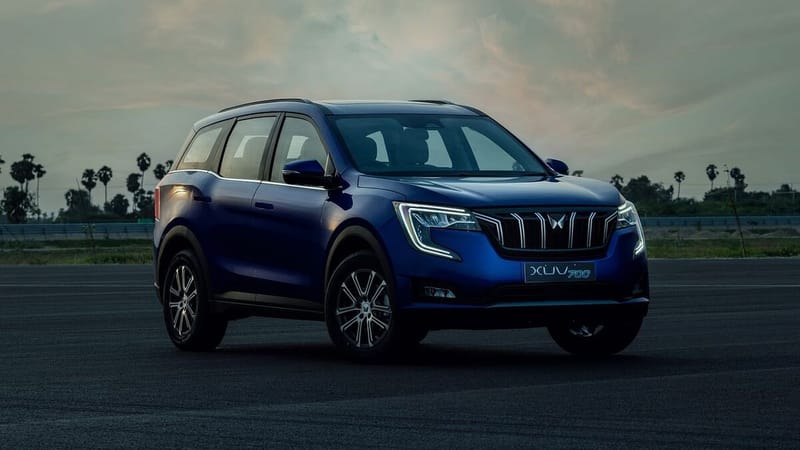
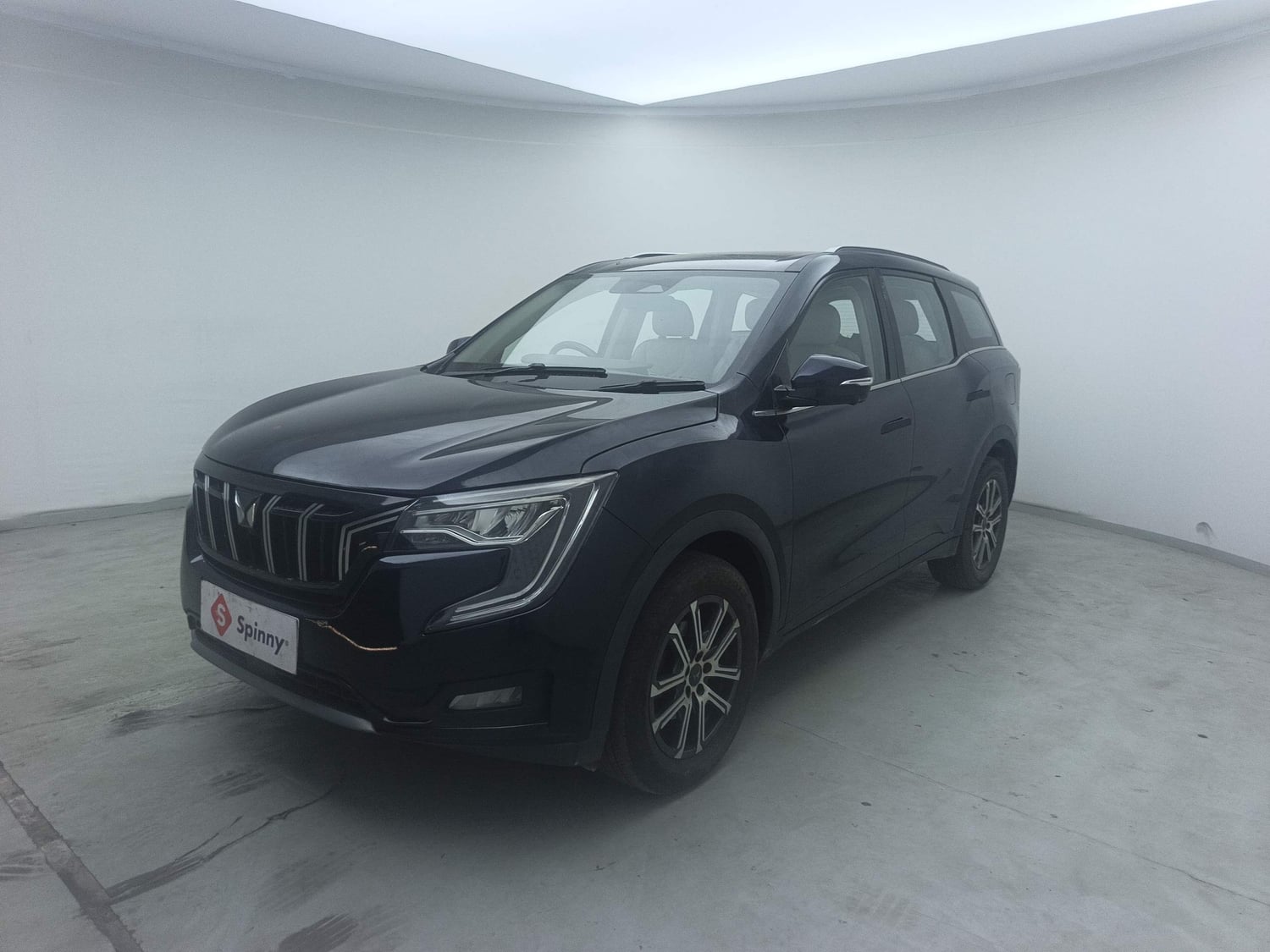
Mahindra XUV700 is a mid-size crossover SUV with 3 rows. It was initially launched in 2021 and is still in its first generation. The Tata Harrier is also a mid-size crossover SUV but can seat only 5 people. It was launched in 2019 and is currently in its first generation. The XUV700 is available in both petrol and diesel variants. The Harrier comes solely in a diesel variant. As per ARAI, the best mileage for the XUV700 is 16.5 km/l for its diesel manual variant. The best mileage for the Harrier is 16.8 km/l for the manual variant, which is only slightly more than the XUV700.
The XUV700 relies on a 2.0L turbo petrol engine and a 2.2L mHawk diesel engine. The Harrier has the equally powerful 2.0L Kryotec diesel engine. Both these SUVs have a 6-speed manual and 6-speed automatic transmission. We will discuss the ARAI and actual mileage of the Mahindra XUV700 and Tata Harrier and also see how their monthly and annual fuel expenses compare.
Mahindra XUV700 vs Tata Harrier Specs
Both the Mahindra XUV700 and Tata Harrier are large SUVs with a muscular look. But they differ in most of their specifications. The table below shows how the XUV700 and Harrier are compared and what their differences are.
| Specification | Mahindra XUV700 | Tata Harrier |
| Engine | 2.0L turbo petrol2.2L mHawk diesel | 2.0L Kryotec turbo diesel |
| Displacement | Petrol: 1997 ccDiesel: 2184 to 2198 cc | Diesel: 1956 cc |
| Power | Petrol: 200 PSDiesel: 152 to 184 PS | Diesel: 170 PS |
| Torque | Petrol:380 NmDiesel: 450 Nm | Diesel: 350 Nm |
| Transmission | 6-speed MT6-speed AT | 6-speed MT6-speed AT |
| Drive layout | Front-Wheel DriveAll Wheel Drive | Front-Wheel Drive |
| Kerb weight | 1700 to 2040 Kg | 1655 to 1823 Kg |
| Fuel tank capacity | Petrol: 60 litresDiesel: 60 litres | Diesel: 50 litres |
The XUV700 and the Harrier have the same transmission options, such as the 6-speed manual and 6-speed automatic. They also have a front-wheel-drive layout, but the XUV700 has an additional All-Wheel Drive as well. The XUV700 has a larger body and fuel capacity. It is heavier and has more powerful engines than the Harrier. Even the petrol engine of the XUV700 is more powerful than the diesel engine of the Harrier.
Mahindra XUV700 vs Tata Harrier: ARAI Mileage Figures
ARAI is India’s fuel efficiency rating for vehicles. It is done in a controlled environment, and the mileage of the cars is tested using a chassis dynamometer. The test will be done for the same duration for all cars under the same conditions. This figure is just a potential number for the mileage of each car. The ARAI figures for the variants of Mahindra XUV700 and Tata Harrier are listed in the table below.
| Engine & Transmission | Fuel Type | Mahindra XUV700 – ARAI Mileage (km/l) | Tata Harrier – ARAI Mileage (km/l) |
| 2.0L turbo manual | Petrol | 13.0 km/l | — |
| 2.0L turbo automatic | Petrol | 13.5 km/l | — |
| 2.2L mHawk manual | Diesel | 16.5 km/l | — |
| 2.2L mHawk automatic | Diesel | 15.0 km/l | — |
| 2.2L mHawk automatic (AWD) | Diesel | 14.0 km/l | — |
| 2.0L Kryotec manual | Diesel | — | 16.8 km/l |
| 2.0L Kryotec automatic | Diesel | — | 14.6 km/l |
The petrol variants of XUV700 have a lower mileage than their diesel variants. The best mileage for its diesel variants is just short of what the Harrier delivered during the ARAI tests. In both cases, it is the manual transmission that has the best figures of 16.5 km/l and 16.8 km/l for the XUV700 and Harrier, respectively. But in most cases, there is usually a gap between these ARAI figures and the actual mileage the cars deliver in the real world. It is likely to be lower in the majority of cases, but on rare occasions, the real-world mileage may be slightly higher as well.
Also Read: Complete Guide to Buying a Mahindra XUV700
Mahindra XUV700 vs Tata Harrier: Real-World Fuel Efficiency
When it comes to real-world mileage, there are different factors that influence the final outcome. Driving style, road conditions, environmental factors, traffic, etc all affect the final mileage that your car delivers. Here is a quick glance at the real-world mileage of the XUV700 and Harrier.
| Mahindra XUV700 (Petrol) | Tata Harrier (Diesel) | Mahindra XUV700 (Diesel) | |
| City | MT: 8 to 10 km/lAT: 7 to 9 km/l | MT: 9 to 13 km/lAT: 9 to 11 km/l | MT: 12 to 14 km/lAT: 11 to 13 km/lAWD: 10 to 12 km/l |
| Highway | MT: 11 to 13 km/lAT: 10 to 12 km/l | MT: 14.5 to 17 km/lAT: 13 to 16 km/l | MT: 16 to 18 km/lAT: 15 to 17 km/lAWD: 13 to 15 km/l |
| Average | MT: 9.5 km/lAT: 8.5 to 10 km/l | MT: 11 km/lAT: 10 km/l | MT: 14 to 16 km/lAT: 13 to 15 km/lAWD: 11 to 13 km/l |
| Tank range | 480 to 800 km | 700 to 900 km | 660 to 900 km |
In the city, the diesel variant of the XUV700 gets close to the ARAI-claimed mileage. Its petrol variant and the Harrier have a much lower city mileage of around 9-10 km/l.
On highways, the XUV700 diesel variant sometimes exceeds expectations, delivering an average mileage of 16-18 km/l, which is higher than its ARAI claims. Its petrol variant can also deliver a mileage of up to 13 km/l, which is also close to its ARAI claims.
The Tata Harrier also delivers higher mileage, close to its ARAI claims. It averages around 15 km/l, but the manual variant can deliver up to 17 km/l on highways.
Also Read: Mahindra XUV700 Mileage Comparison: Petrol vs Diesel
Mahindra XUV700 vs Tata Harrier: Fuel Cost Comparison
As fuel costs are going up constantly, it can be worrying when you plan to buy an SUV. To help you choose the best between the Mahindra XUV700 and Tata Harrier, we will compare their monthly, yearly, and 5-year fuel costs. Let’s use the average mileage for each. To make it uniform, assume that they have a monthly travel distance of 1500 km. The fuel cost used here is Rs. 110 for petrol and Rs. 100 for diesel. Check the calculated cost in the table below.
| XUV700 Petrol | Harrier Diesel | XUV700 Diesel | |
|---|---|---|---|
| Monthly Running | 1500 km | 1500 km | 1500 km |
| Monthly Fuel Use | 166L | 105L | 145L |
| Avg. Monthly Fuel Cost | ₹ 18, 260 | ₹ 11,550 | ₹ 14,500 |
| Average Yearly Fuel Cost | ₹ 2.19 lakhs | ₹ 1.38 lakhs | ₹ 1.74 lakhs |
| 5-Year Fuel Cost | ₹ 10.95 lakhs | ₹ 6.93 lakhs | ₹ 8.70 lakhs |
Based on the mileage and the required quantity of fuel they need, the Harrier diesel variant is the most economical option, with the lowest monthly fuel expenses being just over Rs. 11,000. The XUV700 diesel variant can be the next best option, with a slightly higher range of over Rs. 14,500 per month. Though the monthly cost difference is not big, it can make a huge difference when you check the fuel expenses over 5 years. With the Harrier, you can save almost Rs. 2 lakhs compared to the XUV700. The XUV700 petrol is not an ideal option right now, when fuel prices are volatile.
Also Read: Tata Harrier Real World Mileage
Mahindra XUV700 vs Tata Harrier Price
The full picture will be revealed when you compare the price of Mahindra XUV700 and Tata Harrier.
| Model | Variant (Base to Top) | Price (Ex-Showroom) |
| Mahindra XUV700 | MX, AX3, AX5 S, AX5, AX7, and AXT with Luxury Pack | ₹ 13.66 lakhs to ₹ 26.18 lakhs |
| Tata Harrier | Smart to Fearless+Stealth (18 variants) | ₹ 13.00 lakhs to 26.05 lakhs |
As seen in the table, the Harrier has a lower price range than the XUV700, even though it is just marginal. When you consider the fuel expenses, the Harrier still holds its own with higher fuel efficiency and lower fuel cost.
Summary
The Mahindra XUV700 is larger, heavier and has more seating capacity than the Tata Harrier. Though it has an additional option for AWD, the Tata Harrier scores well with its excellent real-world mileage and lower fuel expenses. The heavier Mahindra XUV700 consumes more fuel, especially in city traffic, while the Harrier can perform better in the city. On highways, both the diesel variants can deliver mileage that is equivalent to the ARAI claims and sometimes better. The XUV700 petrol variant is not an ideal option at this time, as it can give you a huge burden of over 10 lakhs over the next 5 years on fuel expenses. Choose the XUV700 diesel variant if you want an all-wheel-drive or larger-capacity SUV. Choose the Tata Harrier if you are more focused on getting good mileage and have lower fuel expenses.
Related Blogs:
Tata Harrier vs Tata Safari: Real World Mileage Comparison
Tata Harrier vs Jeep Compass Real World Mileage Comparison
Tata Safari vs Mahindra XUV700: Real World Mileage Comparison
FAQs About Mahindra XUV700 vs Tata Harrier Real-World Mileage Comparison
Q. How does the real-world mileage of the XUV700 compare with the Harrier in city traffic?
In city traffic, the XUV700 diesel variant delivers a higher mileage than the Harrier. It can give you a mileage of 12-14 km/l for the manual and 11-13 km/l for the automatic transmission. The Harrier has a city mileage of only 9-13 km/l. During heavy traffic in stop-and-go situations, its mileage could drop even further.
Q. Which XUV700 powertrain is more fuel-efficient in everyday driving?
The diesel manual variant is the better option for getting good mileage for both the XUV700 and the Tata Harrier. The Harrier has an average mileage of 10-11 km/l. The XUV700 enjoys a better average of 13-16 km/l. If you choose the AWD variant, the mileage can be slightly lower and ranges from 11-13 km/l. If you are choosing a diesel variant for daily driving, choose the XUV700.
Q. How does the Harrier diesel perform during frequent short-distance trips?
For frequent short-distance trips, the mileage of the Tata Harrier will drop significantly. It also adds extra strain on its exhaust system. The shorter trips do not let its engine reach its full potential, so the fuel efficiency will be much lower.
Q. Which one is more sensitive to driving style, the XUV700 or Harrier?
The XUV700 has a more sensitive engine that will consume more fuel with frequent acceleration and throttling. The Harrier has a more predictable engine that does not show a dramatic change in fuel consumption. Apart from that, the Harrier’s progressive steering and suspension are less reactive to constant inputs.
Q. Does the Harrier deliver consistent mileage on long-distance journeys?
The Tata Harrier can stay consistent when driving on highways and give good mileage throughout. Its Kryotec engine works better at cruising speed, which allows it to operate at an optimal power range. A speed of 85-95 km/hr would be ideal. Using the Eco driving mode is most recommended, so that the mileage can be stretched to the highest possible range.