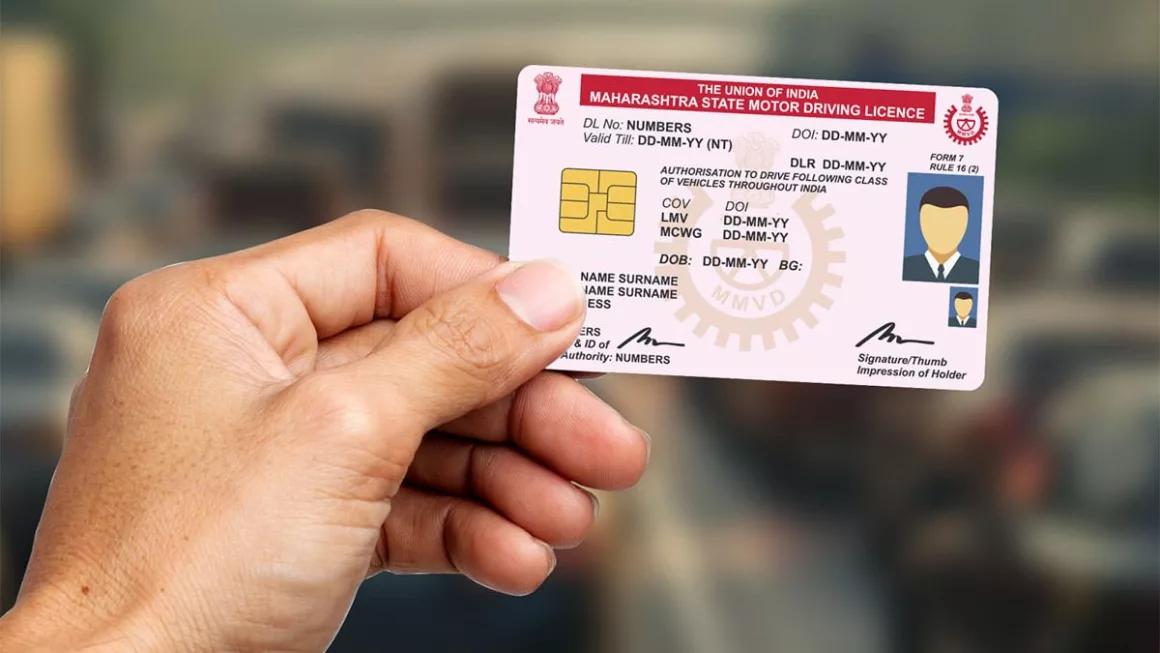
In India, the learner’s driving licence is the first step towards obtaining a permanent driver’s licence from the government. It is a legal document that permits you to learn to drive or practice your driving skills with restrictions. For instance, you cannot drive the car unless you have a registered driver who has a permanent licence.
A learner’s licence is issued for a specific class of vehicle, such as a motorcycle without gear, motorcycle with gear, light motor vehicle or transport vehicle. Once you get a learner’s licence, you can apply for a permanent driving licence after 30 days, but it should be done before the learner’s licence expires.
In India, learner’s license applications typically happen via the Sarathi/Parivahan portal. In several states, you can use Aadhaar-based e-KYC to simplify and digitalise your application. In other states, you will be required to upload documents and go to an RTO to complete the verification process.
Learner’s Driving Licence: Quick Overview
| Particular | Details |
| Licence type | Temporary learning permit |
| Application portal | Sarathi/Parivahan |
| Validity | 6 months |
| Valid across India | Yes |
| Permanent DL application | After 30 days from learner’s licence issue |
| Basic fee | ₹150 per vehicle class |
| Learner test fee | ₹50 |
| Minimum test score | 60% |
| Supervision required | Yes, while practising |
| L plates required | Yes, at the front and rear of the vehicle |
What is a Learner’s Licence?
A learner’s license is used to allow an individual to learn how to operate a vehicle in real-life situations. This is usually granted to the user before they can apply for a permanent licence.
For example, if you want to drive a car, you first apply for a learner’s licence for the Light Motor Vehicle category. After practising and completing the minimum waiting period, you can apply for a permanent driving licence and take the driving test.
A person holding a learner’s license does not have the full freedom that they would if they held a permanent license. You must always abide by the regulations associated with having a learner’s license, such as being supervised by a legally registered driver, and displaying “L” plates whilst operating the vehicle.
Learner’s Licence Eligibility in India
Eligibility depends on the type of vehicle for which you are applying.
| Vehicle category | Minimum age | Key condition |
| Motorcycle without gear up to 50cc | 16 years | Parent or guardian consent required |
| Motorcycle with gear | 18 years | Applicant should meet normal eligibility rules |
| Light Motor Vehicle | 18 years | For private cars and light vehicles |
| Transport vehicle | 20 years | Applicant should meet transport vehicle requirements |
To be able to apply for a learner’s licence for operating a transport vehicle, the applicant is usually required to possess an LMV driver’s licence for a minimum period of time. There are exceptions to the rule that state that some vehicles qualify for their own unique forms of learner’s licences, such as for using e-carts or e-rickshaws.
Also Read: Types of Driving Licences in India
Documents Required for Learner’s Licence
The document list may vary slightly by state and application route, but the following documents are commonly required.
| Document | When it is needed |
| Form 2 | Application for learner’s licence |
| Proof of age | Required |
| Proof of address | Required |
| Form 1 | Self-declaration of physical fitness |
| Form 1A | Required where applicable, especially for transport vehicle applications or when asked by the portal/RTO |
| Parent/guardian consent | Required for minor applicants |
| Photograph | Required unless captured or fetched digitally |
| Form 5 | Required where a driving school certificate is applicable |
| Proof of legal presence in India | Required for foreign nationals |
A typical valid identification of age and address would include Aadhaar cards, voter identification (ID), a passport, a school certificate, a birth certificate, a life insurance policy, along with any other identification document(s) that may be acceptable by the state and/or RTO.
Aadhaar is commonly used for e-KYC, but it should not be treated as the only possible document in every case. If you are applying without Aadhaar e-KYC, follow the document list shown on the Sarathi portal for your state.
Learner’s Licence Fees in India
For the basic learner’s license, there is one fee per vehicle class and a separate charge for the learner’s test itself.
| Service | Base fee |
| Learner’s licence issue fee | ₹150 per vehicle class |
| Learner’s licence test fee | ₹50 |
| Learner’s licence repeat test fee | ₹50 |
| State/portal/user charges | Varies by state |
Let’s say you’re applying to 1 vehicle class. Your total base fees + learner licence fee = ₹150 + ₹50 = ₹200. If you’re applying for two vehicle classes, your learner’s licence fees will be calculated separately for each vehicle class.
The final amount may differ by state because some RTO portals add web portal charges or service charges. Always pay the amount shown on the Sarathi portal during application.
How to Apply for a Learner’s Licence Online
The beginning of the learner’s licence can be completed online using Sarathi/Parivahan for most people.
Online application steps
- Visit the Sarathi/Parivahan portal
- Select your state
- Choose “Apply for Learner Licence”
- Select Aadhaar e-KYC or non-e-KYC route, depending on availability
- Fill in applicant details
- Select the vehicle class
- Upload documents, if required
- Submit Form 1 self-declaration
- Pay the applicable fee online
- Take the learner’s licence test as per your state’s process
- Download or print the learner’s licence after approval
Sometimes, the process to apply for your learner’s licence. In some places, this means that you can use Aadhaar e-KYC and will not need to be verified at your local RTO and in others, you still may be required to go through that process.
Aadhaar e-KYC vs Non-e-KYC Process
The learner’s licence application flow depends on whether you use Aadhaar e-KYC and whether your state supports faceless services.
| Route | What happens |
| Aadhaar e-KYC route | Details may be fetched through Aadhaar, and the test may be available online where the state allows it |
| Non-e-KYC route | Applicant enters details manually, uploads documents and may need RTO verification |
| Offline/RTO route | Applicant submits documents and completes the process at the RTO where online/faceless service is not used |
It is not safe to presume that a learner’s licence can be fully processed from home. The processing method (i.e., online or offline) depends on your state, e-KYC availability, and RTO regulations.
How To Apply For Learner’s Licence Offline
If online or faceless services are not available, you may need to apply through the RTO.
Offline steps
- Visit the nearest RTO or licensing authority
- Collect or fill Form 2
- Attach proof of age and address
- Submit Form 1 self-declaration
- Submit Form 1A if applicable
- Pay the required fee
- Appear for document verification
- Take the learner’s licence test
- Collect or download the learner’s licence after approval
The time to process your licence using the offline method is likely to be longer than with the online method because delays can occur while your documents are verified and while you wait to be allotted an appointment with the RTO.
Learner’s Licence Test
To see if applicants have knowledge of fundamental traffic regulations and safety on the roads, they take an assessment known as the learner’s licence test. This is typically a multiple-choice format.
The test may include questions on:
- Traffic signs
- Traffic signals
- Rules of the road
- Documents to carry while driving
- Duties of a driver after an accident
- Safety at railway crossings
- Basic road discipline
To pass the test, the applicant must correctly answer at least 60% of the questions.
Many RTOs may conduct preliminary tests regarding the applicant’s vision, whether they can distinguish between colours, their ability to move their limbs, as well as medical checks prior to conducting the learner’s licence test; however, this is subject to change depending on the applicant’s state of residence and if they have access to Aadhaar e-KYC or can use faceless services.
Rules for Driving with a Learner’s Licence
With a learner’s licence, you can practice driving, but there are some rules you need to follow.
| Rule | What it means |
| Drive with supervision | A person holding a valid driving licence for that vehicle class should accompany you |
| Display L plates | The vehicle should show “L” plates at the front and rear |
| Drive only allowed vehicle class | Practise only the class of vehicle mentioned on the learner’s licence |
| Carry documents | Keep the learner’s licence and required vehicle documents with you |
| Follow traffic rules | Learner drivers must follow all road rules like any other driver |
Unlike a permanent driver, a learner will NOT be able to drive alone, as the learner’s licence is designed to allow a learner to practice with a permanent licence holder present, who needs to provide him/her with supervision.
Learner’s Licence Validity
A learner’s licence is valid for 6 months from the date of issue and is effective throughout India.
You are eligible to request a permanent driver’s license 30 days after you were issued your learner driver’s license. However, you must apply prior to your expiration date if you wish to obtain a permanent driver’s license.
| Stage | Timeline |
| Learner’s licence validity | 6 months |
| Minimum wait before permanent DL application | 30 days |
| Best time to apply for permanent DL | After 30 days and before LL expiry |
If your learner’s driving license has already expired, you will have to apply for a new learner’s license and go through the entire process again.
How to Apply for a Permanent Driving Licence After a Learner’s Licence
You can apply for your permanent driver’s license after 30 days of having a learner’s permit.
Steps To Follow:
- Visit the Sarathi/Parivahan portal
- Select your state
- Choose “Apply for Driving Licence”
- Enter learner’s licence details
- Select the vehicle class
- Upload documents, if required
- Pay the applicable fee
- Book or follow the driving test process
- Appear for the driving test
- Get the permanent licence after approval
You will need to pass the driving test for the class of vehicle you are using before you will be able to receive your permanent driver’s license.
Common Mistakes to Avoid While Applying for a Learner’s Licence
Errors in applicant information and issuing documents lead to delays in obtaining learner’s licenses.
Avoid these mistakes:
- Selecting the wrong vehicle class
- Uploading unclear documents
- Entering a name or date of birth that does not match the documents
- Treating Aadhaar as the only accepted proof
- Assuming the process is fully online in every state
- Missing the learner test
- Not displaying L plates while practising
- Driving without a licensed person beside you
- Waiting until the learner’s licence expires
- Applying for a permanent DL before completing 30 days
FAQs
Q. What is a learner’s licence?
A learner’s licence is a temporary licence that allows a person to learn and practise driving before applying for a permanent driving licence.
Q. How long is a learner’s licence valid in India?
A learner’s licence is valid for 6 months from the date of issue.
Q. Can I apply for a permanent driving licence immediately after getting a learner’s licence?
No. You can apply for a permanent driving licence only after 30 days from the issue date of the learner’s licence.
Q. What is the minimum age for a learner’s licence in India?
The minimum age is 16 years for a motorcycle without gear up to 50cc with parent or guardian consent, 18 years for non-transport vehicles and 20 years for transport vehicles.
Q. What is the fee for a learner’s licence?
The basic fee is ₹150 per vehicle class, plus ₹50 for the learner’s licence test. State or portal charges may be added depending on the RTO.
Q. Is Aadhaar mandatory for learner’s licence?
Aadhaar is commonly used for e-KYC, but other accepted age and address proof documents can also be used where the process allows.
Q. What is the pass mark for the learner’s licence test?
The applicant must correctly answer at least 60% of the questions in the learner’s licence test.
Q. Can I drive alone with a learner’s licence?
No. A learner driver should be accompanied by a person holding a valid driving licence for that vehicle class.
Q. Are L plates compulsory for learner drivers?
Yes, the vehicle should display L plates at the front and rear while being driven by a learner.
Q. What happens if my learner’s licence expires?
If your learner’s licence expires, you may need to apply for a fresh learner’s licence and repeat the process.