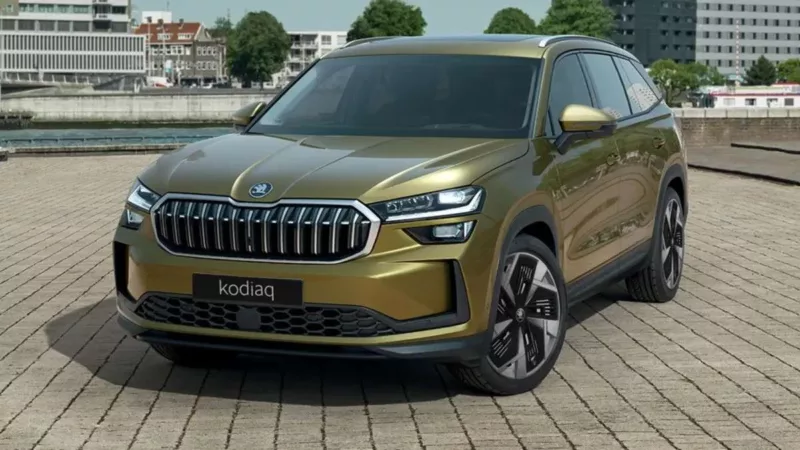
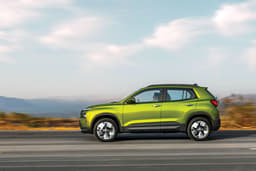
The Hyundai Creta and Renault Duster are two of the best-known names in the midsize SUV market in India. The Creta was introduced to the Indian market in 2015 and is available in both petrol and diesel variants, while the Duster was first introduced in India in 2012 and has been reintroduced in a new avatar in 2026, with turbo-petrol engines and, since October 2026, a strong-hybrid option. Among the turbo-petrol and diesel versions compared here, the most economical Creta is claimed to give a mileage of 21.8 km/l, while the Duster achieves a maximum of 19.41 km/l. However, which of these vehicles is more fuel-efficient on Indian roads? If you are shopping pre-owned, we also look at used Duster vs Creta and which one ages better.
The current Creta offers a 1.5-litre naturally aspirated petrol with manual and CVT options, a 1.5-litre turbo-petrol with a 7-speed DCT, and a 1.5-litre diesel with manual and 6-speed torque-converter automatic gearboxes. The Duster keeps things simpler with a 1.0-litre turbo-petrol manual and a more powerful 1.3-litre turbo-petrol available with manual and DCT transmissions, plus the new 1.8-litre strong hybrid. That gives us several useful comparisons across city use, highway driving and monthly fuel costs.
Table of Contents
Hyundai Creta vs Renault Duster Specs
The three major factors that affect mileage are engine type, torque output, and the weight of the vehicle. The Hyundai Creta has two engine options available to customers in the form of a naturally aspirated petrol engine and a highly efficient diesel engine, along with a turbo-petrol engine option, while the Renault Duster comes with turbo-petrol engines and a strong-hybrid option. The 1.3-litre engine of the Duster is considerably more powerful in terms of power and torque than the normal 1.5-litre engine of the Hyundai Creta, which has an impact on fuel consumption if driven aggressively.
Both SUVs are front-wheel drive and use 50-litre fuel tanks. Kerb weight varies by version, but a Creta petrol CVT reference weighs about 1,282 kg, while tested Duster manual versions weigh roughly 1,316 kg for the 1.0 and 1,372 kg for the 1.3. The heavier Duster and its stronger turbo engines help explain part of the real-world efficiency gap.
| Specification | Hyundai Creta | Renault Duster |
| Engine | 1.5L petrol / 1.5L turbo-petrol / 1.5L diesel | 1.0L turbo-petrol / 1.3L turbo-petrol |
| Displacement | 1,497cc / 1,482cc / 1,493cc | 999cc / 1,333cc |
| Power | 115 PS / 160 PS / 116 PS | 100 PS / 163 PS |
| Torque | 143.8 Nm / 253 Nm / 250 Nm | 160 Nm / 280 Nm |
| Transmission | 6MT / CVT / 7DCT / 6AT | 6MT / 6DCT |
| Drive layout | Front-wheel drive | Front-wheel drive |
| Kerb weight | About 1,282 kg for petrol CVT reference | About 1,316–1,372 kg for tested MT versions |
| Fuel tank capacity | 50 litres | 50 litres |
*The Duster is also offered with a 1.8-litre strong hybrid (160 PS combined), launched in October 2026.
Summary: The Duster’s 1.3 turbo is the more powerful petrol engine, with 163 PS and 280 Nm. The Creta is lighter and offers a diesel, which gives it the edge for efficiency.

Hyundai Creta vs Renault Duster ARAI Mileage Figures

Creta has a wider range of efficiency than the Duster’s turbo-petrol versions because it has both petrol and diesel engines. Its petrol manual of 1.5 litres gives a mileage of 17.4 km/l, and it is slightly higher at 17.7 km/l in CVT. On the other hand, a turbo-petrol DCT Creta offers 18.4 km/l. In fact, diesel offers the highest mileage, while the petrol variants are ahead in performance. The mileage of the diesel manual is 21.8 km/l, and that of the automatic diesel variant is 19.1 km/l.
The Duster’s best turbo-petrol figure comes from the smaller 1.0 turbo-petrol manual, which is rated at 19.41 km/l. The 1.3 turbo manual claims 17.75 km/l, while the 1.3 DCT is rated at 18.45 km/l. The Duster 1.0 beats the Creta’s regular petrol versions, but the Creta diesel remains ahead of every Duster turbo-petrol. The new Duster strong hybrid, launched in October 2026, claims 29 km/l, the highest figure of all, but it was not part of the tests in this comparison.
| Car | Engine & Transmission | Fuel Type | ARAI Mileage (km/l) |
| Hyundai Creta | 1.5 petrol MT | Petrol | 17.4 |
| Hyundai Creta | 1.5 petrol CVT | Petrol | 17.7 |
| Hyundai Creta | 1.5 turbo DCT | Petrol | 18.4 |
| Hyundai Creta | 1.5 diesel MT | Diesel | 21.8 |
| Hyundai Creta | 1.5 diesel AT | Diesel | 19.1 |
| Renault Duster | 1.0 turbo MT | Petrol | 19.41 |
| Renault Duster | 1.3 turbo MT | Petrol | 17.75 |
| Renault Duster | 1.3 turbo DCT | Petrol | 18.45 |
| Renault Duster | 1.8 strong hybrid AT | Petrol-hybrid | 29 |
Summary: Among conventional engines, the Creta diesel manual is the most efficient at 21.8 km/l. If you are open to a hybrid, the new Duster strong hybrid tops the chart at a claimed 29 km/l.
Also Read: Should you Buy a used Hyundai Creta
Hyundai Creta vs Renault Duster Real-World Fuel Efficiency
The cleanest comparison is between the two automatic petrol versions, the Creta 1.5 petrol CVT and the Duster 1.3 turbo DCT, using instrumented city and highway test data. The Creta scored 11.17 km/l in the city and 15.05 km/l on the highway, thus giving it a tested average of 13.11 km/l. However, in the case of the Duster 1.3 DCT, the data showed 6.47 km/l in the city and 13.47 km/l on the highway, giving the car an average of only 9.97 km/l.
The Renault Duster test was carried out in very hot conditions, with temperatures reaching about 40°C, which increased air-conditioner load and limited the effectiveness of auto start-stop. Even with that context, the Creta’s advantage is substantial, especially in traffic. With both using 50-litre tanks, the tested averages translate to a theoretical mixed range of about 656km for the Creta CVT versus roughly 499 km for the Duster DCT.
| Hyundai Creta 1.5 Petrol CVT | Renault Duster 1.3 DCT | |
| City | 11.17 km/l | 6.47 km/l |
| Highway | 15.05 km/l | 13.47 km/l |
| Average | 13.11 km/l | 9.97 km/l |
| Tank range | ~656 km | ~499 km |
Instrumented readings are not available for every version, so for the rest we have used owner-reported figures. These put the Creta petrol manual around 15.7 km/l, the diesel manual around 17.74 km/l, and the diesel automatic around 16.72 km/l. For the Duster, owner-reported averages are about 10.95 km/l for the 1.0 manual and 10.64 km/l for the 1.3 manual. These values come from different methodologies and should not be regarded as a laboratory-style comparison, but they do confirm the Creta’s higher potential on a real-world basis.
Summary: The Creta is clearly more efficient in real-world driving, especially in city traffic, where the CVT returned 11.17 km/l against the Duster DCT’s 6.47 km/l. The Duster narrows the gap on the highway but still trails.
Hyundai Creta vs Renault Duster Fuel Cost Comparison
For the main cost comparison, we will use the directly tested petrol automatics: the Creta 1.5 CVT at 13.11 km/l and the Duster 1.3 DCT at 9.97 km/l. The calculation assumes 1,500km of driving per month, or 18,000km per year. Petrol in New Delhi costs ₹102.12 per litre on September 25, 2026.
| Hyundai Creta Petrol CVT | Renault Duster 1.3 DCT | |
| Monthly Running | 1,500 km | 1,500 km |
| Monthly Fuel Use | ~114.4 litres | ~150.5 litres |
| Average Monthly Fuel Cost | ~₹11,684 | ~₹15,364 |
| Average Yearly Fuel Cost | ~₹1.40 lakh | ~₹1.84 lakh |
| 5-Year Fuel Cost | ~₹7.01 lakh | ~₹9.22 lakh |
The Creta’s monthly cost-saving of approximately ₹3,680 translates to an annual saving of about ₹44,000. Over five years, assuming the same mileage, running costs, and fuel prices, the difference between the two automatics adds up to roughly ₹2.21 lakh, which is significant for buyers who travel about 18,000 kilometres a year.
The Creta diesel can reduce running costs further. Using the current 16.72 km/l owner-reported reference for the diesel automatic and New Delhi diesel at ₹95.20 per litre on September 25, 2026, 1,500km costs roughly ₹8,540 per month, or around ₹1.02 lakh per year. The Duster has no diesel equivalent, so high-mileage buyers have an option in the Creta range that Renault’s turbo-petrol versions cannot match.
To arrive at the price break-even, look at indicative entry-level variants in the price table below. The Creta Petrol EX(O) CVT costs around ₹14.50 lakh ex-showroom while the Duster Evolution 1.3 DCT is priced around ₹14.49 lakh. Thus, the price difference is negligible at about ₹1,000, while the fuel-cost difference is more than ₹44,000 per year. Based on fuel expenses alone, the Creta’s small upfront premium is recovered within the first month. Both models come with different features and performance, so this comparison is about running costs rather than which car is better overall.
Summary: The Creta petrol CVT saves about ₹44,000 a year in fuel over the Duster 1.3 DCT at 1,500 km a month. For high-mileage buyers, the Creta diesel brings running costs down even further.
Also Read: Ultimate Guide to Selling Your Hyundai Creta
Hyundai Creta vs Renault Duster Price
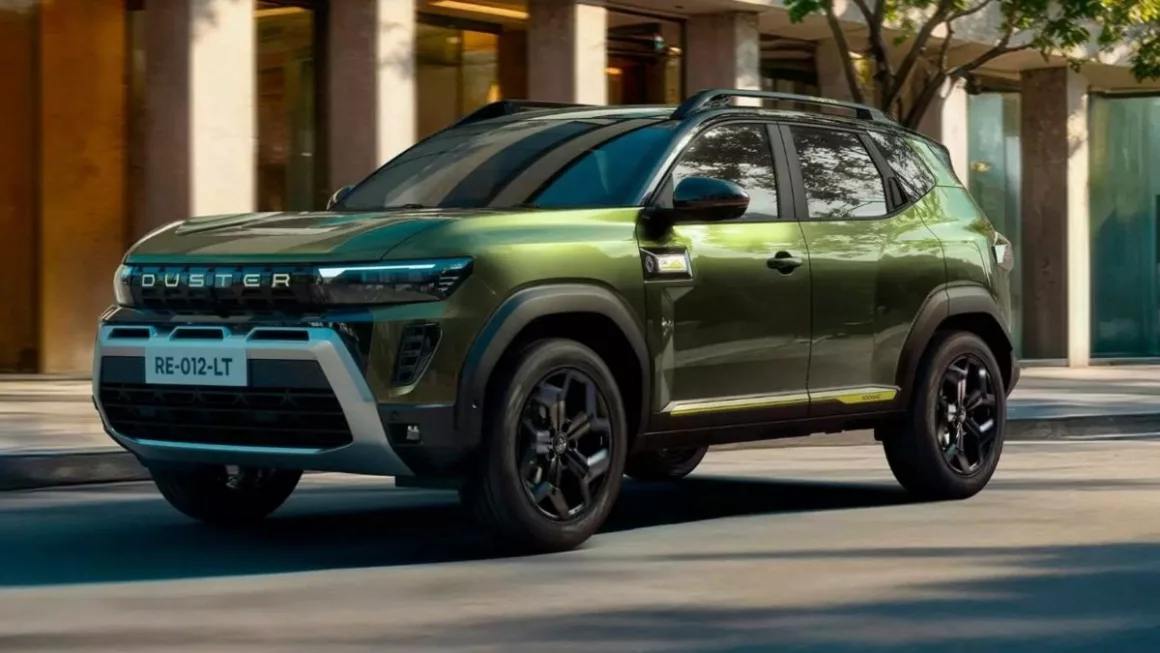
The Hyundai Creta starts at approximately ₹10.91 lakh ex-showroom in September 2026 and extends to around ₹20.11 lakh. The Renault Duster starts slightly lower at ₹10.49 lakh and reaches around ₹18.49 lakh for the Iconic 1.3 turbo DCT, or about ₹19.69 lakh for the top strong-hybrid variant. The Duster therefore has the lower entry price, while the Creta offers a much wider spread of powertrains.
| Model | Variant | Price (ex-showroom) |
| Hyundai Creta | Petrol E MT | ₹10.91 lakh |
| Hyundai Creta | Petrol EX(O) CVT | ₹14.50 lakh |
| Hyundai Creta | Diesel EX(O) AT | ₹16.08 lakh |
| Hyundai Creta | Turbo Petrol King DCT | ₹19.91 lakh |
| Renault Duster | Authentic 1.0 Turbo MT | ₹10.49 lakh |
| Renault Duster | Evolution 1.3 Turbo MT | ₹12.99 lakh |
| Renault Duster | Evolution 1.3 Turbo DCT | ₹14.49 lakh |
| Renault Duster | Iconic 1.3 Turbo DCT | ₹18.49 lakh |
| Renault Duster | Strong Hybrid (range) | ₹16.99–19.69 lakh |
It should also be noted that the pricing reflects the different approaches adopted. While Renault provides significant performance against pricing with its 163PS Duster 1.3, Hyundai gives customers the option of a more refined naturally aspirated petrol, a powerful turbo petrol engine, and a diesel option that yields good savings in fuel for the owner who drives a lot annually.
Summary: The Duster is the cheaper way into this segment, starting about ₹42,000 below the Creta. Like-for-like automatics cost almost the same, so the Creta’s lower running costs make it the better value over time.
Used Renault Duster vs Used Hyundai Creta: Which Ages Better in India?
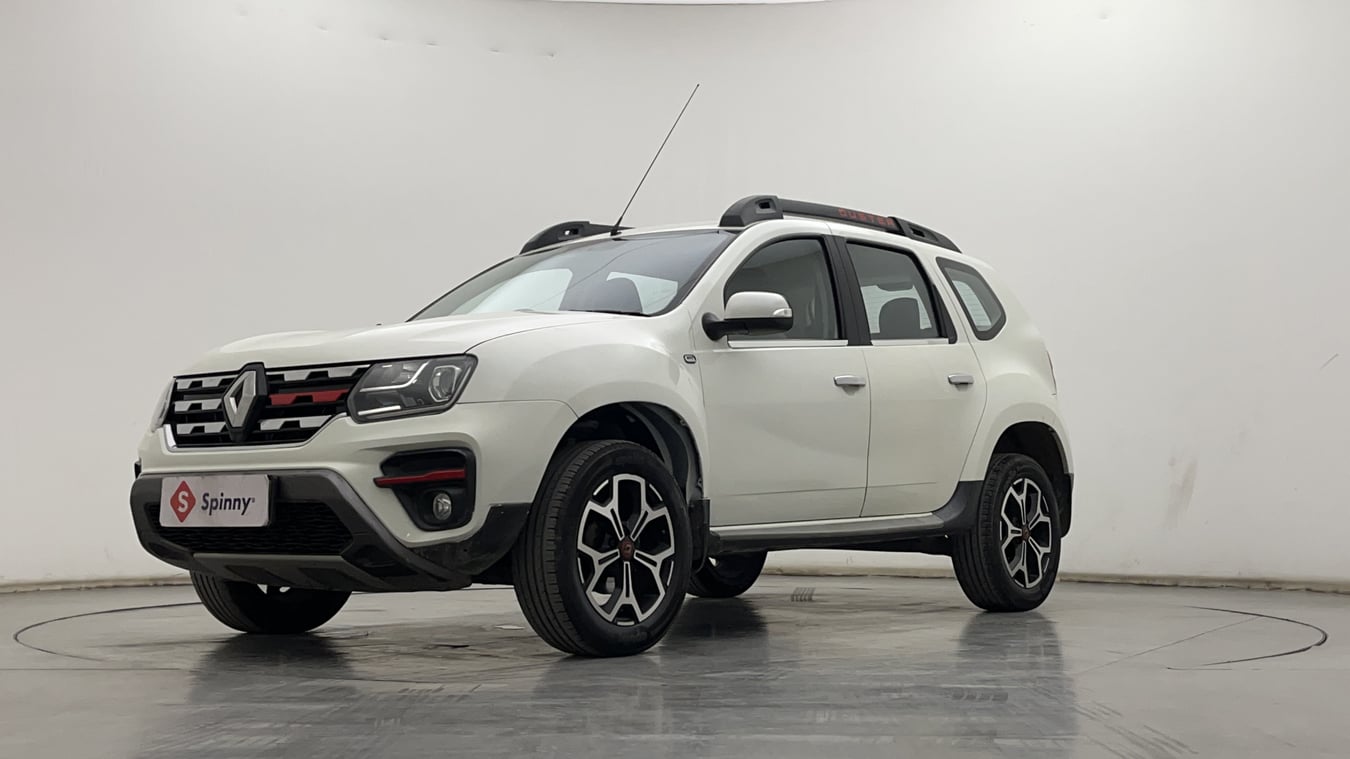
If you are buying used, how a car holds up over the years matters as much as its mileage. Car ageing shows up in worn suspension, rattles, rising repair bills and how easily you can find parts and a good workshop. On these fronts, the used Duster vs Creta comparison is not a like-for-like one. Almost every used Duster on the market is the first-generation model sold until 2022, while the new Duster only arrived in 2026.
| Parameter | Used Renault Duster | Used Hyundai Creta |
| Model years to look at | 2012–2022 (first gen), 2026 onwards (new gen) | 2015–2020 (first gen), 2020–2024 (second gen), 2024 onwards (facelift) |
| Engines (older models) | Petrol, 1.5 diesel, 1.3 turbo petrol (2020–2022) | 1.6 petrol, 1.4 and 1.6 diesel (first gen); 1.5 petrol, 1.5 diesel, 1.4 turbo (second gen) |
| 4×4 option | AWD on select first-gen diesels | No |
| Service network | Smaller | Very wide |
| Used prices on Spinny | From around ₹6.5 lakh | From around ₹5 lakh |
Why a used Duster can age well?
The first-generation Duster earned a reputation for long-term reliability, especially with its 1.5-litre diesel engine. Its suspension was built for rough roads and tends to hold up well even after years of use, and many owners rate its ride over broken roads highly. The trade-off is that even the newest first-gen Duster is now around four years old, its cabin and features feel dated, and Renault’s smaller service network can make parts and repairs slower in some cities. A second-hand Duster with a full service history and a well-maintained diesel engine can still be a tough, comfortable SUV, but check the suspension bushes, clutch and AC carefully.
Why a used Creta often ages better?
The Creta has a much wider choice of newer used cars, so you can find a relatively young model with modern features and six airbags. Hyundai’s large service network means parts are easy to find and maintenance costs are predictable almost anywhere in India, which helps its long-term reliability. If you are looking at a turbo-petrol DCT, check that the gearbox shifts smoothly in stop-start traffic during the test drive.
Whichever SUV you choose, go through the service history and the number of previous owners. Every car on Spinny goes through a 200-point inspection and comes with Fixed Price Assurance, so you can compare a second-hand Duster and a used Creta side by side.
Summary
The Hyundai Creta is the stronger overall mileage choice in this comparison. Its 1.5 petrol CVT returned 13.11 km/l in instrumented real-world testing compared with 9.97 km/l for the Duster 1.3 DCT, while the Creta diesel adds an economical option that the Duster’s turbo-petrol versions do not match. Among conventional engines, the Creta also has the highest official figure at 21.8 km/l for the diesel manual, though the new Duster strong hybrid now claims 29 km/l. For those buyers who take performance into account, the Renault Duster still has a clear advantage. Its 1.3 turbo engine produces as much as 163PS and 280Nm of torque, making it considerably stronger than the Creta’s regular petrol engine and slightly more powerful than the Creta turbo. Even the smaller Duster 1.0 boasts an impressive official rating of 19.41 km/l.
For mileage and fuel costs, the Creta makes the stronger case, particularly in CVT and diesel form. For turbo-petrol performance and a lower starting price, the Duster remains appealing. Buyers should therefore consider not only the claimed figure but also whether most of their driving is in city traffic, on highways, or spread across high annual distances. If you’re weighing a used Duster vs Creta, Spinny lets you compare both side by side. Every car goes through a 200-point inspection and comes with Fixed Price Assurance, and you can book a test drive of each before you decide.
Also Explore: Renault Duster Image Gallery: Interior and Exterior
FAQs about Creta and Duster Mileage Comparison
Q. Which has better mileage, Hyundai Creta or Renault Duster?
Among petrol and diesel engines, the Creta has the stronger overall mileage range. Its diesel manual claims 21.8 km/l, while the Duster’s best turbo-petrol figure is 19.41 km/l from the 1.0 manual. The new Duster strong hybrid claims 29 km/l, the highest of both ranges.
Q. What is the real-world mileage of the Hyundai Creta petrol CVT?
The Creta 1.5 petrol CVT has returned 11.17 km/l in the city and 15.05 km/l on the highway, with a tested average of 13.11 km/l.
Q. What is the real-world mileage of the Renault Duster 1.3 DCT?
The Duster 1.3 DCT has returned about 6.47 km/l in the city and 13.47 km/l on the highway, for an average of approximately 9.97 km/l in instrumented testing.
Q. Which is cheaper to run, the Creta petrol CVT or the Duster 1.3 DCT?
At 1,500km per month and Delhi petrol prices of ₹102.12 per litre, the Creta CVT costs about ₹11,684 per month compared with roughly ₹15,364 for the Duster 1.3 DCT.
Q. Does the Renault Duster have a diesel engine in 2026?
No. The current 2026 Duster has no diesel engine. It offers 1.0-litre and 1.3-litre turbo-petrol engines, and a 1.8-litre strong hybrid was launched in October 2026.
Q. Which SUV is better for high annual running?
The Creta diesel is better suited to high annual mileage because it combines higher real-world efficiency with lower diesel fuel prices. The Duster has no diesel equivalent, though its new strong hybrid is an option worth considering for city-heavy driving.
Q. Used Renault Duster vs used Hyundai Creta: which ages better in India?
For most buyers, a used Creta ages better. There are more newer cars to choose from, it has modern features and six airbags on recent models, and Hyundai’s wide service network keeps maintenance easy. A second-hand Duster, especially the first-gen diesel, is known for its long-term reliability and tough suspension, but most are now at least four years old and Renault’s service network is smaller.