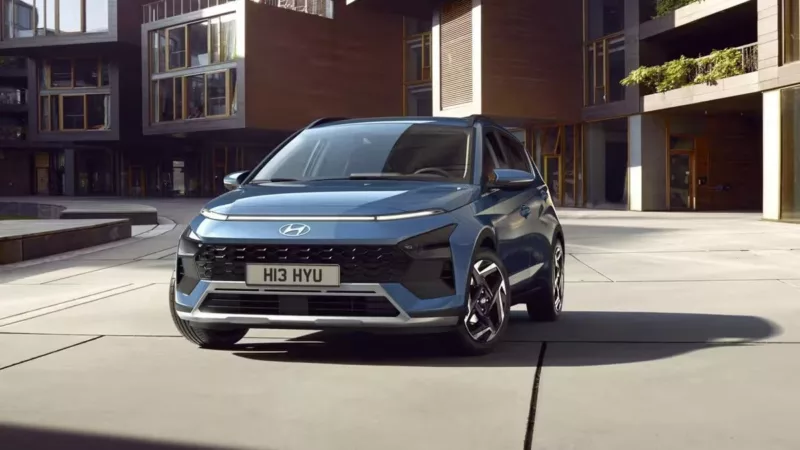
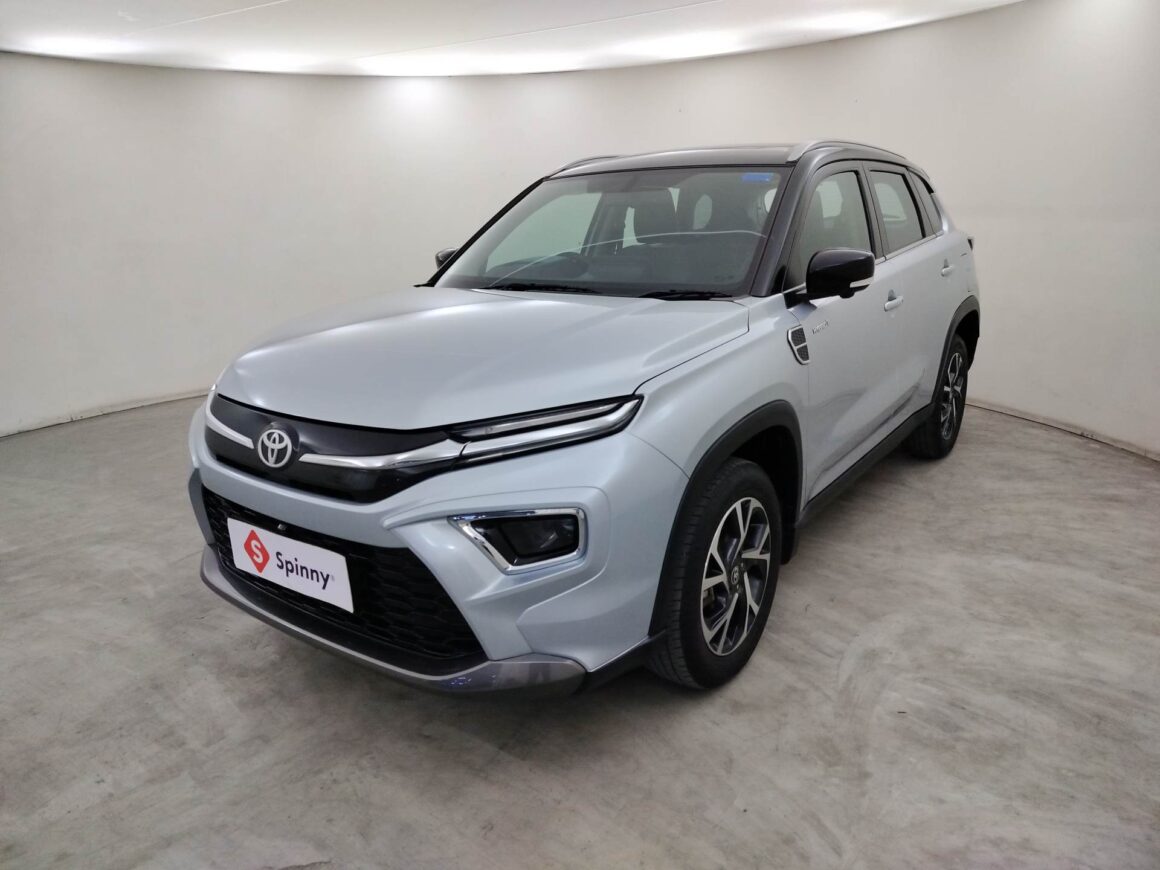
The Hyundai Bayon and Toyota Urban Cruiser Hyryder attract the same customers but for various reasons. The Bayon offers a petrol engine across its lineup, along with several advanced features as you move up the model range. On the other hand, the Hyryder has more engine options, including an efficient hybrid, CNG with the factory-fitted model, and a 4-wheel-drive option.
The right choice depends on how you use your car. A lower purchase price may matter most if you drive occasionally. For a long daily commute, fuel costs deserve more attention.
Here is a comparison between these two five-seater cars based on pricing, specs, usability, features, and ownership.
Table of Contents
Hyundai Bayon vs Hyryder: At a Glance
| Detail | Hyundai Bayon | Toyota Urban Cruiser Hyryder |
| Seating | Five | Five |
| Petrol engine choices | 1.5-litre naturally aspirated | 1.5-litre NeoDrive mild hybrid or strong hybrid |
| Factory-fitted CNG | Not currently offered | Available |
| Manual gearbox | Six-speed | Five-speed on NeoDrive and CNG |
| Automatic options | IVT | Six-speed automatic or hybrid e-Drive |
| All-wheel drive | Not offered | Selected NeoDrive automatic variant |
| Main appeal | Petrol performance and equipment | Powertrain choice and hybrid efficiency |
Hyundai Bayon vs Hyryder: Price Comparison
The advertised amount for the Bayon is ₹9,99,900. For the Hyryder, we are comparing only the S model and higher, based on the current status of the Toyota configurator.
| Variant or buying option | Ex-showroom price |
| Bayon HX2 manual | ₹9,99,900 |
| Hyryder S NeoDrive manual | ₹12,82,000 |
| Bayon HX5 IVT | Approximately ₹13.85 lakh |
| Hyryder S NeoDrive automatic | ₹14,17,000 |
| Hyryder S CNG manual | ₹13,71,000 |
| Hyryder S strong hybrid | ₹17,18,000 |
| Hyryder V NeoDrive automatic | ₹17,67,000 |
| Bayon HX10 IVT | ₹17,99,900 |
Prices were checked in November 2026. These are ex-showroom figures; registration, insurance, selected colours and accessories affect the final quotation. Confirm current grade availability locally.
The Bayon HX5 IVT is about ₹32,000 cheaper than the Hyryder S NeoDrive in the world of typical petrol automatics. The small price difference will make features and driving comfort significant elements in making the final judgment.
Around ₹17–18 lakh, the decision becomes more interesting. You can consider the extensively equipped Bayon HX10 IVT, the Hyryder V NeoDrive automatic or the Hyryder S strong hybrid. The Toyota hybrid asks you to prioritise its powertrain over the equipment available in a higher trim.
An analysis of the comparable equipment characteristics and automatic transmission variants should be carried out before determining the value of the hybrid technology option.
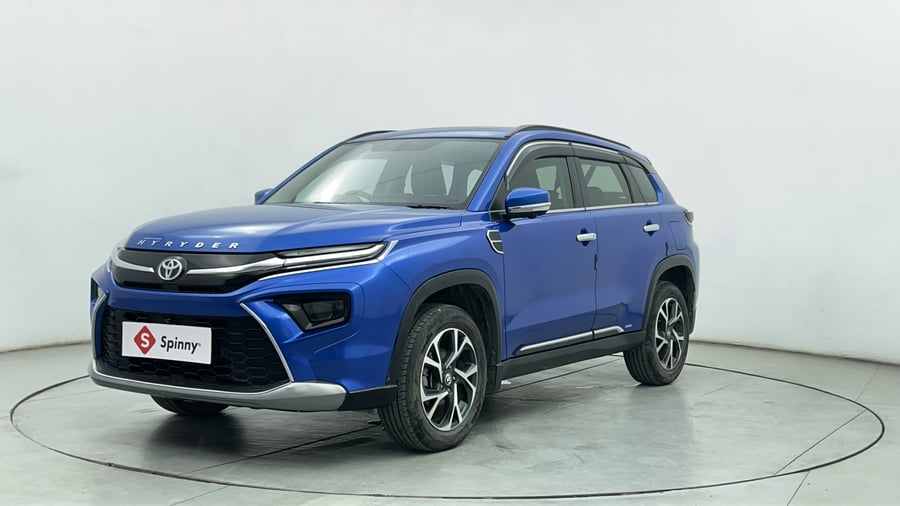
Engines and Gearboxes: Understanding the Difference
The Bayon uses a four-cylinder, 1.5-litre petrol engine. The Hyryder offers a four-cylinder NeoDrive petrol engine, a CNG version and a separate strong-hybrid system.
| Powertrain | Power | Torque | Transmission |
| Bayon 1.5 petrol | 115 PS | 143.8 Nm | Six-speed manual or IVT |
| Hyryder NeoDrive petrol | 103.06 PS | 136.8 Nm | Five-speed manual or six-speed automatic |
| Hyryder CNG, in CNG mode | 87.8 PS | 121.5 Nm | Five-speed manual |
| Hyryder strong hybrid | 115.56 PS combined system output | Engine: 122 Nm; motor: 141 Nm, separately | e-Drive automatic |
The Bayon has a higher peak power and torque output compared to the Hyryder NeoDrive, giving the former the advantage on specs, even if certain parameters like weight, gearing, and responsiveness also play an important role in acceleration.
The strong hybrid works differently. Its petrol engine and electric motor can operate separately or together, depending on demand and battery charge. Do not add their individual torque figures to create a supposed combined figure; that would misrepresent how the system delivers power.
The e-Drive technology of Toyota is also different mechanically from the IVT used in the Bayon. Both can operate automatically, but their similar everyday functions should not lead to the conclusion that they belong to the same type.
The Hyryder CNG is worth considering if fuel expenditure is your priority and refuelling is convenient. It is manual-only, so buyers who want CNG and an automatic will not find that combination here.
Also Read: Complete Buying Guide: Toyota Urban Cruiser Hyryder
City Driving and Highway Use
You can check out the Bayon IVT and the Hyryder NeoDrive automatic when evaluating which one handles tight urban driving better. Apart from its performance on the road, the nature of urban traffic offers very valuable information about a car’s handling abilities that you might not find only by driving it on a stretch of empty road.
The Hyryder strong hybrid adds another benefit: it can move on electric power under suitable conditions. That makes it particularly relevant for urban use, where slowing down and accelerating are frequent. However, engine-off operation depends on battery charge, speed, acceleration demand, and other conditions.
On highways, compare overtaking response with passengers aboard.
The Hyryder also comes with all-wheel drive available in the choice of NeoDrive automatic six-speed model. The strong hybrid model comes with front-wheel drive. If you regularly drive through slippery surfaces, you should consider whether you want to go for all-wheel drive before buying it.
Dimensions, Rear-Seat Space and Boot Practicality
The Hyryder is longer and taller, while the Bayon is slightly wider. Both share the same wheelbase.
| Measurement | Bayon | Hyryder |
| Length | 4,245 mm | 4,365 mm |
| Width | 1,810 mm | 1,795 mm |
| Height | 1,605 mm, with roof rails | 1,645 mm |
| Wheelbase | 2,600 mm | 2,600 mm |
| Turning radius | 5.16 metres | 5.4 metres |
The Bayon has a shorter body and smaller turning radius, which will be advantageous in moving into the most cramped parking space. Nevertheless, it is advisable to check the width of your parking space as the Hyundai is a bit wider.
An identical wheelbase does not guarantee identical comfort. Ask your regular passengers to check knee room, thigh support and access with the front seats adjusted properly.
Hyundai values the Bayon’s boot space at 505 litres according to the VDA 215 specification and using the tyre mobility kit. This provides an important reference point for comparison with other vehicles with different types of spare wheels installed.
For the Hyryder, inspect the exact powertrain you plan to buy. Do not judge the hybrid or CNG version’s luggage accommodation by looking at a NeoDrive display car. Take your usual bags or stroller along if luggage space is important.
Features: What Do You Get for Your Money?
In terms of the equipment, Bayon has a clearer progression. HX5 has automatic climate control, cruise control, and the ability to charge wirelessly. HX6 has a panoramic sunroof, and the HX8 adds air-conditioned front seats, a power driver’s seat, and a 360-degree camera in the Bayon.
HX10 adds dual 12.3-inch displays, Bose audio and the most extensive driver-assistance package in the range. Buyers who want these conveniences have a clear reason to consider the upper Bayon variants.
For the Hyryder, selected versions are equipped with a panoramic roof, ventilated seats, a power driver’s seat and a 360-degree camera. Models with a higher hybrid variant have a head-up display and a larger touchscreen that is 9 inches.
However, Toyota’s equipment varies with both grade and powertrain. A feature available on a strong-hybrid variant should not automatically be assumed to appear on the similarly named NeoDrive version.
A significant comparison is Bayon HX10 IVT vs Toyota Hyryder S strong hybrid. Hyundai has spent some more of your money on cabin comforts while Toyota has invested more in their hybrid technology. Both methodologies are equally good; their effectiveness can only be judged based on which is beneficial for you.
Safety and Driver Assistance
Both SUVs offer six airbags, electronic stability control, hill-start assistance and ISOFIX child-seat anchorages. An equipment list, however, is not a crash-test result.
Bayon HX10 packs in ADAS. However, it should be noted that some of the systems, such as stop-and-go adaptive cruise control, are limited to IVT. On the other hand, Hyryder currently lacks a matching ADAS in the reviewed lineup.
Hyundai describes the Bayon as engineered for five-star Indian safety standards. That is a manufacturer’s engineering claim, not a published independent rating. A directly comparable published Bharat NCAP result for both models was not verified during this research.
Hence, it would be improper to claim the superiority of either vehicle in terms of safety by relying on ratings alone. Make sure to compare the exact equipment of the variants and check for the compatibility of your child seat with the vehicle, because keep in mind that any driving assistant system still requires your active input.
Also Read: Complete Buying Guide: Hyundai Bayon
Mileage and Running Costs
Toyota publishes the following certified efficiency figures for the Hyryder:
| Powertrain | Claimed efficiency |
| NeoDrive manual, front-wheel drive | 21.11 km/l |
| NeoDrive automatic, front-wheel drive | 20.58 km/l |
| Strong hybrid | 27.97 km/l |
| CNG | 26.6 km/kg |
The numbered values mentioned above do not ensure accurate traffic results. Additionally, it cannot be compared to other unrelated Bayon tests since they cannot serve to define the exact mileage advantage, and matching independent testing cannot be used in this comparison between models.
The hybrid premium needs a calculation. The Hyryder S strong hybrid costs ₹3.01 lakh more than the S NeoDrive automatic at the listed prices.
Theoretically, if your real fuel saving were ₹2 per kilometre, it would take about 1.5 lakh km in order to recover that premium through fuel. At a distance of 20,000 km per year, that would amount to about 7.5 years. It is an example rather than an actual fuel saving of these vehicles.
Higher annual usage can make the hybrid easier to justify, while occasional driving may favour the cheaper petrol automatic. Finance costs, insurance and differences in equipment should also enter the calculation.
Ownership, Warranty and Resale
The basic warranty offered by Toyota covers three years or 1,00,000 kilometres, whichever comes first. The warranty concerning high-voltage batteries for hybrid cars being used for private purposes lasts eight years or 1,60,000 kilometres from the date of purchase, depending on the terms of the warranty.
Battery cover does not extend every component’s warranty to eight years. Check the vehicle and battery terms separately.
For each of the two SUVs, obtain service estimate quotes and assess accessibility to the service centre from your residence. Never presume that the badge gives you an intrinsic advantage in resale value. What affects a car’s resale value is not just the badge, but also overall condition, mileage, servicing history, demand for the variant, and projections for future prices.
Which SUV Offers Better Value?
For buyers who want a petrol automatic and drive moderate distances, the Bayon HX5 IVT is a sensible starting point. Its lower price and useful equipment deserve attention before stretching to a hybrid.
The Hyryder becomes more interesting only if you have a compelling reason to choose its powertrain, such as CNG if the use is frequent, a strong hybrid if you plan to drive it mainly in urban settings, or AWD for help in slippery conditions.
At a higher budget, the Bayon HX10 IVT suits buyers prioritising cabin technology and ADAS. The Hyryder strong hybrid suits those willing to pay for its propulsion system after checking the ownership maths.
Do the test drive on the exact cars and make a reasonable comparison of the complete on-road pricing. Alternatively, you could browse the selection of used SUVs available at Spinny if the new car that interests you exceeds your budget.
Related Reads:
Hyundai Bayon vs Creta: Which Hyundai SUV Offers More Value?
Hyundai Bayon Alternatives
FAQs About Hyundai Bayon vs Hyryder
Q. Which has the cheaper petrol automatic?
The Bayon HX5 IVT starts at approximately ₹13.85 lakh, while the Hyryder S NeoDrive automatic is listed at ₹14.17 lakh. The gap is roughly ₹32,000 before registration, insurance and other charges.
Q. Is every Toyota Hyryder a strong hybrid?
No. NeoDrive is Toyota’s mild-hybrid petrol option. The strong hybrid has a different engine-and-motor arrangement and can propel the vehicle electrically under suitable conditions. The Hyryder also offers CNG variants.
Q. Does the Hyryder strong hybrid need external charging?
No. Its system manages battery charging through engine operation and regenerative braking. You do not need a home charger, and electric-only driving depends on operating conditions rather than a fixed guaranteed range.
Q. Which SUV offers CNG?
The Hyryder offers factory-fitted CNG with a five-speed manual gearbox. The current Bayon range covered here is petrol-only. Consider local CNG availability and inspect luggage space before choosing the Toyota CNG.
Q. Which model offers all-wheel drive?
The Hyryder offers AWD with a selected NeoDrive six-speed automatic variant. Its strong hybrid is front-wheel drive. The Bayon does not offer AWD in the current India-spec range.
Q. Do both cars have panoramic sunroofs?
Yes, on selected variants. The Bayon offers a panoramic sunroof from HX6 upwards. The Hyryder also offers a panoramic roof on selected higher grades; confirm the feature against the exact powertrain and variant.
Q. Which SUV has more power?
The Bayon produces 115 PS, compared with 103.06 PS for the Hyryder NeoDrive. The Hyryder strong hybrid produces 115.56 PS as a combined system output. These figures alone do not establish an acceleration winner.
Q. Is the Hyryder hybrid worth the extra money?
It depends on your annual distance, actual fuel savings, and ownership period. Calculate the premium against a comparable petrol automatic. Low-mileage buyers may take much longer to recover the extra cost through fuel savings.