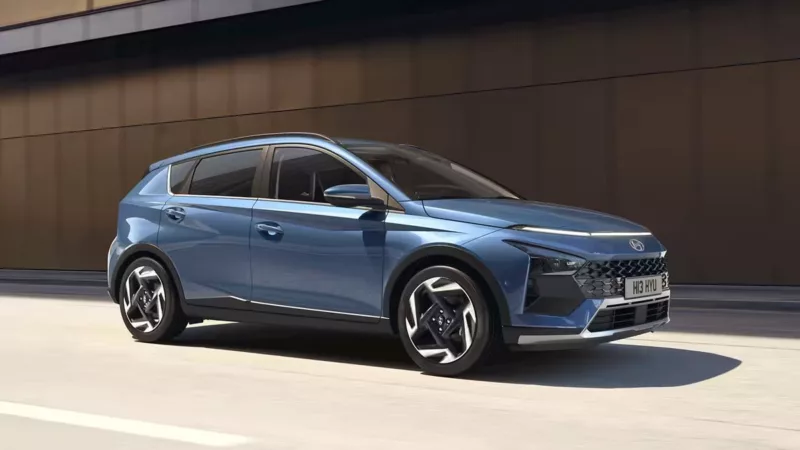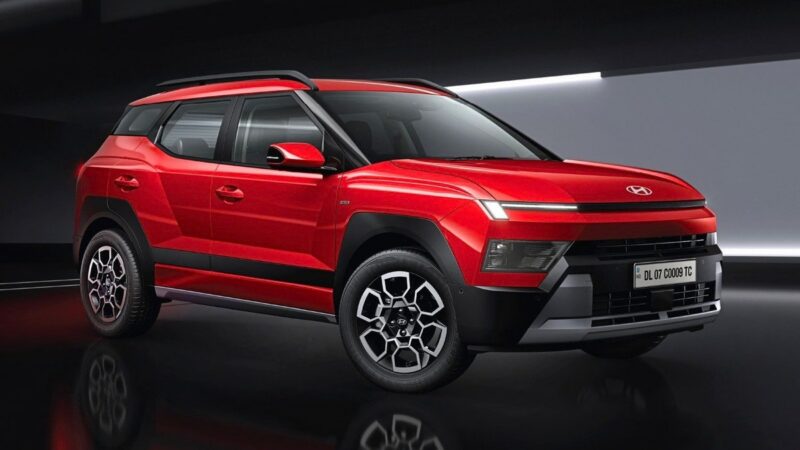
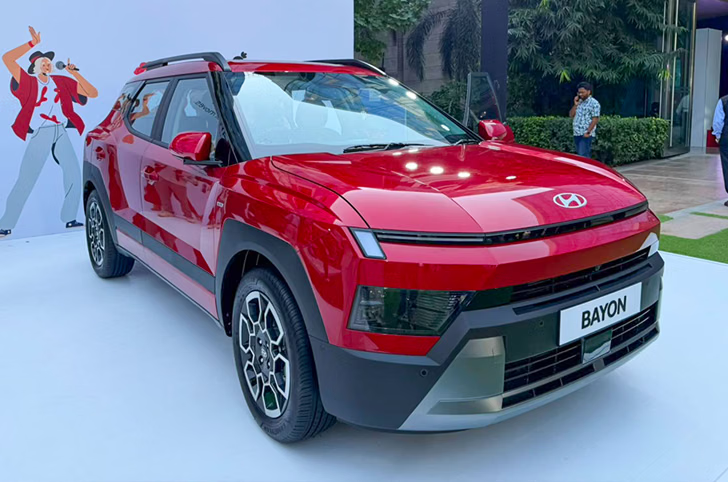
When deciding between the Hyundai Bayon and the Maruti Suzuki Victoris, the first thing to consider is how much you want to spend on a vehicle. You might want a vehicle for your daily commuting at a good value, but you might choose to spend more money getting a more advanced technological version, hence saving on fuel expenses.
Both SUVs deserve consideration, but their strengths differ. The Bayon combines a lower starting price with a relatively compact body and a generous equipment list on higher variants. The Victoris gives you more powertrain choices, including CNG and a strong hybrid.
Here is a detailed comparison of both vehicles in terms of price, usability, safety, features, and maintenance costs.
Table of Contents
Hyundai Bayon vs Victoris: At a Glance
| Detail | Hyundai Bayon | Maruti Suzuki Vitara |
| Starting ex-showroom price | ₹9,99,900 | ₹10,49,900 |
| Seating | Five | Five |
| Engine choices | 1.5-litre petrol | 1.5-litre mild-hybrid petrol, CNG and strong hybrid |
| Manual gearbox | Six-speed | Five-speed |
| Automatic options | IVT | Six-speed automatic or strong-hybrid e-CVT |
| All-wheel drive | Not offered | Available with selected petrol automatics |
| Main attraction | Petrol performance and equipment choices | Powertrain variety and fuel-saving options |
The comparison given here applies only to the Indian market. Different models offer different levels of equipment; therefore, it may not be possible to see the features advertised in promotional materials in your choice of vehicle.
Also Read: Complete Buying Guide: Hyundai Bayon
Hyundai Bayon vs Victoris: Price Comparison
The Bayon starts ₹50,000 below the Victoris. However, that advantage does not continue across every comparable version. The Victoris offers a lower entry price for an automatic, while its strong-hybrid variants require a larger budget.
| Buying option | Bayon | Victoris |
| Base petrol manual | HX2: ₹9,99,900 | LXi: ₹10,49,900 |
| Entry automatic | HX5 IVT: approximately ₹13.85 lakh | VXi 6AT: ₹13,40,900 |
| Entry factory-fitted CNG | Not currently offered | LXi CNG: ₹11,54,900 |
| Entry strong hybrid | Not offered | VXi strong hybrid: ₹16,42,900 |
Prices are ex-showroom figures checked in November 2026. Registration, insurance, colour premiums and optional accessories can change the final amount.
The Virtos VXi undercuts the Bayon HX5 IVT by about ₹44,000 in the petrol automatic segment, making these two competitors more relevant in any comparison drawn during a visit to the showroom. Be sure to check their individual specifications prior to alluding to Hyundai being at a premium.
The bigger decision is whether to pay for the Victoris’ strong hybrid. Its VXi version costs ₹3.02 lakh more than the VXi petrol automatic. Both remove the need to operate a clutch, but the hybrid adds a different propulsion system. Your annual driving distance becomes particularly relevant at this point.
Also Read: Hyundai Bayon Alternatives
Dimensions, Cabin Space and Boot Practicality
While the Victoris is taller and longer, the Bayon is wider. What’s more interesting, though, it turns out that both vehicles are of the same wheelbase.
| Measurement | Bayon | Victoris |
| Length | 4,245 mm | 4,360 mm |
| Width | 1,810 mm | 1,795 mm |
| Height | 1,605 mm, with roof rails | 1,655 mm |
| Wheelbase | 2,600 mm | 2,600 mm |
| Turning radius | 5.16 metres | 5.4 metres |
The Bayon has a compact body, which makes it easier to navigate in confined places. However, it should be noted that its wider body may still impact the vehicle’s ability to enter tight parking spaces.
Neither exterior length nor wheelbase alone tells you which rear seat will suit your family. Adjust the front seat to your driving position, then check knee room, headroom and thigh support behind it. If three people regularly travel in the back, have all three try the seat together.
According to Hyundai, the Bayon has a boot volume of 505 litres based on the VDA 215 standard with the use of a tyre repair kit. It is worth noting that you should not presume that this boot volume is relevant in all variations in wheel arrangement.
The Victoris CNG places its cylinder under the body, avoiding a conventional cylinder across the luggage compartment. This makes it worth considering if you want CNG but regularly carry suitcases. Check the boot of your chosen powertrain in person.
Also Read: Maruti Suzuki Victoris Safety Rating
Engines and Gearboxes: Which Suits Your Driving?
The Bayon maintains a simple engine lineup. Regardless of the variant, all vehicles incorporate a similar naturally aspirated petrol engine, while the main choice of gear system drives the difference.
The Victoris offers three different approaches to everyday driving.
| Powertrain | Published output | Gearbox |
| Bayon 1.5 petrol | 115 PS, 143.8 Nm | Six-speed manual or IVT |
| Victoris 1.5 mild-hybrid petrol | 103.06 PS, 139 Nm | Five-speed manual or six-speed automatic |
| Victoris CNG, in CNG mode | 87.8 PS, 121.5 Nm | Five-speed manual |
| Victoris strong hybrid | Petrol engine and electric traction motor | e-CVT |
While the Bayon delivers a higher peak output than the Victoris petrol hybrid, this information cannot be used to determine which of these two vehicles accelerates faster, as a number of additional factors, including vehicle weight, gear ratios and transmission, play a part in the overall performance of a vehicle.
For city use, compare how each automatic responds when moving away, slowing down and accelerating into a gap. The Bayon’s IVT and the Victoris petrol’s six-speed automatic use different transmission designs, so their responses can feel different.
The Victoris hybrid vehicle is capable of using electric propulsion under certain conditions and doesn’t require external charging. The e-CVT functions along with the hybrid system; it shouldn’t be seen as mechanically identical to Bayon’s IVT since both allow automatic driving.
Choose CNG primarily for its running-cost potential. Remember that the Victoris CNG is manual-only, so it will not solve the inconvenience of repeated clutch use in heavy traffic.
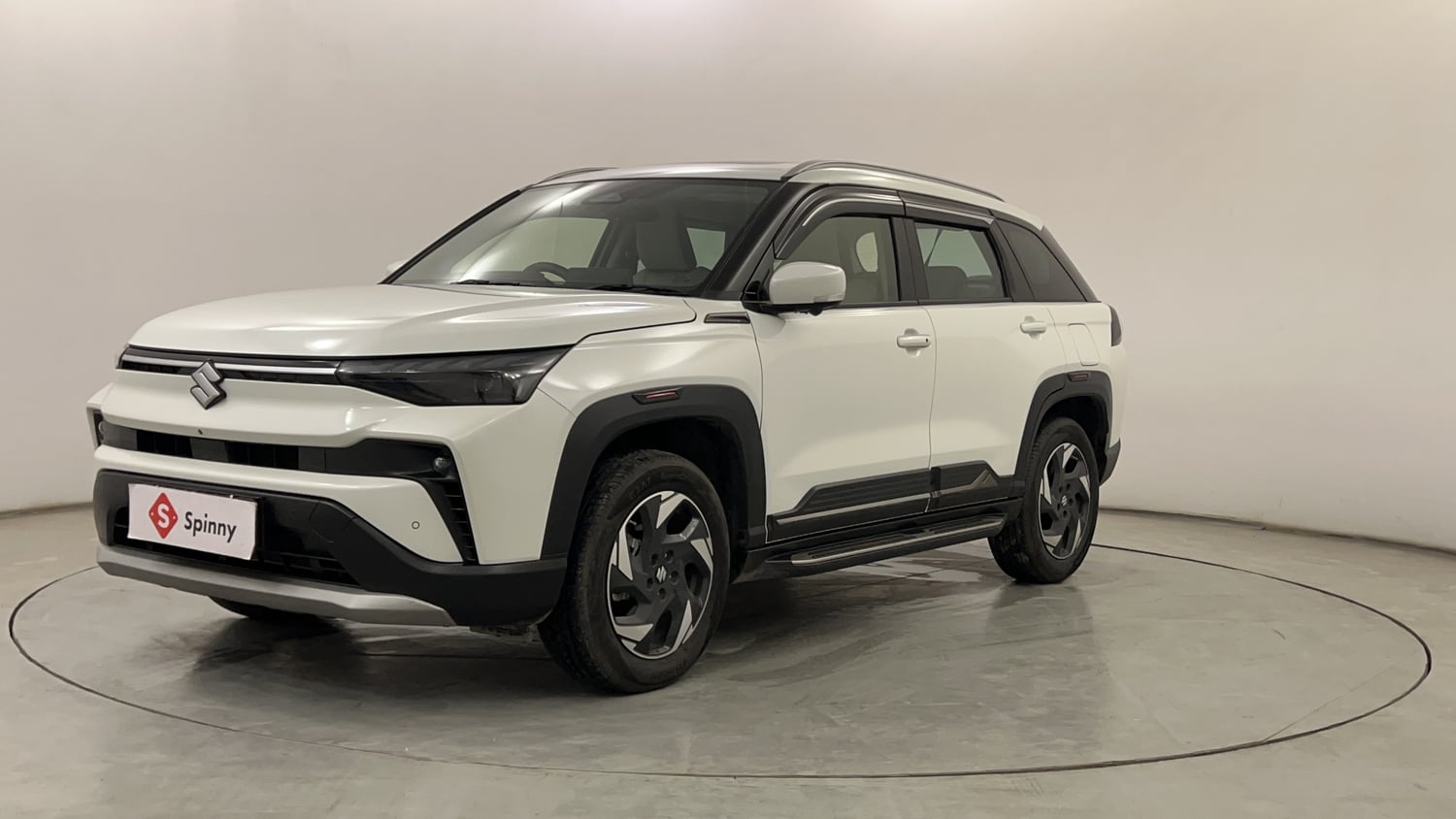
Mileage and Running Costs
The Victoris provides various options for the management of expenses related to fuel. The efficiency numbers are supplied by Maruti Suzuki:
| Victoris version | Claimed efficiency |
| Petrol manual | 21.18 km/l |
| Petrol automatic, front-wheel drive | 21.06 km/l |
| ALLGRIP petrol automatic | 19.07 km/l |
| Strong hybrid | 28.65 km/l |
| CNG | 27.02 km/kg |
The efficiency figures are not the same as actual performance on the road, as there are many factors that can affect the fuel efficiency of the vehicle. The traffic conditions, the driving style, the load that’s on board and whether the air-conditioning is used have an impact.
For a useful comparison, convert consumption into rupees per kilometre using local fuel prices. Then multiply the difference by your expected annual distance.
For example, if the cost of fuel is ₹2 less per kilometre for one of the vehicles, it means that there will be savings of ₹24,000 annually if the vehicle is driven 12,000 km each year. Only fuel savings will enable recovering a premium of ₹3 lakh after about 12.5 years. This is just an illustration, rather than a real Bayon versus Victoris comparison.
That calculation explains why the strong hybrid needs a careful budget check. Higher usage can make the premium easier to justify; occasional driving may favour a less expensive petrol version. CNG also deserves consideration where refuelling is convenient.
Features: Look Beyond the Top Variant
The range of equipment in the Bayon increases significantly towards the higher end. The HX5 version is equipped with an automatic air conditioning unit, wireless charging and cruise control, while the HX6 comes with a panoramic sunroof and the HX8 adds ventilated front seats, an adjustable driver’s seat and a 360-degree camera.
HX10 adds the dual 12.3-inch displays, Bose audio and the most extensive driver-assistance package. Those upgrades will appeal to buyers who spend plenty of time in the cabin, but they should be weighed against their additional cost.
The Victoris also has a panoramic sunroof and ventilated front seats in particular versions. The more expensive versions of Victoris are equipped with a 10.1-inch touchscreen display, a 10.25-inch digital display, Infinity audio with Dolby Atmos and a tailgate operated by gesture.
There is a useful difference at the entry level: the Victoris LXi includes a seven-inch touchscreen, while the Bayon HX2 does not have a factory touchscreen. The Bayon counters with standard tyre-pressure monitoring, which starts from VXi on the Victoris.
For an average customer, assistance in parking, comfort of seats and ease of controls are more important than the size of a display. Try connecting your phone and handling the air conditioning from inside the car during the test drive.
Safety: Equipment and Crash-Test Results
Both SUVs offer six airbags, electronic stability control and ISOFIX child-seat anchorages as standard. Beyond that, distinguish between crash protection and systems designed to help avoid a collision.
The Victoris has obtained five stars in Bharat NCAP assessments for protection of adult and child occupants. The vehicle received 31.66 out of 32 for adult safety, and children’s protection was rated at 43 out of 49. However, the published applicability list relates to specific petrol variants only, and one cannot conclude that such ratings can be automatically applied to the CNG version of the car.
Hyundai describes the Bayon as engineered for five-star Indian safety standards. That is a manufacturer’s engineering claim, rather than a published independent crash-test result. An equivalent Bayon Bharat NCAP result was not verified for this comparison.
ADAS availability should also be accounted for. The Victoris brochure indicates that it is present in selected ZXi+ and ZXi+(O) six-speed automatics and not in the strong-hybrid e-CVT versions. The Bayon offers ADAS on HX10, while the functions, including stop-and-go adaptive cruise control,l are available only for the IVT.
The Victoris therefore has the stronger independently verified crash-test evidence available for this comparison.
Which Offers Better Value?
As for the Bayon, it will be the right choice for those who wish to have a petrol SUV with a shorter body than the Victoris car, and higher peak power than Victoris mild-hybrid vehicles. Those who are going to drive it occasionally should compare its HX5 IVT model with the Victoris VXi automatic.
The Victoris offers more flexibility. Its CNG version deserves attention for frequent driving with convenient refuelling access. The strong hybrid suits buyers who want automatic convenience and can justify its premium through their usage. ALLGRIP provides another option for buyers with a specific need for additional traction.
Among the regular automatic petrol cars, the Victoris VXi is a wise choice because of its affordable price. For those who value its advanced features and smooth driving experience, the Bayon would also make sense even though it costs more.
Compare written on-road quotations, test-drive the exact powertrains and check rear-seat comfort before booking. If the preferred new-car variant stretches your budget, you can also explore available used SUVs on Spinny.
Related Reads:
Hyundai Bayon vs Creta
Maruti Suzuki Victoris vs Hyundai Creta
Best Hybrid Cars in India
FAQs About Hyundai Bayon vs Victoris
Q. Which is cheaper, the Hyundai Bayon or Victoris?
The Bayon has the lower starting price at ₹9,99,900, compared with ₹10,49,900 for the Victoris. However, the Victoris has the cheaper automatic entry. Compare matching gearbox options rather than relying only on base prices.
Q. Does the Hyundai Bayon have a hybrid engine?
The current India-spec Bayon range uses a 1.5-litre petrol engine without a strong-hybrid option. The Victoris offers both mild-hybrid petrol and strong-hybrid versions, which use different systems and should not be confused.
Q. Which SUV offers a factory-fitted CNG option?
The Victoris offers factory-fitted CNG with a five-speed manual gearbox. Its underbody cylinder arrangement helps preserve luggage space. A factory-fitted CNG version is not part of the current Bayon range covered here.
Q. Is the Victoris bigger than the Bayon?
The Victoris is longer and taller, while the Bayon is slightly wider. Both have a 2,600 mm wheelbase. These measurements do not establish a rear-seat comfort winner, so a family seating check remains worthwhile.
Q. Does the Victoris strong hybrid need charging?
The Victoris is longer and taller, while the Bayon is slightly wider. Both have a 2,600 mm wheelbase. These measurements do not establish a rear-seat comfort winner, so a family seating check remains worthwhile.
Q. Which model offers all-wheel drive?
The Victoris offers ALLGRIP with selected six-speed petrol automatic variants. The Bayon does not offer all-wheel drive. For ordinary commuting, decide whether you actually need the extra traction before paying for it.
Q. Do both SUVs offer ADAS?
Yes, on selected variants. Bayon HX10 includes ADAS, with some functions exclusive to IVT. Victoris ADAS is listed on selected higher six-speed automatics. Do not assume a strong-hybrid badge also includes ADAS.
Q. Is the Victoris strong hybrid worth its higher price?
It depends on annual distance, actual fuel savings and ownership duration. Calculate the premium against a comparable petrol automatic. Buyers covering fewer kilometres may find that fuel savings take too long to recover the additional purchase cost.