
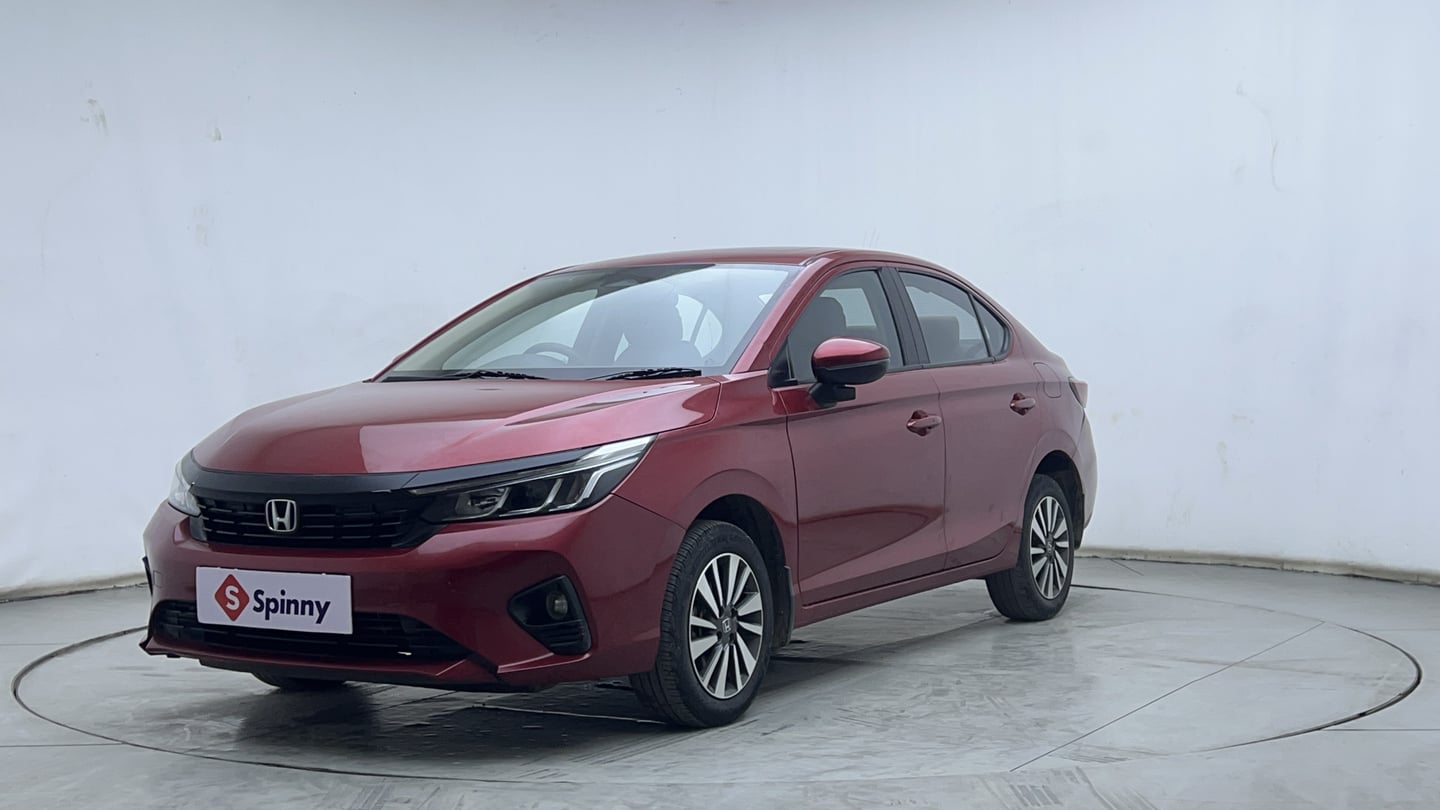
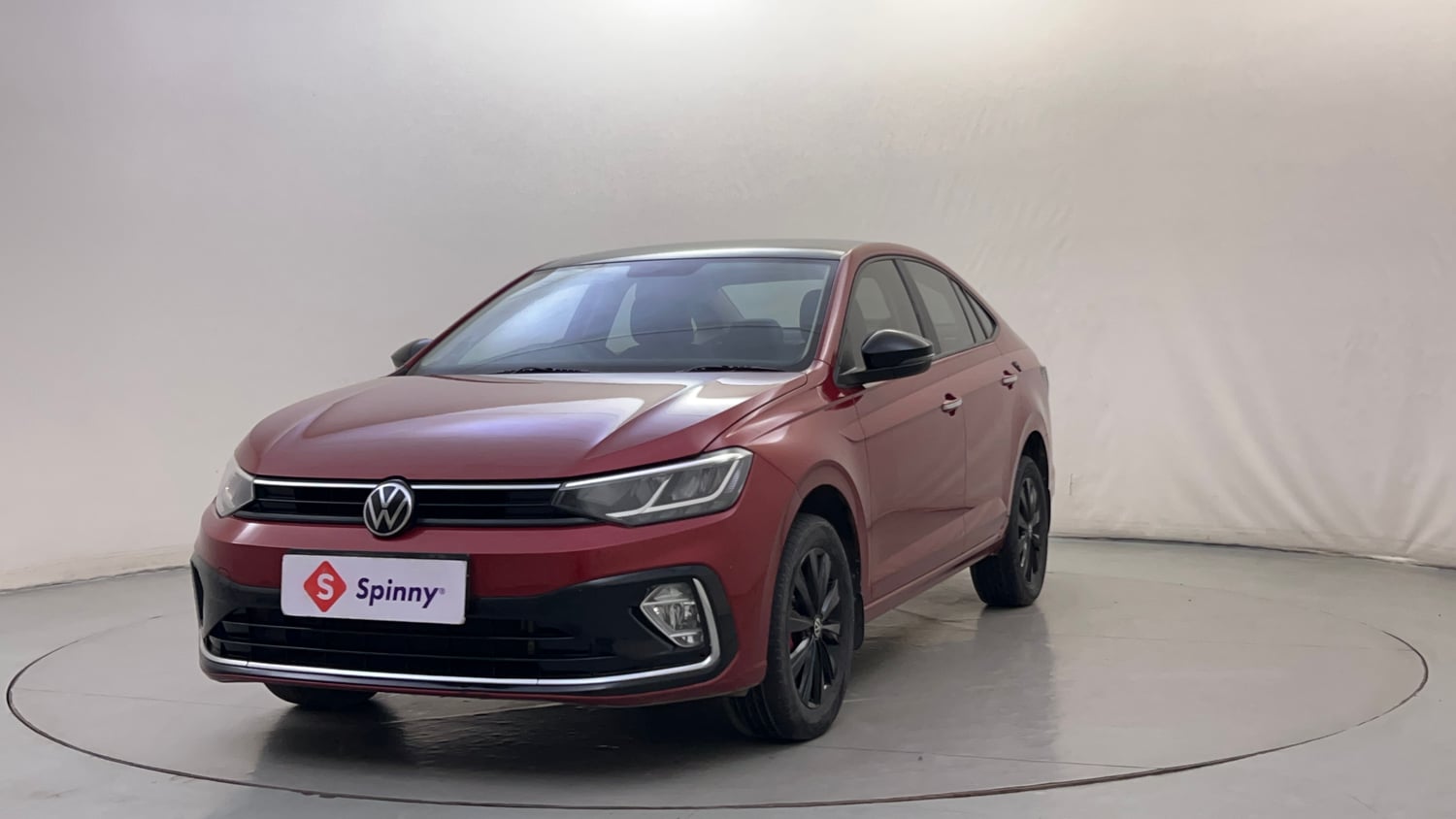
Honda City and Volkswagen Virtus are two of the most sought-after midsize sedans in India, but they take different approaches to power and efficiency. The City is powered by a 1.5-litre naturally aspirated petrol engine with manual and CVT options, while its strong-hybrid version uses electric propulsion to deliver better fuel economy. As for Virtus, it comes with turbo-petrol options including 1.0-litre TSI and 1.5-litre TSI EVO engines. Whichever engine is selected, buyers can opt for a manual or, in the case of the smaller engine, a 6-speed torque-converter automatic transmission. At the same time, the bigger 1.5-litre powertrain is fitted exclusively with a 7-speed DSG.
On paper, the Virtus 1.0 TSI manual is more efficient than the regular City petrol, while the City e: HEV is comfortably ahead of every Virtus version. Real-world results are less straightforward because traffic, gearbox behaviour and driving style affect these cars differently. The City petrol is generally consistent, the Virtus can deliver excellent highway mileage when driven gently, and the City hybrid works best in stop-and-go conditions. This comparison examines their specifications, claimed figures, everyday mileage and fuel costs to determine which sedan is easier on the wallet.
Honda City vs Volkswagen Virtus Specs
The following table compares the principal mechanical specifications of the Honda City and Volkswagen Virtus.
| Specification | Honda City | Volkswagen Virtus |
| Engine | 1.5-litre naturally aspirated petrol; 1.5-litre petrol strong hybrid | 1.0-litre TSI turbo petrol; 1.5-litre TSI EVO turbo petrol |
| Displacement | 1,498 cc | 999 cc; 1,498 cc |
| Power | Petrol: 121 PS; Hybrid: 126 PS combined | 1.0 TSI: 115 PS; 1.5 TSI: 150 PS |
| Torque | Petrol: 145 Nm; Hybrid motor: 253 Nm | 1.0 TSI: 178 Nm; 1.5 TSI: 250 Nm |
| Transmission | 6-speed MT; CVT; e-CVT | 6-speed MT; 6-speed AT; 7-speed DSG |
| Drive layout | Front-wheel drive | Front-wheel drive |
| Kerb weight | Petrol: approximately 1,123–1,142 kg; Hybrid: approximately 1,294 kg | Approximately 1,173–1,269 kg |
| Fuel tank capacity | 40 litres | 45 litres |
As for performance in the city, the City petrol lacks torque compared to either Virtus engine, but its smooth performance means it achieves consistent fuel consumption in the city. The 1.0 TSI engine delivers more torque at lower speeds, but frequent turbocharger use increases consumption, as with the 1.5 TSI; the 1.5 TSI is mainly a performance engine and has less efficient fuel economy overall because it uses Active Cylinder Technology for fuel-efficient cruising. Additionally, the City is much lighter than most versions of the Virtus. Still, weight alone does not determine fuel consumption because of factors such as gearbox tuning and driver behaviour.
The City e: HEV uses electric assistance and regenerative braking, making it particularly effective on congested roads despite its greater weight. The Virtus counters with a five-litre larger tank, so comparable mileage can still give it a longer distance between refuelling stops. Buyers should therefore separate fuel efficiency from tank range: one measures how little fuel the car consumes, while the other determines how frequently it needs to visit a fuel station.
Honda City vs Volkswagen Virtus: ARAI Mileage Figures
The certified mileage figures show the advantage offered by the Virtus 1.0 manual and the City strong hybrid.
| Engine and Transmission | Fuel Type | Honda City ARAI Mileage | Volkswagen Virtus Certified Mileage |
| 1.5-litre petrol MT / 1.0-litre TSI MT | Petrol | 17.77 km/l | 20.19 km/l |
| 1.5-litre petrol CVT / 1.0-litre TSI AT | Petrol | 17.97 km/l | 18.70 km/l |
| 1.5-litre petrol hybrid e-CVT | Petrol-hybrid | 27.26 km/l | Not available |
| 1.5-litre TSI DSG | Petrol | Not available | 19.62 km/l |
Among non-hybrid models, the Virtus with 1.0 TSI engine has the highest official fuel consumption figure among all relevant engines. While this significant edge means a lot on paper, it becomes irrelevant in low-speed driving and frequent acceleration. The DSG gearbox (paired with the 1.5-litre engine) performs better than the 1.0 TSI automatic because of its effective 7-speed gearbox. However, even though the bigger engine has better fuel consumption, it cannot outperform smaller engines in fuel economy because of its extensive use.
The City hybrid’s 27.26 km/l figure is in another league, but certified mileage is not a guaranteed everyday result. Traffic, route length, speed, air-conditioning and throttle input all affect what owners actually achieve.
Also Read: Honda City Real World Mileage: What to Expect from Petrol, CVT & Hybrid
Honda City vs Volkswagen Virtus: Real World Fuel-Efficiency
Actual prices for different routes and owning companies vary. Hence, the ranges given below are more relevant than a fixed number. They reflect realistic results with an air conditioner running and established driving habits.
| Honda City Petrol MT | Volkswagen Virtus 1.0 TSI MT | |
| City | 12–14 km/l | 11–13 km/l |
| Highway | 17–19 km/l | 17–20 km/l |
| Mixed average | 14–16 km/l | 14–16 km/l |
| Approximate tank range | 560–640 km | 630–720 km |
| Honda City Petrol CVT | Volkswagen Virtus 1.0 TSI AT | |
| City | 11–14 km/l | 9–11 km/l |
| Highway | 16–18 km/l | 14–17 km/l |
| Mixed average | 13–15 km/l | 11–14 km/l |
| Approximate tank range | 520–600 km | 495–630 km |
| Honda City Hybrid e-CVT | Volkswagen Virtus 1.5 TSI DSG | |
| City | 20–24 km/l | 10–13 km/l |
| Highway | 20–23 km/l | 17–20 km/l |
| Mixed average | 21–24 km/l | 14–16 km/l |
| Approximate tank range | 840–960 km | 630–720 km |
In the city, the City has the upper hand. Its naturally aspirated engine is known for its consistent performance, while the Virtus 1.0 automatic can even give single-digit mileage in tough traffic conditions. The City hybrid is designed to be the best contender in urban environments, as its electric power, engine stop, and regenerative braking make it possible to save fuel in stop-and-go mode. Nonetheless, short-distance journeys can lead to higher consumption for any car, as the engine spends more time warming up. While the hybrid is better at making multiple stops, air-conditioning use and low battery charge could increase the gasoline engine’s frequent operation.
On highways, the gap narrows. The City can return 17–19 km/l at a steady speed, while the Virtus 1.0 manual may touch 20 km/l. The 1.5 DSG is also economical during relaxed cruising because its seventh gear and cylinder deactivation reduce engine load. Hard acceleration and frequent kickdowns quickly lower its mileage. Maintaining 80–100 km/h normally produces better results than cruising at substantially higher speeds, where aerodynamic resistance rises sharply. The Virtus’s 45-litre tank also supports a longer touring range, though tyre pressure, load, short trips and driving style can move results outside these estimates.
Also Read: How to increase Volkswagen Virtus Mileage
Honda City vs Volkswagen Virtus: Fuel Cost Comparison
The calculation assumes that a driver covers around 1,500 km a month and that the price of gasoline in Pune is ₹112.04 per litre. Instead of the stated figures, we used more realistic mixed values here.
| Powertrain | Mileage Used | Monthly Fuel Use | Monthly Cost | Yearly Cost | Five-Year Cost |
| Honda City petrol MT | 15 km/l | 100 litres | ₹11,204 | ₹1.34 lakh | ₹6.72 lakh |
| Honda City petrol CVT | 14 km/l | 107.14 litres | ₹12,004 | ₹1.44 lakh | ₹7.20 lakh |
| Honda City hybrid e-CVT | 22.5 km/l | 66.67 litres | ₹7,469 | ₹89,632 | ₹4.48 lakh |
| Volkswagen Virtus 1.0 TSI MT | 15 km/l | 100 litres | ₹11,204 | ₹1.34 lakh | ₹6.72 lakh |
| Volkswagen Virtus 1.0 TSI AT | 12.5 km/l | 120 litres | ₹13,445 | ₹1.61 lakh | ₹8.07 lakh |
| Volkswagen Virtus 1.5 TSI DSG | 15 km/l | 100 litres | ₹11,204 | ₹1.34 lakh | ₹6.72 lakh |
Both the manuals and the Virtus 1.5 DSG are available at similar pricing levels. The City CVT can cost about ₹800 more than the car that delivers 15 km/l, while the Virtus 1.0 automatic may cost around ₹2,241 more. But if you use the highway frequently, it can reduce the price difference significantly. However, the opposite could be true if the driver is doing mainly short rides in the urban areas. Fuel prices also vary from city to city and may change over time, so these numbers should be treated as a relative comparison.
The City hybrid saves approximately ₹3,735 per month against the City manual, or around ₹2.24 lakh over five years. Its purchase premium remains substantial, so it makes the strongest financial case for high-mileage urban users who plan to keep the car for several years.
Also Read: Volkswagen Virtus Mileage Comparison: 1.0L TSI vs 1.5L TSI
Honda City vs Volkswagen Virtus Price
| Model | Variant Range | Price, Ex-showroom |
| Honda City | SV to ZX+ e: HEV | ₹11.99 lakh–₹20.99 lakh |
| Volkswagen Virtus | Comfortline to GT Plus Sport/Anniversary Edition | ₹10.70 lakh–₹19.20 lakh |
The Virtus has a marginally lower price point than the City. The upper end of City pricing has been pushed due to ZX+, which has a strong-hybrid engine. Regular petrol variants of the City sit below the hybrid and are therefore more comparable to the 1.0 TSI range. The final on-road price will also include costs for registration, insurance, and optional warranties or service. Prices can vary depending on location, colours, limited editions, and manufacturer revisions.
Summary
The Honda City is the more consistent choice for buyers focused primarily on everyday mileage. Its regular petrol engine generally performs better in crowded city conditions, and the hybrid is comfortably the most fuel-efficient option in this comparison. The Volkswagen Virtus 1.0 manual can equal or beat the regular City on highways, while its larger tank gives it useful touring range. The 1.0 automatic is the variant most likely to consume noticeably more fuel in heavy traffic.
FAQs
Q. Which delivers better real-world mileage, the Honda City or Volkswagen Virtus?
The City usually delivers better urban mileage, particularly in hybrid form. The two manuals are close in mixed use, while the Virtus 1.0 manual can perform better on highways.
Q. What is the real-world mileage of the Honda City petrol?
The City petrol manual generally returns 12–14 km/l in the city and 17–19 km/l on highways. The CVT usually gives 11–14 km/l and 16–18 km/l, respectively.
Q. What is the real-world mileage of the Volkswagen Virtus?
The Virtus 1.0 manual commonly delivers 11–13 km/l in the city and 17–20 km/l on highways. The 1.0 automatic can return 9–11 km/l and 14–17 km/l, respectively, while the 1.5 DSG typically manages 10–13 km/l in the city and 17–20 km/l on highways.
Q. Is the Honda City hybrid worth buying for its mileage?
It can be worthwhile for high-mileage owners who regularly drive in congested cities. A real-world mixed figure of roughly 21–24 km/l can produce meaningful fuel savings, but buyers should compare those savings with the hybrid’s higher upfront price before deciding.
Q. Which is more economical for highway use?
The Virtus 1.0 manual is especially economical on highways and can reach around 20 km/l when driven steadily. The City petrol is close and more predictable, while the City hybrid remains efficient but offers its biggest advantage in stop-and-go city traffic.