
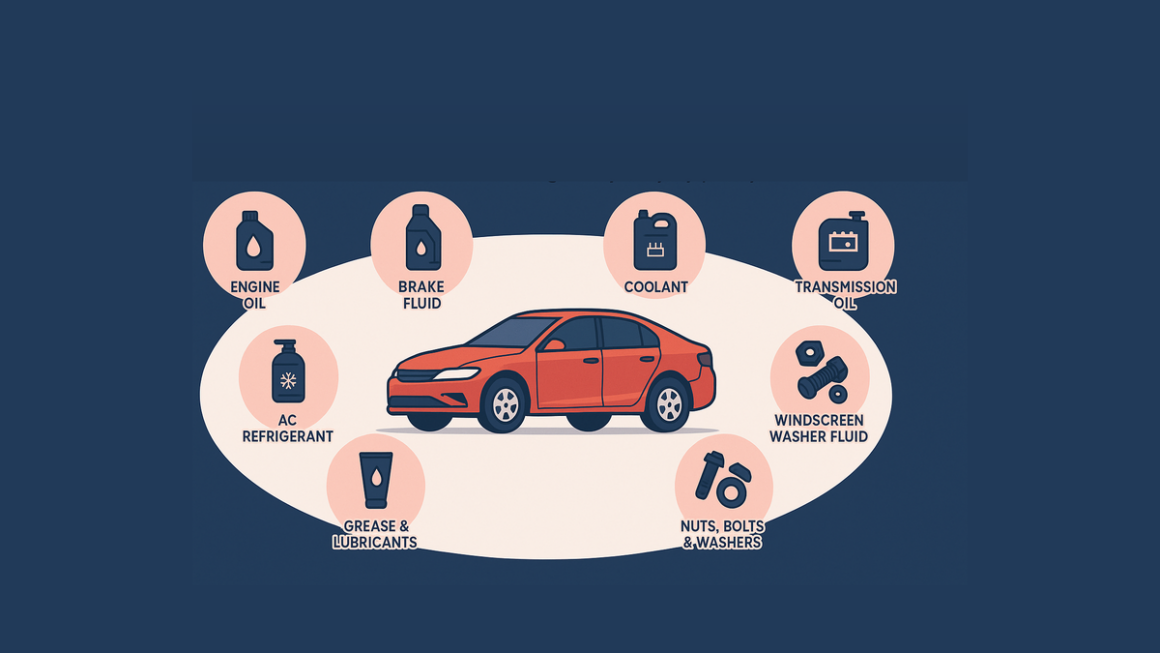
Consumables cover in auto insurance is an additional coverage option that reimburses the cost of certain oils, lubricants, filters, and other disposable goods needed to repair a covered loss. These smaller costs usually don’t fall under a basic motor insurance claim but still significantly add to the total repair bill after an accident.
The key point is that consumables cover is not a maintenance plan. It does not pay for routine oil changes, coolant top-ups, scheduled filter replacement or normal wear and tear. It generally applies only when eligible consumables have to be replaced because of an insured event covered under the vehicle’s own-damage policy. The exact list of covered items, claim limits and eligibility can vary from one insurer to another.
Table of Contents
Consumables Cover in Car Insurance at a Glance
| Aspect | What It Means |
| Type of cover | Optional motor-insurance add-on |
| Main purpose | Covers eligible consumables during an admissible own-damage repair |
| Common examples | Engine oil, coolant, brake fluid, grease, filters, nuts and bolts |
| Available with | Comprehensive/package or standalone own-damage policy, depending on insurer |
| Available with third-party-only policy? | No |
| Routine servicing covered? | No |
| Same as zero depreciation? | No |
| Universal claim limit? | No |
What Are Consumables in a Car?
Consumables refer to materials that are used up, substituted or refilled during the operation or repair of a vehicle. Unlike a a bumper, headlamp, or door panel, many of these materials cannot be repaired and reused after being drained, contaminated, or removed during the process at the service station.
Depending on the insurer’s wording, consumables may include engine oil, gearbox oil, brake fluid, power-steering fluid, coolant, grease, AC refrigerant, battery electrolyte, oil filters, fuel filters, nuts, bolts, screws, clips, washers and rivets. Some insurers may include additional repair materials as well, so the policy wording should always take priority over generic online lists.
What Is Consumables Cover in Car Insurance?
A standard own-damage policy pays for insured damages incurred to the car according to the terms of the policy; however, some materials used in the course of repair may still be the responsibility of the owner. Consumable coverage aims at minimising such out-of-pocket costs of the owner.
For example, if an insured accident damages part of the engine bay and the repair requires new coolant, engine oil, clips and AC refrigerant, those expenses may be covered if they fall within the insurer’s definition and the underlying own-damage claim is admissible. The add-on therefore works alongside a valid own-damage claim rather than independently.
What Does Consumables Cover Include?
The precise list of eligible consumables is dependent on the insurance company; however, the widely accepted items include engine oil, gearbox oil, brake fluid, power steering fluid, coolant, grease, lubricants, AC refrigerant, oil filters, fuel filters, nuts, screws, bolts, washers, clips and rivets.
Some policies may also include bearings, gaskets, wheel-balancing weights or battery electrolyte. These should be treated as possible inclusions rather than a universal list. Before buying the add-on, check what your insurer specifically defines as a consumable because that definition determines what can actually be claimed.
Also Read: Car Insurance: Everything you need to know
What Is Not Covered Under Consumables Insurance?
One important exception which should be emphasised is regular servicing. If, for instance, engine oil is changed because the car reached its servicing frequency or a filter is replaced because its regular life is over, consumables coverage will usually not apply.
Normal wear and tear, mechanical or electrical breakdown and expenses arising from events excluded under the base motor policy are also usually outside the scope of the add-on. Fuel is another common exclusion, so petrol, diesel or CNG required after a repair should not be assumed to be covered.
When Does Consumables Cover Apply?
The consumables cover usually comes into play when the material needs substituting or refilling as a result of an event defined by the insured as own damages. For example, if as a result of an accident the cooling system is damaged and coolant has to be drained and replaced, the coolant can be claimed under the consumables cover, whereas the same coolant replaced during regular servicing usually cannot be compensated.
This distinction is the easiest way to understand the product. Accident-repair consumables may be covered, while routine-maintenance consumables generally are not.
Is Consumables Cover Available Only With Comprehensive Insurance?
The coverage of consumables does call for the own-damage element but does not necessarily call for getting comprehensive cover. This add-on may be provided by some insurance companies along with comprehensive/package cover, standalone own-damage cover, or bundle motor cover depending on the insurance company.
A third-party-only policy does not cover damage to your own vehicle, so consumables cover for own-damage repairs cannot normally be attached to it. The important requirement is eligible own-damage protection, not necessarily a comprehensive policy.
Consumables Cover vs Zero Depreciation Cover
The reason why zero-depreciation cover is confused with the consumables cover is that both may help reduce the amount paid during the claims process. However, they operate through different types of claims rejection.
| Cover | Main Purpose |
| Consumables cover | Eligible oils, fluids, filters, fasteners and repair consumables |
| Zero-depreciation cover | Reduces or removes depreciation deductions on eligible replaced parts |
Just because there is zero-depreciation cover in place does not imply that engine oil, coolants, brake fluids and other consumables will be included in the cover. The car owner may have to pay for consumables unless there is a separate additives cover provided as part of the package.
How Much Does Consumables Cover Cost?
There is no fixed premium for consumables cover across India. The amount can vary depending on the insurer, vehicle, age, IDV, claims history and the way the add-on has been structured.
Rather than depending on vague statements such as a constant rupee range, one should assess the addition’s premium against the limits of claims, exceptions to coverage and the requirements for being eligible for making a claim. A small premium is of little use if the insurance policy really helps to lower the out-of-pocket expenses.
Also Read: Types of Car Insurance Coverage: A Complete Guide
Are There Claim Limits on Consumables Cover?
Some insurers impose claim limits while others structure the benefit differently. One product may reimburse eligible actual costs, while another may use a fixed per-claim amount, annual cap or percentage-based limit linked to the vehicle’s IDV or sum insured.
Thus, it is clear that there can be no single threshold amount for claims in India. Before purchasing, it is smart to check both the premium and the maximum payable amount, particularly for expensive cars where repair fluids and services can be costly.
Who Can Buy Consumables Cover?
Eligibility depends on the insurer’s underwriting rules. Many insurers restrict consumables cover to relatively new vehicles, commonly cars below around five years of age, but this is not a universal regulatory rule.
Certain insurance companies might set their own age threshold, make inspections mandatory or impose extra terms. As a rule, it is better to look at your insurer’s specific policy in detail instead of taking it for granted that any car below a specific age is automatically eligible.
Is Consumables Cover Worth Buying?
Consumables cover can be useful for owners who want to reduce smaller out-of-pocket expenses during accident repairs. It can be particularly relevant for newer vehicles and premium cars where oils, coolants, filters and repair materials can be relatively expensive.
The availability of the feature does not guarantee it will be useful for every vehicle. If the premium charged is relatively high, the maximum payout is low, or if you have already got the same protection in your existing package policy, the benefit may turn out to be not very beneficial for you. Therefore, it would be best to think of the premium first and determine whether the protection you get is worth the money.
How Does a Consumables Claim Work?
A consumables claim generally follows the same process as the underlying own-damage claim. After an accident or insured event, notify the insurer and register the claim before major repairs begin.
Prior to authorising repairs, the insurer has the right to carry out a vehicle inspection or ask for supporting photographic evidence. The repair workshop prepares the repair estimate and determines which consumables are eligible for coverage, along with repair services and costs, once all repairs are approved. Provided the claim is accepted, any consumables covered by the add-on become part of the repair payments in line with the terms and conditions applicable to the add-on.
Cashless vs Reimbursement Claims
In a cashless claim, repairs are generally carried out at a network garage, and the insurer settles the admissible amount directly with the workshop. The policyholder pays deductibles, exclusions and any other non-covered costs.
From a reimbursement perspective, requirements vary. Some insurers may allow reimbursement claims for consumables, while others may require repairs to be performed by an authorised workshop or within a particular network. It is recommended to inform the insurer beforehand about the garage where repairs are planned and to make sure one knows the correct procedure for filing the claim.
Also Read: Comprehensive Car Insurance: Coverage, Exclusions, Cost & More
What Documents May Be Required?
The exact documents depend on the insurer and type of accident, but an own-damage claim may require the claim form, RC details, driving-licence information, repair estimate and final invoice. An FIR or additional documentation may also be needed in specific situations.
Today, many insurers are offering digital submissions of claims, but the basic rule stays the same: the insurer must be able to verify the details about the insured vehicle, the incident that resulted in car damages, and the repair costs of the claim.
Claim Example: With and Without Consumables Cover
Suppose an accident repair includes ₹20,000 in covered parts and labour costs plus ₹3,000 in eligible coolant, engine oil, filters and small fasteners. Without consumables cover, that ₹3,000 may remain payable by the owner even though the main repair is admissible.
With the add-on, insurers may include eligible consumables in the settlement amount, depending on the insurance policy limit. Nevertheless, this does not imply that the entire repair cost is free of charge. Deductibles may still apply, whether compulsory or voluntary. An endorsement of zero depreciation will be needed in case depreciation of other components needs to be paid.
Things to Check Before Buying Consumables Cover
Before purchasing the add-on, read the actual definition of covered consumables instead of relying only on the product name. Check whether your vehicle meets the insurer’s age requirements, whether there are network-garage restrictions and whether reimbursement claims are allowed.
Also check the deductible limit for a claim. Always verify whether consumables coverage is already included in a bundled package add-on, especially if you’ve also purchased zero-depreciation or another premium protection package.
What Happens to Consumables Cover When You Sell the Car?
Consumables cover is attached to the insured vehicle and motor policy. It cannot simply be moved to another vehicle as a personal benefit when the owner buys a different car.
Regarding the sale, a motor policy can be transferred to the buyer upon the insurer’s endorsement and in accordance with the company’s rules. Whether the steamers add-on stops working after the transfer depends on the conditions established by the insurer. As a result, both sides should confirm the ownership transfer in writing.
Can Consumables Cover Be Added Mid-Term?
Consumables cover is commonly selected when buying or renewing an own-damage policy. Whether it can be added during an active policy term depends on the insurer and may require underwriting or vehicle inspection.
Certain companies may disallow mid-term additions altogether. If you’ve purchased an insurance policy and wish to have the add-on, consult your insurer instead of assuming that the add-on can be activated immediately.
Summary
Consumables cover in car insurance is an optional add-on that helps pay for eligible oils, fluids, filters, fasteners and similar items required during an admissible own-damage repair. It can reduce workshop expenses that may otherwise remain payable even when the main accident repair is covered.
The add-on is not available for routine maintenance activities, wear and tear, regular oil changes, or any other fluid changes. It may be offered as part of comprehensive/package insurance or as standalone own-damage insurance, depending on the insurer, but it would not be available as part of third-party insurance alone.
There is no universal premium, age limit or claim cap. Covered items, garage requirements, reimbursement rules and claim limits vary between insurers, so the policy wording matters more than generic lists. Consumables cover can be useful, but it should be judged on its actual premium, exclusions and maximum claim benefit.
Also Read: What is Third-Party Car Insurance?
FAQs About Consumables Cover in Car Insurance
Q. What is consumables cover in car insurance?
Consumables cover is an optional add-on that helps pay for eligible oils, fluids, filters, fasteners and similar items required during an admissible own-damage repair. It does not function as a regular servicing or maintenance plan.
Q. Does consumables cover include engine oil?
It can, provided engine oil is included in the insurer’s definition and has to be replaced because of an admissible insured repair. Engine oil changed during routine maintenance is generally not covered.
Q. Does zero-depreciation insurance cover consumables?
Not automatically. Zero-depreciation and consumables cover protect against different claim deductions unless the insurer combines them within one bundled product.
Q. Can consumables cover be bought with standalone own-damage insurance?
Yes, some insurers offer the add-on with standalone own-damage policies as well as comprehensive or package policies. It is generally not available with third-party-only insurance.
Q. Does consumables cover pay for routine servicing?
No. Scheduled oil changes, coolant replacement, normal filter changes and similar maintenance expenses are generally excluded because they are not linked to an admissible insured event.
Q. Is fuel covered under consumables insurance?
Fuel is generally excluded. Petrol, diesel or CNG required after a repair should not be assumed to be reimbursable under the add-on.
Q. Is there a fixed claim limit for consumables cover?
No. Claim limits vary by insurer and product. They may be fixed per claim, capped annually or linked to another policy value.
Q. Is consumables cover worth buying?
It can be useful if the premium is reasonable compared with the claim limit and likely repair costs, particularly for newer or premium vehicles.