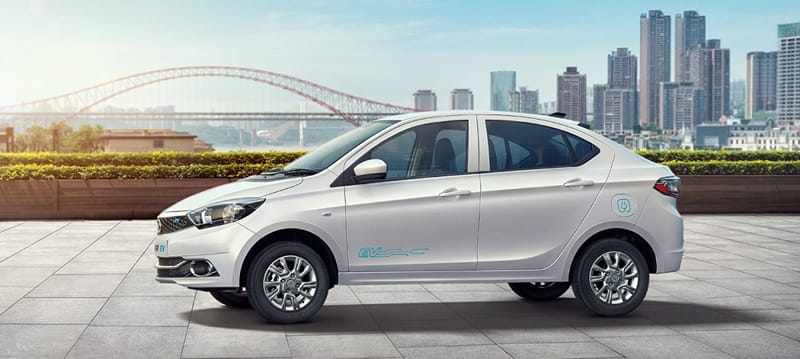
The Tata Tigor EV is one of the very few electric sedans you can buy in India, and it remains a popular pick with families and fleet operators who want a proper boot along with zero fuel bills. It pairs a 26 kWh battery with a claimed range of 315 km, and it was one of the first EVs in India to earn a 4-star Global NCAP safety rating. Although the petrol Tigor has now been replaced by the Tata Aeris, the Tigor EV is still on sale, priced from ₹12.49 lakh to ₹13.75 lakh (ex-showroom). Its closest alternatives are the Tata Tiago EV, Punch EV and Citroen eC3. Read on to see if it is the right EV for you.
Table of Contents
Tata Tigor EV Specifications
The Tigor EV uses a single electric motor that drives the front wheels, powered by a 26 kWh battery. There are two drive modes, Eco and Sport, and four levels of brake regeneration to help stretch the range.
| Specification | Tata Tigor EV |
|---|---|
| Battery | 26 kWh |
| Motor power / torque | 75 PS / 170 Nm |
| Claimed range | 315 km |
| AC charging (3.3 kW, 10–100%) | About 9.4 hours |
| DC fast charging (10–80%) | About 59 minutes |
| Length x Width x Height | 3,993 x 1,677 x 1,532 mm |
| Wheelbase | 2,450 mm |
| Boot space | 316 litres |
| Ground clearance | 172 mm |
| Safety | 2 airbags, ABS with EBD, TPMS, rear parking sensors; 4-star Global NCAP |
With 170 Nm of instant torque, the Tigor EV pulls away briskly from a standstill and reaches 60 km/h in about 5.7 seconds, which makes city driving feel effortless. The 316-litre boot is smaller than the petrol model’s, but it is still much more useful than an electric hatchback’s.
Also Read: Tata Tigor EV: Price, Specifications, Images
Tata Tigor EV Variants
The Tigor EV line-up is simple, with four variants: XE, XT, XZ+ and XZ+ Lux. All of them use the same 26 kWh battery and motor, so the range is identical across the board. The only differences are the features you get as you move up the range.
| Variant | Battery / Transmission | Ex-Showroom Price |
|---|---|---|
| Tigor EV XE | 26 kWh / Automatic | ₹12.49 lakh |
| Tigor EV XT | 26 kWh / Automatic | ₹12.99 lakh |
| Tigor EV XZ+ | 26 kWh / Automatic | ₹13.49 lakh |
| Tigor EV XZ+ Lux | 26 kWh / Automatic | ₹13.75 lakh |
Note: Ex-showroom prices as of November 2026. EVs get road tax and registration benefits in many states, and Tata often runs offers on the Tigor EV, so compare on-road quotes before booking.
Even the base XE is reasonably equipped, with automatic climate control, a digital driver display and a height-adjustable driver’s seat. The XT adds a 7-inch touchscreen with Android Auto and Apple CarPlay, power windows for all four doors and reverse park assist. The XZ+ and XZ+ Lux then bring the convenience and comfort features covered below, so you can pick the trim that matches the features you really need.
Best Tata Tigor EV Variant to Buy
Go for the XZ+. Since every variant has the same battery and range, the choice comes down to features, and the XZ+ adds the ones that make daily driving easier: a rear camera, cruise control, push-button start, auto headlamps, auto-folding mirrors and remote lock/unlock through the app, on top of the XT’s 7-inch touchscreen with Android Auto and Apple CarPlay. It costs ₹50,000 more than the XT and is worth it. The XZ+ Lux only adds leatherette seats and an optional black roof. Skip the base XE, as it misses the touchscreen.
Tata Tigor EV Warranty & Service Cost
The Tigor EV comes with a 3-year or 1,25,000 km vehicle warranty. The battery pack and electric motor are covered for 8 years or 1,60,000 km, so the most expensive parts of the car are protected for a long time.
Running the Tigor EV is very affordable. With no engine oil, fuel filter or clutch to replace, a yearly service is mainly a check-up and usually costs around ₹1,500–3,000. Charging at home at ₹8 per unit works out to roughly ₹1.1 per km based on real-world range, compared with ₹5–7 per km for a petrol or CNG sedan. Tyres, brake pads and the 12V battery are separate costs.
Also Read: Electric Car Warranty Explained: Inclusions, Exclusions & More
Why you should consider the Tata Tigor EV
If you drive mostly within the city and want the practicality of a sedan, the Tigor EV has a few clear advantages.
A Sedan Boot in an Affordable EV
Most affordable EVs in India are hatchbacks, which means very limited luggage space. The Tigor EV gives you a separate 316-litre boot, so airport runs, family shopping and weekend bags are easy to manage. Combined with the comfortable ride and 172 mm ground clearance, it is a practical everyday car that also works well as a taxi or office commuter.
Proven Safety
The Tigor EV scored 4 stars in Global NCAP’s crash test, and it was one of the first electric cars in India to be crash-tested by the agency. It is built on a strong body structure, and comes with ABS with EBD, tyre pressure monitoring and rear parking sensors. For buyers who care about safety, this independent rating is reassuring.
Very Low Running Costs
An EV makes the most sense when you drive a lot, and the Tigor EV can save you a significant amount every month. At around ₹1.1 per km with home charging, a 1,500 km month costs under ₹2,000 in electricity, compared with ₹8,000 or more for a petrol sedan. With minimal servicing and an 8-year battery warranty, the total cost of ownership stays low.
Also Read: EVs Vs Petrol vs Diesel: Cost of Ownership
Why you should not consider the Tata Tigor EV
The Tigor EV has its strengths, but it is starting to show its age. Weigh these two points before you buy.
Short Real-World Range and Slow Charging
The claimed range is 315 km, but real-world tests show about 170–220 km, with Autocar recording around 190 km. A full charge on the standard 3.3 kW AC charger takes over 9 hours, and DC fast charging from 10 to 80 percent takes about an hour, which is slower than newer EVs. It is best suited to city use, not regular highway trips.
Dated Design and Features
The Tigor EV has not received a major update in years. It has only two airbags, a small 7-inch touchscreen, no rear AC vents and no wireless charger. With the petrol Tigor already replaced by the more modern Aeris and an Aeris EV expected, buying a Tigor EV now means getting an older design, which could affect resale value. Check whether the Aeris EV has launched before you decide.
Also Read: Compare Tata Punch EV vs Tata Tigor EV
Try It, Then Decide: Spinny’s 30-Day Exchange
Switching to an EV, or buying any car, is easier when you know you are not locked in. Spinny’s 30-Day Exchange lets you exchange the Spinny car you bought for another Spinny car within 30 days of delivery if it is not the right fit.
Your two options:
• Days 0–5 (maximum 300 km): Return the car and get your money back in full under the 5-day money-back guarantee.
• Days 6–30 (maximum 1,000 km): Exchange it for a different Spinny car. Its value, after a fixed deduction, is adjusted against your new purchase.
Three steps to exchange:
1. Raise your request any time before day 30 ends.
2. Bring the car to a Spinny Car Hub within 3 days of the request.
3. Spinny re-checks the car against its delivery report and confirms your credit.
The car must come back as it was delivered, with no accidents, insurance claims, outside repairs, modifications or commercial use, and with both keys, the RC, insurance papers and all accessories. Charges start from ₹10,000, add-ons like extended warranty, FASTag and detailing cannot be refunded, and loan charges may apply.
Moving to Electric? Sell Your Current Car With Spinny
Before you bring home an EV, you may need to sell your existing car. Spinny can handle it quickly and transparently, so you do not have to deal with buyers or paperwork.
Step 1: Instant online estimate
Enter your car’s variant, year, fuel type and kilometres driven to get a price based on your city’s market.
Step 2: Free car evaluation
A Spinny expert inspects the car and confirms the price according to its condition.
Step 3: Clear, final offer
There are no hidden charges, and any deduction is explained before you say yes.
Step 4: Same-day payment
Accept the offer to receive payment on the same day, with a free RC transfer.
Spinny’s Seller Protection Policy covers you for challans, misuse, legal assistance and documentation until the RC moves to the new owner.
Summary
The Tata Tigor EV is a practical, safe and inexpensive-to-run electric sedan. Its separate boot, 4-star Global NCAP rating, comfortable ride and very low running costs make it a good fit for city commuters, families and taxi owners. However, its real-world range of around 190 km, slow charging, two airbags and ageing design hold it back, especially with the newer Aeris EV on the way. If you need an electric sedan for city use today, the Tigor EV still makes sense. The XZ+ is the variant we would choose.
Related Blogs:
Tata Electric Cars: Price, Specifications, and Features
Should You Buy a Used Electric Car?
Comparison: Tata Tiago vs Tata Tigor: Which One Is Better?
FAQs About the Tata Tigor EV
Q. Is the Tata Tigor EV still on sale after the Aeris launch?
Yes. The petrol and CNG Tigor have been replaced by the Tata Aeris, but the Tigor EV continues to be sold. An Aeris EV is expected, but it had not been launched as of November 2026.
Q. What is the real-world range of the Tigor EV?
Tata claims 315 km. In real-world conditions, expect around 170–220 km, depending on traffic, speed and AC use.
Q. Does every Tigor EV variant have the same range?
Yes. All four variants use the same 26 kWh battery and motor, so the range is the same. Only the features differ.
Q. What safety rating does the Tigor EV have?
The Tigor EV has a 4-star rating from Global NCAP. It comes with two airbags, ABS with EBD and tyre pressure monitoring.
Q. How much boot space does the Tigor EV offer?
The Tigor EV offers 316 litres of boot space, which is less than the petrol model but more than most electric hatchbacks.