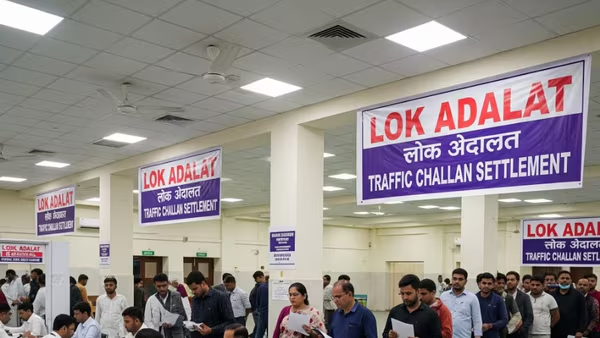
Under the Motor Vehicles Act of India, Parliament sets the penalties for traffic violations in India. States have autonomy under Section 200 of this Act to set their own compounding amounts, which are the amounts you actually pay to settle many offences. Most often, these state amounts are lower than the fines set by the Centre. Section 210A also allows a state to apply a multiplier of up to ten to the Act’s fines, although most states have used their powers to lower amounts rather than raise them.
In 2019, the Centre revised the penalties for traffic violations, and there has been a steep rise in the upper limits. After this, several states have used their power to revise the penalty rates to suit the local conditions and other considerations. This is the main reason why state-wise traffic fines, and the traffic challan amount you pay, differ from one state to another despite the MV Act in India. In this blog, we explain how this difference came into effect and how the state governments have used their power in this regard.
Table of Contents
What Does the Central Motor Vehicles Act Say About Traffic Fines?
The Central Government has categorised different traffic violations as per the Motor Vehicles Act, 1988, as amended in 2019 and set the maximum penalty for each category, along with a minimum fine for some offences. The states set the actual compounding fine amounts. So the Centre sets the stage, and the states decide how much they want to charge for the offences. There are general and specific offences that need to be dealt with differently. Minor or general offences, such as improper parking or other minor signage violations, are not the focus here. The 2019 amendment raised penalties most sharply for high-risk violations such as overspeeding, driving without valid insurance, street racing, drunken driving, etc.
Section 200 of the Act lists the offences that can be compounded, or settled by paying a fine, while other serious offences must be settled via courts. Offences such as riding without a helmet, not wearing a seatbelt, driving without a PUC, etc. can be settled immediately, and the challan can be paid online or offline as convenient. But severe offences such as drunken driving and offences committed by juveniles must be produced before the court. The punishment for these offences involves heavy penalties, community service, licence cancellation, or even jail time, depending on the severity.
Under Section 199B, the fines in the Act can also be increased by up to 10% every year, as notified by the Central Government. This revision prevents the penalties from losing their value due to inflation. Section 210A, added in 2019, lets a state notify a multiplier of between one and ten to apply to the Act’s fines in that state.
Why States Have Different Traffic Fine Structures
India is a diverse country, and what people can afford differs from state to state. This is one of the major reasons why each state sets its own penalty amount, considering factors such as local road conditions and people’s ability to pay. Thus, the penalty can be lower than what the Centre sets. At the same time, some states keep the penalty amount as close to the maximum limit, while some states have a major difference in the amount for the penalties. Either way, most states keep the amount for severe offences close to what the limit permits. Moreover, many states opposed the revision of the Act in 2019, saying the increased amounts were harsh on citizens, and reduced their compounding amounts. Karnataka, for example, halved the fine for riding without a helmet or driving without a seatbelt from ₹1,000 to ₹500.
Summary
The Central Government set a common framework for traffic offences in India and fixed the penalties for each. However, the states have used their power under Section 200 to reduce compounding penalties as they felt the penalties were harsh on the people. Many of these reductions apply to common offences such as riding without a helmet or roadside parking, though some states have also cut fines for more serious ones. Offences such as drunken driving must go to court, so state compounding amounts do not apply to them. This difference in the traffic fines in different states and the provision to give power to the state to set the actual amount reveals the federal nature of India. It proves there cannot be one-size-fits-all when it comes to penalties for traffic violations.
Related Blogs:
e-Challan Complaint Guide: How to File a Complaint Against a Wrong Traffic Challan
Highest Challan in India
FAQs about Traffic Fines Differ by State
Q. Can states change traffic fines under the Motor Vehicles Act?
Under Section 200 of the MV Act, the states can set the compounding amounts for traffic fines as long as the amount is within the limit set by the Act. Where the Act prescribes a minimum fine, states cannot go below it.
Q. Can a state impose a higher fine than the central MV Act?
Yes, within limits. Section 210A allows a state to notify a multiplier of up to ten to the Act’s fines. In practice, most states have used their powers to lower compounding amounts rather than raise them.
Q. Does the Motor Vehicles Act apply to all the states?
Yes, Motor Vehicles Act, 1988 is applicable to all the states and Union Territories of India. But there might be specific road taxes and enforcement rules that are applicable in the state and may also be involved in addition to the rules set in the Act.
Q. Can traffic police issue a challan to an out-of-state vehicle?
Yes, the traffic police can issue a challan for a traffic offence committed within their jurisdiction even if the vehicle is registered in another state. But they cannot penalise the vehicle just because it has an out-of-state registration. Under Section 47, re-registration is required only if the vehicle has been kept in the said state for more than 12 months, and vehicles with a BH-series registration are exempt.
Q. Which state has the highest traffic fines in India?
No single state can be designated to have the highest traffic fines in India. Each state has different amounts for offences.
Q. Do two-wheelers and cars have different fines?
For some offences, the fines for two-wheelers and cars are different. For example, driving without a helmet applies only to two-wheelers. The same applies to overspeeding penalties, which are different for vehicles in different categories.
Q. Can I challenge a traffic fine issued in another state?
If you have been issued a traffic challan for an offence you did not commit, you can challenge it no matter which state issued it. You can raise a grievance on the Parivahan e-challan portal (echallan.parivahan.gov.in) or your state’s traffic police portal, with proper documentation and proof. If the challan has already been sent to court, you can contest it through the virtual court or the court named on the challan.