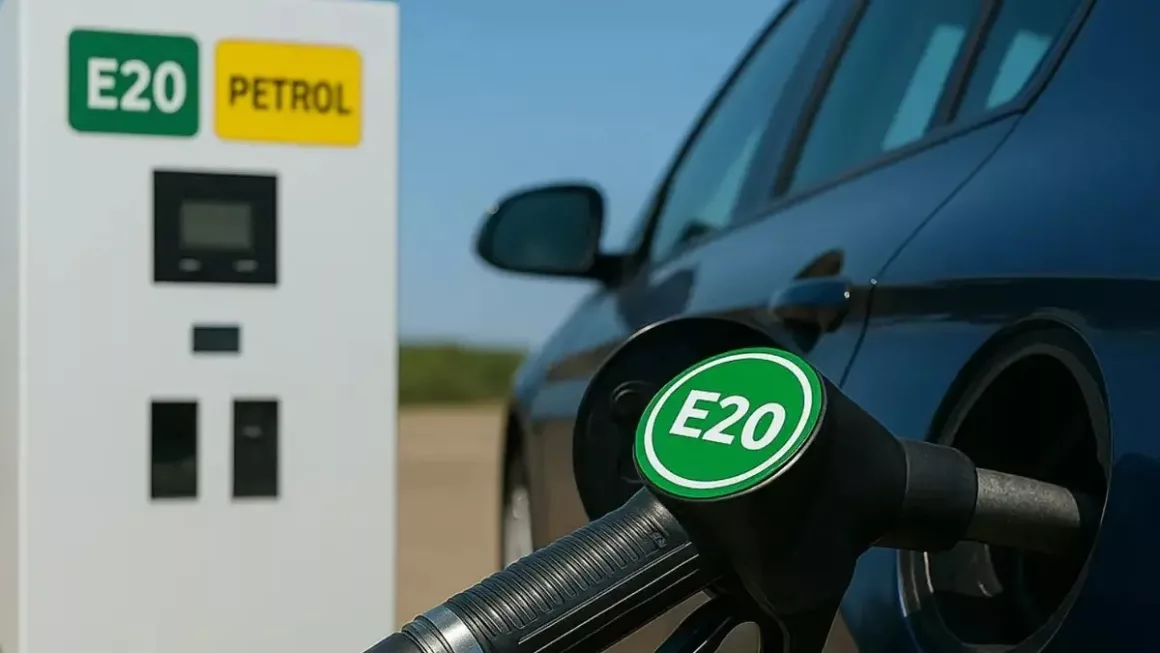
We all have been hearing a lot about E20 petrol lately. Most of the petrol pumps in India now offer E20 petrol to align with the updated guidelines set by the Indian government. Even then, not everyone knows what exactly E20 petrol is.
Most drivers just ignore it. We usually just tell the attendant to fill up regular petrol and move on. However, E20 is not just a fancy name or a premium fuel gimmick. It is a massive change that determines the actual fuel going into your car. Therefore, it is something every Indian car owner needs to understand right now.
The government is keen on making the E20 petrol, the new standard fuel across the country. As a petrol car owner, you must know how it can impact the future of your vehicles. So, here we are, yet again to demystify the complicated terms around this new-age fuel.
What is fuel blending?
Before learning about the E20 petrol, it is essential to understand that the petrol that powers our vehicles is blended with specific additives, which enhance its efficiency. These additives include detergents to clean engine parts, antioxidants to prevent fuel degradation, corrosion inhibitors to protect the fuel system, and octane boosters to improve engine performance, efficiency, and prevent knocking. Ethanol is an octane booster, and it is denoted by E, as in E20. Before E20, most base petrol from all oil companies had a 91-octane rating; however, now with E20, the octane rating of petrol has increased to 95.
Also Read: E20 Fuel Compatibility: How to Check, Precautions for Non-Compliant Cars
What is E20 Petrol?
E20 petrol is a solution of 80 percent petrol and 20 percent ethanol. Basically, ethanol is ethyl alcohol. Composed of carbon, hydrogen, and oxygen atoms, ethanol is a type of alcohol commonly used in various applications, such as industrial solvents, beverages, and antiseptics. A key usage of ethanol is to be used as a biofuel, which is blended with petrol or gasoline, because it burns cleaner than other hydrocarbon-based fuels.
Ethanol is produced by fermentation – the process used to produce beer as well. Primary ingredients of ethanol are plant-based sugars and starches. Therefore, to produce ethanol, crops rich in sugars or starches such as corn, sugarcane, barley, wheat, and sorghum are used.
Why Are We Changing the Fuel?
Including the E20 petrol is not a random choice by the oil companies. The Indian government has three very big reasons for pushing E20 so quickly.
- Saving Billions on Imports: India buys about 85% of its crude oil from other countries. That is a massive drain on our money. By mixing 20% homegrown ethanol into the fuel, we import less oil. This saves the country thousands of crores every single year.
- Helping Indian Farmers: As ethanol comes from crops, making it requires a lot of farming waste. This creates a huge new market for sugarcane and grain farmers. The money stays right here in the rural Indian economy.
- Cleaning the Air: Ethanol burns much cleaner than regular petrol. Doubling the ethanol in fuel reduces the smoke that the exhaust releases. It could be a big change towards reducing the smoke-enabled pollution in metropolitan cities such as Delhi and Mumbai.
How Ethanol Behaves in Your Engine?
Here is where things get interesting. Ethanol is very different from standard petrol. So, it behaves differently inside an engine. Car mechanics are paying close attention to this because ethanol brings three specific problems to the table.
It Acts Like a Solvent
Regular petrol sits happily inside plastic tanks and rubber pipes. Ethanol does not. It is highly corrosive and acts like a slow solvent. If a car’s rubber pipes and plastic seals are not built for it, the ethanol will slowly melt and eat away at them.
It Loves Water
This is the biggest headache. Ethanol is a water magnet and attracts moisture from the humid air. Cars that are likely to be parked for a long time are more prone to attracting water. Ultimately, water starts separating out and drowns to your fuel tank’s bottom. As you start the car, the engine gets water instead of petrol. This leads to a jerky start and speeds up the rusting process of the internal parts.
It Packs Less Energy
Ethanol does not generate as much power as petrol. The slower combustion rate of ethanol can be the reason behind this. When you mix petrol and ethanol together, it leads to more fuel consumption to deliver the required power.
New Cars and E20: What’s in Store For New Car Buyers?
Those who have purchased cars after April 2023 are safe. With the updated BS6 Phase-2 emission norms, the government forced the car manufacturers to upgrade their car making rules. Every single new petrol car sold today must be built to handle E20 fuel. Here is what that means for new car owners:
Durable Parts
Hyundai, Tata Motors, Maruti Suzuki, and Mahindra started upgrading the internal parts of their vehicles. The modifications in plastic tanks, rubber hoses, and engine seals were made to make them E20 compatible. Now, the E20 will not melt these parts and your fuel pump and injectors also have the special coatings to counter rust.
The Drop in Mileage
Your engine will not melt but your wallet might feel a slight pinch. As ethanol packs less power, your new car will give you slightly lower mileage on E20.
Up to 7% drop in the mileage is expected as per the car experts. The cars that gave a mileage of 15 kmpl on petrol may provide only 14 kmpl on E20. This is because of the extra power your car requires to get the speed you require. This leads to extra fuel consumption.
No Warranty Issues
The best news for new car buyers is the warranty. If your car manual says it is E20 ready, you have zero things to worry about. Filling up with the new blend will not void your warranty.
Also Read: Maintenance Precautions for Using E20 Petrol
Impact of E20 Fuel on Old Cars
E20 Fuel on Post-2023 Manufactured Cars
Reports suggest that most cars produced after April 2023 are compatible with the E20 petrol. Therefore, they are not going to suffer any adverse effects of the E20 fuel.
E20 Fuel on Pre-2023 Manufactured Cars
Most cars produced before April 2023 are not built to run on E20 petrol. While refuelling these cars with E20 petrol will not suddenly break them and they are still going to drive as usual, the E20 petrol can harm their engines’ health.
The basic issue with ethanol is its corrosive character. Firstly, the increased ethanol quantity in the fuel tank will deteriorate the plastic and rubber components it touches. Therefore, fuel lines, hoses and gaskets will degrade sooner than usual. Meanwhile, since ethanol easily attracts and absorbs moisture, it can corrode metal parts over time. Moreover, if left idle for a long duration, ethanol releases water, which can cause further problems to the fuel system.
Many car owners, fuelling their cars with E20 petrol, are reporting a drop in the fuel efficiency of their cars. At the same time, using E20 petrol or any other fuel, which is not recommended in the owner’s manual, can void a warranty. Recently, Toyota also confirmed that it is not advisable to use E20 petrol in cars that are not compatible with this fuel.
Things That Used Car Owners Must Consider
Injecting E20 petrol in old cars can be a bit risky. The things that owners of old cars must consider include:
Melting Fuel Lines
Those older rubber hoses under the hood will dry out. They will swell up and start to crack. This can cause dangerous fuel leaks. Even worse, tiny pieces of melting rubber will travel into the engine and block the fuel injectors.
Dying Fuel Pumps
Older fuel pumps need the slippery nature of regular petrol to stay lubricated. Ethanol is a very “dry” fuel. It does not lubricate well at all. This could wear down the old fuel pump much faster.
Rusting Inside Out
The metallic fuel tanks in old cars can catch rust faster. This will be due to the hydrophilic properties of ethanol that can lead to faster rusting of the metal parts.
Check Engine Light Headaches
Older car computers are programmed for pure petrol. When they burn E20, the sensors get confused. They think the engine is running too lean. The computer then dumps extra fuel into the engine to fix it. Your mileage tanks, and that annoying orange “Check Engine” light turns on and stays on.
Conclusion
While E20 petrol is already in place, the Indian government is looking to increase the quantity of ethanol in petrol even further. The Automotive Research Association of India (ARAI) claims that its tests show a small 1 to 6 percent dip in the fuel efficiency, and no significant wear and tear even after extended use of E20 petrol. The government is relying on this ARAI study to reassure motorists, and stating that the E20 fuel has been quietly available in select markets for years without any mechanical failures being reported. However, carmakers have chosen to remain reticent on this subject and are not accepting the liability for any damage done to engines not compliant with E20 fuel. For now, E20 petrol is the standard petrol at fuel stations, and only 100-octane petrol (such as XP100 or Power 100) is ethanol-free. If you are using a car manufactured before April 2023, it will be wise to keep an eye on its performance to check how the E20 petrol is affecting your car and maintain it accordingly.
FAQs on E20 Fuel
Q. What is E20 petrol?
E20 petrol means a solution of 80 percent petrol and 20 percent ethanol. Ethanol is a biofuel usually produced by crops rich in sugars or starches such as corn, sugarcane, barley, wheat, and sorghum. India moved from E5 in 2003 to E10 by 2022. Initially, E20 was targeted to be rolled out by 2030; however, the shift has been made five years ahead of the target.
Q. How to know if my car is compatible with E20 fuel?
Most vehicles manufactured between 2012 and 2023 are E10-compliant, whereas all vehicles manufactured after April 1, 2023, are required to be E20-compliant. Meanwhile, it is important to check the owner’s manual of the car to check what type of fuel it is compliant with. It is because manufacturers began the implementation of the blended fuel compliance before the deadline and in a phased manner across their model portfolio.
Q. Will E20 fuel harm my car?
If your car is not compatible with the E20 fuel, it could accelerate wear and tear on certain components. However, the extent of the damage depends on multiple factors, such as the engine’s age and the technology.
Q. Does the E20 fuel ruin my vehicle’s warranty?
If the owner’s manual of your vehicle does not recommend the E20 fuel, then using E20 fuel will void your vehicle’s warranty.
Q. Is E20 petrol good?
E20 petrol burns cleaner, reduces import dependence, and is completely safe for cars manufactured after April 2023, so for newer vehicles, it’s a positive change. However, for pre-2023 cars, it can accelerate wear on rubber and plastic components, reduce fuel efficiency, and may void the warranty if the owner’s manual doesn’t recommend it