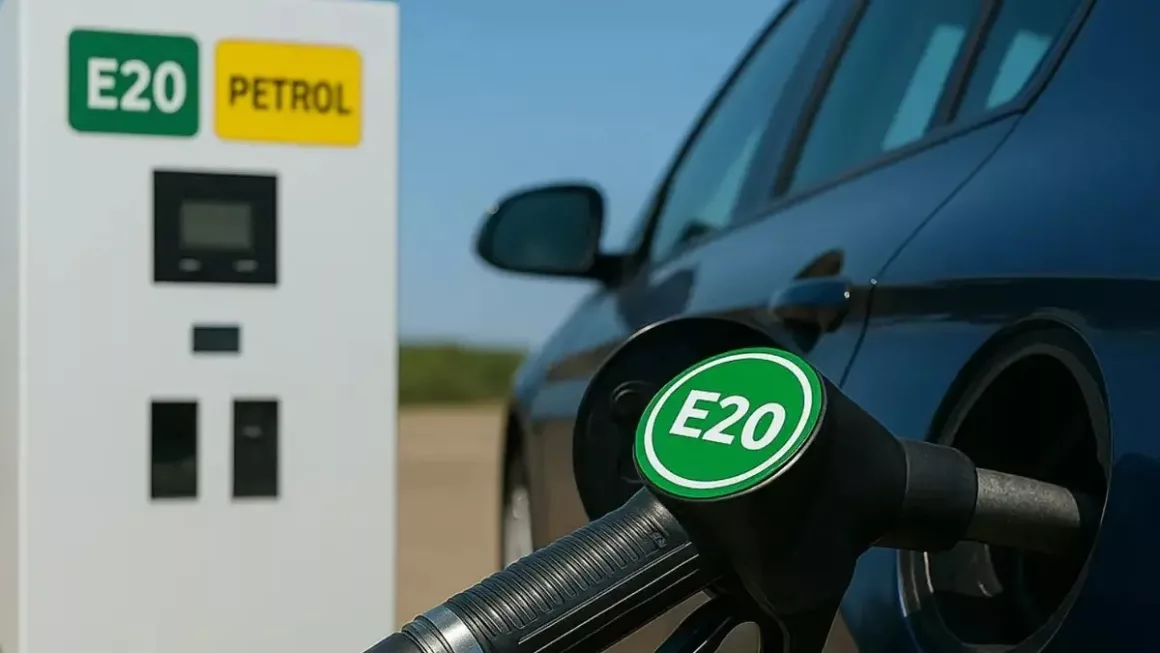
As per the Indian government mandates, fuel stations across the nation have begun selling E20 (20 percent ethanol) petrol. While the government reasons that this is being done to reduce crude oil imports and tailpipe carbon dioxide (CO2) emissions, the E20 petrol has become a matter of concern for motorists and those with significant knowledge of automobiles. Even a PIL was filed against the E20 rollout in the Supreme Court, but the SC dismissed it. In a bid to address E20-related concerns and queries, in this article, we explain what E20 petrol is and why it is sparking debates.
What is fuel blending?
Before learning about the E20 petrol, it is essential to understand that the petrol that powers our vehicles is blended with specific additives, which enhance its efficiency. These additives include detergents to clean engine parts, antioxidants to prevent fuel degradation, corrosion inhibitors to protect the fuel system, and octane boosters to improve engine performance, efficiency, and prevent knocking. Ethanol is an octane booster, and it is denoted by E, as in E20. Before E20, most base petrol from all oil companies had a 91-octane rating; however, now with E20, the octane rating of petrol has increased to 95.
What is E20 Petrol?
E20 petrol is a solution of 80 percent petrol and 20 percent ethanol. Basically, ethanol is ethyl alcohol. Composed of carbon, hydrogen, and oxygen atoms, ethanol is a type of alcohol commonly used in various applications, such as industrial solvents, beverages, and antiseptics. A key usage of ethanol is to be used as a biofuel, which is blended with petrol or gasoline, because it burns cleaner than other hydrocarbon-based fuels.
Ethanol is produced by fermentation – the process used to produce beer as well. Primary ingredients of ethanol are plant-based sugars and starches. Therefore, to produce ethanol, crops rich in sugars or starches such as corn, sugarcane, barley, wheat, and sorghum are used.
Shift to E20
Earlier, it was the E10 petrol, which was fuelling our vehicles. India moved from E5 in 2003 to E10 by 2022. Initially, E20 was targeted to be rolled out by 2030; however, the shift has been made well ahead of the target. With the increase in ethanol blending in petrol, the government can cut down on the oil import bill, which is over USD 130 billion or Rs 1.1 lakh crore every year. In addition to slashing the oil import bill, the increase in ethanol blending is intended to reduce the tailpipe carbon dioxide emissions, improving the air quality. Another advantage of the increasing ethanol content in petrol is a significant boost to the rural economy and agriculture, which is great for farmers.
Impact of E20 Fuel on New Cars
All new vehicles currently on sale in the Indian market are E20-compliant. However, not all the vehicles manufactured before 2024 are designed to run on the E20 petrol. The effect of E20 petrol on old cars, with more than 5 to 10 years of age, is what is causing worries across the nation.
Impact of E20 Fuel on Old Cars
E20 Fuel on Post-2023 Manufactured Cars
Reports suggest that most cars produced after April 2023 are compatible with the E20 petrol. Therefore, they are not going to suffer any adverse effects of the E20 fuel.
E20 Fuel on Pre-2023 Manufactured Cars
Most cars produced before April 2023 are not built to run on E20 petrol. While refuelling these cars with E20 petrol will not suddenly break them and they are still going to drive as usual, the E20 petrol can harm their engines’ health.
The basic issue with ethanol is its corrosive character. Firstly, the increased ethanol quantity in the fuel tank will deteriorate the plastic and rubber components it touches. Therefore, fuel lines, hoses and gaskets will degrade sooner than usual. Meanwhile, since ethanol easily attracts and absorbs moisture, it can corrode metal parts over time. Moreover, if left idle for a long duration, ethanol releases water, which can cause further problems to the fuel system.
Many car owners, fuelling their cars with E20 petrol, are reporting a drop in the fuel efficiency of their cars. At the same time, using E20 petrol or any other fuel, which is not recommended in the owner’s manual, can void a warranty. Recently, Toyota also confirmed that it is not advisable to use E20 petrol in cars that are not compatible with this fuel.
Conclusion
While E20 petrol is already in place, the Indian government is looking to increase the quantity of ethanol in petrol even further. The Automotive Research Association of India (ARAI) claims that its tests show a small 1 to 6 percent dip in the fuel efficiency, and no significant wear and tear even after extended use of E20 petrol. The government is relying on this ARAI study to reassure motorists, and stating that the E20 fuel has been quietly available in select markets for years without any mechanical failures being reported. However, carmakers have chosen to remain reticent on this subject and are not accepting the liability for any damage done to engines not compliant with E20 fuel. For now, E20 petrol is the standard petrol at fuel stations, and only 100-octane petrol (such as XP100 or Power 100) is ethanol-free. If you are using a car manufactured before April 2023, it will be wise to keep an eye on its performance to check how the E20 petrol is affecting your car and maintain it accordingly.
FAQs on E20 Fuel
What is E20 petrol?
E20 petrol is a solution of 80 percent petrol and 20 percent ethanol. Ethanol is a biofuel usually produced by crops rich in sugars or starches such as corn, sugarcane, barley, wheat, and sorghum. India moved from E5 in 2003 to E10 by 2022. Initially, E20 was targeted to be rolled out by 2030; however, the shift has been made five years ahead of the target.
How to know if my car is compatible with E20 fuel?
Most vehicles manufactured between 2012 and 2023 are E10-compliant, whereas all vehicles manufactured after April 1, 2023, are required to be E20-compliant. Meanwhile, it is important to check the owner’s manual of the car to check what type of fuel it is compliant with. It is because manufacturers began the implementation of the blended fuel compliance before the deadline and in a phased manner across their model portfolio.
Will E20 fuel harm my car?
If your car is not compatible with the E20 fuel, it could accelerate wear and tear on certain components. However, the extent of the damage depends on multiple factors, such as the engine’s age and the technology.
Does the E20 fuel ruin my vehicle’s warranty?
If the owner’s manual of your vehicle does not recommend the E20 fuel, then using E20 fuel will void your vehicle’s warranty.