
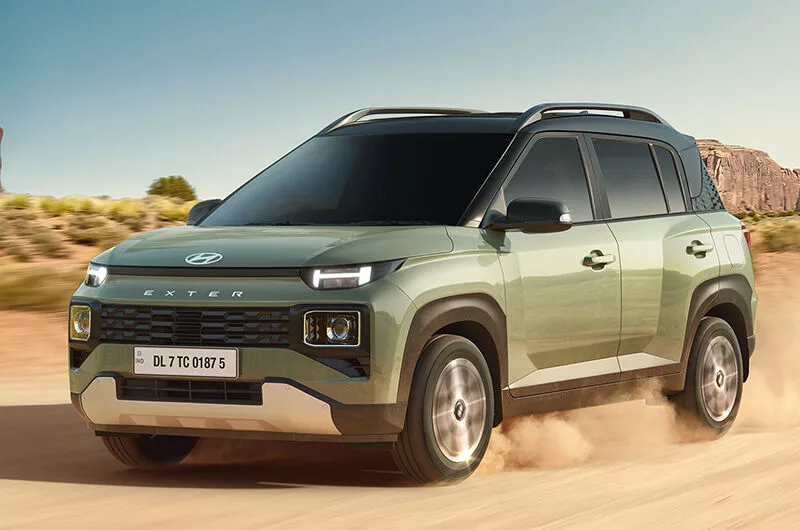
Buying a base model makes sense if you want to keep the purchase price low. However, a low starting price does not tell you everything about a car. Basics such as air conditioning, safety features, seat adjustment and a spare tyre can matter more than features you rarely use. The Tata Punch and Hyundai Exter approach this balance differently. The Punch brings a strong safety case and useful standard equipment. The Exter answers with practical cabin features and a four-cylinder petrol engine. Their base prices are almost the same, so the real question is the value each base variant delivers in daily use. Let’s see how they compare right now.
Table of Contents
Which Punch and Exter Variants Are We Comparing?
This comparison covers the Tata Punch Smart petrol manual and Hyundai Exter HX 2 petrol manual, from their updated 2026 ranges. Older comparisons referring to the Punch Pure and Exter EX as the entry variants do not reflect these current lineups. Both vehicles are equipped with naturally aspirated 1.2-litre petrol engines and come with five-speed manual gearboxes. Neither of the base petrol variants comes with an automatic transmission. Both cars are also sold with CNG, but those versions need a separate price and running-cost comparison.
Tata Punch vs Hyundai Exter: Base Variant Prices
| Variant | Ex-showroom price |
| Tata Punch Smart petrol manual | ₹5,74,990 |
| Hyundai Exter HX 2 petrol manual | ₹5,80,600 |
| Exter’s additional cost | ₹5,610 |
*Prices checked in November 2026. Registration, insurance, accessories and other applicable charges are additional.
The Punch is more affordable, but a price difference of ₹5,610 is not enough of a reason to choose one option over the other. Changes in insurance coverage, an accessory package, or a good deal from a dealer can change the cost difference significantly. Ask for itemised on-road quotations with comparable insurance and accessories. For the Punch, include the cost of a compatible spare wheel if you want one: Smart comes with a puncture repair kit instead. That addition could absorb its initial price advantage.
If you plan to take a car loan, compare the total amount payable, not just the EMI. A lower instalment does not always mean a better deal since it may be a result of a longer loan term.
Also Read: Hyundai Exter Variants Guide 2026
Engine and Performance: Does the Punch’s Extra Power Matter?
| Specification | Tata Punch Smart | Hyundai Exter HX 2 |
| Petrol engine capacity | 1,199 cc | 1,197 cc |
| Cylinders | 3 | 4 |
| Maximum power | 87.8 PS | 83 PS |
| Maximum torque | 115 Nm | 113.8 Nm |
| Gearbox | 5-speed manual | 5-speed manual |
Although the Punch has somewhat higher power figures, the torque values are almost the same. These figures don’t provide a definitive winner for acceleration and overtaking, since vehicle weight, gearing and how each engine delivers its power also play a part. For daily driving, pay attention to clutch effort, low-speed response and how often you need to change gears. Try both with the air conditioner running, especially if your usual journeys involve slow traffic and several passengers.
The Exter’s four-cylinder layout is often expected to feel smoother, so check its refinement for yourself. Note any vibration through the seat and steering wheel at idle, then listen to both engines on the move. A back-to-back test drive tells you more than the cylinder count alone. Neither base variant gets a turbocharged engine. The 1.2-litre turbo-petrol offered in higher Punch variants should not influence expectations of the Smart.
Features: Which Base Variant Covers More Essentials?
| Feature | Punch Smart | Exter HX 2 |
| Manual air conditioning | Yes | Yes |
| Front power windows | Yes | Yes |
| Rear power windows | No | No |
| Remote central locking | Yes | Yes |
| Factory touchscreen | No | No |
| Electrically adjustable outside mirrors | No | No |
| Driver seat height adjustment | No | Yes |
| Adjustable rear headrests | No | Yes |
| Rear AC vents | No | No |
| Spare wheel | No; puncture kit supplied | Yes |
Both cover the basics, but neither is feature-rich. The back seat passengers can open their windows only manually, and neither of the two cars comes with factory-installed screens for music or navigation.
The Punch does include LED headlamps, which stand out at this price. It also offers City and Eco driving modes and idle start-stop. However, these features do not replace the everyday convenience of driver seat height adjustment, which the Exter offers.
The height-adjustable driver’s seat in the Exter is a real convenience when family members take turns driving. Adjustable rear headrests also help rear passengers of different heights find better support. Sit in both cars to check the fit, because seating comfort is much harder to fix later than adding a stereo. The spare wheel deserves attention too. A repair kit can help with certain punctures, but it cannot handle every kind of tyre damage. Buyers who travel outside well-served urban areas may prefer the Exter’s standard spare.
Safety: The Punch Has Stronger Crash-Test Evidence
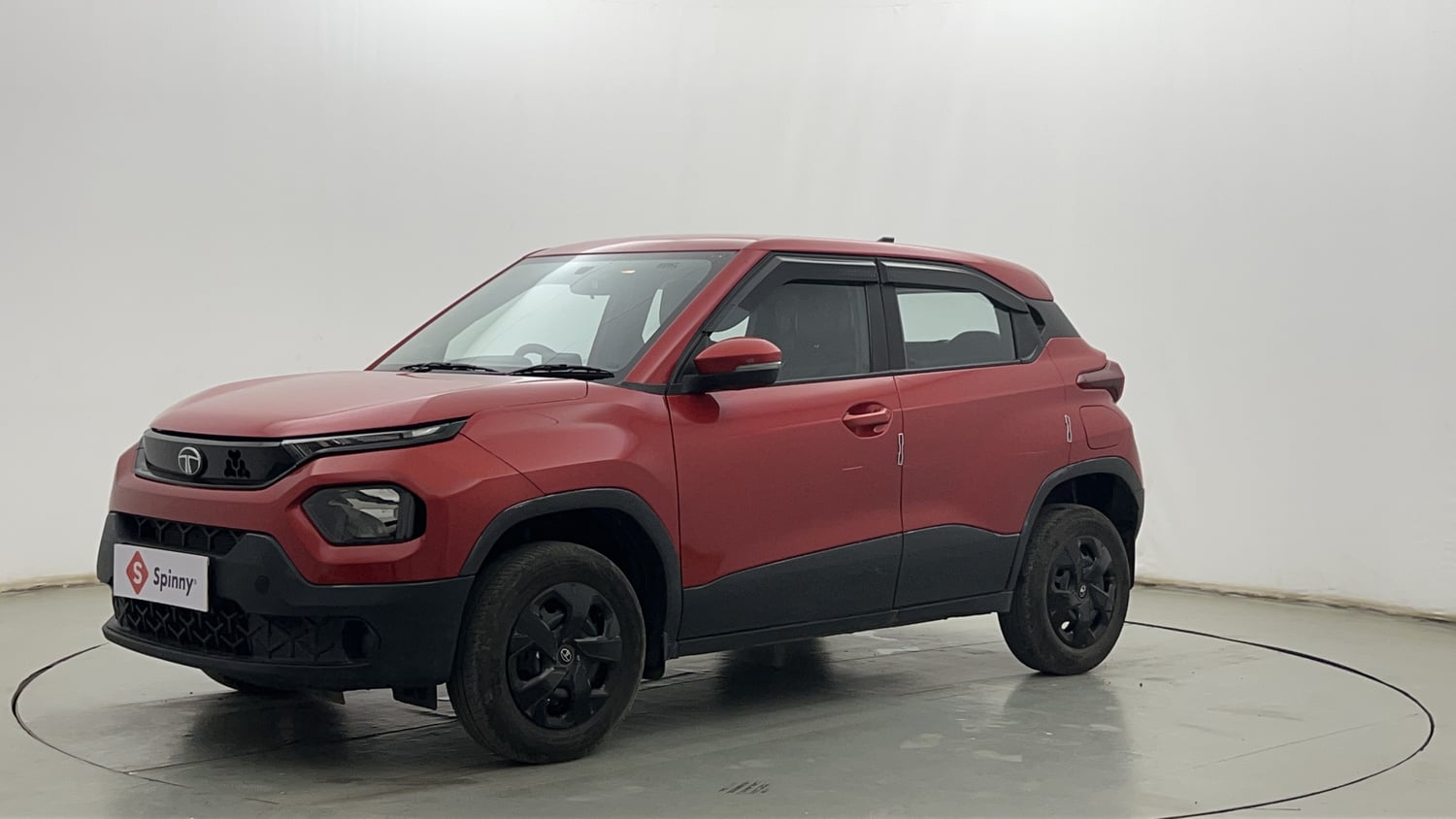
Both entry-level models now come with six airbags, electronic stability control, hill-start assistance, as well as ISOFIX child-seat anchors. Adopting the entry model does not mean sacrificing these key features. The Punch adds indirect tyre-pressure monitoring, while the Exter HX 2 does not include TPMS. Indirect monitoring warns about pressure loss; it should not be confused with a system that displays an individual pressure reading for each tyre.
However, the larger difference is found in crash-test results. The updated Punch received a five-star Bharat NCAP rating in January 2026 for both adult and child occupant protection, scoring 30.58 out of 32 and 45 out of 49 respectively. The official applicability list for this rating includes the Smart petrol manual.
A published Bharat NCAP or Global NCAP rating for the current Exter was not available at the time of checking. This does not establish that it is unsafe, but it means there is no equivalent published result to compare here. So, for buyers who want independent crash-test evidence, the Punch has the stronger case, because airbag counts alone do not settle the comparison.
Space and Practicality: Small Differences, Different Benefits
| Measurement | Tata Punch | Hyundai Exter |
| Length | 3,876 mm | 3,830 mm |
| Width | 1,742 mm | 1,723 mm |
| Wheelbase | 2,445 mm | 2,450 mm |
| Ground clearance | 193 mm | 185 mm |
| Petrol boot capacity, V215 measurement | 366 litres | 391 litres |
The Punch is a bit larger in length and width, whereas the Exter has a marginally larger wheelbase than the Punch. There isn’t much of a difference in size, and so size alone may not help you decide which rear seat is better for your family. The Punch’s doors open to approximately 90 degrees, which can help when fitting a child seat or assisting someone into the cabin, provided there is room to open them fully. Its extra ground clearance also offers a little more margin over uneven surfaces, although load and driving technique still matter.
The Exter boasts 25 litres more boot space according to the same V215 measurement. It looks good on paper, but practical storage is also about the luggage shape. Test out your usual suitcases or a stroller rather than considering mere numbers. For rear-seat comfort, take along the people who will regularly travel with you. Check knee room behind the driver, headroom and how comfortably the rear headrests support each passenger.
Mileage and Running Costs: Avoid Comparing Mismatched Figures
The accuracy of fuel cost comparisons depends on having data for specific models. Figures from the earlier models should not be applied to the updated versions. Similarly, a test of the automatic model will not indicate the performance of either manual version. Without a directly comparable test of these current base manuals, there is no sound basis for promising that one will save a fixed amount every month. Traffic, journey length, air-conditioner use and driving habits can significantly change consumption.
To calculate fuel costs, take the monthly distance and divide it by kilometres per litre, and multiply it by the local price of petrol. For example, for 1,000 kilometres at an assumed mileage of 15 km/l and ₹100 per litre, the cost will come to approximately ₹6,667. This is only an illustration, not an actual mileage figure for either model. If your monthly distance is high, compare the factory CNG versions separately. Include their higher purchase prices, local CNG availability and reduced luggage space before deciding whether the fuel savings justify the switch.
Warranty and Ownership: Where the Exter Gains Ground
The Punch standard warranty gives coverage for three years or a distance of 1,00,000 km, whichever comes first. The Exter comes with a standard warranty of 3 years and unlimited km, subject to the manufacturer’s terms.
Hyundai’s unlimited-kilometre cover is more useful for someone who could exceed 1,00,000 km within three years. For a typical private owner who stays below that distance, the headline duration is the same. Neither warranty should be treated as free cover for routine servicing or normal wear.
Ownership convenience also depends on how accessible service workshops are where you live. Compare the service availability, appointment options, and written maintenance estimates in your locality. A blanket claim that one brand is cheaper to own or maintain ignores these local differences.
Also Read: Tata Punch Variants Guide: Choose the Best Variant
Should You Buy the Base Variant or Move Up?

A base variant works best when you are comfortable with its omissions. If you immediately plan to add an audio system, speakers, a camera and several other accessories, calculate the complete bill before booking. In the Exter range, the HX 3 adds an 8-inch touchscreen with wireless Android Auto and Apple CarPlay, front and rear speakers and a rear parking camera. In the Punch range, the Pure focuses on comfort, adding rear power windows, electrically adjustable mirrors and rear AC vents, while the Pure+ adds an 8-inch touchscreen, a rear camera and driver seat height adjustment. These upgrades serve different needs, so compare feature lists rather than assuming the next variant solves everything. Avoid stretching your budget for decorative additions while leaving out something you will use every day.
Which Base Variant Offers More Value?
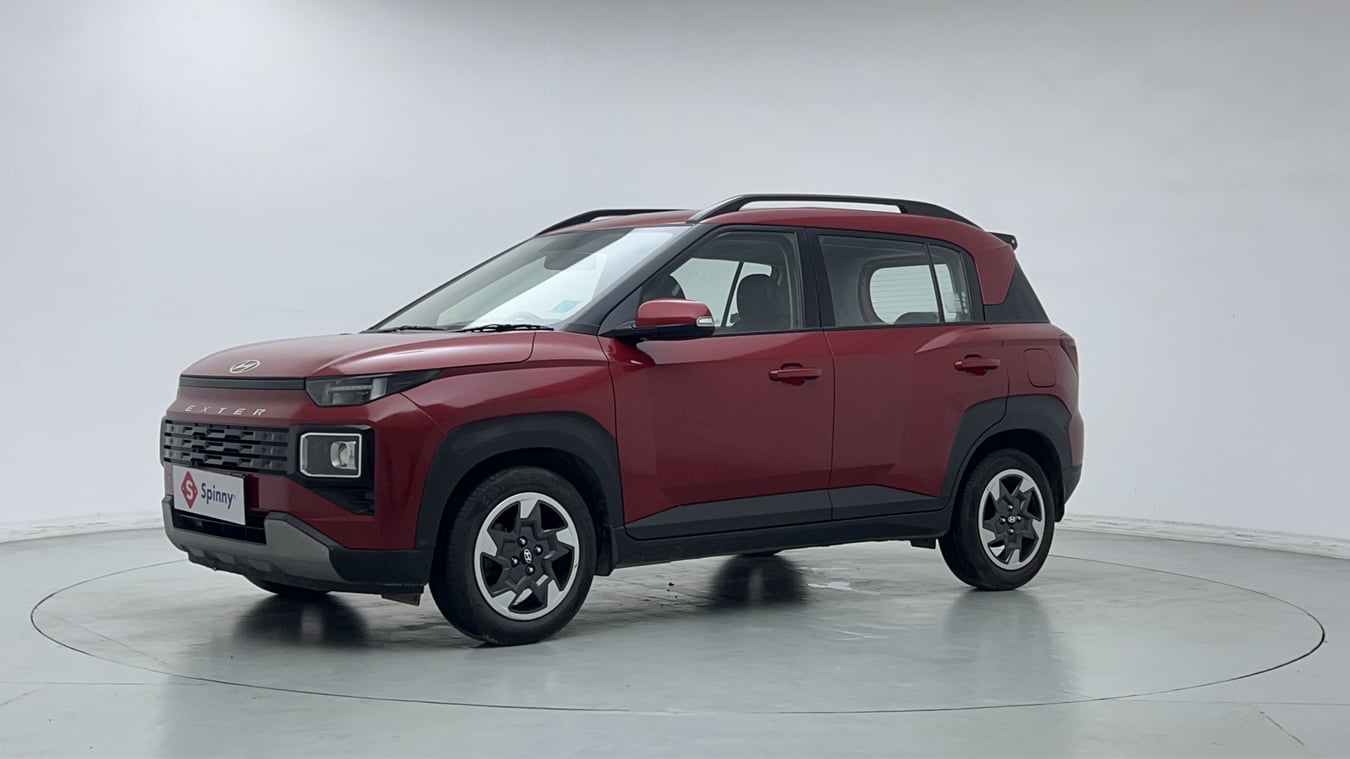
If crash-test-backed safety is your priority, the Tata Punch Smart has the stronger case, with a five-star Bharat NCAP rating. It also adds LED headlamps and tyre-pressure monitoring, and it costs slightly less. However, the Exter HX 2 makes a convincing argument for everyday convenience. Driver seat height adjustment, adjustable rear headrests and a standard spare wheel are useful inclusions for the small additional cost. Its unlimited-kilometre warranty also suits buyers with unusually high usage. The Punch should be your choice if safety means more to you than anything else and if the driving position is satisfactory. Choose the Exter if everyday convenience, such as its adjustable seating and standard spare wheel, matters more to your family. Before deciding, test drive both in base-variant specifications if you can. A well-equipped showroom demonstrator can hide the compromises you will experience in the car you actually buy.
Related Blogs:
How to Buy a Used Tata Punch
How to Buy a Used Hyundai Exter
FAQs about Tata Punch vs Hyundai Exter Base Variants
Q. Which is cheaper: the Punch or Exter base variant?
The Punch Smart petrol manual costs ₹5,74,990, compared with ₹5,80,600 for the Exter HX 2 petrol manual. The ex-showroom difference is ₹5,610, before local charges, insurance and offers.
Q. Do both base variants get six airbags?
The current Punch Smart and Exter HX 2 include six airbags as standard. Both also provide electronic stability control and hill-start assistance.
Q. Does the Punch’s Bharat NCAP rating cover Smart?
Smart petrol manual appears in the official applicability list for the current Punch’s five-star adult and child occupant protection ratings. This is separate from the older Punch’s Global NCAP assessment.
Q. Which base variant has a touchscreen?
Neither includes a factory touchscreen. It is available from Pure+ in the Punch range and HX 3 in the Exter range.
Q. Does the Punch Smart come with a spare wheel?
The current Smart supplies a puncture repair kit. The Exter HX 2 includes a spare wheel, which is an important practical difference between these base variants.
Q. Can I buy either base variant with an automatic?
Both base petrol variants use five-speed manual gearboxes. You need to move higher in the respective ranges for an automatic transmission.
Q. Which car has the larger petrol boot?
The Exter lists 391 litres against the Punch’s 366 litres using V215 measurements. Check the opening and usable shape with your usual luggage before choosing solely by capacity.
Q. Which is better for drivers who need seat height adjustment?
The Exter HX 2 includes driver seat height adjustment; Punch Smart does not. That makes the Hyundai more flexible, although a test drive remains necessary to check visibility and comfort.