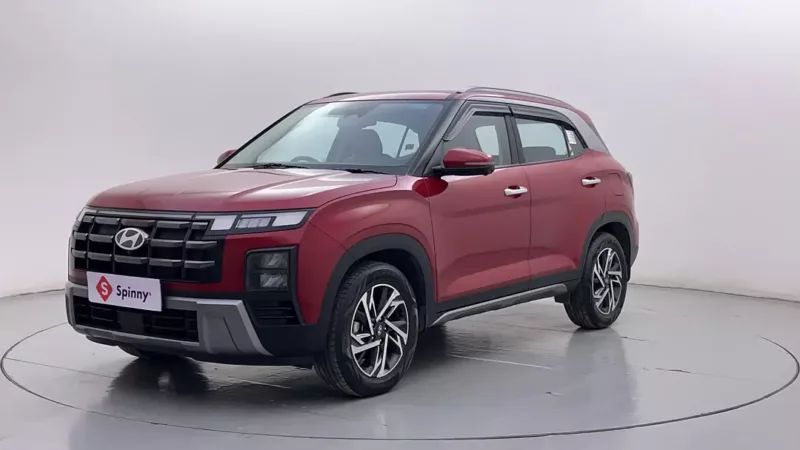
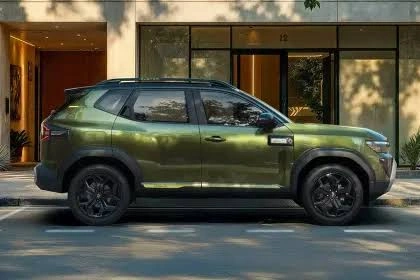
The Maruti Grand Vitara was launched in 2022, while the current Renault Duster came out in 2026. Both mid-size SUVs have different fuel options: the Grand Vitara is available in petrol manual, petrol automatic, strong-hybrid automatic and CNG manual versions; the Duster offers only petrol manual and petrol automatic versions. Their highest claimed petrol mileages stand at 27.97 km/l for the Grand Vitara and 19.41 km/l for the Duster. Which one performs better on actual roads?
The answer depends on the variant. A regular Grand Vitara petrol automatic cannot match its strong-hybrid sibling, while the Duster’s 1.0-litre manual differs from its 1.3-litre automatic. Renault’s forthcoming Duster strong hybrid has no Indian price or measured Indian mileage yet. This comparison uses published city and highway tests for available versions and translates them into monthly fuel bills.
Table of Contents
Maruti Grand Vitara vs Renault Duster Specs
A standard 1.462 cc petrol engine is available in the Grand Vitara. It also features mild-hybrid technology and can be paired with either a five-speed manual transmission or a six-speed automated one. Select automatic trims can be installed with the AllGrip four-wheel drive. Meanwhile, there is a 1.490 cc strong hybrid engine that combines internal combustion with an e-CVT engine. CNG variant of the Grand Vitara uses a conventional engine paired with a manual gear system.
The new Duster’s 999 cc turbo-petrol makes 100 PS and comes only with a six-speed manual. Its 1,333 cc turbo-petrol makes 163 PS and 280 Nm, paired with a six-speed manual or dual-clutch automatic. Current Indian variants are front-wheel drive and petrol-only. The strong hybrid’s price announcement is scheduled for 17 October 2026.
| Fuel-economy-related specification | Grand Vitara | Current India-spec Duster |
| Available petrol engines | 1,462 cc mild hybrid; 1,490 cc strong hybrid | 999 cc turbo; 1,333 cc turbo |
| Transmission choices | Five-speed MT; six-speed AT; hybrid e-CVT | Six-speed MT; six-speed DCT on 1.3 |
| Maximum output, examples | 103 PS conventional petrol; 116 PS combined hybrid | 100 PS 1.0; 163 PS 1.3 |
| CNG option | 1.5-litre manual | Not offered |
| Driven wheels | Front-wheel drive; selected petrol AT trims have AWD | Front-wheel drive |
| Petrol tank | 45 litres | 50 litres |
| Kerb-weight examples | 1,140 kg Sigma petrol MT; 1,250 kg hybrid Delta+ | 1,380 kg for a tested top-spec 1.3 MT |
The Duster’s larger turbo engine favours performance; the Grand Vitara hybrid uses electric assistance to save petrol. Its smaller tank need not mean a shorter driving range.
Maruti Grand Vitara vs Renault Duster ARAI Mileage Figures
According to Maruti, the Grand Vitara mild-hybrid petrol manual provides 21.11 km/l while the front-wheel-drive petrol automatic makes a claim of 20.58 km/l. Moreover, the AllGrip automatic boasts 19.20 km/l figures. The strong hybrid takes the top position in the petrol segment at 27.97 km/l, with the manual CNG variant recording a 26.6 km/kg figure.
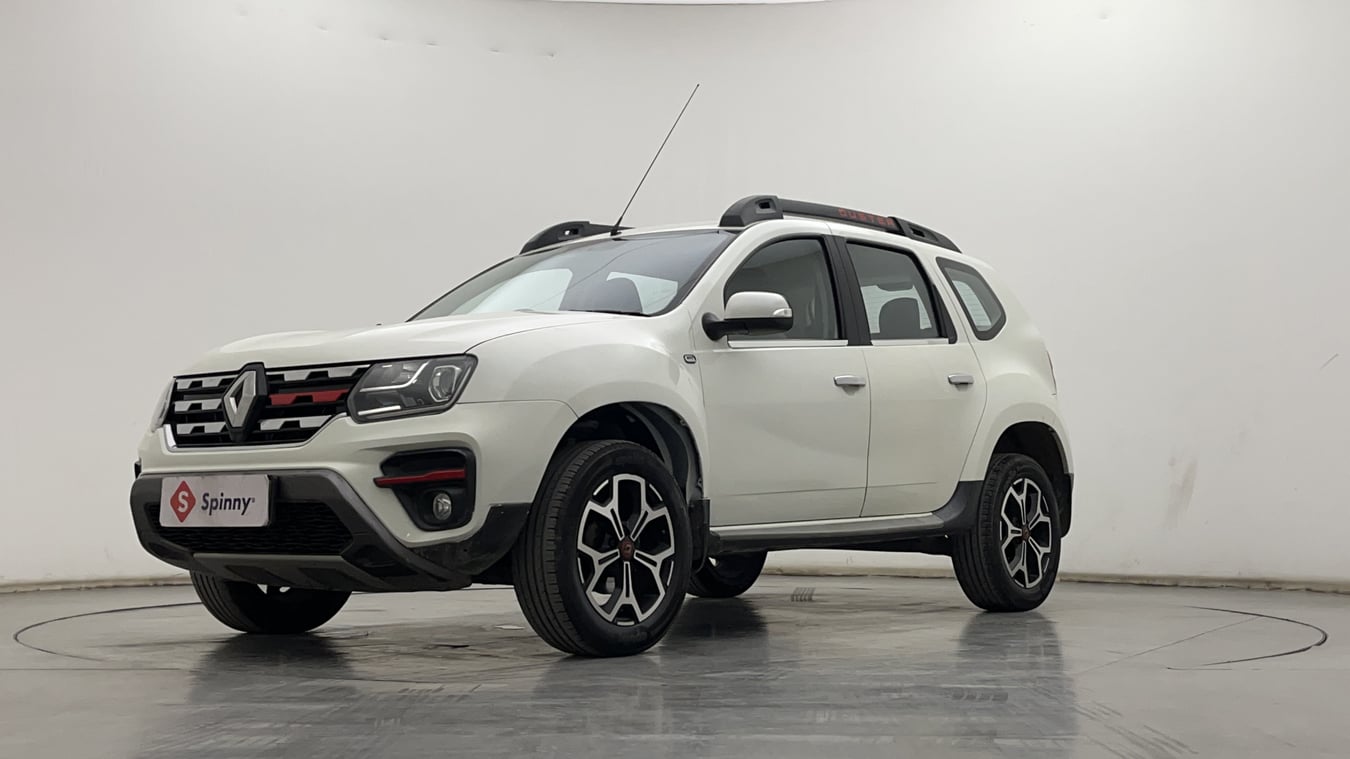
Renault’s current petrol figures are 19.41 km/l for the Duster 1.0 manual, 17.75 km/l for the 1.3 manual and 18.45 km/l for the 1.3 DCT. The 1.3 automatic has a slightly higher certified figure than the manual; road tests can reverse that order. The future hybrid has no confirmed Indian fuel-economy rating to place in this table.
| SUV and powertrain | Fuel | Claimed mileage |
| Grand Vitara 1.5 mild-hybrid MT, FWD | Petrol | 21.11 km/l |
| Grand Vitara 1.5 mild-hybrid AT, FWD | Petrol | 20.58 km/l |
| Grand Vitara 1.5 mild-hybrid AT, AWD | Petrol | 19.20 km/l |
| Grand Vitara 1.5 strong-hybrid e-CVT | Petrol | 27.97 km/l |
| Grand Vitara 1.5 CNG MT | CNG | 26.6 km/kg |
| Duster 1.0 turbo MT | Petrol | 19.41 km/l |
| Duster 1.3 turbo MT | Petrol | 17.75 km/l |
| Duster 1.3 turbo DCT | Petrol | 18.45 km/l |
The regular front-wheel-drive Grand Vitara petrol variants also have a claimed advantage. Certified cycles cannot capture your traffic, air-conditioning use or cruising speed.
Also Read: Maruti Grand Vitara Mileage Comparison: Petrol vs CNG vs Strong Hybrid
Maruti Grand Vitara vs Renault Duster Tested Mileage
Published tests provide a clearer picture. The petrol automatic variant of the Grand Vitara has given 11.6 km/l in the city and 15.3 km/l on the highway, while its strong hybrid version has returned 23.77 km/l and 20.39 km/l in these places. A separate test of the Duster 1.3 manual and DCT has shown 8.04 and 13.24 km/l figures for the manual variant and 7.47 and 13.47 km/l for the DCT variant.
For the Renault Duster 1.0 manual, reports measured 10.42 km/l in its city loop and 16.85 km/l on the highway. The table’s mixed column is calculated specifically for equal distance in city and highway driving. It divides the combined distance by petrol used on each half; it does not copy an outlet’s published arithmetic average.
| Tested petrol version | City | Highway | Calculated equal-distance mixed |
| Grand Vitara mild-hybrid AT, FWD | 11.6 km/l | 15.3 km/l | 13.20 km/l |
| Grand Vitara strong-hybrid e-CVT | 23.77 km/l | 20.39 km/l | 21.95 km/l |
| Duster 1.0 turbo MT | 10.42 km/l | 16.85 km/l | 12.88 km/l |
| Duster 1.3 turbo MT | 8.04 km/l | 13.24 km/l | 10.00 km/l |
| Duster 1.3 turbo DCT | 7.47 km/l | 13.47 km/l | 9.61 km/l |
The Grand Vitara petrol automatic and Duster 1.0 manual vehicle types are even in terms of assessments, albeit researched separately. However, the Grand Vitara hybrid has quite a distinct advantage. Similarly, the city tests of Duster 1.3 models are significantly lower than the rated estimates.
Maruti Grand Vitara vs Renault Duster Real World Mileage
Among tested petrol automatic models, the Grand Vitara strong hybrid comes first with a city mileage of 23.77 km/l, which is three times higher than that of the Duster 1.3 DCT (7.47 km/l). The superiority of the Grand Vitara is irrespective of the fact that both vehicles were tested separately, because on highways it managed to show 20.39 km/l against 13.47 km/l for the DCT.
The regular Grand Vitara petrol automatic returned 11.6 km/l in town, above the Duster results shown but well below the hybrid’s 23.77 km/l. Its 15.3 km/l highway result falls between the tested Duster 1.0 and 1.3 manuals. Different routes make small gaps less conclusive.
Grand Vitara CNG has its own measuring standard. Its claim of 26.6 km/kg and the actual owner’s figure of 18.46 km/kg are not both city and highway values. Prices of gas and petrol consumed will influence cost.
Also Read: Renault Duster Alternatives: Competitors of Renault Duster
Maruti Grand Vitara vs Renault Duster Fuel Cost Comparison
Consider travelling a distance of 1,000 km per month, with the distance covered equally on the expressway and in the city. The total distance travelled per year will be approximately 12,000 km. Take the price of petrol at ₹111.90 per litre and CNG at ₹97.75 per kg as of September 28, 2026. Then calculate how much fuel will be consumed for each 500 km. The final amount may differ from your calculations.
| Petrol version | Monthly fuel cost (1,000 km) | Annual fuel cost (12,000 km) |
| Grand Vitara strong-hybrid e-CVT | ₹5,098 | ₹61,174 |
| Grand Vitara mild-hybrid petrol AT | ₹8,480 | ₹1,01,762 |
| Duster 1.0 turbo MT | ₹8,690 | ₹1,04,279 |
| Duster 1.3 turbo MT | ₹11,185 | ₹1,34,217 |
| Duster 1.3 turbo DCT | ₹11,644 | ₹1,39,724 |
Against the Duster 1.3 DCT, the hybrid suggests savings of about ₹6,546 monthly or ₹78,550 annually. The ₹210 monthly gap between the Grand Vitara petrol automatic and Duster 1.0 manual is less conclusive because their tests came from different outlets.
| CNG version | Mileage basis | Monthly fuel cost (1,000 km) | Annual fuel cost (12,000 km) |
| Grand Vitara CNG MT | 18.46 km/kg, owner-reported | About ₹5,295 | About ₹63,543 |
The CNG formula assumes that the entire trip is made on gas. It ignores petrol use and is based on the owners’ reports. The Duster does not have any new diesel or CNG model. The cost of purchasing the Grand Vitara hybrid is higher than that of standard petrol version models.
Summary
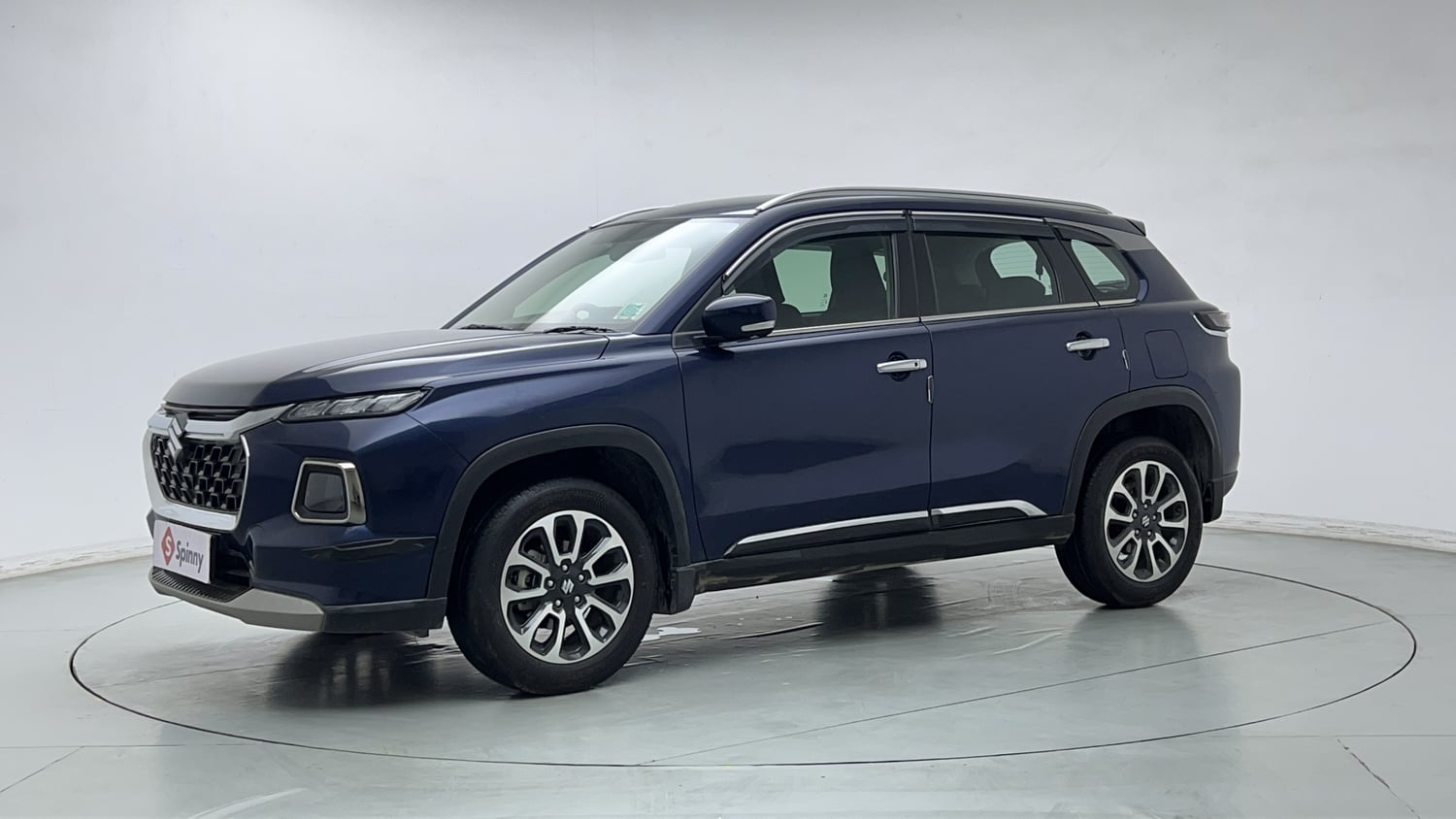
When it comes to the current versions being tested, the Grand Vitara strong hybrid is surely leading the way when it comes to real-world mileage figures. With its 23.77 km/l in the city and 20.39 km/l on roads, this car surely outshines the fuel efficiency ratings of the Duster turbo-petrol. Running the Grand Vitara at the Pune fuel cost for a distance of 1,000 km per month costs approximately ₹5,098 in petrol, while the running cost of the Duster 1.3 DCT is around ₹11,644.
The regular Grand Vitara petrol automatic and Duster 1.0 manual are closer, with results from different outlets. The more powerful Duster 1.3 has higher estimated fuel bills here. Renault’s upcoming hybrid could change the answer; its Indian price and road-test results are still needed.
Also Read: Why Renault Duster Stands Out in Its Segment
FAQs about Grand Vitara vs Duster Mileage
Q. Which has better real-world mileage, the Grand Vitara or Duster?
The tested Grand Vitara strong hybrid leads clearly, with 23.77 km/l city and 20.39 km/l highway. The highest measured Duster highway result in the cited tests is 16.85 km/l for the 1.0 manual, tested separately.
Q. Is the new Duster available with diesel, CNG or a hybrid?
As of September 2026, the Duster is petrol-only. Renault is due to announce strong-hybrid prices on 17 October; there is no current diesel or CNG option.
Q. What is the real-world mileage of the Duster 1.3 automatic?
In the Duster 1.3 manual-versus-automatic comparison, the DCT returned 7.47 km/l city and 13.47 km/l highway. Other road tests have reported different results, so treat them as measurements under particular conditions.
Q. Is Grand Vitara CNG cheaper to run than the Duster?
At an owner-reported 18.46 km/kg and Pune CNG at ₹97.75/kg, the illustrative bill is about ₹5,295 for 1,000 km. The tested Duster petrol variants cost more in this scenario, although petrol used by the CNG car is excluded.
Q. Does the Duster’s 50-litre tank give it more range?
Not automatically. It holds more petrol than the Grand Vitara’s 45-litre tank, but the Grand Vitara hybrid’s much better tested efficiency can more than offset that difference. Your actual range also depends on usable fuel and driving conditions.