

When comparing two brands of vehicles, one would tend to look into their fuel efficiency. The Fronx has an impressive mileage of 28.51km/kg, however, the Mahindra XUV300 only manages to achieve a mileage of around 20km/l. No doubt that the Fronx comes with not only petrol engines but also alternative fuel options with CNG, while the XUV300 is only available in petrol and diesel engines, with a selection of both automatic and manual options in its range. The question that needs to be asked here is which one manages to deliver better mileage on Indian roads?
Launched in April 2023, the Fronx is a sub-four-metre crossover. The XUV300, introduced in February 2019, is a compact SUV that was replaced by the XUV 3XO in 2024. This comparison covers the original XUV300, making it relevant to buyers considering a used Mahindra alongside a new or used Fronx. The answer depends on the engine selected, monthly driving distance and the price paid for the car.
Table of Contents
Maruti Fronx vs Mahindra XUV300: Specifications
The available engines in the Maruti Fronx are 1.2L petrol and 1.0L Boosterjet turbo petrol, where the smaller version comes fitted with a five-speed manual or AMT, while the turbo engine gets a five-speed manual and a six-speed torque converter automatic option. The factory-fitted CNG option is also available in the 1.2 L petrol engine along with manual transmission. Hence, the two engines have been designed remarkably differently,t making the mileage figures taken from one variant of the Fronx not valid for the other.
The XUV300 has a different mix. Its standard 1.2-litre turbo-petrol and 1.5-litre diesel were offered with six-speed manual and AMT gearboxes, depending on variant and model year. The more powerful 1.2-litre TGDi TurboSport arrived later with a six-speed manual. Unlike the Fronx, the XUV300 did not offer factory-fitted CNG. Buyers should therefore identify the precise engine before comparing efficiency, particularly when browsing used-car listings that simply describe a vehicle as petrol or automatic.
| Specification | Maruti Fronx | Mahindra XUV300 |
| Petrol engines | 1.2-litre naturally aspirated; 1.0-litre turbo | 1.2-litre turbo; 1.2-litre TGDi TurboSport |
| Diesel engine | Not offered | 1.5-litre turbo-diesel |
| Factory-fitted CNG | Available with 1.2-litre manual | Not offered |
| Manual gearboxes | Five-speed | Six-speed |
| Automatic gearboxes | Five-speed AMT; six-speed torque converter | Six-speed AMT |
| Petrol torque | 113 Nm; 147.6 Nm | 200 Nm; 230 Nm, excluding temporary overboost |
| Diesel torque | Not applicable | 300 Nm |
| Width | 1,765 mm | 1,821 mm |
| Wheelbase | 2,520 mm | 2,600 mm |
The wider body and longer wheelbase of the XUV 300 will have some relevance in terms of passenger comfort, but the amount of torque exerted by the diesel engine adds another dimension to its performance. As far as the Fronx is concerned, its differences in engine technology produce a divide between the conventional petrol engines and the turbo engine. But body size and amount of torque are not the only parameters of fuel efficiency, and treating every engine variant as being of similar nature can lead to erroneous interpretations.
Maruti Fronx vs Mahindra XUV300: ARAI Mileage Figures
Certified mileage figures are commonly grouped under the ARAI label, although certification may come from another authorised testing agency. They measure efficiency under standard conditions and provide a starting point for comparison. They do not reproduce every owner’s commute. Also, CNG mileage in km/kg cannot be compared directly with petrol or diesel mileage in km/l without including the price of the fuel.
| Car | Engine and transmission | Fuel | Claimed mileage |
| Maruti Fronx | 1.2-litre manual | Petrol | 21.79 km/l |
| Maruti Fronx | 1.2-litre AMT | Petrol | 22.89 km/l |
| Maruti Fronx | 1.0-litre turbo manual | Petrol | 21.50 km/l |
| Maruti Fronx | 1.0-litre turbo automatic | Petrol | 20.01 km/l |
| Maruti Fronx | 1.2-litre manual | CNG | 28.51 km/kg |
| Mahindra XUV300 | Standard 1.2-litre turbo manual | Petrol | 17.00 km/l |
| Mahindra XUV300 | 1.2-litre TGDi manual | Petrol | Approximately 18.20 km/l |
| Mahindra XUV300 | 1.5-litre diesel manual, original specification | Diesel | 20.00 km/l |
The figures for the Fronx come from official manufacturer specifications as of September 2026. The entries for the Mahindra XUV300 refer only to historical manual figures, which should include all model years, as opposed to one after the other. For AMT mileage, one should refer to the original specifications of the specific model. Of the five petrol variants, both Fronx engines generate greater efficiency than their corresponding XUV300 petrol counterparts. Furthermore, the improved numbers for the TGDi explain why XUV300 petrol and TurboSport should be treated as different engines in the first place.
The Fronx CNG has the highest claimed distance per kilogram, while the diesel manual is the efficiency-focused XUV300 option in this table. However, neither is automatically the cheapest vehicle to own. CNG adds a purchase premium and requires convenient station access; a used diesel’s condition affects its overall costs. For petrol buyers, the important next step is checking whether the Fronx’s advertised advantage survives ordinary city traffic.
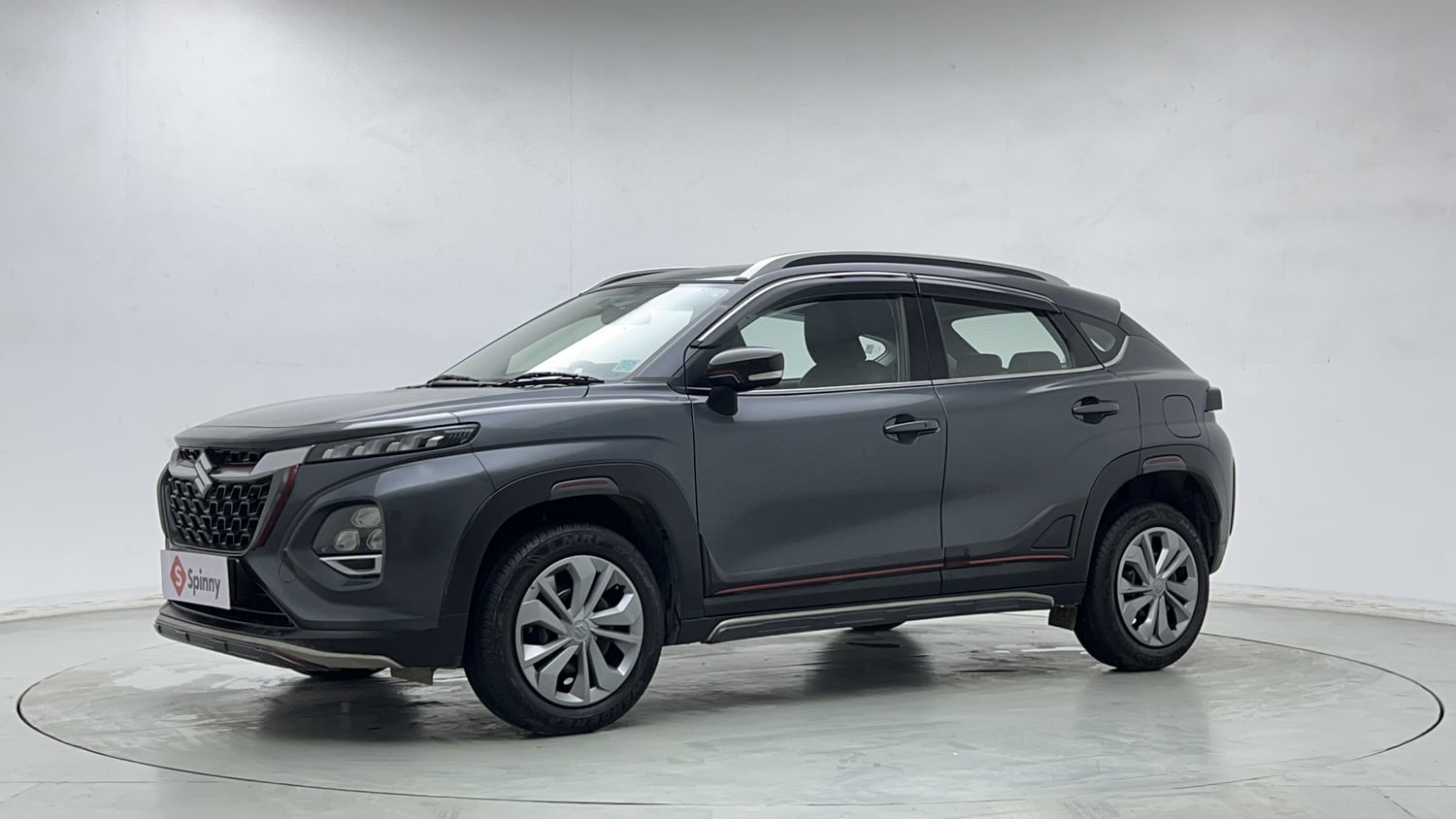
Maruti Fronx vs Mahindra XUV300: Real-World Fuel Efficiency
Road tests conducted by Autocar India provide different reference points for comparison. The Fronx results of 1.2 refer to the 2023 tests, while those for the XUV300 manual are from 2019. This is an important distinction in that these are not two sets of results from the same tests and that the usefulness of results from the older Mahindra should not be mistaken for providing a reference point for the later BS6 versions. The last column employs the following methodology in calculation: 70% city driving and 30% highway driving.
| Tested version | City mileage | Highway mileage | Calculated combined mileage |
| Fronx 1.2 petrol manual | 13.50 km/l | 20.00 km/l | 14.96 km/l |
| Fronx 1.2 petrol AMT | 13.00 km/l | 18.80 km/l | 14.33 km/l |
| XUV300 standard petrol manual, 2019 test | 9.70 km/l | 14.80 km/l | 10.82 km/l |
| XUV300 diesel manual, 2019 test | 14.40 km/l | 17.90 km/l | 15.30 km/l |
Petrol comparison shows that the Fronx 1.2 is benefiting in both environments in question. But when you take the diesel-powered XUV300 into account, the balance changes. Its result in the city is better than that of the manual version of the Fronx, despite the fact that the Fronx gets better results on the highway in the tests. So, there is no simple answer that can be based solely on the name of the model. A person who is trying to compare petrol manuals will make a totally different choice than a buyer who is considering the Fronx petrol with the XUV300 diesel.
These figures do not establish the real-world mileage of the Fronx turbo, Fronx CNG, XUV300 TurboSport or XUV300 AMTs. Avoid transferring one version’s result to another. On a used-car test drive, assess smooth running, warning lights and service history alongside any displayed mileage. For an existing vehicle, calculate consumption across several full-tank refills. A short dashboard reading after an easy highway stretch rarely represents a month of mixed driving.
Also Read: Complete Guide to Buying a Mahindra XUV300
Maruti Fronx vs Mahindra XUV300: Fuel Cost Comparison
If you drive 1,000 km per month, comprising 700 km in cities and 300 km on the highways, and fuel is priced at ₹105/litre for petrol and at ₹95/litre for diesel, our assumptions are purely for budgeting purposes instead of determining the actual prices in a city. Also, as far as consumption is concerned, it is calculated separately according to the different conditions of the driving environment and then added to total consumption. Note that fuel spending alone is calculated here, and maintenance, insurance, financing, and depreciation costs have not been factored in.
| Version | Fuel cost per km | Monthly fuel cost | Annual fuel cost, 12,000 km |
| Fronx 1.2 petrol manual | ₹7.02 | ₹7,019 | ₹84,233 |
| Fronx 1.2 petrol AMT | ₹7.33 | ₹7,329 | ₹87,953 |
| XUV300 standard petrol manual | ₹9.71 | ₹9,706 | ₹1,16,468 |
| XUV300 diesel manual | ₹6.21 | ₹6,210 | ₹74,523 |
In light of this information, the Fronx petrol manual is estimated to have savings of around ₹2,686 per month or ₹32,235 per year in comparison to the XUV300 petrol manual. The XUV300 diesel is significantly cheaper, costing ₹809 less monthly or ₹9,711 less yearly than the Fronx petrol manual. The figures reflect past experience, rather than expected savings. For example, if the cost of buying diesel is ₹1 lakh more, the savings of ₹809 per month will take approximately 10.3 years to get over the price difference, assuming the same distance is travelled, exclusive of maintenance costs.
CNG can produce a lower fuel bill, but it needs a separate estimate. At an assumed 24 km/kg and ₹80/kg, a Fronx CNG would cost approximately ₹3.33/km or ₹3,333 monthly. That mileage is an illustrative assumption, not a verified road-test result. Against the Fronx petrol manual’s calculated cost, a hypothetical ₹1 lakh CNG premium would take about 27,100 km to recover. Use actual quotations and local fuel prices, and allow for petrol consumed alongside CNG before treating either payback estimate as your own.
Also Explore: Maruti Suzuki Fronx Image Gallery: Interior, Exterior
Maruti Fronx vs Mahindra XUV300: Price Comparison
In comparing the cost, it is necessary to distinguish between historical and current figures. The Fronx can still be bought new, whereas the XUV300 has become more of a used car option as it has now been replaced by the XUV300. The old showroom price and how it is positioned in the marketplace need to be considered, but it does not indicate the costs of the used car currently. Therefore, this table will not show the costs as a range but rather will show the relevant periods of time.
| Price comparison | Maruti Fronx | Mahindra XUV300 |
| New-car price reference | September 2026 listings | Mahindra’s August 2023 price list |
| Starting ex-showroom price | Approximately ₹6.85 lakh | ₹7.99 lakh, historical |
| Upper end of referenced range | Approximately ₹11.98 lakh | ₹14.59 lakh, historical |
| Buying options today | New and used | Primarily used |
| Used-car pricing basis | Year, variant, condition and location | Year, variant, condition and location |
If someone is deciding between getting a new Fronx or a second-hand XUV300, the price gap may turn out to be worth more than several years saved on fuel, and a more affordable Mahindra will also allow for maintenance costs. On the other hand, getting a new Fronx means getting into the market at a different point in terms of age and usage history. It is important to compare total quotes and test results. The past ex-showroom values should never be regarded as final for the evaluated vehicles.
A used-to-used comparison should match age, kilometres covered and equipment as closely as possible. Check scheduled maintenance, tyre condition, clutch operation and pending repairs before assigning value to a mileage advantage. For an AMT, include a proper stop-start traffic test rather than a brief drive around the dealership. A repair bill can erase months of fuel savings, making the better-maintained example more economical even when another version has the stronger mileage figure.
Summary
For petrol-powered vehicles focused on fuel efficiency, the Fronx 1.2 can be argued to have the upper hand in the driving test results. Both its manual and AMT versions performed better than the XUV300 petrol manual while performing in the modes mentioned above. Meanwhile, the XUV300 diesel was better at scoring and even has the lowest projected fuel cost of all tested models at the given price point. But this advantage should be offset against the price and condition of the vehicle.
Choose the Fronx CNG only after checking station access, luggage needs and premium recovery. Consider an XUV300 diesel when its actual asking price, maintenance history and your driving distance support the decision. Buyers seeking stronger petrol performance should compare the turbo versions separately. The most economical purchase is the combination of the right engine, a realistic fuel budget and a sound vehicle, rather than whichever model advertises the largest mileage number.
Also Read: Mahindra XUV300 Real World Mileage
FAQs
Q. Which offers better real-world petrol mileage, the Fronx or XUV300?
The Fronx 1.2 returned better city and highway mileage than the standard XUV300 petrol manual in the historical tests used here. Those findings do not automatically cover the Fronx turbo or XUV300 TurboSport, which use different engines and need separate assessment.
Q. Is the XUV300 diesel cheaper to run than the Fronx petrol?
Under the stated fuel-price and driving assumptions, yes. Its calculated fuel cost is approximately ₹6.21/km against ₹7.02/km for the Fronx 1.2 manual. However, the purchase price and maintenance of an individual used diesel can change the overall ownership comparison.
Q. Does the Mahindra XUV300 have a factory-fitted CNG option?
No. The original XUV300 offered petrol and diesel engines. The Fronx offers factory-fitted CNG with its 1.2-litre engine and five-speed manual gearbox. An aftermarket conversion should not be treated as equivalent to a manufacturer-supplied CNG variant.
Q. Are the automatic gearboxes in these cars the same?
No. The Fronx 1.2 uses a five-speed AMT, while the turbo-petrol gets a six-speed torque-converter automatic. The XUV300’s automatic versions use a six-speed AMT. Engine and gearbox differences mean their driving behaviour and fuel consumption should be compared separately.
Q. Can XUV 3XO mileage figures be used for the XUV300?
No. The XUV 3XO replaced the XUV300, and its published specifications and tests belong to that model. When evaluating a used XUV300, match the mileage reference to its engine, transmission and model year rather than borrowing the successor’s figures.
Q. Is a used XUV300 worth considering despite higher petrol consumption?
Yes, if its purchase price and condition make the total cost attractive. Compare the expected fuel difference over your ownership period with the money saved upfront. A thorough inspection and documented service history are more useful than choosing solely from advertised mileage.