
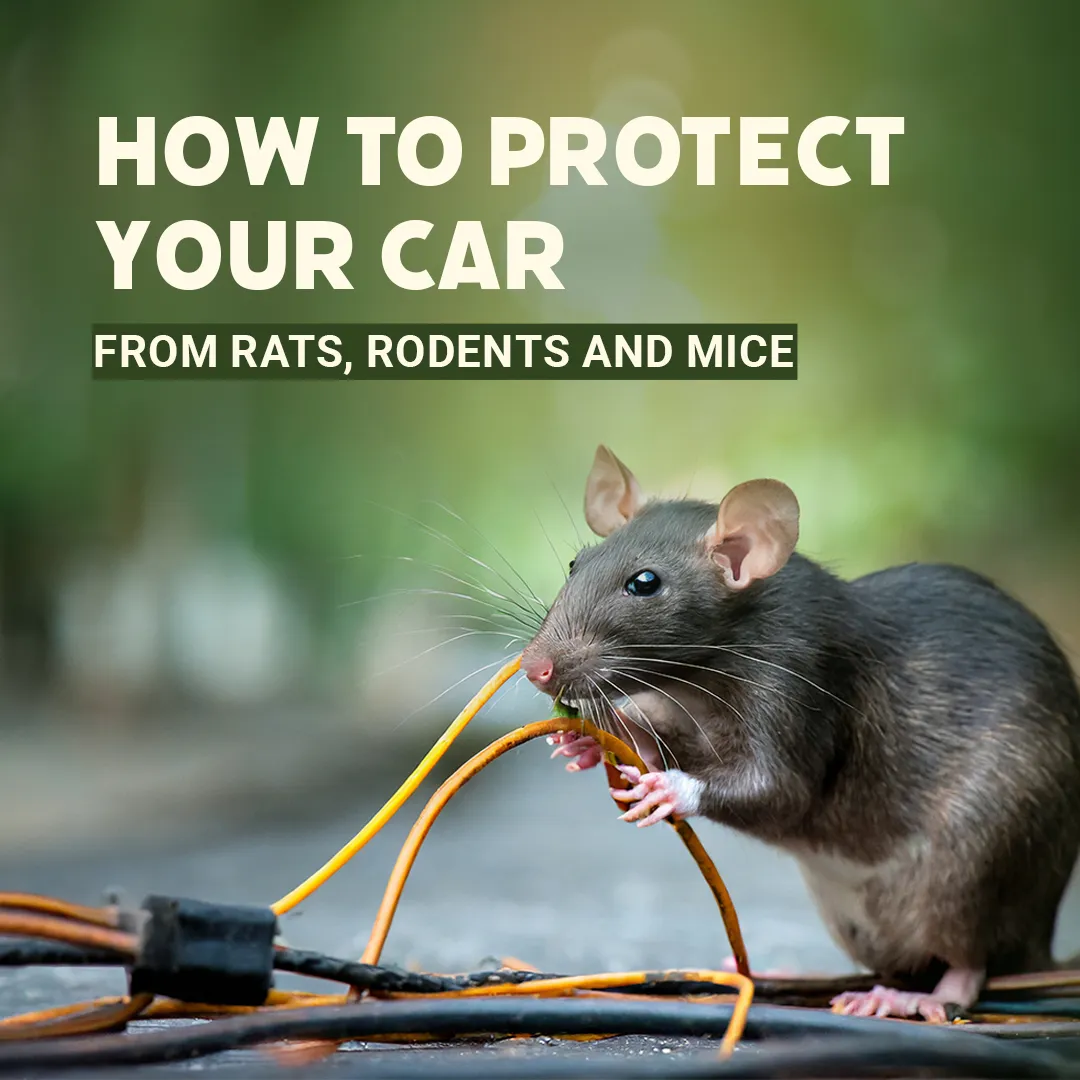
Rats and mice will make your precious car their home, chewing the wires, insulation, and even the hoses. Repairing this can cost you thousands of rupees. If you have ever opened the hood and found rat droppings, chewed wires, or nesting material, then you’re not alone. In this blog, we’ll guide you through how to rat-proof your car with the least amount of effort, using preventive tips, deterrents, and smart habits.
Why Do Rats Enter Cars?
Let’s learn about the reasons behind rats entering cars in the first place:
- Warmth: The engine compartment is a warm and comfortable place, particularly in winter, and therefore an ideal retreat for mice escaping cold.
- Shelter: The area under the hood is dark, narrow, and comparatively less disturbed and therefore an ideal and safe nesting area for rats.
- Food sources in surroundings: Placing food waste inside your vehicle or parking your vehicle by trash cans, gardens, and trash points will inevitably draw rats to your car.
- Wiring insulation: Most contemporary automobile manufacturers use soy-based or plant-sourced wiring insulation, which rats love to chew because it is naturally sourced.
Warmth, security, access to food sources, and soft nesting material in your car create an attractive home for rodents in search of temporary or seasonal shelter.
Dangers of Rats in Your Car
Rats do not only visit, rather, they destroy. And that is why car rodent protection is vital:
- Chewed cables: Rats will chew through electric cables, which may lead to engine failure, potentially lethal short circuits, or even potential blazes.
- Clogged air filters: Rodents use the air filters of your car to construct nests, clogging up the air systems or the air conditioner and decreasing performance.
- Smelly odors: Dead rodents, urine, or feces in your car can create overwhelming, pungent odors that are hard to get rid of.
- Increased repair expenses: Repairing the damage that rats have inflicted, such as chewed wires, damaged components, or soiled interiors, may cost between ₹10,000 and ₹50,000 or even more, depending on the amount of cleaning involved.
Top 10 Tips to Keep Cars Safe from Rats
Follow these handy and practical advices to keep your car safe from rats.
1. Park Wisely
- Do not park near dumps, bushes, or drains for long periods.
- Park in open spaces that are well-lit or safe garages.
- Keep the parking area clean to prevent rodents on a regular basis.
2. Make the Engine Area Rodent-Free
Rodents are drawn to garbage, trash, or even organic waste in the hood area.
- Clean the engine area every week, especially when stored in the same place.
- Never keep dog food and supplies in the car overnight.
- Request your mechanic to inspect for nesting material on routine maintenance.
3. Natural Rat Deterrents for Cars
Use the following if you choose to go the natural route:
- Oil of peppermint: Put soaked cotton balls around the wheel hubs or engine.
- Tobacco leaves: Rats detest the strong odor.
- Naphthalene balls (mothballs): Place them in mesh bags at the bonnet level (keep them from coming into direct contact with components).
4. Ultrasonic Rodent Repellers
These tiny devices release high-pitched sound waves that are irritating for rodents but completely harmless to human ears. It is simple to install in the engine compartment.
These rodent repellers look perfect for garaged or covered park cars and contain no chemicals or odors.
A few of these repellers also consist of extra flashing lights to frighten rodents.
5. Anti-rodent Tape for Wiring
There are some anti-rodent tapes available in the market provided by some car manufacturers that contain capsaicin (pepper extract). All you just need to do is wrap it around susceptible wires within the hood. Rats would not bite them because they are spicy. As a result, it is an affordable yet efficient option.
6. Use Rat Traps Around Your Parking Area
It is not recommended inside the vehicle, but traps in your parking are wonderful. You could place snap traps, glue traps, or live traps with peanut butter. Replace traps daily to avoid foul smells.
7. Seal All Breathing Holes
Rats can enter via small openings in the car’s cabin or underneath it. Therefore, check for holes near wheel wells, vents, or the firewall. Finally, seal gaps with rubber plugs or metal mesh.
8. Rat Repellent Sprays and Deterrent Coatings
There are numerous rodent repellent sprays for commercial vehicles in the market.
Spray them on the hood bottom, wheel wells, and across the battery or fuse box. They have bitter-tasting chemicals or smelly oils.
When shopping for these sprays, choose products with “safe for engine bay” or “automotive use” labels.
9. De-clutter Car Interiors and Clean
Rats don’t require much to move in. Clear newspapers, clothing, wrappings, or snack packs available at your disposal.
If rodents are an issue, avoid eating in your car.
10. Move the Car Often
Your car turns into a rodent haven if it is left unattended for weeks. Therefore, start and drive your vehicle every two to three days.
Don’t leave it unwashed, especially in monsoons and winter.
Additional Tips Based on Car Type
Rodent prevention techniques might vary depending on the area where your vehicle is typically parked. Here are some tailored tips for various parking spaces:
For Vehicles Parked in Garages
- Leave Garage Light On or Use Motion Sensor Lights: Rodents do not like darkness. Leaving the garage light on or motion sensor lights can scare them away from entering or remaining inside.
- Seal All Holes with Metal Sheet or Wire Mesh: Seal all the little holes, vents, and crevices in garage walls and doors with metal sheets or wire mesh.
- Use Neem Oil in Garage Corners: Rodents dislike the strong odor that neem oil creates. Spraying it on the edges and corners of the garage floor will deter rats without the need for harmful chemicals.
Also, keep your garage free of clutter and neat. Stacked boxes, paper stored in stores, and pieces of cloth are nesting material magnets for rats.
For Cars Parked in Open Parking
- Sprinkle Red Chili Powder Around Tires: Rats detest strong odors. Sprinkling red chili powder or ground-dried chili flakes around tires and the engine area will prevent them from sneaking into the car.
- Fill Wheel Wells with Steel Wool at Night: Filling the wheel wells or the engine compartment with steel wool at night will discourage entry. But before you drive, take it off.
- Don’t Park Near Thick Weeds or Garbage: Rats prefer hiding behind thick bushes, weeds, or near garbage cans. Try not to park near them because it’s a probability that the rodents will move to your car for shelter.
Myths to Avoid
Here are some common myths to avoid when it comes to car rodent protection:
- Myth: Having cats or dogs around the car will solve the issue.
- Reality: Rats are nocturnal and intelligent and your pat’s presence may not affect them.
- Myth: Once a rat leaves, it never comes back.
- Reality: Rats drop pheromone trails behind them and will most definitely return unless you exhaustively clean and disinfect.
Real-Life Scenario: How a Car Owner Saved ₹40,000 in Damage
Rajiv, in Mumbai, had parked his car in an empty plot opposite a garbage dump. One winter morning, the car would not start. Why? Rats had eaten out the spark plug wires and coolant pipe, resulting in leakage and loss of ignition.
He had spent ₹40,000 on replacement, but then he went on to follow a very rigid routine:
- Sprays peppermint oil once a week
- Parking on metallic mesh
- Attaches anti-rodent tape to weak wires
Result? No rodent problem for more than a year.
Cost of Repairing Due to Rodent Damage
| Component Damaged | Average Repair Cost (INR) |
| Spark Plug Wiring | ₹3,000 – ₹7,000 |
| Coolant Pipe | ₹5,000 – ₹10,000 |
| Air Filter Blockage | ₹1,500 – ₹4,000 |
| Full Engine Wiring | ₹15,000 – ₹50,000+ |
Prevention is cheaper than cure.
Nature-Friendly Car Rodent Repellent Techniques
If you are an environmentalist, the following are non-toxic rat-repellent methods:
- Neem and eucalyptus oil sprays
- Camphor sachet in the seat
- Solar-powered LED strobe lights
- Motion-sensitive alarms
Summary
Knowing how to protect your car from rats is more crucial than ever, particularly in urban and semi-urban areas where rodents are ubiquitous. None of the methods is foolproof, but the combination of daily cleaning, repellents, smart parking, and vigilance will safeguard your car from rodents and save you stress and money.
Don’t wait for more damage, rodent-proof your car today.
FAQs
Q. Which smell do rats repel?
Rats detest overpowering odors such as peppermint oil, eucalyptus, tobacco, and naphthalene.
Q. When do I use repellent rat spray?
Every 2-3 weeks or after heavy rain.
Q. Can the AC vent of the vehicle be penetrated by rats?
Yes, if parked in close proximity to bushes. Install mesh filters on vents and clean them regularly.