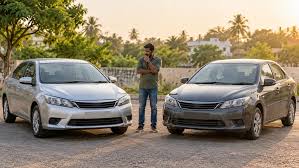
While purchasing a used car in India, you’d go through multiple cars from different brands, categories, and price segments. With multiple models to explore, it is natural to get confused while picking the best car according to your budget, driving needs, and other preferences. To avoid this confusion, you can follow certain steps or tips. In this blog, we will reveal some basic steps that you can follow while comparing two used cars in India.
Table of Contents
Steps to Follow While Comparing Similar Used Cars
These are the steps you can follow while comparing two similar used cars in India:
1. First Visit Enquiry
During the first visit, you will notice the exterior condition, interior, and overall looks and form of the car. If these things impress you, you can go forward to check the car’s age, odometer readings, and other basic things to confirm its quality and condition.
For instance, you can confirm the number of owners the car had till date. Usually, first owner cars are priced higher than second or third owner cars. So, it is an important thing to remember when you check the car for the first time. If you find two cars in the similar price range and segment and both impress you, follow the below comparison steps.
2. Basic Checks
When comparing two cars, you can check their brand name, car model, variant, transmission type, engine type, manufacturing year, and car type. These basic checks can also help you determine the right used car model.
For instance, if your preference is mileage, you can pick diesel cars over petrol ones. However, if you drive in rural regions frequently, you might prefer SUVs over sedans or hatchbacks. Therefore, if you set your preferences straight, even the basic checks can help you shortlist the cars and choose the better car according to your specific requirements.
3. Driving Preferences
Driving preferences matter a lot when comparing two used cars. If you drive mostly in the traffic, it is better to choose an automatic model over the petrol one. Also, multiple choices are available when it comes to automatic transmission.
So, you can compare cars with Automated Manual Transmission (AMT), Continuous Variable Transmission (CVT), Dual Clutch Transmission (DCT), Torque Converter (TC), and other types of automatic models. Electric cars also come with convenient single-speed automatic transmission.
If you are driving enthusiasts who like to take on challenges on the highway, you might prefer a manual model over the automatic one. Things such as high-speed stability, traction control, Electronic Stability Control (ESC), Cornering Braking Assist, etc. are crucial things that you must check when comparing cars engineered for exhilarating driving performance. The cars that offer most of these performance-oriented technology and features would be the right pick for you.
Also Read: Types Of Automatic Transmissions
4. Mileage & Fuel-Cost Comparison
Most car buyers in India compare the mileage of two cars before choosing one. This is applicable to used cars as well. Those who want cars for daily commuting or those who travel long distances on a regular basis would prefer mileage over everything else. Used diesel and CNG cars seem to be more cost-effective options for such buyers. These days, people also prefer buying used electric cars because of their low running costs.
Now, there are two types of mileage that can come into picture when comparing two cars. One is the claimed mileage and one is the on-road mileage. Claimed mileage is generally on the higher side because it gets tested in favourable driving conditions. On-road mileage depends on your driving style, engine health, transmission type, and actual road conditions.
You have to focus on the on-road mileage of the used cars when comparing them because in most cases, the conditions won’t be favourable for deriving high mileage from your car. For that, you can do some research or test the mileage of the car yourself during the test drive.
After determining the on-road mileage, you can determine the fuel costs associated with both the cars. The actual fuel-costs can be different irrespective of the mileage of the car because of the varying fuel rates of petrol, diesel, and CNG. For that, you might have to do some calculations on your own depending upon your daily running, fuel-type of the car, and its on-road mileage. Online fuel cost calculators might do your job easier. The car with the lower monthly or yearly fuel-costs will naturally be the better choice if you are seeking a car with low running costs.
To calculate the fuel costs associated with petrol, diesel, and CNG cars, you can divide your total running (in a day, month, or over any period) by the real-world mileage of that car. It will give you the total number of litres of fuel required to cover that distance and then you can multiply this value with the ongoing fuel rate.
To calculate costs associated with electric cars, you can multiply the total amount of electricity required to charge them with the per unit charging cost. The cars that cost less using this formula will be the right choice when comparing two electric vehicles.
Also Read: Petrol vs Diesel: Efficiency and Cost of Running
5. Maintenance & Service Costs
If you find two used cars with exact features and mileage figures, it would be confusing to choose one from them. In such cases, you can determine which car costs less in terms of servicing and maintenance costs. The car with the cheaper maintenance will reduce your ownership costs in the future. Also, cars with cheaper spare parts and easy availability due to a wide service network should top your priority list. So, you can choose them over cars with higher maintenance costs and enjoy a stress-free ownership experience.
6. Performance Comparison
To determine the best car according to your usage, you can compare their performance in different conditions. For instance, if you drive majorly within the city limits, you can prefer cars with agile performance and nimble handling.
For highway driving, you will prefer cars with high speed stability and firm suspension. For driving in the ghats, you would prefer cars with good mid range pull and low-end torque. Less powerful cars or cars with heavy weight but low powered engines would be less appealing for that driving.
Similarly, cars with high body roll and poor steering weight distribution would be less appealing for highway driving. Thankfully, modern-day cars come with steering modes or driving modes that adjust the weight and dynamics of the steering wheel as per the mode you selected. Cars also come with traction control and terrain modes such as snow, mud, gravel, etc. to help you drive in challenging conditions. So, you would definitely prefer a car with these terrain and driving modes over the ones that do not offer them at all.
One aspect of a car’s performance that we cannot ignore these days is off-roading. As an off-roading enthusiast, you will prioritise cars with a 4 Wheel Drive (4WD) or All Wheel Drive (AWD) over Front Wheel Drive (FWD) or Rear Wheel Drive (RWD) cars. Also, off-roading cars come with differential locking, dedicated terrain modes, and many other features that make them rugged for your off-roading adventures. So, you can compare these features and specifications when comparing two cars for their off-roading prowess.
Also Read: The Ultimate Pre Purchase Inspection Checklist : For Used Cars
7. Comparing Vehicle Documents & Details
Most car buyers do not check the vehicle documents carefully before purchasing a used car. Documents such as service records, Registration Certificate (RC), car insurance certificate, PUC validity, etc. should be verified before purchasing any second hand car in India. This must be an important factor before purchasing used cars as cars with legal issues or past accidental history can affect your ownership experience.
For instance, cars with multiple accidents in the past will naturally have higher insurance claims. Purchasing such cars will lead to higher insurance costs in the future. So, if you compare two cars using such fine details, you can definitely improve your decision-making ability.
You can check vehicle details such as owner’s name, registration date, RC validity, PUC validity, insurance validity, etc. using third-party sites such as Spinny or Parivahan. You only need to submit the vehicle number of acquiring these details for a used car. Comparing these details will help you detect the potential defects or issues in the car.
For instance, cars with an active hypothecation status indicate that the car loan has not been cleared by the previous owner yet. Also, the RC of a car can be suspended due to a pending legal or criminal case. Therefore, comparing the legal and financial viability of the cars is a must before making a decision.
Comparing the physical condition and engine/transmission health of cars is also crucial. At Spinny, we provide only certified cars that have been verified on the basis of 200+ checkpoints. So, you can rely on their condition, performance, legal and financial viability. Explore our used car collection today and compare them on the basis of your budget, car’s age, kms driven, and other factors using the multiple filters we have provided on our official site and mobile app.
Also Read: Parivahan Sewa: RTO & Vehicle Services
FAQs About How to Choose between two used cars
Q. Which factors to compare when purchasing two used cars in India?
Compare service records and history, vehicle documents, performance, condition, price, and overall features of two pre-owned cars before purchasing them in India.
Q. How to determine the better used car for mileage when comparing two cars?
The better used car for mileage can be selected after comparing their real-world mileage. The details related to the real-world mileage of the cars are available online but you can also verify it yourself during the test drive.
Q. How to check the ownership and vehicle details of a used car?
The ownership and vehicle details of a used car can be verified by checking the vehicle number using sites such as Spinny or Parivahan. The potential legal and financial issues in the car can be found using this vehicle search method.
Q. Why to purchase second-hand cars from verified sources?
Only verified car platforms such as Spinny provide free RC transfer, 1-year warranty, fixed price assurance, detailed inspection report, and other professional car services. So, you must always purchase used cars from verified sources.
Q. How to compare the ride-quality and performance of two used cars?
You can compare the ride-quality and performance of two used cars while observing them closely during the test drive.
Q. Which factors determine the resale value of a used car in India?
The car’s brand value, the demand for specific car models or variants, car’s age, kms driven, and overall condition determine its resale value. You must always prefer used cars with higher resale value over cars with lower resale value.
Q. Which costs determine the overall ownership cost of a second hand car?
Service and maintenance costs, fuel costs, and cost of spare parts that need to be replaced periodically determine the overall ownership cost of a second hand car in India.