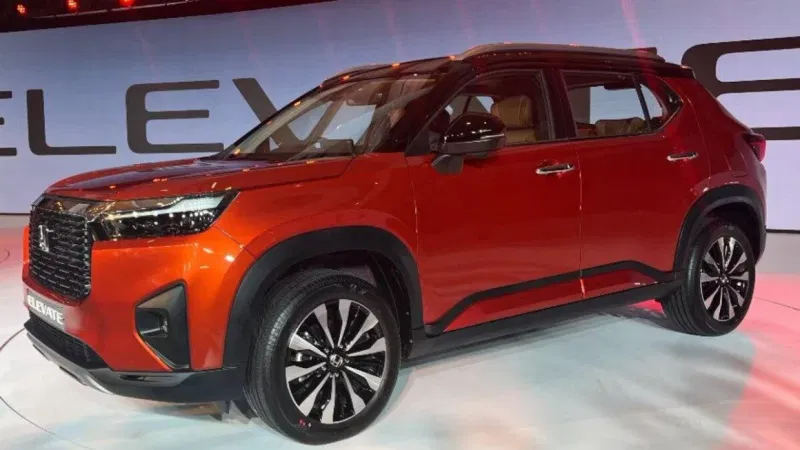
The Honda Elevate and Hyundai Creta compete in the midsize SUV segment but vary in their technologies. The Elevate uses a 1.5-litre naturally aspirated petrol engine coupled with a manual or CVT gearbox. This engine is smooth and provides a commanding driving position and high ground clearance. The Creta, on the other hand, offers a range of petrol engines (naturally aspirated and turbo) as well as diesel engines, giving drivers a choice of gearboxes (manual and automatic).
That broader choice suits buyers seeking either stronger performance or lower running costs. However, certified figures do not tell the complete story. The Elevate CVT claims more than its manual version, but city efficiency can fall when the engine is worked hard. The Creta’s naturally aspirated petrol versions are its fairest rivals, while its diesels are substantially more economical. Tank size also matters because two SUVs returning similar mileage may still cover very different distances between fuel stops. Here is how their mileage and fuel expenses compare.
Honda Elevate vs Hyundai Creta Specs
The table below highlights the major mechanical differences between the Honda Elevate and Hyundai Creta.
| Specification | Honda Elevate | Hyundai Creta |
| Engine options | 1.5-litre naturally aspirated petrol | 1.5-litre naturally aspirated petrol; 1.5-litre turbo-petrol; 1.5-litre diesel |
| Displacement | Petrol: 1,498 cc | NA petrol: 1,497 cc; turbo-petrol: 1,482 cc; diesel: 1,493 cc |
| Power | Petrol: 121 PS | NA petrol: 115 PS; turbo-petrol: 160 PS; diesel: 116 PS |
| Torque | Petrol: 145 Nm | NA petrol: 144 Nm; turbo-petrol: 253 Nm; diesel: 250 Nm |
| Transmission | 6-speed manual; CVT | 6-speed manual; IVT; 7-speed DCT; 6-speed automatic |
| Drive layout | Front-wheel drive | Front-wheel drive |
| Approximate kerb weight | 1,213–1,259 kg | 1,230–1,367 kg |
| Fuel tank capacity | 40 litres | 50 litres |
Since the Elevate generates slightly more power than Creta’s naturally aspirated petrol engine, it allows for gradual power delivery in both vehicles. The Honda Elevate is better because, even though it has a less efficient CVT, the driver has greater control over the vehicle’s performance. However, on some occasions, the acceleration might not be sufficient. Thus, extra pressure on the accelerator pedal or even a downshift may be needed to achieve the required acceleration, resulting in significant fuel wastage.
The Creta’s naturally aspirated petrol engine prioritises smoothness, its turbo-petrol focuses on performance, and the diesel combines stronger low-end torque with better efficiency. Its 50-litre tank is 10 litres larger than the Elevate’s, improving driving range. The Creta is generally heavier, especially as a diesel, but the engine’s efficiency compensates for the added weight.
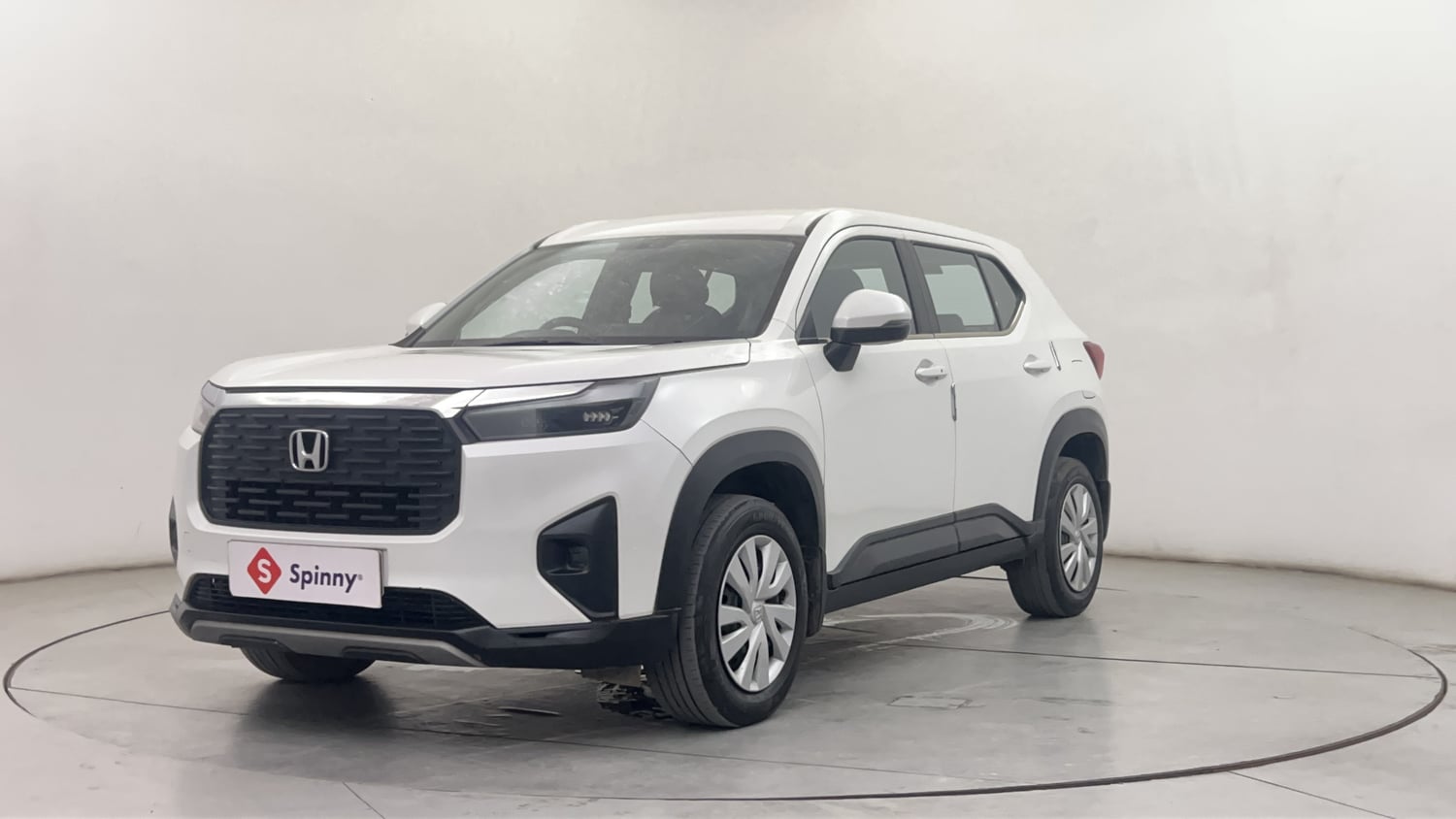
Honda Elevate vs Hyundai Creta: ARAI Mileage Figures
Mileage is a standardised reference point, although it may not reflect what people achieve daily, as factors such as traffic, average speed, incline, tyre pressure, weight, air-conditioning use, and driving style affect real-world efficiency.
| Engine and Transmission | Fuel Type | Honda Elevate ARAI Mileage | Hyundai Creta ARAI Mileage |
| 1.5-litre NA petrol manual | Petrol | 15.31 km/l | 17.4 km/l |
| 1.5-litre NA petrol CVT/IVT | Petrol | 16.92 km/l | 17.7 km/l |
| 1.5-litre turbo-petrol DCT | Petrol | Not available | 18.4 km/l |
| 1.5-litre diesel manual | Diesel | Not available | 21.8 km/l |
| 1.5-litre diesel automatic | Diesel | Not available | 19.1 km/l |
According to the paperwork, the Creta tops all its petrol rivals. Its manual model gives 2.09 more km/l over the Elevate manual, and the automatic version is 0.78 km/l more than the Elevate manual. In fact, the Elevate CVT, which performs better than the Elevate manual in terms of mileage, benefits from keeping the engine in its most efficient range.
The Creta turbo DCT posts the highest certified petrol figure, but it is not automatically the most economical choice in traffic. Hard acceleration and stop-start use can raise consumption. The diesel manual leads overall at 21.8 km/l. Honda offers no factory-fitted diesel Elevate, leaving high-mileage buyers without an equivalent powertrain.
Also Read: Hyundai Creta Real World Mileage
Honda Elevate vs Hyundai Creta: Real World Fuel-Efficiency
Mileage on the road may vary by driver and route, so the numbers below are ranges rather than exact figures. These data indicate the average mileage for the given brand in the city and on highways under normal driving conditions, with air conditioning used when necessary and passengers carried according to standards.
| Driving Condition | Elevate Petrol Manual | Elevate Petrol CVT | Creta NA Petrol Manual | Creta NA Petrol IVT |
| City | 11–13 km/l | 10–13 km/l | 11–13 km/l | 10.5–12.5 km/l |
| Highway | 16–18 km/l | 14–17 km/l | 15–17 km/l | 15–17 km/l |
| Mixed average | 13–15 km/l | 12–14.5 km/l | 13–15 km/l | 12.5–14 km/l |
| Theoretical tank range | 520–600 km | 480–580 km | 650–750 km | 625–700 km |
| Driving Condition | Creta Turbo-Petrol DCT | Creta Diesel Manual | Creta Diesel Automatic |
| City | 9–11 km/l | 14–17 km/l | 13–16 km/l |
| Highway | 15–18.5 km/l | 19–22 km/l | 18–21 km/l |
| Mixed average | 12–14 km/l | 16–19 km/l | 15–18 km/l |
| Theoretical tank range | 600–700 km | 800–950 km | 750–900 km |
The Elevate and the Creta with a naturally aspirated engine show similar efficiency results under mixed operating conditions. Their manual transmissions provide fuel efficiency of 13- 15 km/l, while automatics deliver about 12- 14 km/l. The Elevate performs well in steady highway conditions, but for rapid acceleration, the engine must be pushed to high RPMs. In traffic, both SUVs may reach around 10 km/l. Short trips from a cold start may produce even worse figures, as the engine cannot reach its optimal working temperature. At the same time, long highway trips can deliver quite high fuel efficiency for both SUVs.
The Creta turbo DCT shows the widest city-highway difference. Congestion may restrict it to 9–11 km/l, but gentle cruising can push it beyond 18 km/l. It is therefore less suitable for buyers prioritising predictable city economy. For high usage, the diesel is better: its manual averages 16–19 km/l, while the automatic returns 15–18 km/l.
In practical terms, the Creta has the advantage because of its tank capacity. Despite similar petrol fuel efficiency, its 50-litre capacity can add 100- 150 km of range, while the diesel manual variant can deliver almost 900 km in ideal conditions. The result is lower than the possible mileage, as drivers usually keep some fuel in reserve.
Also Read: Complete Guide on Buying a Hyundai Creta
Honda Elevate vs Hyundai Creta: Fuel Cost Comparison
The following estimate assumes monthly driving of 1,500 km, petrol priced at ₹112.04 per litre and diesel at ₹98.68 per litre in Pune. Since real-world mileage varies, one representative mixed figure has been selected for each powertrain. Actual expenses will change with local fuel prices, traffic and driving habits.
| Powertrain | Mileage Used | Monthly Fuel Use | Monthly Cost | Yearly Cost | Five-Year Cost |
| Elevate petrol manual | 14 km/l | 107.14 litres | ₹12,004 | ₹1.44 lakh | ₹7.20 lakh |
| Elevate petrol CVT | 13.5 km/l | 111.11 litres | ₹12,449 | ₹1.49 lakh | ₹7.47 lakh |
| Creta NA petrol manual | 14 km/l | 107.14 litres | ₹12,004 | ₹1.44 lakh | ₹7.20 lakh |
| Creta NA petrol IVT | 13.1 km/l | 114.50 litres | ₹12,829 | ₹1.54 lakh | ₹7.70 lakh |
| Creta turbo-petrol DCT | 13.8 km/l | 108.70 litres | ₹12,178 | ₹1.46 lakh | ₹7.31 lakh |
| Creta diesel manual | 17.5 km/l | 85.71 litres | ₹8,458 | ₹1.01 lakh | ₹5.07 lakh |
| Creta diesel automatic | 16.5 km/l | 90.91 litres | ₹8,971 | ₹1.08 lakh | ₹5.38 lakh |
The average maintenance costs for both the manual petrol engines and the automatic systems are virtually the same. Additionally, the automatic systems are also reverse in traffic. The smooth Elevate CVT can match the Creta IVT, but during aggressive driving, it loses its advantage. The Turbo DCT would appear to be a serious contender, but city users should prepare for decreased fuel efficiency. A difference of even 1 km/l would translate to a difference of several hundred rupees in the monthly petrol expenses, due to the fact that actual driving conditions are likely to overshadow the minor lab advantage.
The Creta diesel is the cost winner for frequent drivers. Its manual can save roughly ₹3,500 per month over either a manual petrol SUV, or about ₹2.1 lakh across five years. That excludes purchase price, insurance, servicing and resale value. A diesel makes financial sense when running is high enough to recover its higher initial price.
Honda Elevate vs Hyundai Creta Price
| Model | Variant Range | Ex-Showroom Price |
| Honda Elevate | SV to ZX/ADV Edition | Approximately ₹11.81 lakh to ₹16.67 lakh |
| Hyundai Creta | E to King/King Knight | Approximately ₹10.91 lakh to ₹20.11 lakh |
Though the Creta comes in with the lowest starting price, it is able to cover much higher ground due to its bigger version and engine options available for buyers. On the other hand, Elevate has a smaller line-up. Prices can differ due to special editions and model year updates, and hence customers must check these relevant numbers before making a purchase decision.

Summary
For petrol buyers, this is a close real-world mileage contest. The Elevate and the naturally aspirated petrol Creta generally return similar figures, especially with manual transmissions. The Creta holds a small advantage in certified mileage and offers a longer range because of its larger tank. The Elevate remains a sensible choice for drivers who value a straightforward engine, linear performance, fewer powertrain decisions and predictable highway efficiency.
When it comes to performance, the Creta scores the highest. Not only does its diesel version assure the best mileage and efficient fuel consumption, but its turbo petrol also provides you with the power to run your vehicle effectively in the city. The right option to choose depends on your operation; if you are driving normally, opt for any of the naturally aspirated petrol variants, but if your driving distances are long, choose the Creta diesel.
Related Blogs:
Tata Nexon vs Maruti Brezza Real World Mileage Comparison
Maruti Grand Vitara vs Hyundai Creta Real World Mileage Comparison
FAQs
Q. Which SUV delivers better real-world petrol mileage, the Honda Elevate or Hyundai Creta?
The naturally aspirated petrol versions are closely matched. Their manual variants usually average around 13–15 km/l, while automatic versions commonly return 12–14 km/l. The Creta leads on certified figures, but actual results depend heavily on traffic and driving style.
Q. What is the real-world mileage of the Honda Elevate CVT?
The Elevate CVT typically returns around 10–13 km/l in the city and 14–17 km/l on the highway. A practical mixed average is approximately 12–14.5 km/l. Hard acceleration can reduce mileage because it keeps the engine at higher revolutions.
Q. What is the real-world mileage of the Hyundai Creta diesel?
The diesel manual generally delivers 14–17 km/l in the city and 19–22 km/l on the highway. The diesel automatic can return around 13–16 km/l in urban use and 18–21 km/l on open roads.
Q. Which SUV offers a longer range on a full tank?
The Creta offers the longer range because it has a 50-litre tank, compared with the Elevate’s 40-litre capacity. The advantage is especially significant with the Creta diesel manual, which can theoretically cover around 800–950 km under favourable conditions.
Q. Which SUV is cheaper to run for 1,500 km every month?
The Creta diesel is the cheapest option based purely on fuel expense. Among the petrol versions, costs are close, and the manual Elevate and Creta can be nearly identical. Purchase price, service expenses and annual running costs should also be considered before deciding.