The Indian automobile market is at a genuine turning point. Rapid policy support, fresh model launches, and rising consumer interest have pushed electric vehicles (EVs) from a niche product to a visible (and growing) part of new-car sales.
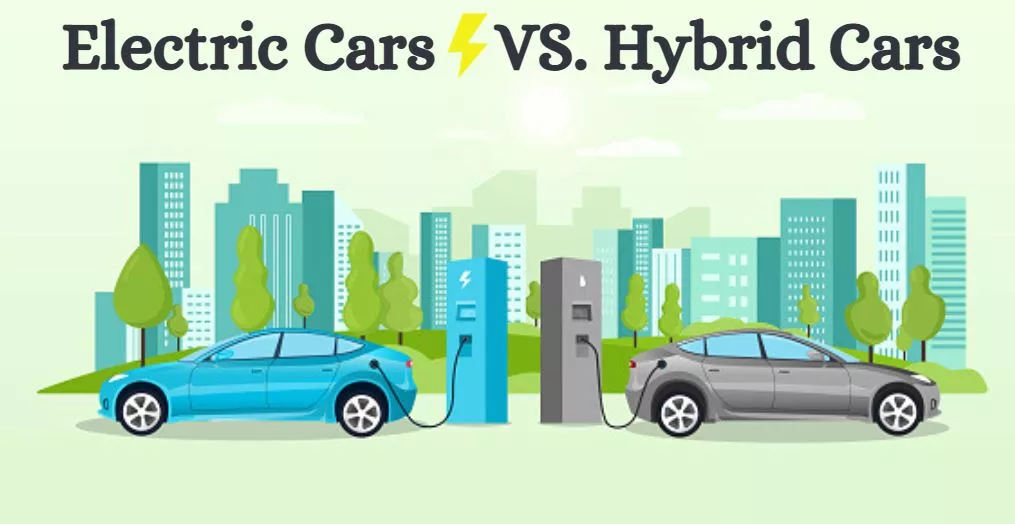
At the same time, “strong” hybrids, cars that pair a combustion engine and a substantial electric motor capable of driving the car independently or working in tandem, have become a compelling middle ground for many buyers, offering better fuel economy and lower running costs than conventional petrol/diesel cars.
Because both technologies promise lower lifetime costs and smaller carbon footprints than ICE vehicles in different ways, the real question for many Indian buyers isn’t which is objectively “better,” but which fits their budget, daily mileage, charging access, and long-term ownership goals.
In the sections that follow, we’ll compare EVs and strong hybrids across purchase price, efficiency, maintenance, running costs, and more. By the end, you’ll have a clear, practical answer to the question: EV vs hybrid, which should you buy?
Table of Contents
Cost of Purchase
When you’re weighing up the decision between an EV vs hybrid, the initial purchase price is one of the first, and most important, factors. While both strong hybrids and EVs tend to carry a higher sticker price compared to conventional petrol or diesel cars, that gap is narrowing, and the real value often lies in how you drive, where you live, and how long you plan to keep the car.
For this analysis, we’re comparing mid‑sized SUVs and MUVs (multi‑utility vehicles). Below are example models and their average price bands (ex‑showroom):
| Model | Price Range (₹ Lakhs) |
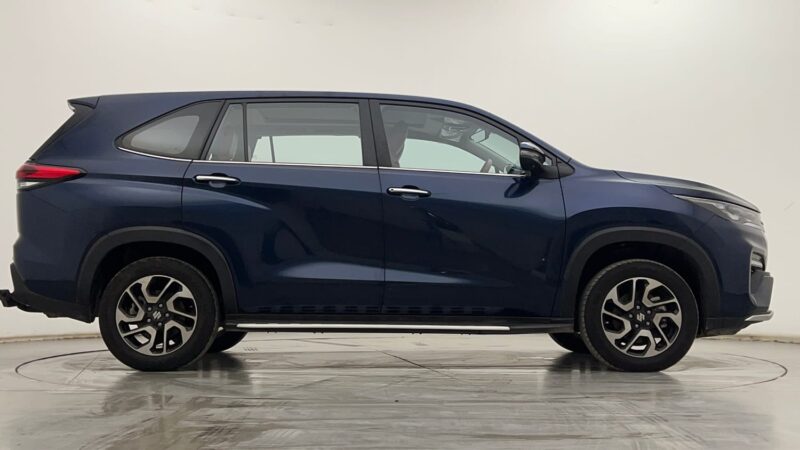
| Maruti Grand Vitara (strong hybrid) | ₹10.99 – 19.93 |
| MG ZS EV (EV) | ₹18.98 – 25.20 |
| Toyota Hycross (strong hybrid) | ₹19.77 – 30.98 |
| BYD e6 (EV) | ~ ₹29.15 |
From these figures, you can see:
- The Maruti Grand Vitara, a strong hybrid, starts considerably lower than the MG ZS EV, by around ₹6‑8 lakh at the lower end of the range. This difference is meaningful if your budget is tight or you want to minimise upfront cost.
- The Toyota Hycross and BYD e6 sit in very similar price zones at the high end, meaning if you are willing to invest around ₹30 lakh, you could choose either a strong hybrid or an EV. At this level, the decision becomes less about price and more about technology, usage pattern, charging access, and long‑term savings.
Also Read: EV Maintenance Best Practices: Owner’s Guide
Efficiency & Cost
When comparing EV vs hybrid vehicles, it’s not just a matter of one being “better” than the other; the trade‑offs are nuanced. Here are the differences using two pairs of vehicles:
| Vehicle | Efficiency Metric | Maximum Theoretical Range* |
| Maruti Grand Vitara (Strong Hybrid) | 27.97 km/l | 1,258 km |
| Toyota Hycross (Strong Hybrid) | 23.24 km/l | 1,208 km |
| MG ZS EV (Battery EV) | 9.16 km/kWh | 461 km |
| BYD e6 (Battery EV) | 5.78 km/kWh | 415 km |
*Note: The “maximum theoretical range” uses the manufacturer‑or‑estimated full tank/charge under ideal conditions. Real‑world figures will be lower.
Here’s what this tells us:
- Strong hybrids deliver robust fuel efficiency (km per litre), thanks to combining an internal‑combustion engine (ICE) with an electric motor. For example, the Grand Vitara delivers nearly 28 km per litre, and the Hycross around 23 km per litre.
- The EVs shown (MG ZS EV and BYD e6) have energy efficiency expressed as km per kWh rather than km per litre. While the numerical figure appears low in the “km/kWh” format, the key is that electricity is far cheaper per unit of energy in many cases.
- Hybrids in this sample achieve longer “maximum range” on a single tank of fuel than the EVs can on a single charge (1,200‑plus km vs ~400‑460 km). That speaks strongly to the range advantage when infrastructure (charging) is limited.
- On the other hand, the cost per km for EVs often comes out far lower, because electricity can cost dramatically less than petrol per unit of useful distance driven.
To bring this to life, let’s assume an annual mileage of 12,000 km and the following assumptions for India: petrol price ₹ 94.72/litre (New Delhi, 2024) and electricity ₹9/kWh. Using the above efficiency figures, the approximate annual cost and projected 5‑year cost become:
| Vehicle | 1‑year cost* | 5‑year cost* |
| Maruti Grand Vitara | ₹ 40,638 | ₹ 203,189 |
| MG ZS EV | ₹ 11,784 | ₹ 58,920 |
| Toyota Hycross | ₹ 48,909 | ₹ 244,544 |
| BYD e6 | ₹ 18,659 | ₹ 93,296 |
From this illustration:
- The MG ZS EV offers a dramatic cost advantage: over five years, about ₹1.44 lakh lower than the Grand Vitara.
- Even though the Hycross has strong hybrid efficiency, the BYD e6 offers a markedly lower 5‑year running cost thanks to cheap electricity.
Thus, the EVs here win on running costs, but the hybrids win on range and upfront flexibility.
Also Read: List of Best EV Cars in India
Maintenance Cost
Let’s dig into how much upkeep you can expect when comparing EV vs hybrid:
| Vehicle | 1st year | 2nd year | 3rd year | 4th year | 5th year | 5‑year total |
| Maruti Grand Vitara (strong‑hybrid) | ₹2,624 | ₹5,806 | ₹5,279 | ₹6,666 | ₹5,279 | ₹17,224 |
| MG ZS EV (EV) | ₹0 | ₹356 | ₹365 | ₹350 | ₹913 | ₹1,984 |
| Toyota Hycross (strong‑hybrid) | ₹2,833 | ₹4,836 | ₹6,467 | ₹11,911 | ₹6,467 | ₹32,514 |
| BYD e6 (EV) | ₹2,500 | ₹2,800 | ₹2,900 | ₹2,600 | ₹3,000 | ₹13,800 |
From this comparison, we see clearly: the EVs (MG ZS EV and BYD e6) show significantly lower maintenance costs over a five‑year span compared to the strong‑hybrids. The MG ZS EV especially stands out with a very low total cost (~₹2,000).
Cost of Running
Once we factor in both fuel (or electricity) expenses and maintenance costs, the long-term running costs of EV vs hybrid become clear. Over a five-year period, EVs consistently demonstrate a financial advantage, thanks to their simpler mechanics and lower energy costs.
Here’s a detailed breakdown of running costs for select models:
| Cost of Running | Maruti Grand Vitara | MG ZS EV | Toyota Hycross | BYD e6 |
| 5-year fuel/charging cost | ₹2,03,189 | ₹58,920 | ₹2,44,544 | ₹93,296 |
| 5-year maintenance cost | ₹25,654 | ₹1,984 | ₹32,514 | ₹13,800 |
| 5-year running cost | ₹2,20,413 | ₹60,904 | ₹2,77,058 | ₹1,07,096 |
Strong hybrids, while more efficient than traditional petrol vehicles, still incur notable maintenance costs, particularly in the 2nd and 4th years, due to their complex dual powertrain systems. EVs, on the other hand, have fewer moving parts and require minimal upkeep, which translates to significantly lower maintenance expenses.
The numbers speak for themselves: over five years, EVs like the MG ZS EV and BYD e6 offer substantial savings not just in fuel costs but also in maintenance. Combined with the environmental benefits of zero tailpipe emissions, EVs emerge as a compelling choice for budget-conscious drivers who are also eco-aware.
In short, if your goal is long-term cost efficiency and minimal hassle, EVs clearly take the lead over strong hybrids.
Variable Cost of Ownership
Understanding the variable cost of ownership is crucial for making a practical choice between an EV vs hybrid. This metric goes beyond just the purchase price; it accounts for fuel or electricity consumption, maintenance, and other running costs over time.
For a focused comparison, we’ll look at two popular vehicles in a similar segment: the MG ZS EV and the Maruti Grand Vitara. We’ll consider three annual mileage scenarios:
- Low usage: 6,000 km/year (500 km/month)
- Average usage: 12,000 km/year (1,000 km/month)
- High usage: 24,000 km/year (2,000 km/month)
The total variable cost of ownership is calculated as:
Cost of Ownership = Cost of Purchase (ex-showroom) + Cost of Running (fuel/charging over 5, 10, and 15 years) + Maintenance Cost
This approach captures how the cost burden evolves over time and with different driving habits, giving buyers a clear picture of the long-term financial implications.
Also Read: Best Hybrid Cars in India
Analysis of the Cost of Running for Different Annual Mileages
One of the most insightful ways to compare the real‑world economics between an EV and a petrol car is to examine how costs stack up at varying annual mileages. In this case study, we compare the petrol‑hybrid Maruti Grand Vitara and the EV MG ZS EV in three running scenarios: 6,000 km/year, 12,000 km/year, and 24,000 km/year, and follow the total cost of running over 5, 10, and 15 years.
Here’s how the story plays out:
6,000 km/year
With modest driving (6,000 km per annum), the Grand Vitara maintains a clear cost advantage over the MG ZS EV. Because the purchase price of the ZS EV is significantly higher, even though its running and maintenance costs are lower, the gap remains.
Over 10 or 15 years, the petrol‑hybrid holds its cost edge. In other words, low mileage = petrol/hybrid still likely cheaper overall.
12,000 km/year
When annual usage doubles to 12,000 km, the effect begins to shift. According to the data:
- After 5 years:
- Grand Vitara total cost: ₹1,766,413
- MG ZS EV total cost: ₹2,269,904
- After 10 years:
- Grand Vitara: ₹1,986,826
- MG ZS EV: ₹2,330,807
- After 15 years:
- Grand Vitara: ₹2,207,239
- MG ZS EV: ₹2,391,711
The savings in “fuel + electricity + maintenance” for the EV are growing, but they haven’t yet offset the higher upfront cost and other ownership overheads. At this mileage level, the petrol‑hybrid remains more economical overall, but the margin is narrowing.
24,000 km/year
Now for the heavy‑usage scenario: 24,000 km per year. At this level of annual driving, the economics begin to tilt more favourably towards the EV:
- Over 15 years:
- Grand Vitara: ₹2,816,807
- MG ZS EV: ₹2,568,470
In this scenario, the MG ZS EV nearly matches and begins to outperform the Grand Vitara in total cost of ownership. Because the EV’s cost per km for energy and maintenance is much lower, the high mileage magnifies those savings, eventually making up for the initial premium.
Conclusion: Which Should You Buy?
After a detailed analysis of costs, efficiency, maintenance, and overall ownership experience, your choice between an EV vs hybrid largely depends on your priorities, lifestyle, and driving patterns. Here’s a clear guide to help you decide:
Opt for an EV if you want lower running and maintenance costs, charging access is convenient for you, and you cover longer distances monthly. Choose a strong hybrid if upfront cost is a major concern, charging infrastructure is limited or inconvenient, or daily drives are shorter.
Understanding your driving patterns and priorities is key to making the right choice.
FAQs
Q. Are hybrids better than EVs?
It depends on your usage and infrastructure. If you have regular access to charging (at home or work), commute short to moderate distances, and can afford a somewhat higher upfront cost, then an EV often makes more sense from a total‑cost and environmental view. On the other hand, if you routinely drive long distances, have limited access to charging infrastructure, or often find yourself on highways or in remote areas, a strong hybrid (which combines an internal‑combustion engine and an electric motor) can be a more practical and flexible choice.
Q. Is there any subsidy on strong hybrid cars in India?
Currently, central‑government incentives (such as those under FAME II) are only available to zero‑emission vehicles (i.e., full battery‑electric vehicles) and not to hybrids. Some states may offer limited road‑tax or registration‑tax relief for hybrids, but as of now, there is no broad national subsidy programme for them.
Q. How much GST is levied on strong hybrid cars in India?
There is a stark tax differential: EVs in India attract a GST rate of 5%, whereas hybrid vehicles currently face a much higher tax burden for many hybrids, an effective tax rate of ~43% (28% GST + ~15% compensation cess) or even ~48% in some cases. This creates a significant upfront cost penalty for hybrid vehicles relative to EVs.
Q. What is the big drawback of hybrid cars?
While hybrids do offer improved fuel economy compared to purely internal‑combustion vehicles, some key drawbacks include higher upfront cost, limited emissions benefit, maintenance complexity, and tax/levy disadvantage.
Q. Which should I buy: an EV or a strong hybrid?
There’s no one‐size‑fits‐all answer; it comes down to your driving profile, charging access, budget, and how long you plan to keep the vehicle. Choose an EV if you do shorter trips, have reliable access to charging (at home or work), and are willing to pay the premium now for lower running costs later. Choose a strong hybrid if you drive longer routes frequently, worry about charging availability, or are looking for more immediate flexibility.
Q. What is the cheapest hybrid Toyota?
The Toyota Urban Cruiser Hyryder is the cheapest Toyota strong hybrid, with hybrid variants starting at around ₹16.5 lakh (ex-showroom). Cheaper Toyotas like the Glanza and Taisor only get mild-hybrid tech.