The growth of the SUV market in India has been so significant that it has given buyers a plethora of options in similar price ranges, even across various SUV segments. A case in point is the Nissan Tekton and the Mahindra XUV 7XO. Both vehicles are SUVs, both offer many new-age features, both prioritise safety, and both provide family buyers with an extensive choice set. However, in terms of strict competition, they are not direct competitors.
The Nissan Tekton is a 5-seat mid-size SUV. It is aimed at buyers who want a practical, feature-rich, city-friendly SUV with strong turbo-petrol performance, a large boot, high ground clearance, ADAS, and a 5-star Bharat NCAP rating. It competes more directly with cars such as the Hyundai Creta, Kia Seltos, Renault Duster, Skoda Kushaq, Honda Elevate, and Toyota Urban Cruiser Hyryder.
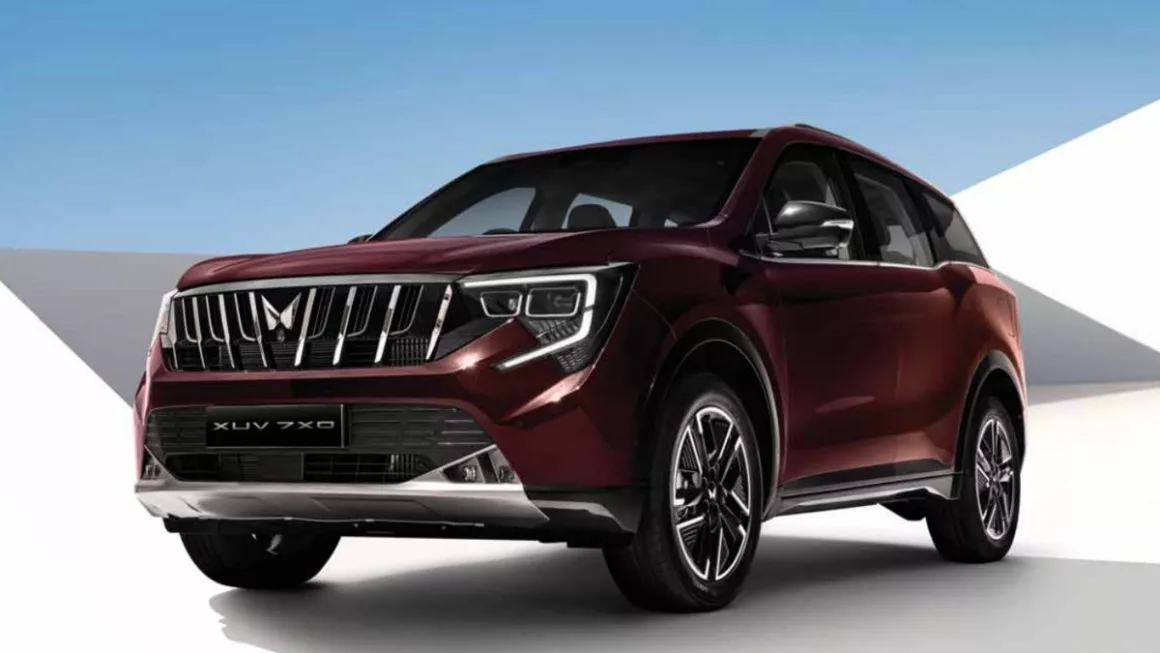
Mahindra XUV 7XO is bigger than Nissan Tekton. It is a larger 6/7-seater SUV with powerful petrol and diesel engines available in the market, has a larger body, offers a commanding presence on the road, comes with an AWD option, and features a better, more premium cabin experience in higher versions.
Here is the interesting part: the Tekton is more affordable, easier to drive in the city, and better suited to buyers who need a 5-seat SUV. The XUV 7XO is more expensive, but it offers more space, more seats, stronger engines, diesel availability, and a richer feature package. So, which SUV makes more sense for you? This comparison breaks both down across dimensions: performance, features, safety, and price.
Table of Contents
Nissan Tekton vs Mahindra XUV 7XO: Dimensions
| Specification | Nissan Tekton | Mahindra XUV 7XO |
| Length | 4,348 mm | 4,695 mm |
| Width | 1,815 mm | 1,890 mm |
| Height | 1,674 mm | 1,755 mm |
| Wheelbase | 2,657 mm | 2,750 mm |
| Boot Space | 518 litres | 240 litres with all rows up |
| Ground Clearance | 212 mm | Around 200 mm |
| Seating | 5 seats | 6 or 7 seats |
The dimensions of the Mahindra XUV 7XO are significantly greater than those of the Nissan Tekton. Length, width, height, and wheelbase are all longer. Mahindra XUV 7XO’s length is measured at 4,695 mm, which speaks volumes as it is around 350 mm longer than the Nissan Tekton. The wheelbase of 2,750 mm, in turn, speaks in favour of the XUV 7XO for cabin space as well because it was developed to have the capacity to accommodate three rows of seats.
The Tekton, by comparison, is a 5-seat SUV. It does not try to match the XUV 7XO for overall cabin size or seating flexibility. Instead, it offers a more compact footprint that is easier to manage in city traffic, parking lots, narrow streets, and daily use.
Boot space depends on how you look at the two SUVs. Nissan Tekton can accommodate 518 litres when all five seats are in use, which is tremendous in terms of practicality for trips, such as travelling during a holiday, going on a family trip, or using it on a daily basis. Meanwhile, even though XUV 7XO doesn’t have such a massive capacity with all three rows in use, it will allow excellent results when one of the rear rows is folded, and the overall boot capacity will be boosted significantly.
The XUV 7XO’s biggest advantage is seating flexibility. Buyers can choose between 6-seat and 7-seat layouts depending on the variant. This makes it better for larger families or buyers who often travel with more than five people. The Tekton, however, is better if you need five comfortable seats and a proper boot all the time.
To sum up, there is no doubt that Mahindra XUV 7XO is significantly larger and roomier than Nissan Tekton. Meanwhile, Nissan Tekton is more compact and convenient for those who need a solid vehicle for day-to-day use.
Nissan Tekton vs Mahindra XUV 7XO: Engine & Transmission
| Specification | Nissan Tekton | Mahindra XUV 7XO |
| Engine Options | 1.0L turbo-petrol / 1.3L turbo-petrol | 2.0L turbo-petrol / 2.2L turbo-diesel |
| Power Output | 100 PS / 163 PS | 200 bhp petrol / 182 bhp diesel |
| Torque | 166 Nm / 280 Nm | 380 Nm petrol / 420–450 Nm diesel |
| Transmission | 6-speed MT / 6-speed wet-clutch DCT | 6-speed MT / 6-speed AT |
| Drive Type | FWD | FWD / AWD |
| Fuel Type | Petrol only | Petrol and diesel |
| Mileage | 17.8–19.4 kmpl | Variant dependent |
The Nissan Tekton features two turbo-petrol engine choices. The 1.0-litre turbo-petrol engine produces 100 PS and 166 Nm of torque and comes with a 6-speed manual gearbox. The more powerful engine is a 1.3-litre version that produces 163 PS and 280 Nm and can be had with a DCT system or a manual gearbox.
The Tekton’s powertrain is designed for buyers who want strong petrol performance without moving into a larger SUV segment. The 1.3-litre turbo-petrol has enough torque for highway overtakes, quick acceleration, and comfortable cruising. It also offers better claimed fuel efficiency than what you would usually expect from a larger, heavier SUV.
Compared to that, the Mahindra XUV 7XO has more imposing engine options. It is available with a 2.0-litre turbo-petrol engine producing 200 bhp and 380 Nm and a 2.2-litre turbo-diesel engine producing 182 bhp. It produces 420 Nm of torque with the manual and 450 Nm with its automatic option. These figures are significantly better than those of the Tekton.
The XUV 7XO also offers AWD on select diesel automatic variants, which the Tekton does not. This gives the Mahindra an advantage for buyers who travel on highways, hills, rough routes, or places where extra traction is useful. It is not a hardcore off-roader, but the AWD option does improve its versatility.
As far as transmissions are concerned, both vehicles employ similar options. The Tekton offers its 6-speed manual and DCT options, whereas the XUV 7XO is available with manual and torque-converter automatic options. Mahindra’s automatic system is more capable in terms of handling torque, especially in diesel variants.
Nissan Tekton vs Mahindra XUV 7XO: Features & Comfort
| Feature | Nissan Tekton | Mahindra XUV 7XO |
| Infotainment System | 10.1-inch screen with Google built-in | Triple 12.3-inch screen setup |
| Digital Cluster | 10.25-inch digital cockpit | 12.3-inch digital display |
| Music System | Arkamys sound system | 16-speaker Harman Kardon system |
| Climate Control | Voice-assisted dual-zone AC | Dual-zone climate control |
| Ventilated Seats | Front ventilated seats | Front ventilated seats; second-row ventilation on select variants |
| Sunroof | Panoramic sunroof | Panoramic sunroof |
| Wireless Charging | Active-cooled wireless charger | Front and rear wireless charging on higher trims |
| Connected Tech | MyNissan connected features | ADRENOX connected tech |
| 360° Camera | 3D Around View Monitor | 540-degree camera |
| ADAS | Level 2 ADAS on higher variants | Level 2 ADAS on higher variants |
While both vehicles have a good range of technologies, the Mahindra XUV 7XO takes the edge with its high-end premium cabin equipped with a triple 12.3-inch display system, an ADRENOX connected technology, built-in Alexa and ChatGPT support, wireless Android Auto and Apple CarPlay, a panoramic sunroof, a 540-degree camera, ventilated seats, wireless charging, dual-zone climate control, sun blinds, and a super audio system with Dolby Atmos on higher models.
The XUV 7XO also offers a more spacious cabin. The first and second rows feel more generous, and the option of 6-seat and 7-seat layouts offers more flexibility. Higher variants also add premium touches that make it feel closer to a large family SUV than a regular mid-size SUV.
The Nissan Tekton is also equipped with quite a bit of modern technology. It features a 10.1-inch Tek-Link HD infotainment screen with built-in Google features, a 10.25-inch digital cockpit, wireless Android Auto and Apple CarPlay, powered front seats with cooling, a panoramic sunroof, dual-zone climate control, a wireless charging system, ambient lighting, and an Arkamys sound system.
The Tekton’s cabin feels modern and well-equipped, but it cannot match the sheer screen count, audio system, space, and premium tech of the XUV 7XO’s higher variants. That said, the Tekton offers most of the features a 5-seat family SUV buyer would realistically need, and it does so at a lower price.
Overall, the Tekton may be regarded as one of the best in its class. Packed with technologies, the XUV 7XO is the clear winner between the two SUVs in terms of features and innovations.
Nissan Tekton vs Mahindra XUV 7XO: Safety Features
| Safety Feature | Nissan Tekton | Mahindra XUV 7XO |
| NCAP Safety Rating | 5-star Bharat NCAP | Listed as a 5-star Bharat NCAP by current listings |
| Adult Occupant Score | 30.49 / 32 | Not quoted here without the official score sheet |
| Child Occupant Score | 45 / 49 | Not quoted here without the official score sheet |
| Airbags | 6 airbags | 6 airbags standard / 7 airbags on higher variants |
| ABS with EBD | Yes | Yes |
| ESC | Yes | Yes |
| Hill Hold Assist | Yes | Yes |
| Hill Descent Control | No | Yes, variant dependent |
| TPMS | Yes | Yes |
| 360° / 540° Camera | 3D Around View Monitor | 540-degree camera |
| ADAS | Level 2 ADAS | Level 2 ADAS |
| ISOFIX | Yes | Yes |
Both SUVs are equally impressive when it comes to safety measures employed by their manufacturers; however, there are more concrete numbers available for the Nissan Tekton. The SUV scores a 5-star rating on the Bharat NCAP with a score of 30.49 out of 32 in the protection of the adult passengers and a score of 45 out of 49 in child passenger protection.
The Tekton also gets six airbags, electronic stability control, hill hold assist, tyre pressure monitoring, all-wheel disc brakes, front and rear parking sensors, electronic parking brake with auto-hold, 360-degree camera, and Level 2 ADAS on higher variants.
The Mahindra XUV 7XO SUV also possesses a serious safety kit consisting of six airbags in the lower variants and seven airbags in the higher trims, ABS with EBD system, electronic stability control, reverse parking sensors, aid for the seat belts, speed alert system, tyre pressure monitoring, 540-degree camera, and Level 2 driver assist system. The special feature of the 540-degree camera is the transparent bonnet view that helps to drive the car in difficult areas.
The XUV 7XO’s safety-tech package is richer in higher variants, especially due to the 540-degree camera and additional airbag count. However, for this comparison, it is safer to give the Tekton the clearer crash-score advantage because its Bharat NCAP adult and child scores are already published in the sources checked.
To sum up, both SUVs are safe choices. However, the Tekton boasts of better performance according to the Bharat NCAP ratings, while the XUV 7XO provides a full safety tech package.
Nissan Tekton vs Mahindra XUV 7XO: Price Comparison
| Variant Level | Nissan Tekton Ex-Showroom | Mahindra XUV 7XO Ex-Showroom |
| Base / Entry Variant | ₹10.49 lakh | ₹13.99 lakh |
| Mid Variant | Around ₹13–16 lakh | Around ₹16–21 lakh |
| Top Variant | ₹18.59 lakh | ₹25.79–25.94 lakh |
| Seating | 5 seats | 6 or 7 seats |
Nissan’s Tekton is less expensive than Mahindra’s XUV 7XO. The price of the Tekton ranges from ₹10.49 lakh ex-showroom to ₹18.59 lakh, giving buyers a compact SUV that comes with turbo-petrol options, good boot space, decent ground clearance, lavish features, ADAS, and a 5-star Bharat NCAP rating.
The Mahindra XUV 7XO starts at ₹13.99 lakh ex-showroom and goes up to around ₹25.79–25.94 lakh, depending on listing and variant. It is significantly more expensive, especially in higher trims, but it also offers a larger body, more seats, stronger engines, diesel availability, AWD options, and a much more premium feature list.
The Tekton serves best for customers with a need for 5 seats. It offers the SUV experience at a lower price, and even for the higher variant, the cost of the Tekton is lower than that of the lower variants of the XUV 7XO.
The XUV 7XO’s value comes from size, power, flexibility, and premium features. It costs more because it offers more space, more engine strength, more seating options, and more cabin tech.
In conclusion, the Tekton is the better price-point SUV for customers looking for a 5-seat compact SUV, while the XUV 7XO is a good option for people who are looking for a bigger, more powerful, and luxurious 7/8-seat SUV.
Summary: Nissan Tekton vs Mahindra XUV 7XO
The Nissan Tekton vs Mahindra XUV 7XO comparison comes down to size, budget, and family needs.
For buyers looking for a 5-seater SUV, the Nissan Tekton is the more practical option. It is much easier to drive in urban areas, is cheaper on paper, gets better fuel economy, and still has many features. The Tekton comes with turbo-petrol engines, a big 518-litre boot, high ground clearance, ADAS, a 3D Around View Monitoring system, seat ventilation, a panoramic sunroof, as well as having received a 5-star rating from Bharat NCAP.
The Mahindra XUV 7XO is the better choice for buyers who need more space and more power. It offers 6-seat and 7-seat layouts, petrol and diesel engines, AWD on select variants, stronger torque figures, a larger body, triple-screen dashboard, 16-speaker Harman Kardon audio, 540-degree camera, Level 2 ADAS, and a more premium cabin experience.
For buyers looking for an inexpensive, easy-to-drive, and safe 5-seat SUV, the Nissan Tekton is a good choice. But those looking for a larger SUV with more seating, more powerful engines, and diesel/AWD options, along with more luxury features, should really consider the Mahindra XUV 7XO.
FAQ about Nissan Tekton vs Mahindra XUV 7XO
Q. Which is cheaper, the Nissan Tekton or Mahindra XUV 7XO?
The Nissan Tekton is cheaper. It starts at ₹10.49 lakh ex-showroom, while the Mahindra XUV 7XO starts at ₹13.99 lakh ex-showroom. The Tekton also has a much lower top-end price.
Q. Which SUV is bigger, the Nissan Tekton or Mahindra XUV 7XO?
The Mahindra XUV 7XO is much bigger. It is longer, wider, taller, and has a longer wheelbase than the Nissan Tekton. It also offers 6-seat and 7-seat layouts.
Q. Which SUV has more seating capacity?
The Mahindra XUV 7XO has more seating capacity. It is available with 6-seat and 7-seat options, while the Nissan Tekton is a 5-seater.
Q. Which SUV has more boot space?
With all seats in use, the Nissan Tekton has the more usable boot because it offers 518 litres in a 5-seat layout. The XUV 7XO has limited boot space when all three rows are up, but it becomes more practical when the third row is folded.
Q. Which SUV is more powerful?
The Mahindra XUV 7XO is more powerful. Its 2.0-litre turbo-petrol produces 200 bhp and 380 Nm, while its diesel produces up to 450 Nm. The Nissan Tekton’s strongest engine produces 163 PS and 280 Nm.
Q. Which SUV is safer, the Nissan Tekton or Mahindra XUV 7XO?
Both SUVs have strong safety packages. The Nissan Tekton has a confirmed 5-star Bharat NCAP rating with published adult and child scores. The Mahindra XUV 7XO offers a richer safety-tech package in higher variants, including seven airbags, Level 2 ADAS, and a 540-degree camera.