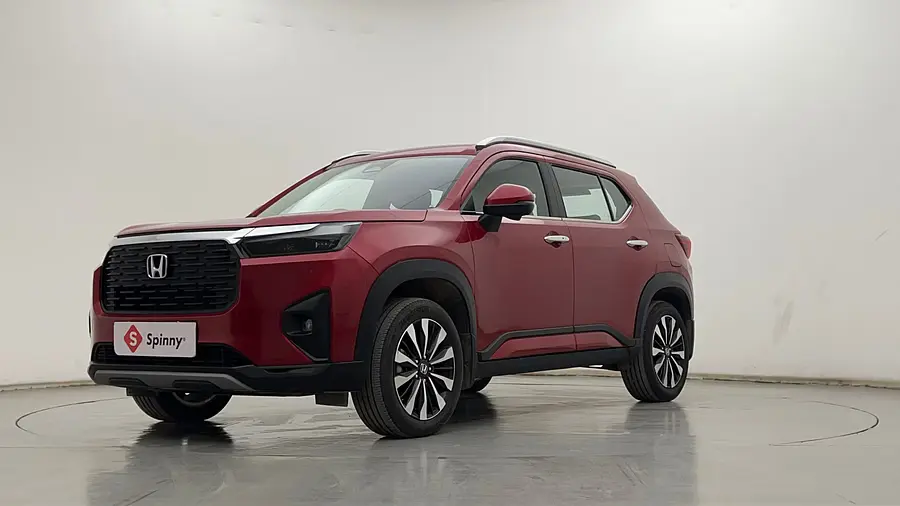
The Honda City has been one of the country’s most popular high-quality sedans for many years, earning high praise for its elegance, luxuriousness, spacious interior, comfort, and resale value. However, the growing popularity of SUVs has brought the Honda Elevate into focus, thanks to its commanding driving position, rugged styling, and greater practicality.
With both models carrying Honda’s reputation for reliability and quality, choosing between them can be challenging. Are you looking to experience The City Facelift sedan selection and hybrid fuel efficiency, or are you more into the versatility of an SUV like the Elevate?
The right choice will depend on your financial budget, driving habits, family needs and ownership priorities. This guide compares the Honda City Facelift vs Honda Elevate and highlights differences in size, speed, specs, safety, cost and driving experience.
Read on to discover which Honda offers the best value for your needs.
Honda City Facelift vs Honda Elevate: Dimensions
The Honda City Facelift and Honda Elevate are both spacious, but serve different purposes. The City is geared towards boot space and sedan comfort, while the Elevate makes ground clearance, a spacious cabin and SUV usability its primary selling points.
The comparison below highlights how their dimensions differ and what those differences mean in everyday use.
| Dimension Parameter | Honda City Facelift | Honda Elevate |
| Length | 4,594 mm | 4,312 mm |
| Width | 1,748 mm | 1,790 mm |
| Height | 1,489 mm | 1,650 mm |
| Wheelbase | 2,600 mm | 2,650 mm |
| Boot Space | 506 litres (306 litres Hybrid) | 458 litres |
| Ground Clearance | 165 mm | 220 mm |
Both models offer comfortable cabins, but they’re different in their strengths. The Honda City’s extra length and spacious boot make it a great long-distance sedan, whereas the Honda Elevate’s wider stance, elevated seating and 220 mm ground clearance lend it robustness for hard roads and urban clutter.
The seating position of the Elevate is also higher, which offers better visibility and ingress/egress. The City, meanwhile, continues its rather impressive rear-seat comfort and luxury sedan styling.
The Honda City’s major advantage is its rear comfort and the traditional sedan look, and the Honda Elevate’s standout features are practicality and road presence.
Honda City Facelift vs Honda Elevate: Engine & Transmission
The Honda City Facelift and Honda Elevate share Honda’s trusted 1.5-litre i-VTEC petrol engine, but they cater to different needs. The Elevate is focused on simplicity and SUV utility, whereas the City offers an advanced e: HEV hybrid and has set its sights on refinement and fuel economy.
The comparison below highlights their powertrain options:
| Specification | Honda City Facelift | Honda Elevate |
| Engine Options | 1.5L Petrol, 1.5L Hybrid | 1.5L Petrol |
| Transmission Options | 6MT, CVT, e-CVT | 6MT, CVT |
| Power | 121 PS (Petrol), 126 PS (Hybrid) | 121 PS |
| Torque | 145 Nm, 253 Nm (Hybrid) | 145 Nm |
| Mileage | Up to 27.26 kmpl | Up to 16.92 kmpl |
City and Elevate petrol versions are the same, smooth and refined, with the ease of handling in daily driving. The SUV-styling and taller driving attitude on the Elevate, though, give it a more commanding driving position and confidence over bumpy roads.
The City e: HEV hybrid is the only one of its kind that offers electric torque immediately available, almost silent operation in traffic and exceptional fuel efficiency of up to 27.26 kmpl, lowering running costs in the long term. The Elevate, on the other hand, has a tried-and-tested petrol-CVT system that is easy to use while still being reliable.
The Honda Elevate works best for customers who are interested in simple utility features for an SUV, whereas the Honda City is designed to be more efficient, refined and hybrid.
Honda City Facelift vs Honda Elevate: Features & Comfort
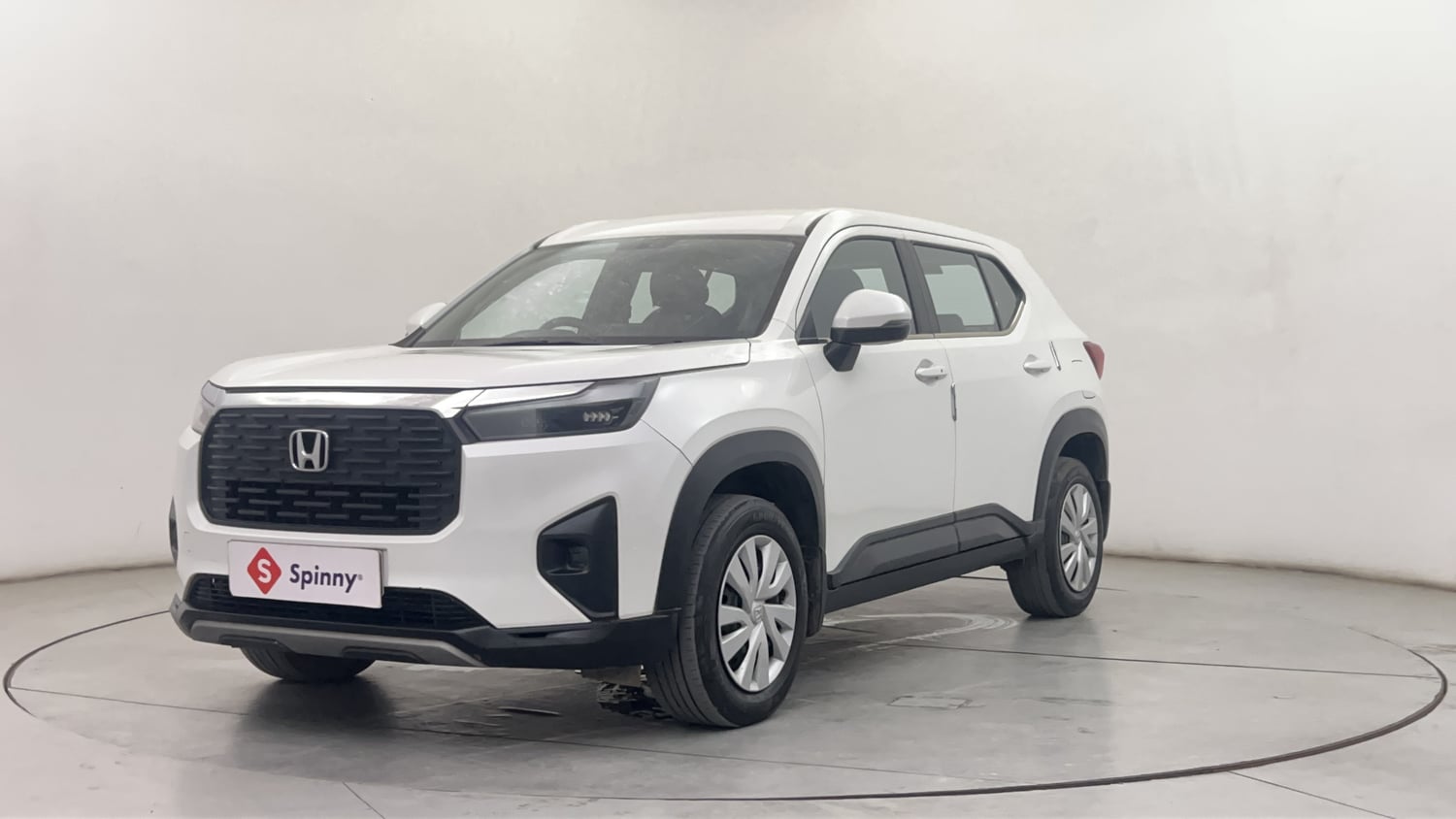
The Honda City Facelift and Honda Elevate offer a strong mix of comfort and convenience features, but they cater to different preferences. The City’s emphasis is on upgrades to the cabin and rear-seat comfort, whereas the Elevate is more about functionality, visibility, and SUV usability.
Here’s how their feature lists compare:
| Feature | Honda City Facelift | Honda Elevate |
| Infotainment | 8-inch/10.1-inch touchscreen | 8-inch/10.25-inch touchscreen |
| Audio System | 4 or 8 speakers | 4 or 8 speakers |
| Climate Control | Auto AC with PM2.5 filter | Automatic climate control |
| Ventilated Seats | Yes | No |
| Steering Adjustment | Tilt & Telescopic | Tilt & Telescopic |
| Drive Modes | Econ & Sport | No |
| Instrument Cluster | TFT MID | 7-inch TFT MID |
| Sunroof | Electric | Electric |
| Seat Adjustment | Manual | Manual |
| Rear AC Vents | Yes | Yes |
| 60:40 Split Seats | No | Yes |
| Cruise Control | Adaptive (ADAS variants) | Adaptive (ZX variants) |
Both Hondas are well-equipped, but they excel in different areas. The larger touchscreen, split-folding rear seats, and bold seating position with enhanced visibility make the Elevate a more practical and usable SUV. It has a straightforward and easy-to-navigate cabin structure, and it is perfect for families.
On the other hand, the City offers a more upscale quality experience via ventilated front seats, a PM2.5 air filter and better rear-seat comfort. Long driving days are especially comfortable due to its supportive seats, low transmission tunnel and refined cabin.
The Honda Elevate is more practical and versatile as an SUV, and the Honda City is the leader in terms of comfort, refinement and rear-seat quality.
Also Read: Honda Elevate Warranty Explained
Honda City Facelift vs Honda Elevate: Safety Features
The Honda City Facelift and Honda Elevate offer comprehensive safety packages and share many of Honda’s core protection technologies. The City highlights the increased availability of Honda Sensing ADAS technology to provide preventative safety measures, while the Elevate’s appeal is in its SUV practicality and reputation for safety.
Here’s how their safety features compare:
| Safety Feature | Honda City Facelift | Honda Elevate |
| NCAP Safety Rating | Not tested under current protocols | 5-Star JNCAP (WR-V) |
| Airbags | 6 airbags | 6 airbags |
| ABS with EBD | Yes | Yes |
| ESC | Yes | Yes |
| Traction Control | Yes | Yes |
| Automatic Headlamps | Yes | Yes |
| Rain-Sensing Wipers | Yes (higher variants) | No |
| Hill Hold Assist | Yes | Yes |
| Hill Descent Control | No | No |
| Rear Parking Sensors | Yes | Yes |
| Rear Parking Camera | Multi-angle camera | Multi-angle camera |
| ISOFIX Anchor Points | Yes | Yes |
| ADAS | Level 2 Honda Sensing (V and above) | Level 2 Honda Sensing (ZX variants) |
Both Hondas are well-equipped with the essentials like six airbags, ESC, hill hold assist, and ISOFIX mounts. The major variance is that they are safe. The made-in-India WR-V from Elevate also got a 5-star rating by the JNCAP, which added further confidence to Elevate’s crash protection.
The Honda City, on the other hand, takes advanced safety within reach, with the V variant upwards incorporating Honda ADAS Level 2: Collision Mitigation Braking, Lane Keeping Assist, and Adaptive Cruise Control. The rest of the Elevate lineup has Level 2 Honda Sensing ADAS.
The Honda City puts advanced driver assistance technology options within reach of more consumers, but the Honda Elevate takes the lead with Verified Crash Credentials.
Also Read: Honda Elevate Running Cost Breakdown
Honda City Facelift vs Honda Elevate: Price Comparison
While both the Honda City Facelift and Honda Elevate share the Honda brand values of reliability and refinement, their target customers are distinct. While the City exudes luxury due to its enhanced feature set, advanced safety electronics, and hybrid model, the Elevate provides access to Honda ownership in SUV practicality.
The comparison below highlights which model delivers the better value across different budgets:
| Variant Level | Honda City Facelift (Ex-Showroom Prices) | Honda Elevate (Ex-Showroom Prices) |
| Base Variant | ₹11.99 lakh (SV MT) | ₹11.60 lakh (SV MT) |
| Mid Variant | ₹13.29 lakh (V MT) | ₹13.22 lakh (V CVT) |
| Upper Mid Variant | ₹15.25 lakh (ZX MT) | ₹14.91 lakh (VX CVT) |
| Top Variant | ₹20.99 lakh (ZX Plus e: HEV) | ₹16.25 lakh (ZX Black CVT) |
Honda Elevate is slightly lower-priced in most Elevate variants and is a good option for buyers looking for the practicality of an SUV and a driver’s seat that dominates the road.
The Honda City, by contrast, commands a higher price with its more extensive feature roster, more generous selection of advanced driver assistance and a more comfortable rear seat, plus the super-efficient e: HEV hybrid that reduces long-term running costs. The budget-focused hybrid is far from the top of the range and is actually very cost-effective for high-mileage drivers.
The Honda Elevate is definitely the more affordable and practical SUV, whereas the Honda City’s comfort, technology, safety, and hybrid capability offer the more all-around value.
Also Read: Honda Elevate vs Hyundai Creta: Safety Rating Comparison
Summary
The Honda City Facelift and Honda Elevate are designed to meet the needs of different lifestyles, but both carry Honda’s reputation for reliability, refinement and ease of ownership. The Elevate is designed to attract buyers looking for SUV functionality: the driving position is high, and the vehicle has great ground clearance, versatile cabin space, and is more stable on rough roads.
The Honda City, on the other hand, offers a better ownership experience, more comfortable rear seats, improved ride quality, a wider range of Honda Sensing ADAS, and the very efficient e: HEV hybrid, which helps cut running costs significantly. The cabin luxury and sedan handling make it a favourite for short commuting in the city and long journeys with family.
Overall, most buyers will find the Honda City Facelift to have done a better job of fulfilling its duties. It’s easier to recommend as a product, based on its comfort, efficiency, advanced safety features and long-term value. The Honda Elevate is the better choice for those who value practicality, have higher ground clearance and want to see the road more clearly from an SUV.
FAQs about Honda City Facelift vs Honda Elevate
Q. Which is better for Indian roads: Honda City or Honda Elevate?
With its SUV nature and high ground clearance of 220 mm, the Honda Elevate is more likely to handle rough roads than other models. The City is more at ease on paved roads and highways.
Q. Does the Honda Elevate offer a hybrid option?
No. The Honda City is the only one of the two that has the e: HEV strong hybrid powertrain for fuel efficiency of up to 27.26 kmpl.
Q. Which car is more comfortable for rear passengers?
The Honda City interior provides outstanding space and comfort for the rear seats on long trips and is engineered to suit a sedan cabin for use by a chauffeur.
Q. Do both models get Honda Sensing ADAS?
Yes. Both feature Level 2 Honda Sensing ADAS. But the latter is available from the City variant upwards, and the former is available directly on the Elevate.
Q. Which Honda offers better value for money?
The Honda Elevate is a more budget-conscious SUV choice. But the Honda City delivers top-tier all-around value with its luxurious comfort, safety, and hybrid version.