
Based on the number of cylinders fitted in the engine, cars can be classified as having 6-cylinder engines; 6-cylinder engines provide performance, smoothness, and utility and are found in regular vehicles, while 12-cylinder engines are found in supercars, high-end luxury passenger vehicles, or grand touring cars.
This is where the difference between V6 and V12 engines becomes important. Both use a V-shaped layout, but they are built for very different purposes. A V6 engine balances performance, packaging, and efficiency. A V12 engine prioritises refinement, power delivery, sound, and exclusivity.
Most people buy a V6 engine because it is more practical than a V12. On the flip side, luxury car buyers and car enthusiasts would opt for a V12 as it is much more special and has emotional value. However, a V12 does cost more to run/maintain due to the higher amount of fuel it uses, and the fact that they are not easily found (limited production).
What Is a V6 Engine?
A V6 engine has six cylinders arranged in two banks of three cylinders each. These two banks are positioned at an angle, forming a V-shape when viewed from the front.
Ultimately, automotive manufacturers utilise a V6 engine design primarily due to packaging reasons. Since the cylinder arrangement consists of 2 banks, a V6 has a smaller overall physical footprint than an equivalent inline-6 cylinder engine; therefore, it is more accommodating when considering space requirements inside crossover SUVs, 4-door sedans, performance vehicles and everyday commuter vehicles.
Modern V6 engines are often turbocharged or paired with hybrid systems. This helps them produce strong power while staying smaller and more efficient than larger engines.
A V6 engine is commonly used in:
- Premium SUVs
- Luxury sedans
- Sports cars
- Performance hybrids
- Off-road SUVs
- High-performance daily cars
In simple terms, the design of the V6 engine allows excellent performance without being extremely large, heavy or much more costly compared to either a V8 or V12 engine.
What Is a V12 Engine?
A V12 engine has twelve cylinders arranged in two banks of six cylinders each. Like a V6, the cylinders are placed in a V shape, but the engine is much larger and more complex.
V12 engines produce a very smooth operation because they have many cylinders firing in succession, allowing for a higher level of refinement and constant power delivery from the engine. This is why V12 engines are typically found in high-end luxury vehicles, grand touring vehicles, and supercars.
A V12 engine is usually used in cars where refinement, performance, sound, and brand character matter more than fuel economy or affordability.
You will usually find V12 engines in:
- Ultra-luxury sedans
- Supercars
- Grand tourers
- High-end performance cars
- Collector-focused cars
- Flagship luxury models
While a V12 engine may not be practical for most consumers due to the high cost, weight, poor fuel economy, and maintenance cost, for car enthusiasts who appreciate smoothness, sound, and exclusivity, very few engine configurations can top the feeling of driving a V12-powered vehicle.
V6 vs V12 Engine: Key Differences
The biggest difference between a V6 and a V12 engine is not just the number of cylinders. It is about how the engine behaves, how much space it takes up, how expensive it is to maintain, and what type of car it suits.
| Factor | V6 Engine | V12 Engine |
| Number of cylinders | 6 | 12 |
| Layout | Two banks of three cylinders | Two banks of six cylinders |
| Size | Smaller and more compact | Larger and heavier |
| Weight | Lighter than a V12 | Much heavier |
| Smoothness | Good, but depends on design | Extremely smooth |
| Power | Strong, especially with turbo or hybrid tech | Usually very powerful and effortless |
| Fuel efficiency | Better than a V12 in most cases | Lower because of size and displacement |
| Maintenance cost | Lower than V12, but still depends on the car | Very expensive |
| Common use | SUVs, sedans, sports cars, performance hybrids | Supercars, ultra-luxury cars, grand tourers |
| Daily usability | More practical | Less practical and more expensive |
| Emotional appeal | Sporty and capable | Exotic, smooth, and rare |
The majority of drivers with practical use for cars will choose a V6. V12 is a great option for those who want a luxury or supercar driving experience.
V6 Engine Cars: Examples
V6 engines are used in different types of cars, from premium SUVs to modern supercars. Their biggest strength is flexibility. They can be tuned for durability, luxury, performance, or efficiency depending on the car.
| Car | Engine Type | Why It Matters |
| Toyota Land Cruiser 300 | 3.3-litre V6 turbo-diesel | Strong SUV engine with high torque |
| Audi Q7 | 3.0-litre V6 TFSI | Luxury SUV engine with everyday performance |
| Ferrari 296 GTB/GTS | V6 plug-in hybrid | Shows how modern V6 engines can deliver supercar performance |
| Maserati MC20 | 3.0-litre V6 Nettuno | Performance-focused V6 supercar engine |
| Porsche Cayenne | 3.0-litre turbo V6 in select versions | Premium SUV performance with practicality |
Toyota Land Cruiser 300
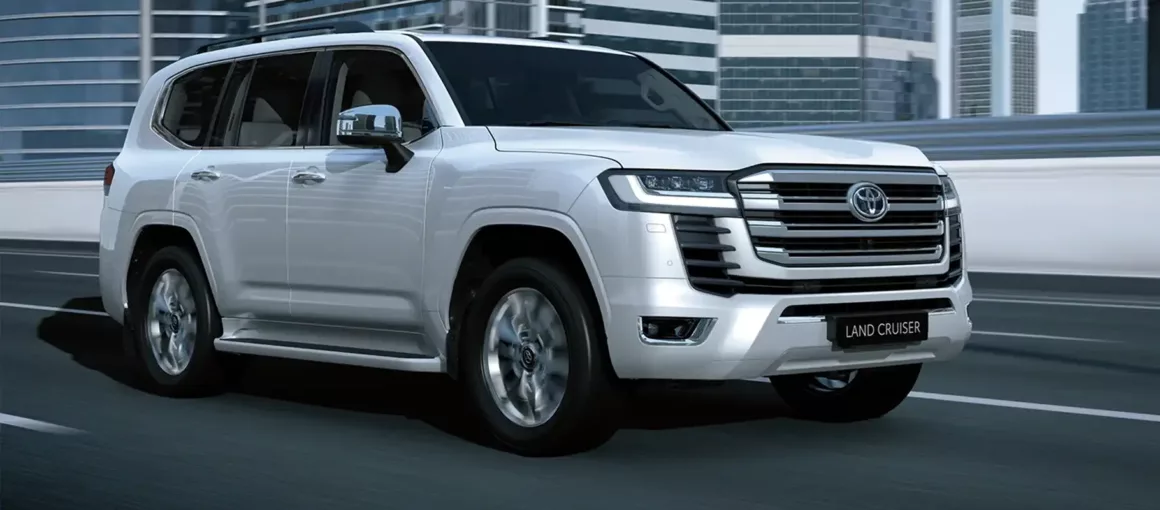
The Toyota Land Cruiser 300 is powered by a 3.3-litre turbo-diesel (V6) engine, which is the ideal engine for this model due to its design, as it provides plenty of torque, power, and off-road capabilities.
This is a good example of a V6 engine being used for capability and long-distance confidence.
Audi Q7

The Audi Q7 has a 3.0-litre TFSI petrol (V6) engine that combines smooth operation, ample power, and everyday usability, making it the best option in the high-end luxury SUV segment.
It is powerful enough for highway driving and premium enough for a luxury SUV, without the size and cost of a larger engine.
Ferrari 296 GTB and 296 GTS
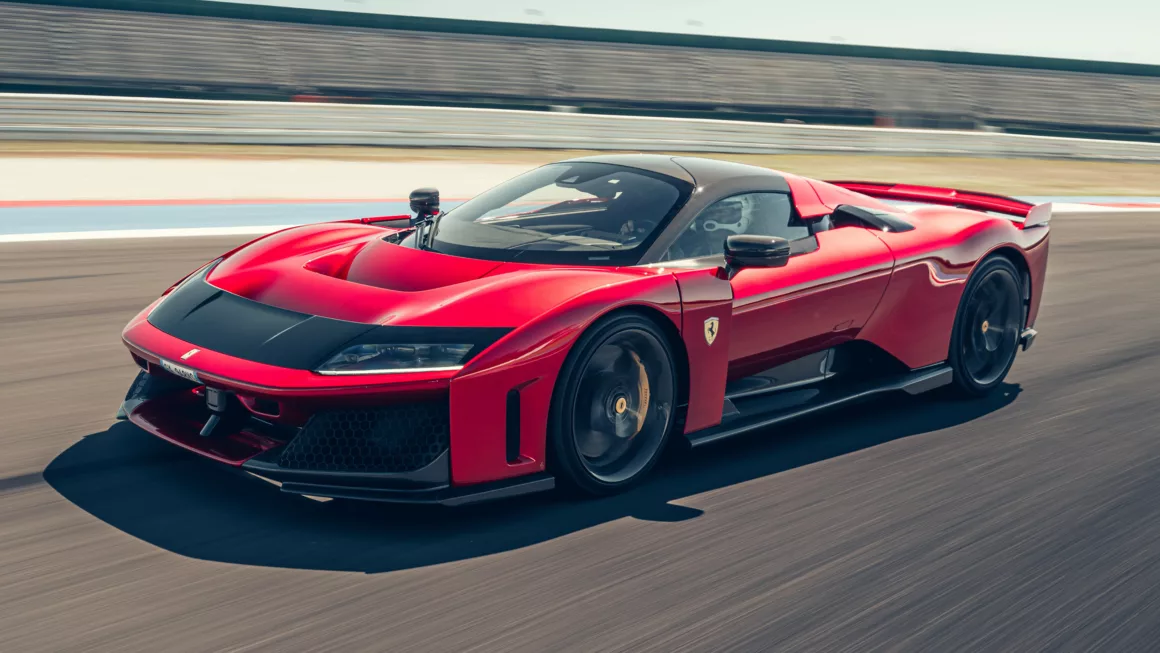
Ferrari’s 296 represents the evolution of V6 engines by utilising a plug-in hybrid powertrain, which will provide supercar-level performance.
This shows that modern performance is no longer only about large engines. With turbocharging, hybrid assistance, and advanced engineering, a V6 can produce extremely high power.
Maserati MC20
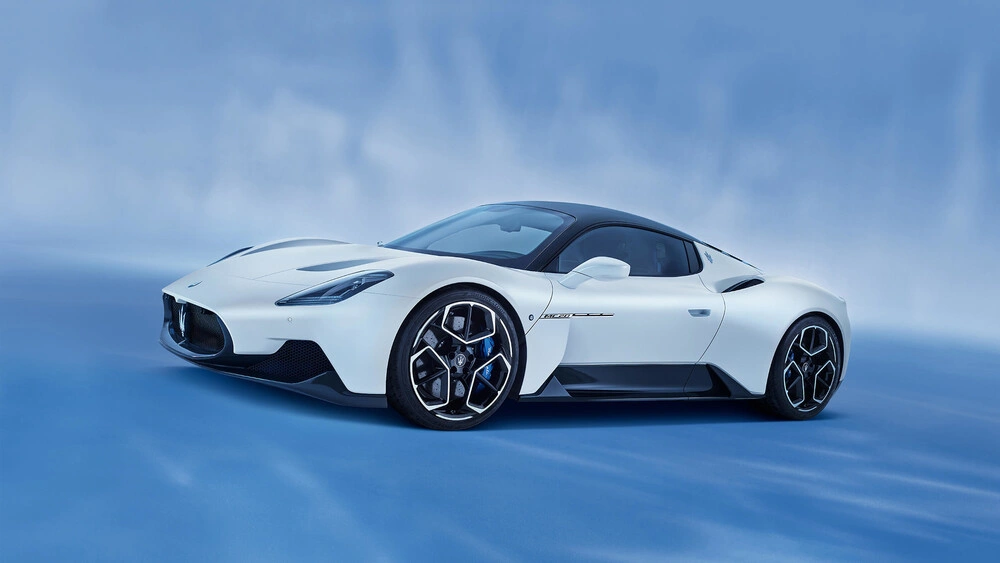
Maserati’s MC20 shows that V6 engines can provide an exotic driving experience when they are built to be performance-oriented, while using a 3.0-litre twin-turbo Nettuno (V6) engine.
For sports cars, the V6 layout also helps keep the engine compact and lighter than larger layouts.
Also Read: VinFast VF6 vs Tata Nexon EV: Safety Rating Comparison
V12 Engine Cars: Examples
V12 engines are not that common; they are most commonly found in luxury brands that emphasise drama, luxury and limited production.
| Car | Engine Type | Why It Matters |
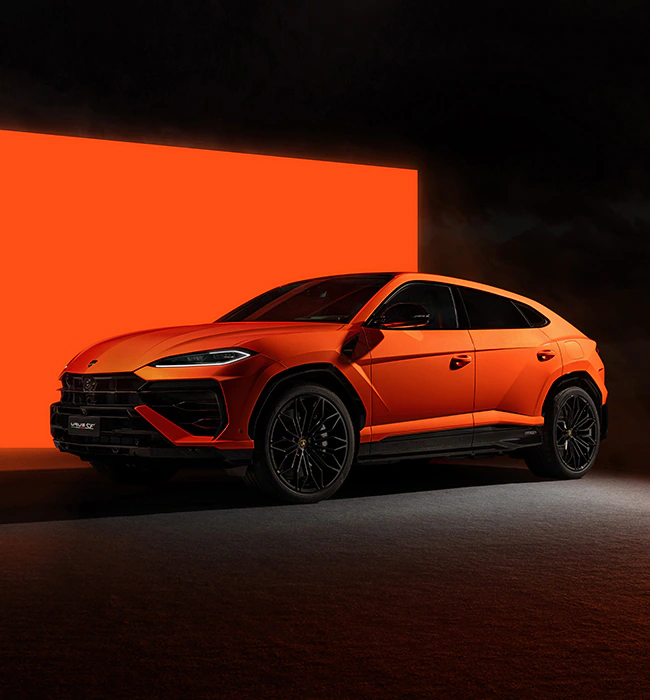
| Lamborghini Revuelto | Naturally aspirated V12 hybrid | Combines old-school V12 character with hybrid performance |
| Ferrari 12Cilindri | Front-mounted V12 | Modern Ferrari grand tourer with classic V12 identity |
| Ferrari Purosangue | Naturally aspirated V12 | Luxury performance car with a rare V12 setup |
| Aston Martin Vanquish | 5.2-litre twin-turbo V12 | Grand tourer with strong performance and character |
| Rolls-Royce Phantom | 6.75-litre twin-turbo V12 | Ultra-luxury sedan focused on effortless refinement |
| Rolls-Royce Ghost | 6.75-litre twin-turbo V12 | Luxury sedan with smooth power delivery |
| Rolls-Royce Cullinan | 6.75-litre twin-turbo V12 | Ultra-luxury SUV with effortless performance |
Lamborghini Revuelto
The Lamborghini Revuelto is an example of how the V12 has evolved in recent years. It takes the classic V12 engine and combines it with electric motors, providing hybrid support, while still retaining that emotive feel of a Lamborghini V12 engine.
This is the future direction for many high-end performance cars: keep the original V12 engine and retain the emotional value, while also using electrification to improve performance and meet modern requirements.
Ferrari 12Cilindri
Ferrari continues its legacy of producing front-engine V12 grand tourers with the new 12Cilindri. Designed for buyers seeking performance, sound and the ability to cover long distances.
It is not just about speed. It is about the feel of a naturally aspirated V12 engine in a modern grand touring car.
Aston Martin Vanquish
The Aston Martin Vanquish offers a modern-day example of the grand tourer. The 5.2-litre twin-turbo V12 hits the performance and luxury marks unlike any other.
Aston Martin’s V12 engines are known for having an emotional value to their buyers, and the Vanquish keeps that identity alive.
Rolls-Royce Phantom, Ghost and Cullinan
Unlike many supercar manufacturers, Rolls-Royce’s use of the V12 engine is focused on smooth and quiet operation, while providing effortless movement (e.g., the ability to accelerate to highway speeds without any problem).
In cars like the Phantom, Ghost and Cullinan, the V12 engine supports the luxury experience by delivering power without stress or vibration.
V6 vs V12: Which Is More Powerful?
Since traditional V12 engines usually have more cylinders and are also typically larger, they are generally considered more powerful. In both high-end luxury and performance vehicles, a V12 provides a lot of torque that does not feel “taxed” as acceleration is achieved.
However, modern V6 engines have changed the equation. Turbocharging and hybrid systems allow smaller engines to produce huge power. The Ferrari 296 is a strong example of a V6 hybrid that delivers supercar-level performance.
According to our research, the claim that “V12 is always faster” does not capture the whole picture. V12 engines feel smoother and more powerful in their work, but there are some V6 engines, such as turbocharged and hybrid ones, that are very fast and have strong performance.
The real difference is character. A V6 feels more compact, sharp, and modern. A V12 feels smoother, richer, and more dramatic.
Also Read: Types of Car Engines
V6 vs V12: Which Is More Fuel Efficient?
V6 engines consume less fuel than their counterparts, V12 engines, since they have fewer cylinders, less capacity and lower internal friction.
A V12 engine needs more fuel because it has twelve cylinders and is usually built for high performance or luxury refinement. Even when driven normally, it will usually consume more fuel than a V6.
| Factor | V6 Engine | V12 Engine |
| Fuel consumption | Lower | Higher |
| City mileage | More manageable | Usually poor |
| Highway efficiency | Better than V12 | Depends on car, but still fuel-heavy |
| Best for | Buyers who want performance with some practicality | Buyers who prioritise luxury, sound, and exclusivity |
If mileage and running cost are of the highest priority, it is better to choose a V6 engine. This is a great choice for buyers who do not care about fuel efficiency.
V6 vs V12: Sound and Driving Feel
Sound is one of the biggest emotional differences between a V6 and a V12.
Although it is true that V6 engines can produce good sound, this depends on the brand and the model. Turbocharged V6 engines feel very dynamic and fast due to having a great mid-range torque.
A V12 feels different. It is smoother, richer, and more refined. In supercars, it can sound dramatic and high-revving. In luxury cars, it can feel almost silent and effortless.
V6 engines focus more on efficient performance while V12 engines draw more attention with their amazing design and high-end comfort.
V6 vs V12: Maintenance and Ownership Cost
Maintenance is one of the biggest reasons why V6 and V12 cars appeal to very different buyers.
Even though V6 engines can be quite massive and expensive to maintain, this type of engine has a lot of advantages. And they are usually much cheaper and simpler than the V12 engine.
A V12 engine has more cylinders, more components, more heat, and more complexity. Parts are expensive, labour is specialised, and service costs can be very high.
| Cost Area | V6 Engine | V12 Engine |
| Fuel cost | Lower | Much higher |
| Routine service | Moderate to high | Very high |
| Spare parts | Easier to source depending on brand | Expensive and rare |
| Labour cost | Lower than V12 | Specialist service needed |
| Repair complexity | Moderate to high | Very high |
| Used-car risk | Manageable with service history | High without proper records |
The idea of getting a V12 luxury vehicle seems nice because of the depreciation. But in order to save money on maintenance, it is important to have a detailed inspection done before buying the vehicle.
Why Are V12 Engines Becoming Rare?
V12 engines are becoming rare because the car industry has changed. Emission norms are stricter, fuel efficiency expectations are higher, and carmakers are moving towards turbocharging, hybrid systems, and electric powertrains.
A small turbo engine is now capable of delivering the same power that would otherwise require a bigger-sized engine. Hybrid automobile technology is able to provide torque instantly and to overcome the limitations of traditional internal combustion engines.
There is also a cost issue. V12 engines are expensive to design, manufacture, and certify. Since demand is limited, many brands have reduced or discontinued large twelve-cylinder engines.
However, this doesn’t signify that the powerful V12 engine in cars has disappeared because it still exists in some high-performance vehicles, but it has now become rarer.
V6 vs Inline-Six: Are They the Same?
No, a V6 and an inline-six are not the same.
In automotive engineering, six-cylinder engines can exist in two different types: V6 and inline-six. The first one consists of two rows of cylinders organised in a V-shape, while all six cylinders of an inline-six are placed in a single line.
This distinction matters because many people call every six-cylinder engine a V6, which is incorrect. Some luxury cars from brands like BMW use inline-six engines, not V6 engines.
| Engine Type | Layout |
| V6 | Six cylinders in two banks of three |
| Inline-six | Six cylinders in one straight line |
By looking at the specification of V6 engines, one should understand that it is important to look for the engine layout, and not just for the number of cylinders in an engine.
V12 vs W12: Are They the Same?
No, V12 and W12 engines are also not the same.
The V12 engine consists of two sets of six-cylinder banks in a V shape. The W12 engine has 4 banks of 3 cylinders in a smaller W-shaped form. Bentley has manufactured vehicles featuring W12 engines, but they cannot be classified as V12 engines.
This is important because many 12-cylinder car lists include Bentley models, but Bentley’s famous 6.0-litre engine was a W12, not a V12.
So, when making a note on cars with V12 engines, it is a must to exclude Bentley W12 cars.
Should You Buy a V6 or V12 Car?
For most buyers, a V6 makes more sense. It offers strong performance, better fuel efficiency, lower maintenance costs, and more practical ownership. It can be used in SUVs, sedans, sports cars, and even modern hybrids.
A V12 only makes sense if you are going to buy an ultra-luxury car, supercar, grand tourer or something for a collector. It is not rational, but that is precisely its appeal: the V12 engine represents excitement, smoothness, prestige, and style.
Choose a V6 if:
- You want strong performance with better practicality
- You care about running costs
- You want a luxury SUV or performance car you can use often
- You want lower maintenance than a V12
- You want a modern turbo or hybrid performance setup
Choose a V12 if:
- You want an ultra-luxury or supercar experience
- You value engine sound and smoothness
- You are comfortable with high maintenance costs
- You want something rare and special
- You are buying with emotion, not practicality
The short explanation is simple: the V6 is a more sensible engine for nearly everyone. The V12 is a more exclusive engine for car enthusiasts and collectors.
Used V6 and V12 Cars: What to Check
Buying a used car with a V6 or V12 engine needs careful inspection. These engines are more complex than regular four-cylinder engines, and repairs can be expensive.
| What to Check | Why It Matters |
| Service history | Confirms regular maintenance and major repairs |
| Engine warning lights | Can indicate expensive mechanical or electronic issues |
| Oil leaks | Common in older luxury and performance cars |
| Cooling system | Large engines generate more heat |
| Turbo condition | Important in turbocharged V6 and V12 cars |
| Hybrid system health | Needed for hybrid V6 or V12 models |
| Exhaust condition | Repairs can be expensive in performance cars |
| Idle quality | Misfires or vibration can point to engine problems |
| Imported car paperwork | Important for rare luxury and supercars |
| Specialist inspection | Essential before buying high-value performance cars |
A V6 luxury car is a good choice if it has been well maintained. In contrast, the V12 needs a larger buffer for safety due to service, spares, and diagnostics costs.
Never buy a used V12 car only because it has depreciated heavily. The purchase price may fall, but the repair cost does not become cheap.
Final Thoughts
V6 and V12 engines offer two completely different perspectives of the automobile sector. V6 engine is compact, efficient and practical as compared to V12 engine. V12 works best in cases of luxury SUVs and sports cars and modern performance hybrids. The introduction of turbocharging and electrification makes it possible to gain such outputs from V6 engines which could have been expected only from engines with larger capacities.
A V12 engine is different. It is smoother, rarer, more expensive, and more emotional. It is not designed for low running costs or everyday practicality. It is built for luxury, drama, sound, and effortless power.
V6 engines will be a better option for most people because they provide high output without the high maintenance cost involved in the case ofa V12. However, for those who are car enthusiasts or collectors, the grandeur of a V12 engine cannot ever be matched by smaller engines.
FAQs on V6 vs V12 Engine Cars
Q. What is the difference between V6 and V12 engines?
A V6 engine has six cylinders arranged in two banks of three, while a V12 engine has twelve cylinders arranged in two banks of six. A V6 is smaller and more practical, while a V12 is smoother, more powerful, and more expensive.
Q. Is a V12 engine better than a V6?
A V12 is better for smoothness, sound, luxury, and emotional appeal. A V6 is better for practicality, fuel efficiency, lower maintenance, and regular use. The better engine depends on what the buyer wants.
Q. Is a V6 engine good for performance?
Yes, modern V6 engines can be very powerful. Turbocharged and hybrid V6 engines are used in performance cars, luxury SUVs, and even supercars.
Q. Are V12 cars still available?
Yes, V12 cars are still available, but they are rare. They are mostly found in ultra-luxury cars, supercars, and grand tourers from brands like Ferrari, Lamborghini, Aston Martin, and Rolls-Royce.
Q. Which cars have V6 engines?
Examples of V6 engine cars include the Toyota Land Cruiser 300, Audi Q7, Ferrari 296 GTB/GTS, Maserati MC20, and select Porsche Cayenne versions.
Q. Which cars have V12 engines?
Examples of V12 engine cars include the Lamborghini Revuelto, Ferrari 12Cilindri, Ferrari Purosangue, Aston Martin Vanquish, Rolls-Royce Phantom, Rolls-Royce Ghost, and Rolls-Royce Cullinan.
Q. Is a 6-cylinder engine always a V6?
No, a 6-cylinder engine is not always a V6. It can also be an inline-six engine, where all six cylinders are arranged in one straight line.
Q. Is Bentley W12 the same as V12?
No, Bentley’s W12 engine is not the same as a V12 engine. A W12 has a different cylinder layout and should not be listed as a V12.
Q. Why are V12 engines becoming rare?
V12 engines are becoming rare because of stricter emission norms, high development costs, poor fuel efficiency, and the rise of turbocharged, hybrid, and electric powertrains.
Q. Is a V12 expensive to maintain?
Yes, V12 engines are very expensive to maintain. They have more components, higher fuel consumption, expensive parts, and usually require specialist service.
Q. Should I buy a used V12 car?
A used V12 car can be worth buying only if it has a complete service history, passes a specialist inspection, and you are prepared for high maintenance costs. Avoid buying one only because the used price looks attractive.